Planter drainage is one of the most important planning details in a commercial planter project.
It affects plant health, floor protection, runoff, cleaning, maintenance, and long-term performance.
The right drainage approach depends on where the planter will be used, what will be planted, how it will be watered, where excess water will go, and who will maintain it.
Indoor, outdoor, rooftop, balcony, pool deck, courtyard, restaurant patio, office, hotel, and storefront planters may all require different drainage and water-management approaches.
The goal is to decide the drainage plan before ordering and installation, not after the planters are already on site.
A strong planter drainage plan helps answer practical questions:
Where will the planter be used?
Is the planter indoors or outdoors?
What plant material will be used?
How will watering or irrigation happen?
Where will water go?
Who will maintain the planter?
Are liners, reservoirs, saucers, risers, or floor protection needed?
Does the project need a coordinated drainage approach across multiple planter types?
Drainage options can be selected at order and should be coordinated with the site, planting plan, and maintenance approach.
Why Planter Drainage Is Different in Commercial Projects
Commercial planters are used in more complex environments than residential containers.
They may be placed in finished interiors, hotel lobbies, office spaces, restaurant patios, rooftops, pool decks, storefronts, courtyards, sidewalks, multifamily amenities, and other high-visibility areas.
That means drainage needs to support both the plant and the operating reality of the property.
Commercial planter drainage should account for:
Finished floors
Rooftop membranes
Pool decks
Courtyards
Sidewalks
Restaurant patios
Lobbies
Hotels
Office interiors
Multifamily amenities
Delivery and maintenance access
Irrigation and hand-watering routines
Cleaning crews
Public-facing appearance
The right drainage plan is not always the same from one site to another.
Indoor and outdoor planter areas need different drainage and water-management planning. Rooftops, balconies, terraces, pool decks, courtyards, and storefronts also bring their own site conditions.
Indoor vs. Outdoor Planter Drainage
Indoor and outdoor planters should not be treated the same way.
Indoor Planters
Indoor planters usually need a controlled water-management plan.
Finished floors, carpet, tile, wood, stone, polished concrete, lobby surfaces, retail floors, restaurant interiors, and tenant spaces need protection from uncontrolled water exposure.
Indoor water-management options may include:
Liners
Reservoirs
Saucers where appropriate
Waterproof inserts
Drop-in grow pots
Staged planting
Maintenance routines
Floor protection
Drainage water should not be allowed to escape onto finished interiors. For indoor projects requiring sealed containers, review our guide on plants that thrive without drainage holes.
Drainage is not one feature; it is a set of choices that should be coordinated with the site, planter, plant material, and maintenance plan.
Drainage Holes
Drainage holes can be useful for many outdoor applications. They allow water to exit the planter, but they also require a runoff path.
Before selecting drainage holes, consider where the water will go, what surface is below the planter, how the planter will be watered, and whether runoff could affect sidewalks, patios, rooftops, pool decks, balconies, or finished surfaces.
Liners
Liners can help control or contain water depending on the planting method and site needs. They are often important for indoor commercial planters, lobbies, offices, restaurants, hotels, retail interiors, and finished floors.
Reservoirs
Reservoirs can be useful when controlled watering or water storage is part of the maintenance plan. They should be coordinated with the plant material, planter size, watering method, and maintenance approach.
Saucers and Trays
Saucers or trays can be useful in some indoor situations. In commercial interiors, small or hard-to-access saucers can create maintenance problems if they are not part of a clear water-management plan.
Risers or Feet
Risers or feet may help separate planters from surfaces and support runoff or cleaning access depending on the site.
Drop-In Grow Pots
Drop-in grow pots can support maintenance access and plant replacement in some interiors without disturbing the outer planter.
Drainage by Location
Rooftop Planters
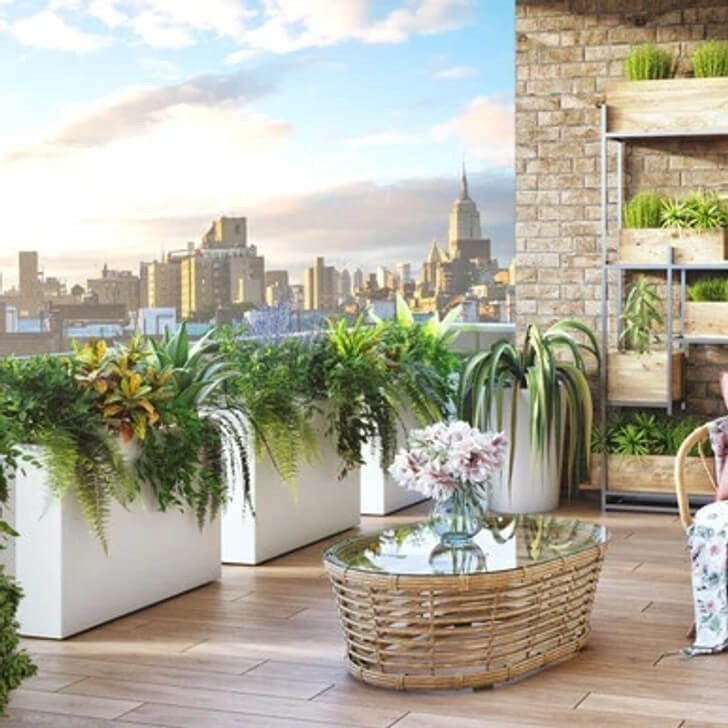
Rooftop planter drainage should be coordinated early. Rooftop projects need to account for filled weight, runoff path, roof assembly sensitivity, irrigation, wind, access, cleaning routines, and coordination with the project team.
For commercial rooftops, balconies, terraces, and elevated decks, final placement and load approval should be coordinated with the structural engineer of record where applicable.
Balcony planter drainage needs careful runoff planning. Runoff onto lower areas, adjacent units, finished surfaces, or public-facing areas should be considered before ordering and installation.
Restaurant patio and storefront planter drainage is public-facing. Plan for guest-facing appearance, sidewalk cleaning, outdoor dining boundaries, service paths, runoff direction, and public-facing maintenance.
The plant material and drainage plan should be selected together. Planting method, soil volume, watering plan, exposure, and maintenance all matter.
Drainage planning should consider:
Trees and palms
Shrubs
Grasses
Seasonal planting
Privacy planting
Interior foliage
Artificial planting where appropriate
Tree and palm planters often need more coordinated planning because they involve larger soil volume, more water, higher filled weight, and long-term maintenance.
Drainage planning should include the people who will maintain the planter.
Before ordering, confirm:
Who waters?
Is irrigation planned?
Are planters hand-watered?
Is there access for maintenance crews?
How often will planting be refreshed?
Where will excess water go?
How will debris and standing water be avoided?
Who monitors plant health?
Runoff, Cleaning, and Surface Protection
Runoff should be planned before installation. Commercial planters often sit on surfaces that need to stay clean, accessible, and presentable.
Plan for:
Runoff path
Staining risk
Hardscape cleaning
Finished surface protection
Indoor floor protection
Sidewalk and patio cleaning
Pool deck cleaning
Rooftop and courtyard water management
Risers or surface separation where appropriate
Drainage and Planter Size
Planter size affects drainage and water management. Larger planters hold more soil and water, changing watering, runoff, and maintenance needs. To ensure proper drainage layering in deep containers, see our guide on how to fill a large planter.
Fiberglass planters are practical for many commercial drainage plans because they work indoors and outdoors, can be ordered with custom drainage patterns, and are lighter than concrete when empty.
Concrete, Metal, Wood, Ceramic, Plastic, and Resin Planters
Other materials can work in certain settings, but each has drainage-related tradeoffs around weight, rot, heat, and weather durability.
Common Mistakes to Avoid
Assuming All Planters Drain the Same Way
Drainage should be planned by location, plant material, watering method, and maintenance approach. Lobbies, rooftops, patios, and pool decks do not all need the same setup.
Saying Yes to Drainage Holes Without Planning Where Water Goes
Drainage holes can be useful in many outdoor applications, but water needs a clear runoff path.
Forgetting Indoor Floor Protection
Indoor commercial planters need controlled water management to protect interior flooring.
Ignoring Rooftop, Balcony, or Elevated-Deck Filled Weight and Runoff
Elevated planter projects need structural coordination for weight and water runoff.
Recommended PPM Planters for Drainage Planning
Tolga Long Rectangular Fiberglass Planter
Best for: Patios, restaurant fronts, rooftop edges, privacy runs, office dividers, and long planter layouts.
Why it fits: The long rectangular format is useful when multiple planters need a coordinated drainage and maintenance approach.
Specifying commercial planters and need custom drainage hole patterns or leak-proof interior configurations? Our commercial-grade fiberglass planters can be drilled to order or supplied sealed for interior floor protection. Backed by a 3-year warranty and available in 20+ professional finishes. Call us at (888) 381-9501 or reach out to our team for custom trade quotes and lead times.
Commercial planters need drainage planning, but the right approach depends on indoor or outdoor use, plant material, watering method, site conditions, and maintenance plan. Drainage options can be selected at order and should be coordinated with the site, planting plan, and maintenance approach.
Do outdoor planters need drainage holes?
Many outdoor planters use drainage holes, but the right approach depends on where water will go, the planting plan, and site conditions. Drainage options can be selected at order and should be coordinated with the site, planting plan, and maintenance approach.
How should indoor planters handle drainage?
Indoor planters usually need controlled water management. Liners, reservoirs, saucers where appropriate, floor protection, and maintenance routines should be planned so water does not escape onto finished floors.
What is the difference between drainage holes and liners?
Drainage holes allow water to exit the planter. Liners help control or contain water depending on the planting method and site needs. The right setup depends on indoor or outdoor use, plant material, watering method, and maintenance.
Are reservoirs useful in commercial planters?
Reservoirs can be useful when controlled watering or water storage is part of the maintenance plan. They should be coordinated with the plant material, planter size, and maintenance approach.
How should rooftop planter drainage be planned?
Rooftop planter drainage should consider runoff, filled weight, irrigation, wind, access, maintenance, and the roof assembly. For commercial rooftops, balconies, terraces, and elevated decks, final placement and load approval should come from the structural engineer of record where applicable.
How do I prevent planter runoff problems on patios or sidewalks?
Plan the runoff direction before installation. Consider planter placement, drainage options, risers where appropriate, watering method, cleaning routines, and the surfaces around the planter.
Can fiberglass planters be ordered with drainage options?
Yes. Drainage options can be selected at order and should be coordinated with the site, planting plan, and maintenance approach.
What should I confirm before ordering planters with drainage?
Confirm indoor or outdoor use, planter location, plant material, watering method, drainage option, runoff path, floor or surface protection, maintenance access, delivery constraints, and timeline.