Loading cart...
Large Outdoor Planters
Large Outdoor Planters Buying Guide
How to choose the right size, shape, material, and format for commercial entries, rooftop terraces, restaurant patios, pool decks, walkways, courtyards, and high-end residential exteriors.
A large outdoor planter has to do more than look good in a product photo.
It needs to hold scale in an exterior space. It needs to survive sun, rain, wind, freeze-thaw cycles, cleaning crews, foot traffic, and the realities of freight and installation.
For a commercial entry, rooftop terrace, restaurant patio, pool deck, walkway, courtyard, or high-end residential exterior, the planter is not just decoration. It helps define how the space works.
This guide will help you choose the right size, shape, material, and format for your project, then point you toward large outdoor planter options that fit the site, planting plan, and installation requirements.
Why Large Outdoor Planters Are Different
Small pots decorate.
Large outdoor planters do real work.
They define entrances. They divide patios. They create privacy. They frame walkways. They hold trees, grasses, shrubs, and larger plantings. They soften hardscape. They help make an exterior space feel finished instead of empty.
That is why choosing large planters for outside is different from picking a few decorative pots for a backyard.
The planter has to fit:
- The scale of the space
- The plant material
- The exposure
- The maintenance plan
- The delivery conditions
- The design intent
- The budget
If the planter is too small, the whole space can look underbuilt. If the material is wrong, it may fade, crack, bow, or become hard to maintain. If the size is not planned around access, the planter may be difficult to receive, move, or install.
A large outdoor planter is part of the exterior package, not a disposable accessory.
Where Large Outdoor Planters Are Used
Commercial Entries
Entries need planters with presence.
Hotels, offices, restaurants, retail centers, and multifamily properties often use tall, round, square, or cube planters to frame doors and make the entrance feel intentional.
For an entry, the planter has to do two jobs at once. It needs to look polished up close, and it needs to hold visual weight from a distance.
Good formats include tall planters, large cubes, round statement planters, and tree-scale containers.
Restaurant Patios
Restaurant patios need structure.
Large patio planters and long rectangular planter boxes can define outdoor dining areas, separate traffic from seating, create privacy, and make a patio feel less exposed.
This is where outdoor planter boxes are especially useful. A long planter can create a clean edge with fewer pieces than a row of small pots.
For restaurants, think less about decoration and more about layout:
- Where do guests enter?
- Where do servers move?
- Where does the patio need a boundary?
- Where would planting make the space feel more comfortable?
Rooftop Terraces and Amenity Decks
Rooftops need careful planter choices because access, filled weight, drainage, wind exposure, and delivery all matter.
Large fiberglass planters are often a practical option because they can provide scale without the handling burden of concrete.
For rooftop amenity decks, project teams should think through:
- Planter dimensions
- Filled weight
- Elevator or stair access
- Wind exposure
- Drainage plan
- Plant material
- Maintenance access
Rooftop planters should not be selected from a photo alone. The site conditions, access path, and filled weight matter too much.
Pool Decks and Courtyards
Pool decks and courtyards often need planters that make the space feel resort-level without blocking movement.
Large outdoor planters can create zones, soften hard surfaces, frame lounge areas, and support palms, grasses, or seasonal plantings.
For hotels, multifamily properties, resorts, and high-end residential exteriors, the planters need to look good from multiple angles. They also need to hold up around sun, water, foot traffic, and regular cleaning.
Walkways and Drive Entries
Long walkways and drive entries can look cold when they are all hardscape.
Large planters create rhythm. They guide movement. They make the approach feel designed.
For these spaces, repeatable planter formats usually work best. A row of matching tall planters, cubes, or long boxes can soften the path without making the design feel busy.
Commercial Campuses and Mixed-Use Properties
Commercial campuses and mixed-use properties often need repeatable planter formats across multiple zones: entries, walkways, seating areas, courtyards, and tenant-facing outdoor spaces.
In these projects, consistency matters. A limited set of sizes, shapes, and finishes can make the property feel more intentional while keeping quoting, ordering, and future replacement simpler.
Trees and Statement Plantings
Large planters for trees need real soil volume.
Palms, ficus, olive trees, ornamental grasses, and large specimens need a planter that supports both the plant and the visual scale of the space.
This is where tree planters, large round planters, cubes, and extra-large boxes become useful. For specimen tree selection and container sizing guidelines, review our guide to the best trees for pots.
Do not choose the planter only by diameter or height. Ask what the plant needs, what the finished space needs, and how the planter will be handled after delivery.
How to Choose the Right Size
"Large" should mean large enough for the space and the planting plan.
It does not always mean buying the biggest planter available.
The right size is the one that fits the plant, the space, and the installation plan.
Match the Scale of the Space
Large exterior spaces can swallow small pots.
A planter that looks substantial on a product page may look undersized beside a hotel entry, office facade, restaurant patio, pool deck, or multifamily courtyard.
If the surrounding architecture is large, the planter needs enough height, width, or length to hold its own.
Match the Plant Material
Tree planters need more soil volume than small ornamental arrangements.
If the goal is to hold palms, ficus, olive trees, grasses, or large shrubs, the planter needs to support the root zone, planting depth, and maintenance plan.
Undersizing can make the install look weak and create problems for the planting.
Match the Run
For long patios, walkways, and edges, the total run matters.
If you need to define 30 or 60 feet of outdoor space, a few long rectangular planters may work better than many small pots. The result usually looks cleaner and is easier to plan.
Match the Access
Big planters still need to get to the site.
Before choosing an extra-large outdoor planter, confirm doors, gates, elevators, stairs, roof access, staging areas, and who will move the planter after delivery.
Planter dimensions can matter as much as planter weight.
How to Choose the Right Shape
Shape should follow the job the planter needs to do.
Rectangular Planters
Rectangular planters are best for edges, dividers, privacy, patios, walkways, and commercial runs.
Use them when you need to define space, create separation, line a path, or build a clean boundary without constructing a permanent wall.
They are especially useful for restaurants, rooftops, pool decks, and outdoor seating areas.
Browse long planters and planter boxes when the project needs a continuous edge.
Square and Cube Planters
Square and cube planters work well for entries, trees, symmetrical layouts, and modern exterior spaces.
They are clean, flexible, and easy to repeat across a project. They can hold larger plantings without looking overly decorative.
Use cubes when you want a planter that feels architectural but not fussy.
Round Planters
Round planters are good for focal points, plazas, hotel entries, courtyards, and spaces that need softness.
They break up hard lines and work well with trees, palms, and statement plantings.
Use round planters when the space needs a more sculptural or welcoming shape.
Tall Planters
Tall outdoor planters are useful for vertical scale.
They work well flanking doors, marking corners, screening views, and adding height where floor space is limited.
Tall planters are not only for entries. They can also help define patios, hospitality spaces, and exterior walkways.
Low Profile Planters
Low profile planters are best for pathways, balcony edges, pool decks, and areas where the planter should define space without blocking sightlines.
Use them when you need a boundary, but not a wall.
They can be especially useful in hospitality and multifamily settings where visibility and movement still matter.
Material Comparison for Large Outdoor Planters
Material affects appearance, weight, freight, durability, installation, and long-term maintenance.
For large outdoor planter pots, the right material depends on the site.
| Material | Best For | Strengths | Watchouts |
|---|---|---|---|
| Fiberglass | Commercial outdoor projects needing scale without excessive weight | Lightweight, durable, many finishes, good for large formats | Quality varies by vendor |
| Concrete | Permanent heavy installations | Substantial look, durable | Very heavy; expensive to ship and install |
| Metal / Aluminum | Custom architectural projects | Precise fabrication, modern look | Higher cost and longer lead times |
| Fiberstone | Decorative stone-like appearance | Lighter than stone, textured look | Less flexible than fiberglass for some commercial specs |
| Plastic / Resin | Budget or temporary use | Low cost | Can fade, crack, or look cheap in commercial settings |
For many commercial outdoor planter projects, fiberglass is the practical default.
It gives project teams size, durability, finish options, and manageable handling. That makes it useful for restaurants, hotels, rooftops, pool decks, multifamily properties, office entries, and high-end residential exteriors.
Fiberglass is not always the lowest-cost material. It is often chosen because it solves several project problems at once.
Outdoor Conditions to Consider
Large planters for outside need to survive the actual site, not just the product page.
Before specifying planters, consider these conditions.
Sun and UV Exposure
Full sun can be hard on exterior finishes.
For patios, rooftops, pool decks, and commercial entries, finish quality matters because fading is visible. If the planter is in a high-sun location, choose a material and finish intended for outdoor exposure.
Freeze-Thaw Cycles
Northern climates create another issue.
Freeze-thaw cycles can damage materials that absorb water, hold moisture incorrectly, or are not built for exterior conditions.
If the planters will stay outside year-round, make sure the material and drainage plan fit the climate.
Wind
Rooftops, courtyards, coastal sites, and open commercial properties can have real wind exposure.
The planter size, filled weight, planting material, and placement should all be considered. In some projects, the planter needs enough mass once filled to stay stable.
Drainage and Irrigation
Drainage should be planned before installation.
Outdoor planters may need drainage holes, risers, liners, reservoirs, or irrigation coordination depending on the site and planting plan.
Poor drainage can damage plant material, create maintenance problems, or shorten the life of the installation.
Cleaning Crews and Foot Traffic
Commercial planters live in the real world.
They may be bumped by cleaning equipment, luggage carts, chairs, strollers, maintenance crews, and everyday foot traffic.
That does not mean every planter needs to be overbuilt. It means high-traffic locations should not be treated like low-risk decorative corners.
Pool, Coastal, and High-Moisture Areas
Pool decks and coastal environments can add exposure from moisture, splash, chemicals, salt air, and cleaning routines.
For those sites, ask about finish durability and maintenance expectations before ordering.
Weight Constraints
Rooftops, balconies, terraces, and elevated decks may have weight constraints.
Planter weight is only part of the story. Filled weight includes soil, plant material, water, and any drainage system. To manage weight without compromising plant stability, review our step-by-step guide on how to fill a large planter using lightweight pot fillers.
This is one reason large fiberglass planters are often considered for rooftop and balcony projects.
Freight, Access, and Installation
Large planters can be lightweight and still be difficult to move.
Why? Because dimensions drive logistics.
A long planter box or extra-large cube may take up freight space, require careful packaging, and need planning once it reaches the site.
Before ordering, confirm:
- Delivery address
- Commercial or residential receiving
- Dock access
- Gate, door, and elevator clearances
- Rooftop or courtyard access
- Staging location
- Installation schedule
- Who moves the planters after delivery
For large orders, plan freight and installation together.
If the planters arrive before the site is ready, you may need storage. If they arrive too late, the planting or opening date can slip. If they are too large for the access path, you have a real problem.
This is why large outdoor planters should be specified early enough to confirm dimensions, finish, quantity, and lead time.
Common Mistakes to Avoid
Choosing Based Only on a Product Photo
A product photo does not tell you how the planter will read against the building, patio, entry, or landscape. Ask whether the size, shape, and finish make sense for the actual space.
Undersizing the Planter
This is one of the most common mistakes. Large commercial and luxury residential spaces need scale. Too many small pots can make a project look pieced together.
Ignoring Filled Weight
Planters get heavier after soil, water, drainage material, and plants are added. This matters on rooftops, balconies, decks, and any site with structural or access constraints.
Ignoring Drainage
Drainage is not a detail to figure out after the planters arrive. It affects plant health, maintenance, placement, and long-term performance.
Choosing the Wrong Material for the Exposure
Outdoor exposure is not the same everywhere. A shaded office entry, full-sun restaurant patio, rooftop deck, pool area, and coastal hotel all create different demands.
Buying Too Many Small Pots
Sometimes fewer properly scaled planters work better than a crowd of smaller pieces. This is especially true for patios, commercial entries, walkways, and large outdoor spaces.
Waiting Too Long
Late planter decisions can create rush freight, limited finish choices, substitutions, and project stress. Confirm sizes, quantities, and finishes early enough to avoid bad options.
Recommended PPM Planters for Large Outdoor Projects
These products are common starting points for large outdoor planter projects. The right choice depends on the site, quantity, planting plan, finish, and timeline.
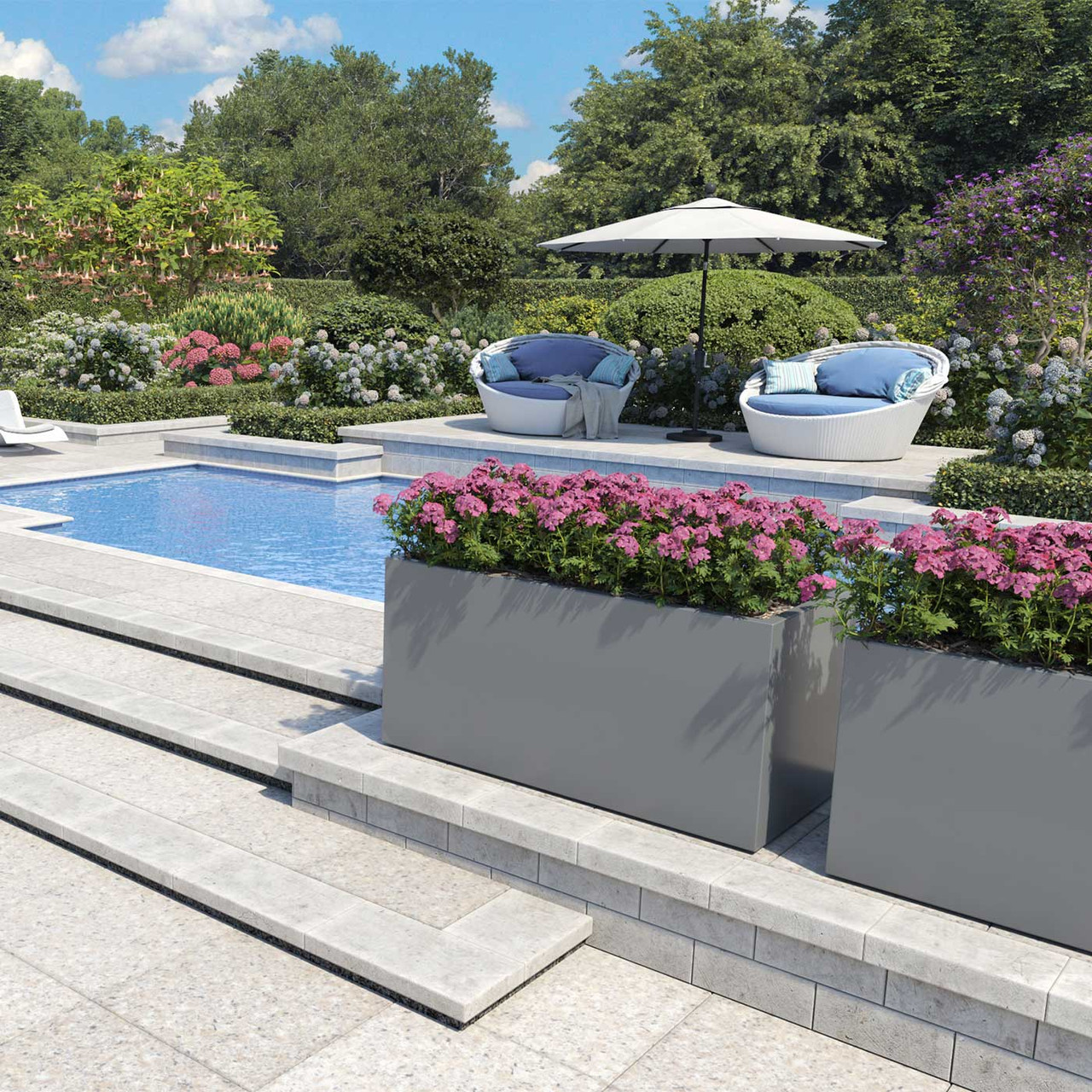
Brisbane Extra Large Planter Box
Best for: Large outdoor commercial installs, pool decks, courtyards, patios, and broad landscape applications.
An extra-large rectangular fiberglass planter box with strong architectural presence for commercial outdoor spaces that need scale.
View Brisbane Planter
Tolga Long Rectangular Planter
Best for: Patios, dividers, walkways, restaurant edges, and commercial runs.
A long rectangular fiberglass planter built for defining space, creating clean edges, and organizing outdoor commercial layouts.
View Tolga Planter
Montroy Cube Planter
Best for: Entries, rooftops, trees, plazas, and commercial exterior layouts.
A modern cube fiberglass planter with the scale and flexibility needed for entries, rooftops, trees, and large commercial installations.
View Montroy Planter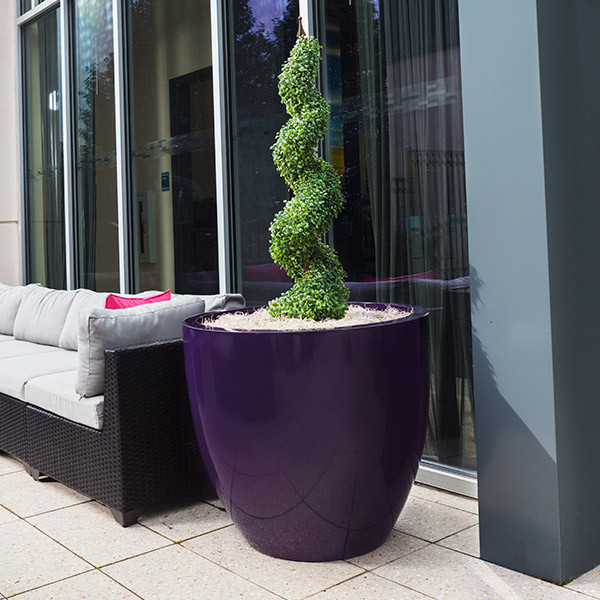
Wannsee Round Tree Planter
Best for: Trees, palms, ficus, hotel entries, rooftops, and statement plantings.
A large round fiberglass tree planter for projects that need visual weight, real specimen planting, and a softer round form.
View Wannsee Planter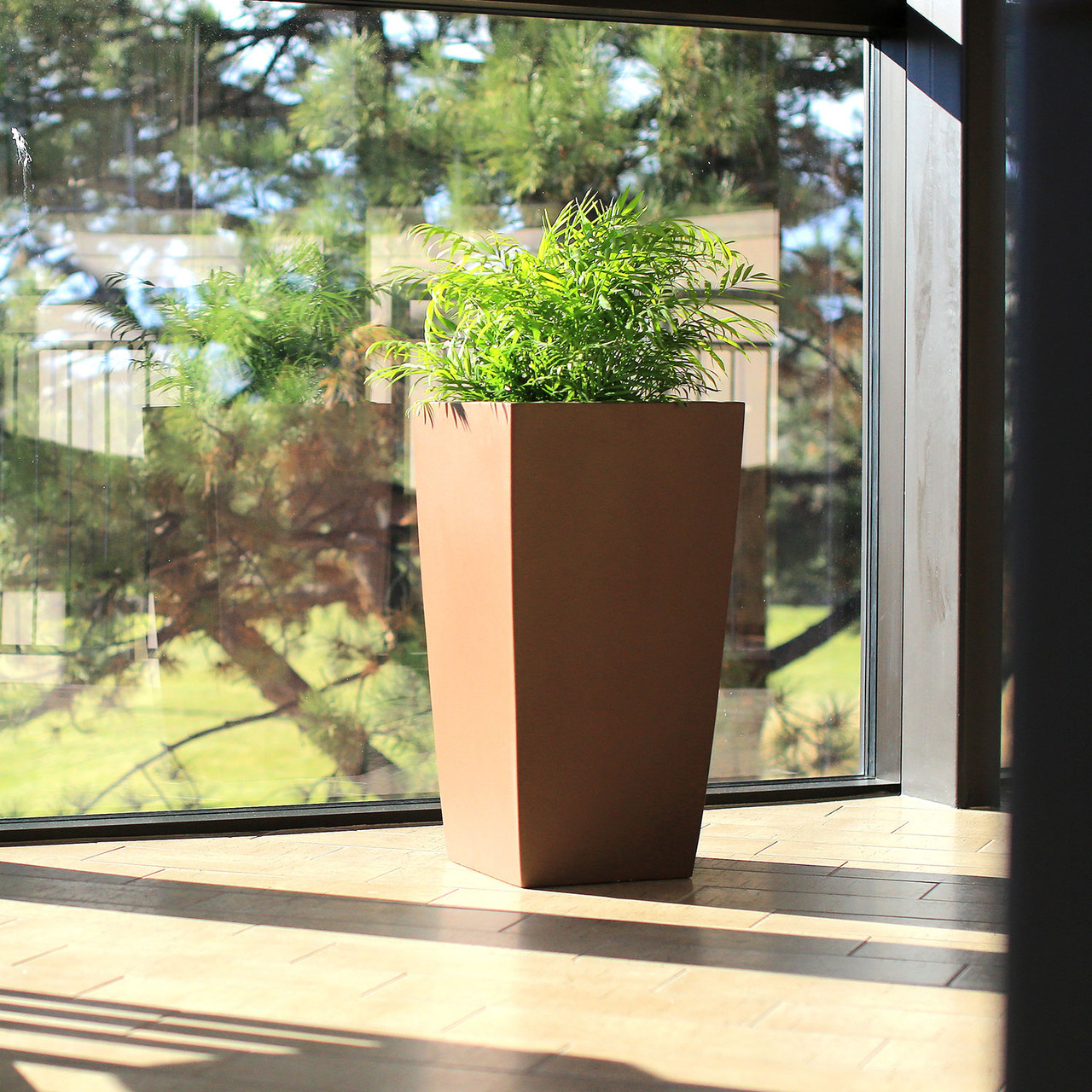
Toulan Tall Tapered Planter
Best for: Entries, vertical accents, patios, and hospitality exteriors.
A tall tapered square planter that adds vertical presence to entries and outdoor commercial spaces without needing a large footprint.
View Toulan Planter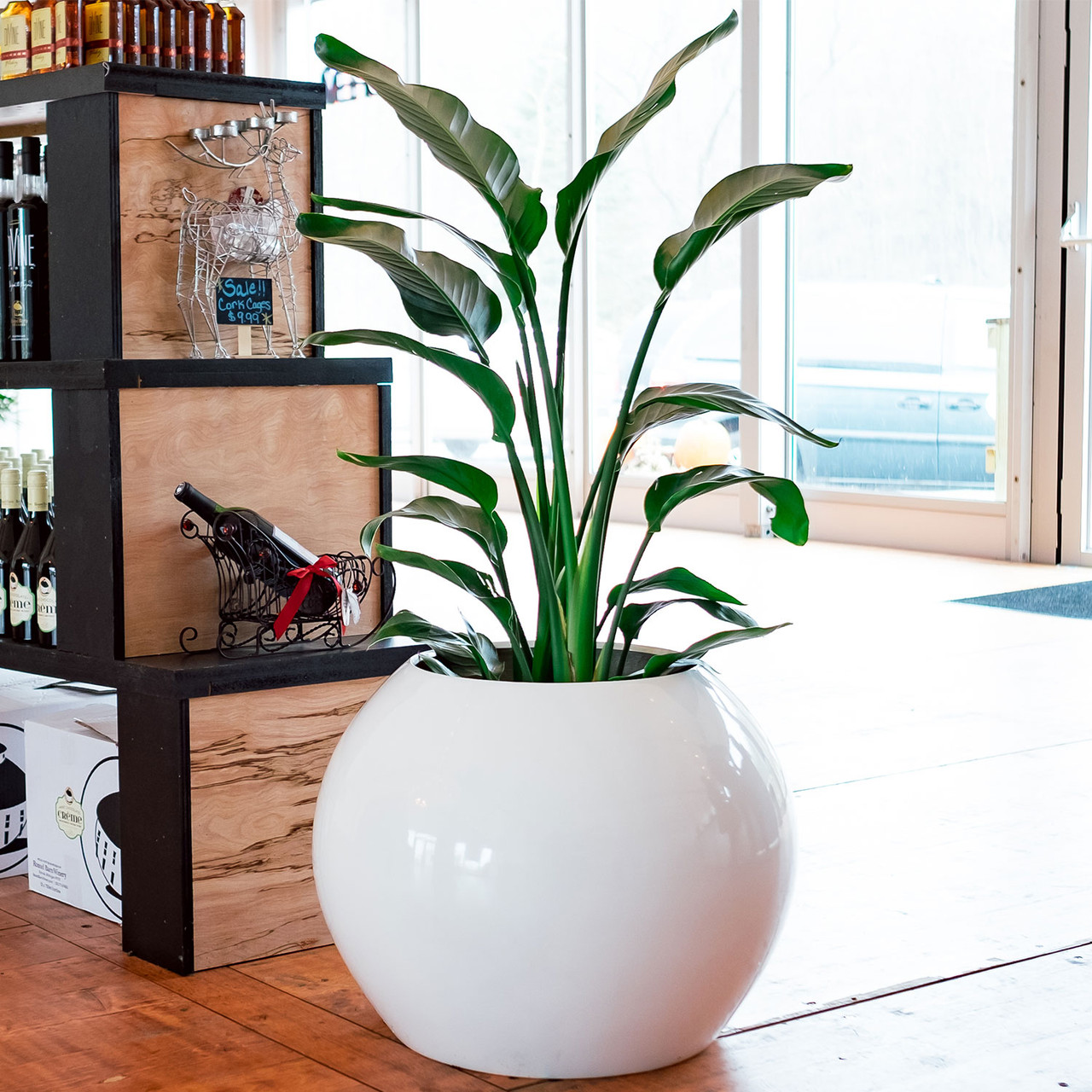
Globe Spherical Planter
Best for: Plazas, courtyards, entries, patios, and focal points.
A sculptural round fiberglass planter that softens hard exterior spaces and works well as a standalone focal point.
View Globe Planter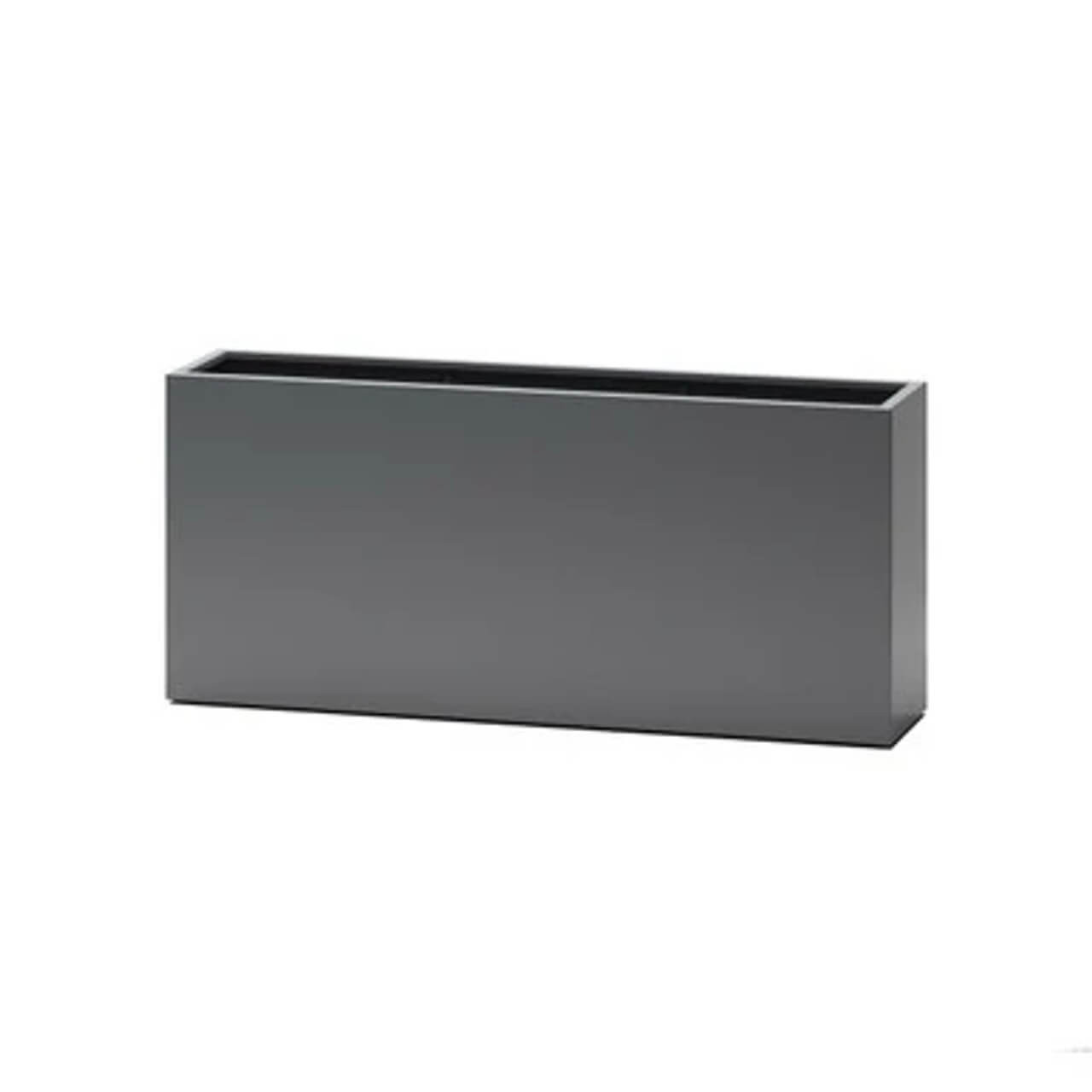
Modular 12 Inch Wide Planter Box
Best for: Narrow edges, balconies, patios, rail-adjacent spaces, and constrained outdoor layouts.
A slim fiberglass planter box for outdoor areas where the project needs a clean edge but depth is limited.
View Modular 12 PlanterSpecifying large planters for a commercial entry, rooftop deck, or residential patio project? Our large fiberglass planters and outdoor commercial pots are engineered to withstand freeze-thaw cycles, high traffic, and heavy root loads without bowing or cracking. Backed by a 3-year warranty and available in 20+ professional finishes. Call us at (888) 381-9501 or reach out to our team for custom trade quotes and volume pricing.
FAQ
What size planter do I need for a large outdoor space?
The right size depends on the space, plant material, and installation plan. Large entries, patios, rooftops, pool decks, and courtyards usually need planters with enough height, width, or length to hold visual scale. Tree planters need real soil volume, while long runs often work better with fewer long planter boxes instead of many small pots.
What material is best for large outdoor planters?
Fiberglass is often a strong choice for large outdoor planters because it offers durability, lower weight than concrete, finish options, and practical handling for commercial projects. Concrete, metal, fiberstone, and plastic can also work depending on the site, budget, and design requirements.
Are fiberglass planters good for outdoor commercial projects?
Yes, large fiberglass planters are commonly used for commercial outdoor projects because they can provide scale, durability, and a polished finish without the heavy handling requirements of concrete. They are often used for restaurants, hotels, rooftops, multifamily properties, offices, patios, and pool decks.
What shape is best for large outdoor planters?
The best shape depends on the use. Rectangular planters work well for dividers, patios, walkways, and privacy. Cube planters are useful for entries, trees, and modern layouts. Round planters work well as focal points. Tall planters add vertical scale where floor space is limited.
Can large outdoor planters be used for trees?
Yes, large outdoor planters can be used for trees when the planter provides enough soil volume, stability, and drainage for the plant material. Palms, ficus, olive trees, and other statement specimens usually need larger round, cube, or box planters.
Do large outdoor planters need drainage holes?
Most outdoor planters need a drainage plan. Depending on the site and planting plan, that may include drainage holes, risers, liners, reservoirs, or irrigation coordination. Drainage should be confirmed before installation.
How much do large outdoor planters weigh?
Weight depends on material, size, soil, water, drainage materials, and plants. Fiberglass planters are lighter than concrete, but filled weight still needs to be considered for rooftops, balconies, decks, and other weight-sensitive areas.
Are large outdoor planters expensive to ship?
Large outdoor planters can cost more to ship because dimensions affect freight space and handling. Even lightweight planters may require LTL or freight shipping when they are oversized or ordered in larger quantities.
What are the best large outdoor planters for restaurants, hotels, and commercial properties?
Restaurants often use long rectangular planter boxes for boundaries, privacy, and patio layout. Hotels often use tall, round, cube, or statement planters for entries and amenity spaces. Commercial properties often use repeatable planter formats for walkways, courtyards, rooftops, and exterior gathering areas.