Loading cart...
Trusted by teams at:
Pots Planters & More planters are specified by teams at Fenway Park, Fontainebleau Las Vegas, Marriott Hotels, Metropolitan Washington Airports Authority, and Hard Rock Hotel & Casino.





Browse our planter boxes below, add the styles that fit your project to your cart, then choose Checkout to order online or Confirm Pricing & Lead Time to request a project quote.
Find the Right Planter Box for Your Project
These fiberglass planter boxes are built for entrances, patios, rooftops, restaurant terraces, office spaces, privacy layouts, and commercial landscapes where clean lines, durable construction, and flexible placement matter. Use this collection to compare outdoor planter boxes, rectangular planter boxes, modern planter boxes, and commercial planter boxes by size, length, height, finish, and project fit.
- Need longer linear runs, borders, or architectural layouts - compare rectangular planters.
- Exterior patios, rooftops, storefronts, and restaurant terraces - browse outdoor planters.
- Privacy screens, dividers, or space definition - shop privacy planters.
- Oversized scale, deeper planting, or larger root systems - compare large planters.
Where Planter Boxes Earn Their Keep
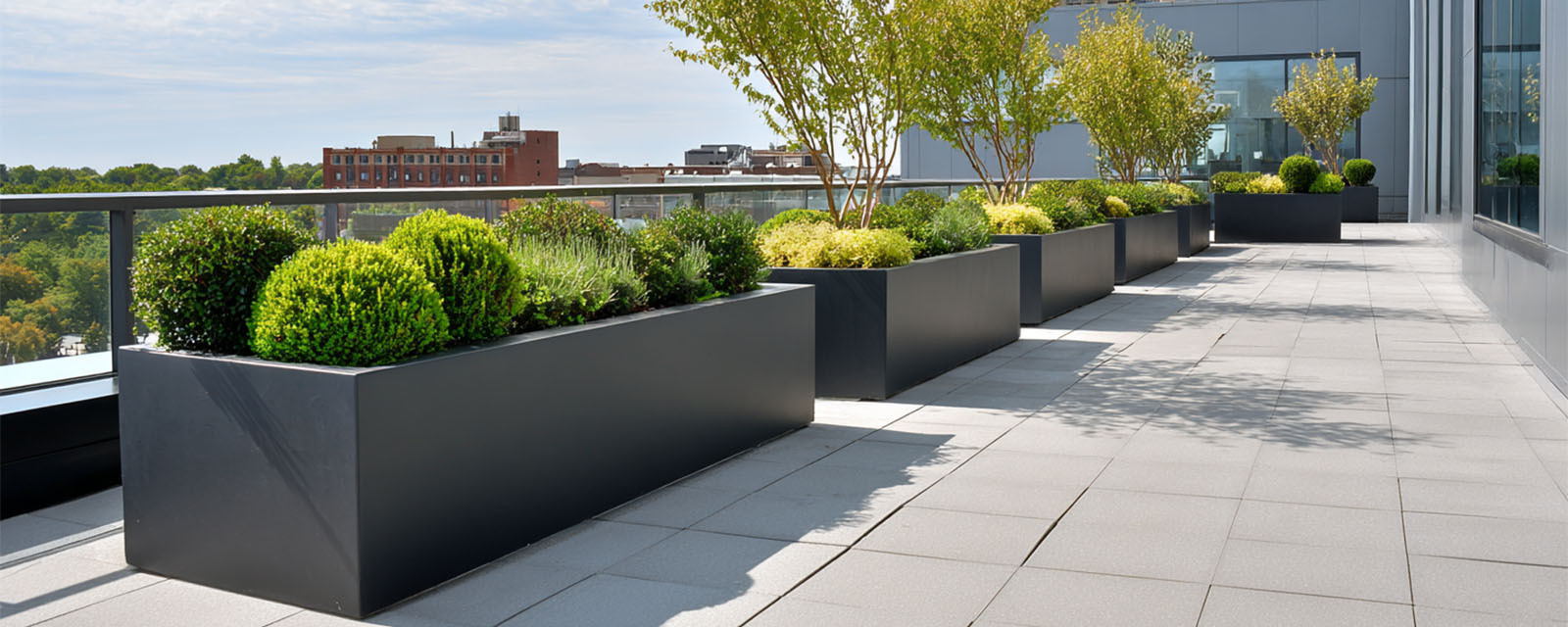
Planter boxes are specified wherever architectural precision and edge definition are part of the brief: hotel and resort drive entries lined with matching box forms, building bases bordered by continuous low-profile runs, rooftop terraces defined by box-profile perimeters, courtyard and plaza edges, and retail storefronts where clean geometry reinforces brand identity.
Smart Buying Guide for Planter Boxes
1. Choose Profile Height for the Application
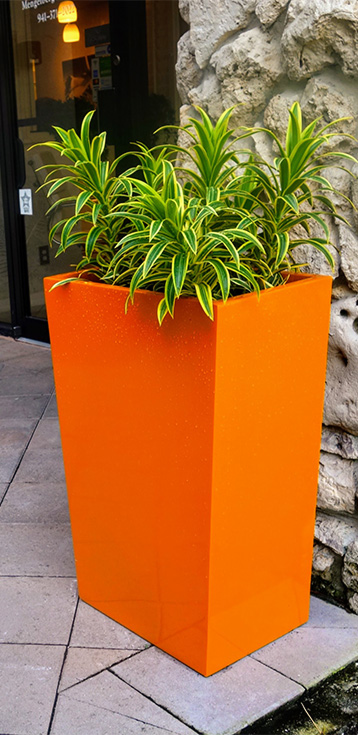
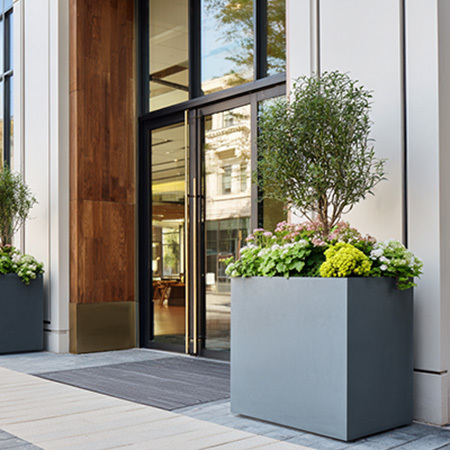
Planter box height determines its role in a space. Low-profile boxes (12 to 18 inches) function as borders and edges. They define a zone without interrupting sightlines or circulation. Mid-profile boxes (18 to 30 inches) provide more visual presence, hold larger plantings, and work well flanking entries and defining outdoor seating areas. Tall box profiles (30 to 48 inches) function as privacy screens, architectural dividers, and statement elements at building entries. Start with what the space needs the planter to do, then select the profile height that achieves it. Most commercial projects use two profile heights across the same installation: a low border run with taller accent placements at key points.
2. Coordinate Dimensions for Clean Alignment
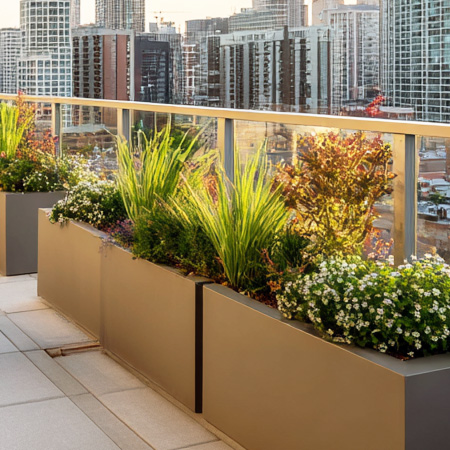
Planter boxes are most effective when dimensions coordinate across the installation. Length choices should divide cleanly into the total run with consistent gaps, typically 2 to 4 inches between units. Width should be consistent across all units in a run. Mixing widths breaks the visual line that makes box-form plantings read as intentional. Depth determines root volume: confirm the interior depth supports the planting type specified, with 12 to 16 inches of depth for shrubs and ornamentals, and up to 24 inches for larger specimens.
3. Specify Drainage Before the Order Ships
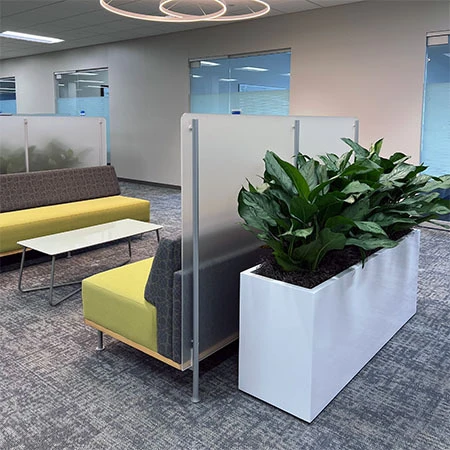
All planter boxes are stocked without drainage holes as standard. Drainage holes are drilled to order at no additional cost. Specify hole size, quantity, and placement when ordering. Custom hole patterns for specific drainage systems or subsurface channels are available on request. For interior installations or rooftop applications using reservoir liner systems, no-drill units are used with an internal drainage layer above the soil. Clients can also drill custom patterns in the field if site conditions require it after installation. Confirm your drainage approach before the order ships so units arrive ready for installation.
Need a fast gut-check on planter box dimensions, profile heights, and lead times? Send us your project specs and we will recommend planter box options that fit the space.
Planter Boxes Built for Real-World Projects
A planter box installation is a permanent architectural feature. The dimensions have to be precise, the finish has to be consistent across every unit, and the whole run has to look as intentional in year five as it did on opening day.
Our fiberglass planter boxes are manufactured to hold dimension and finish consistency across production runs so replacement units match originals ordered months or years later. Wall construction is reinforced to maintain flat, square profiles under full planted weight without bowing or deformation. UV-stable exterior finishes hold color and surface quality through seasons of outdoor exposure, pressure washing, and daily commercial use. Every planter box carries a three-year commercial warranty. Core SKUs ship in approximately 1 to 2 weeks from US warehouses. Custom lengths, heights, drainage configurations, and RAL color matching are available for projects where standard dimensions do not fit the brief.
Trusted Nationwide for Demanding Installations
Professionals specify our planter boxes for:
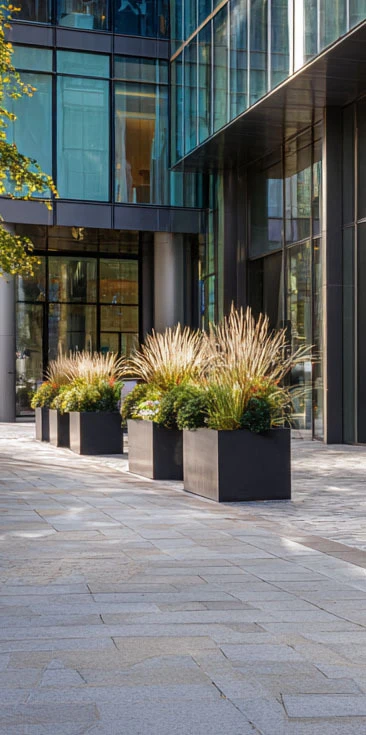
- → Building base borders and entry runs at hotels and offices
- → Terrace and rooftop perimeter definition
- → Courtyard and plaza edge installations
- → Retail streetscape and storefront borders
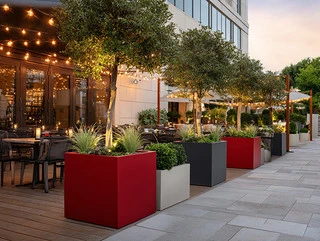
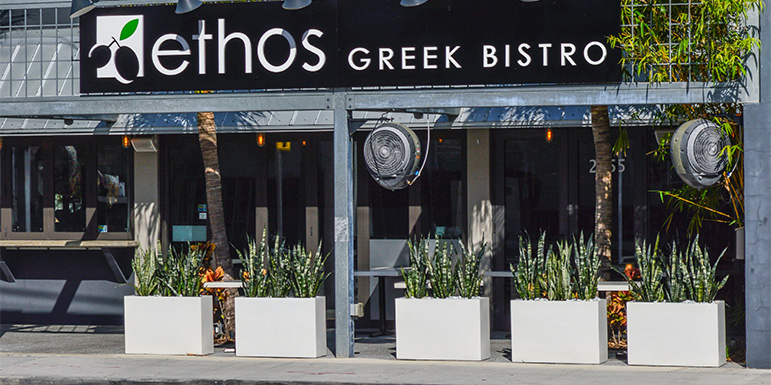
- → Restaurant patio and outdoor dining definition
- → Corporate campus walkaway and path edges
Dimension Precision Across Every Unit
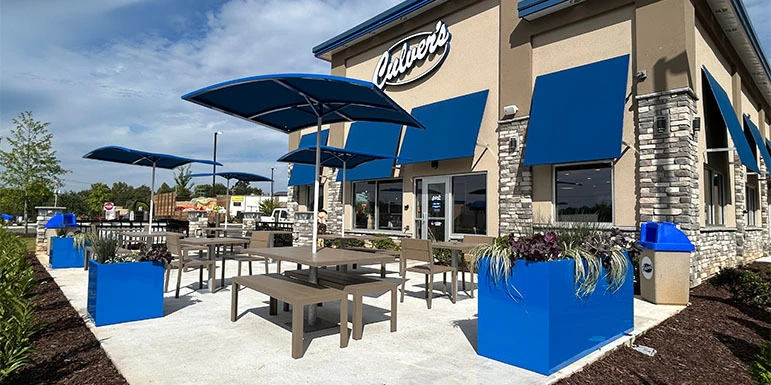
Planter boxes are specified as systems, not individual pieces. Consistent exterior dimensions, wall thickness, and corner geometry across every unit in an order means runs align, gaps are even, and the installation looks like it was designed that way. Replacement units ordered months later match the originals because specifications are locked and documented per order.
Any Profile, Any Length, Drainage to Spec
Planter boxes are available in low-border to tall-screen profiles and in standard lengths from 24 to 72 inches. Custom lengths are available for non-standard run dimensions. Drainage holes are drilled to order at no charge. Specify hole pattern, size, and placement before the order ships, or choose no-drill for reservoir liner systems. Custom hole patterns are available on request.
Commercial Finishes That Hold the Line
20-plus standard finishes and custom RAL matching in matte, smooth, and lightly textured surfaces. For runs of planter boxes where every unit needs to read as identical from 50 feet away, finish consistency across a production run is not optional. It is how we produce every order. Colors hold under UV, pressure washing, and commercial cleaning cycles for years without chalking or fading.
Frequently Asked Questions
Planter box lengths typically run from 24 inches to 72 inches, with common commercial sizes at 36 and 48 inches. Heights range from 12-inch low-border profiles to 48-inch tall box forms. Widths vary by profile. Custom dimensions are available for projects where standard sizes do not fit the run or the design specification. Contact us with your required dimensions and we will confirm availability and lead time.
Planter boxes ship without drainage holes as standard. Drainage holes are drilled to order at no additional cost. Specify hole size, quantity, and placement when ordering. Custom hole patterns for specific drainage systems are available on request. For reservoir liner systems used in interior and rooftop applications, no-drill units are ordered and the drainage is managed through the liner. Clients can also drill custom patterns in the field after installation if conditions require it.
The terms are often used interchangeably, but planter boxes typically refer to the rectangular box-profile form: clean flat tops, square corners, and consistent width-to-height ratios that read as architectural elements rather than decorative containers. Rectangular planters is the broader shape category. All planter boxes are rectangular, but not all rectangular planters are box-profile forms. Some have tapered sides, angled profiles, or trough proportions that work differently in installations.
Start with the total run length and choose a box length that divides cleanly into it with 2-to-4-inch gaps between units. Account for corner returns and end treatments. Confirm drainage coordination across the run before install. For runs on grades or slopes, plan whether units step down at intervals or whether a level substrate is required. For complex layouts, send us dimensions and we will help work out the module.
Yes, and rooftop terrace perimeters and elevated plaza edges are common applications. Confirm structural load capacity before specifying. Fiberglass planter boxes are substantially lighter than concrete alternatives before planting, which matters on rooftops where load limits apply. Coordinate drainage with the waterproofing and drainage system on the deck before installation.
Yes. Trade pricing is available for qualifying designers, contractors, and property teams. No account is required to browse retail pricing or place an order. For larger project quantities, formal quotes with committed lead times and freight planning are available. Contact us with your project specifications and we will respond within one business day.
If You Need Planter Boxes, We Are the Team That Makes Your Life Easier
We help designers and property teams specify planter boxes that align precisely, hold their finish across seasons, and arrive on time for project openings.
When the dimensions, the finish consistency, and the timeline all matter, our planter boxes deliver.