How to compare fiberglass and concrete planters for commercial and luxury residential projects: weight, freight, installation, freeze-thaw durability, finish options, cost, and use cases.
Concrete planters look permanent, architectural, and substantial.
That is why designers, developers, property teams, and landscape architects consider them for entries, patios, rooftops, courtyards, and commercial landscapes.
But once a project moves from rendering to receiving dock, concrete can create problems: weight, freight, equipment, placement, freeze-thaw exposure, replacement risk, and layout changes that are easy on paper but painful on site.
Fiberglass planters are often specified when the project needs the look and scale of concrete without the burden of concrete. They can be made in large formats, finished in smooth or textured surfaces, used indoors or outdoors, and moved with far less effort.
Concrete has its place. But if the planter needs to look substantial and still ship, move, install, and perform well in a commercial environment, fiberglass is often the more practical choice.
This guide compares fiberglass vs. concrete planters for commercial and luxury residential projects, including weight, freight, installation, freeze-thaw durability, finish options, cost, and use cases.
If you already know you need a lighter concrete-style alternative, start with our fiberglass planters or browse large planters for commercial projects.
Quick Comparison: Fiberglass vs. Concrete Planters
Factor
Fiberglass Planters
Concrete Planters
Empty weight
Much lighter
Very heavy
Freight
Easier to ship and receive
More expensive and harder to handle
Installation
Easier to move and place
May require equipment or more labor
Rooftop use
Often more practical
Often difficult because of weight
Freeze-thaw
Non-porous and resistant to cracking
Porous and can crack if water freezes inside
Finish options
Many colors and finishes, including concrete-look finishes
Natural concrete appearance, limited color flexibility
Durability
Strong when commercial-grade
Durable, but brittle under some conditions
Maintenance
Low maintenance
May stain, chip, crack, or require sealing
Best use
Commercial projects needing scale, lower weight, and finish flexibility
Permanent ground-level installs where weight is not an issue
The short version: Concrete gives you real weight and a natural concrete look. Fiberglass gives you the look, scale, and finish flexibility many commercial projects need without making the planter shell the hardest part of the job.
Why Concrete Planters Appeal to Designers
Concrete is easy to understand. It looks heavy because it is heavy. It feels architectural. It has a natural texture. It can look permanent in a way that works for some commercial exteriors, public spaces, and ground-level installations.
Concrete becomes less simple once the project has to receive it, move it, place it, plant it, maintain it, or replace it.
Heavy Empty Weight
Concrete is heavy before soil, water, drainage material, and plants are added. That affects freight, receiving, jobsite movement, rooftop access, elevator access, crew size, and equipment needs.
More Complicated Freight and Receiving
Large planters already take up freight space because of their dimensions. Concrete adds significant weight on top of that, leading to higher shipping complexity.
Harder Installation
Concrete planters may require pallet jacks, forklifts, cranes, larger crews, or special handling. That becomes difficult on rooftops, terraces, upper floors, lobbies, courtyards, and finished spaces.
Layout Changes Are Expensive
Commercial projects change. Patio layouts move, lobby plans shift, and moving a heavy concrete planter after delivery can become a labor and equipment nightmare.
Chipping, Staining, and Freeze-Thaw Risk
Concrete can chip at corners and edges, stain, or discolor. In cold climates, water can enter porous concrete and expand when frozen, leading to cracking or surface damage. To maintain commercial containers season after season, see our guide on how to clean and maintain fiberglass planters.
Less Finish Flexibility
Concrete has a natural look, but it is not always easy when a project needs a specific color, brand palette, or smooth finish across multiple phases or locations.
Why Fiberglass Is Often the Better Commercial Choice
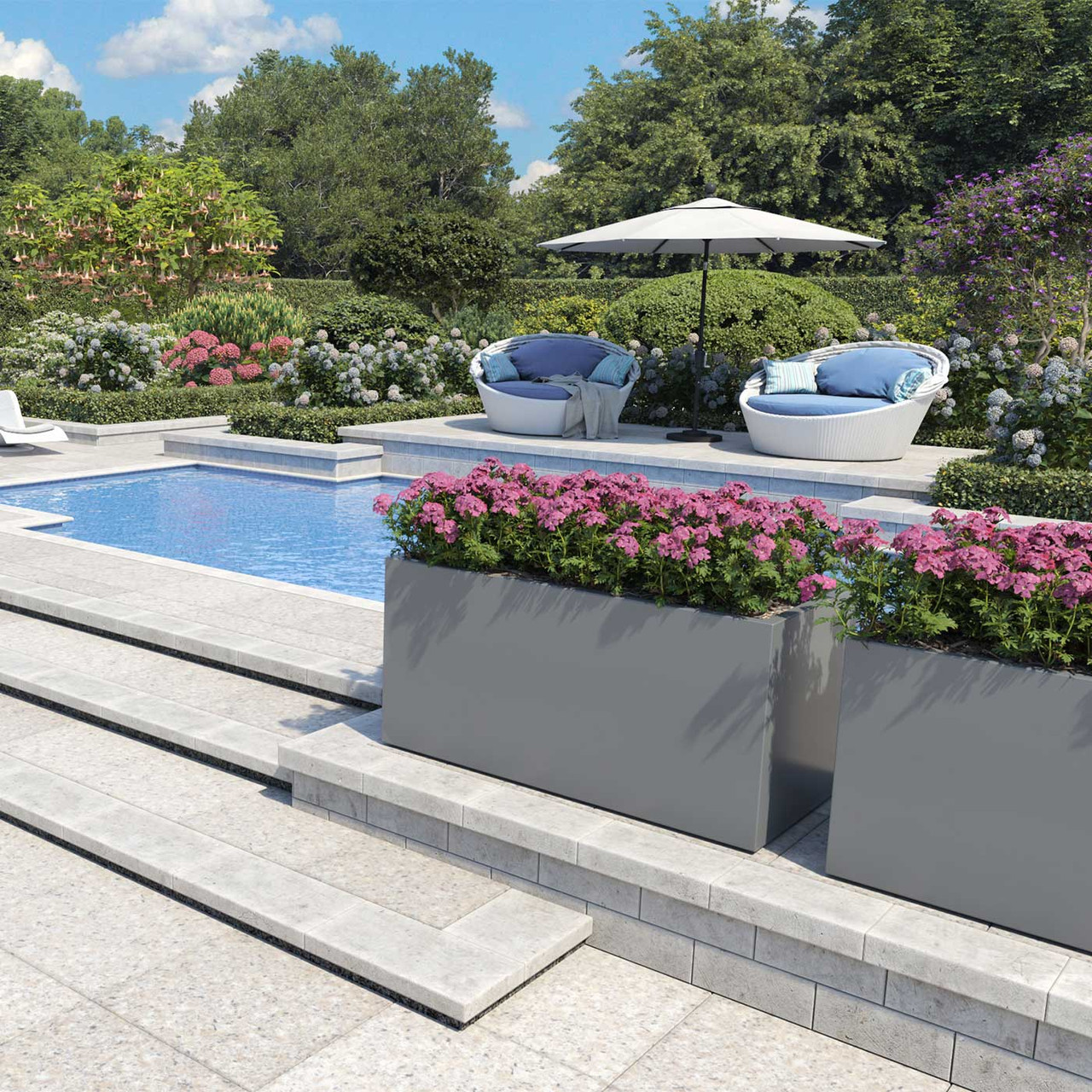
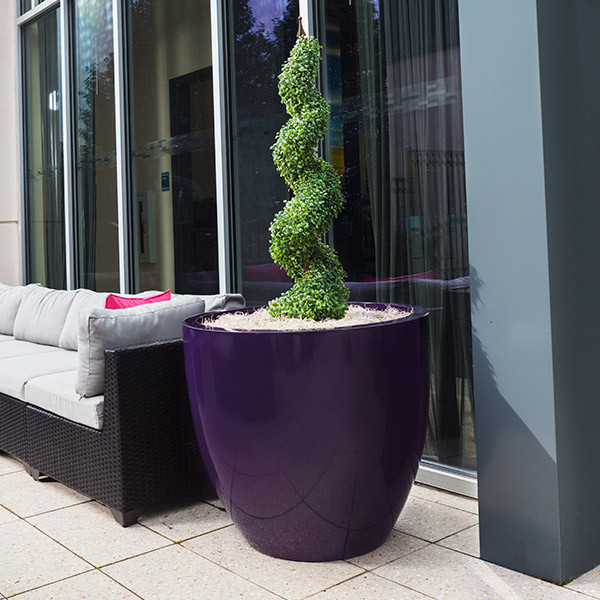
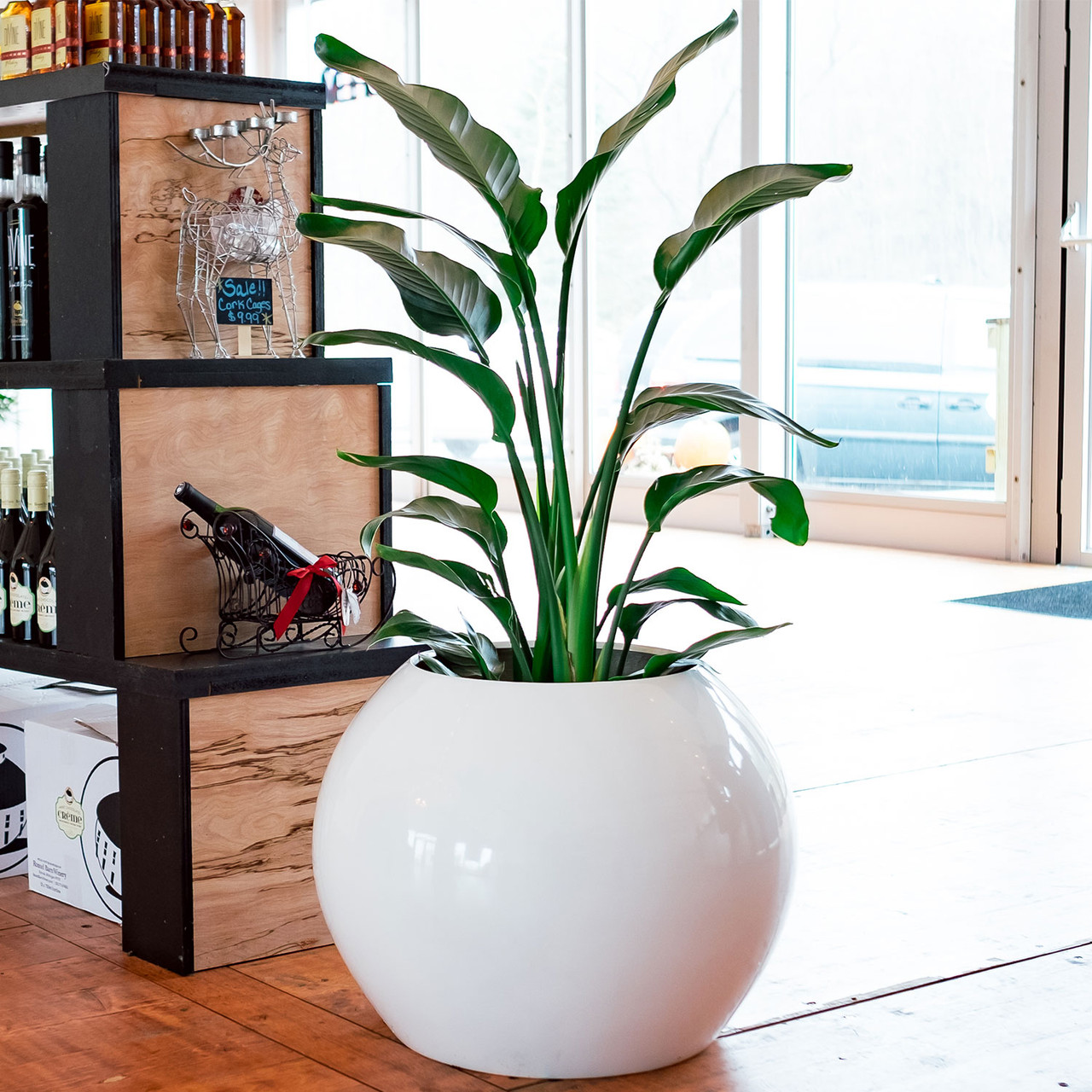
Fiberglass planters solve many of the practical problems concrete creates. They deliver large-scale forms, clean architectural shapes, and concrete-look finishes while staying much lighter than concrete.
Commercial-grade fiberglass planters offer:
Lower empty weight than concrete
Easier freight, receiving, and placement
Excellent fit for rooftops, balconies, terraces, upper floors, and interiors
Exterior-rated finishes and concrete-look options
Non-porous, freeze-thaw resistant construction
Consistency across multi-piece or multi-phase projects
Weight: The Biggest Difference
Weight is the first thing to understand when comparing fiberglass vs. concrete planters. Starting with a lighter planter shell gives the project team more flexibility to allocate structural load to soil, drainage, and plant material.
Freight and Installation
Large planters take up truck space regardless of material, but concrete adds massive weight to the dimensional freight calculation. Fiberglass planters are generally easier to unload, stage, move, and place with standard crew labor.
Rooftops, Balconies, and Upper Floors
Rooftop and elevated projects are where the fiberglass vs. concrete decision becomes critical. Fiberglass provides a lightweight starting point for rooftop amenity decks, balconies, terraces, and upper-floor lobbies.
For commercial rooftops and elevated decks, final placement and load approval should come from the structural engineer of record.
Freeze-Thaw and Outdoor Durability
Concrete is porous; water enters the material and expands during freeze-thaw cycles, leading to potential cracking. Fiberglass is non-porous and will not absorb water, making it far more forgiving in northern winter climates.
Finish and Design Flexibility
Fiberglass planters can be finished in smooth, matte, gloss, textured, concrete-look, stone-look, or custom brand-specific colors. If the project needs "concrete look planters without the weight," fiberglass is the industry standard.
Cost: Product Price vs. Project Cost
Compare total installed project cost rather than just the product line item. Concrete may appear cost-effective initially, but freight, rigging equipment, labor, and replacement risk often make fiberglass the superior total value.
Recommended Fiberglass Alternatives to Concrete Planters
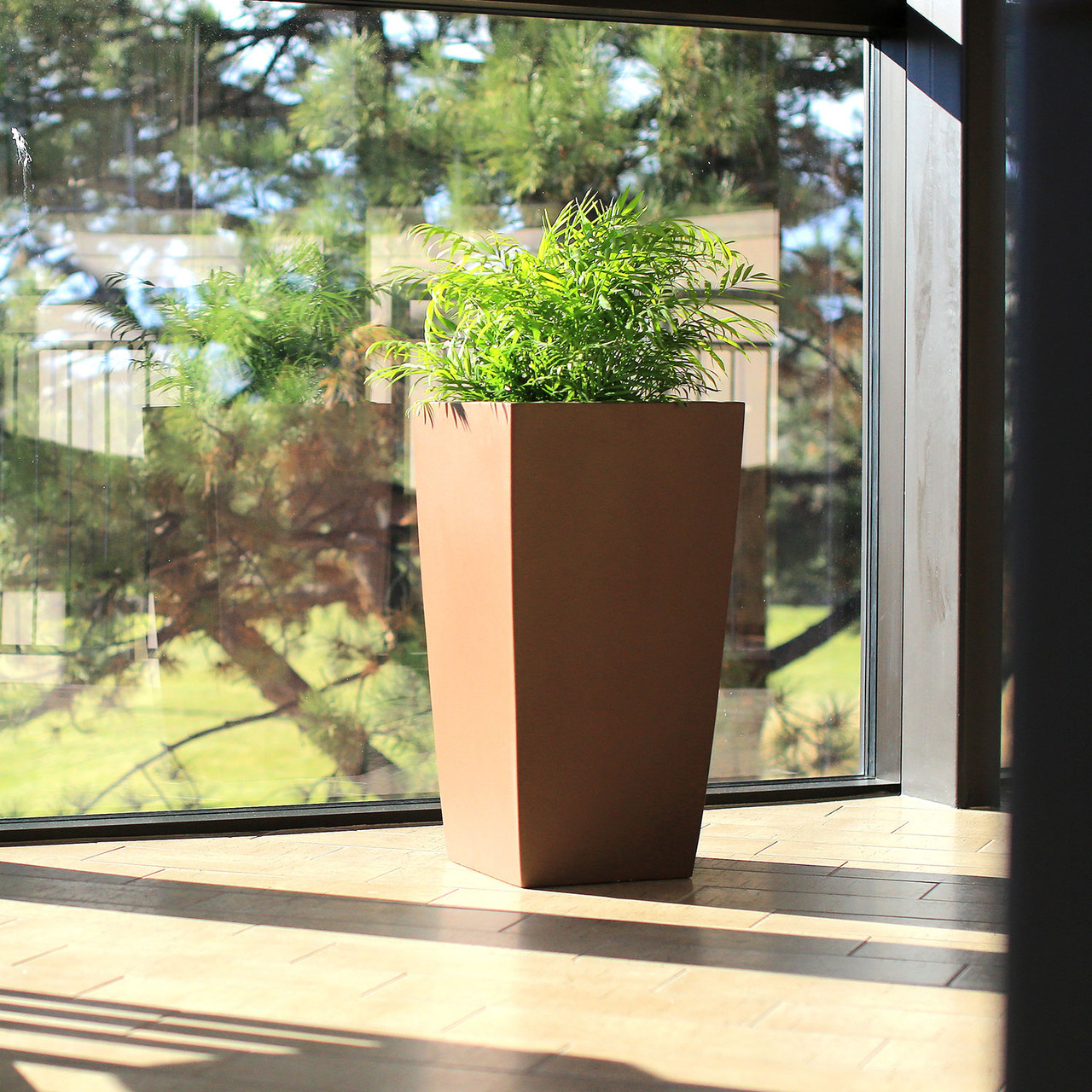
Montroy Cube Planter
Best for: Concrete-look cube planters, entries, rooftops, trees, and commercial landscapes.
A clean architectural cube form with large-format scale and much easier handling than concrete.
Comparing fiberglass and concrete planters for a commercial project? Our commercial-grade fiberglass planters deliver the architectural presence of concrete with significant freight, handling, and freeze-thaw advantages. Backed by a 3-year warranty and available in 20+ professional colors. Call us at (888) 381-9501 or reach out to our team for custom trade quotes and sample swatches.
Are fiberglass planters better than concrete planters?
Fiberglass planters are often better for commercial projects where weight, freight, installation, finish flexibility, and freeze-thaw performance matter. Concrete can still make sense for permanent ground-level installations where weight is not a problem and the project specifically wants real concrete.
Do fiberglass planters look like concrete?
Fiberglass planters can be made with concrete-look finishes, textured finishes, smooth finishes, matte colors, and other architectural finishes. They are often used when a project wants the look and scale of concrete without the weight.
Are fiberglass planters lighter than concrete planters?
Yes. Fiberglass planters are much lighter than concrete planters when empty. Filled weight still matters because soil, water, drainage material, and plants add load, but fiberglass gives the project a lighter starting point.
Are concrete planters good for rooftops?
Concrete planters are often difficult for rooftops because of weight, freight, access, and placement concerns. Some rooftop projects may still use concrete if approved by the structural engineer and planned correctly, but fiberglass is often the more practical starting point.
Do concrete planters crack in winter?
Concrete is porous, and water can enter the material. In freeze-thaw conditions, freezing water can expand and lead to cracking, spalling, or surface damage. Proper design and maintenance can reduce risk, but the material is more vulnerable to freeze-thaw issues than fiberglass.
Are fiberglass planters durable outdoors?
Commercial-grade fiberglass planters are durable outdoors when made with exterior-rated materials and finishes. They are commonly used for patios, hotel entries, rooftops, office campuses, multifamily properties, and commercial landscapes.
Which is cheaper: fiberglass or concrete planters?
It depends on the project. Concrete may appear less expensive on a product-only basis in some cases, but freight, receiving, installation equipment, maintenance, and replacement risk can change the total project cost. Fiberglass is often chosen for better total project practicality.
What is the best lightweight alternative to concrete planters?
Fiberglass is one of the best lightweight alternatives to concrete planters because it can provide large formats, architectural shapes, concrete-look finishes, and outdoor durability with much lower empty weight.
When should I choose concrete instead of fiberglass?
Choose concrete when the project specifically requires real concrete, the installation is permanent and ground-level, equipment access is easy, and weight is either acceptable or useful. For rooftops, terraces, interiors, patios, and multi-planter commercial projects, fiberglass is often more practical.