Loading cart...
Commercial Planter Cost
How Much Do Commercial Planters Cost?
A practical guide to commercial planter pricing, what drives cost on a real job, where it makes sense to spend more, and how to control budget without picking the wrong product.
Commercial planter pricing is hard to compare from a product photo.
Two planters can look similar online and perform very differently once they reach a job site. Size, material, finish, drainage, freight, quantity, lead time, and installation conditions all affect the final cost.
That matters because the real cost of a commercial planter is not just the planter. It is the cost of getting the right product to the site, installed on time, and still looking professional years later.
This guide breaks down what drives commercial planter cost, where it makes sense to spend more, where you can control budget, and what information helps a supplier quote the project correctly.
If you are already comparing options for a commercial property, start with our commercial planters collection, then use this guide to understand what affects project pricing.
What Commercial Planters Typically Cost
Commercial planter costs vary widely because the product has to match the job.
A small planter used inside an office lobby is a different project than a row of long outdoor planter boxes dividing a restaurant patio. A rooftop amenity deck has different constraints than a hotel entry. A single decorative pot is not priced the same way as 40 matching commercial outdoor planters that need to ship together and arrive on a schedule.
In general:
- Small commercial planters are usually the lowest-cost project option.
- Large commercial planters, long planter boxes, and tree-scale containers cost more because they require more material, larger molds, more packaging, more freight space, and more handling.
- Standard fiberglass planters are often a practical middle ground for commercial projects because they offer durability, lower weight, and polished finishes without the freight and installation burden of concrete.
- Custom colors, custom finishes, oversized formats, and custom aluminum projects can move into a higher budget tier.
The best way to understand cost is to look at the full project: what the planter needs to hold, where it is going, how it ships, who handles it, and what happens if it fails.
Why Commercial Planters Cost More Than Retail Pots
Retail pots are usually built for homeowners buying one or two pieces.
Commercial planters are built for project conditions.
They may need to handle public use, cleaning crews, luggage carts, restaurant traffic, freeze-thaw cycles, rooftop access, direct sun, high winds, repeated planting changes, and a client who expects the finished space to look intentional.
That is why commercial-grade planters often cost more. You are paying for:
- Thicker construction
- Exterior-rated finishes
- UV resistance
- Freeze-thaw durability
- Larger sizes
- Better consistency across multiple pieces
- Freight-safe packaging
- Commercial design expectations
- Longer project life
A cheap planter can become expensive fast if it cracks, fades, bows, delays installation, or has to be replaced after the space is already open.
For a restaurant, hotel, multifamily property, rooftop deck, office lobby, or commercial campus, replacement is not just a product cost. It can mean labor, disruption, client frustration, and another round of freight.
That is why commercial buyers should not only ask, "What does the planter cost?"
The better question is: "What will this planter cost me if it is wrong?"
The Main Factors That Affect Commercial Planter Cost
Size and Volume
Size is one of the biggest cost drivers.
Larger planters require more material. They also take more space to package, ship, store, and move on site. Even lightweight fiberglass planters become logistically bigger as the dimensions increase.
Tree-scale planters, oversized cubes, long rectangular planter boxes, and large outdoor commercial planters will cost more than smaller decorative pieces because they have to do more work. To manage total project costs on deep containers, see our guide on how to fill a large planter using lightweight fillers.
If the planter needs to support mature plant material, heavy soil, or a high-visibility application, sizing matters. Undersizing to save money can make the finished installation look weak or create planting problems later.
Material
Material affects the planter cost, shipping cost, installation cost, and long-term maintenance risk.
Fiberglass is often a strong commercial option because it gives project teams a durable, polished planter without the weight of concrete or stone. It works well for fiberglass planters, rooftops, patios, entries, lobbies, restaurants, hotels, and multifamily properties. To evaluate long-term material lifecycle costs, read our planner's handbook to planter materials.
Concrete can look permanent and substantial, but it is heavy. That can increase freight, handling, equipment, and installation complexity.
Metal and aluminum can be excellent for custom commercial specs, but they often move into a higher fabrication and lead-time tier.
Plastic and resin are usually lower-cost options, but they may not deliver the finish, scale, or long-term appearance a commercial project needs.
Shape and Format
Simple shapes are usually more efficient.
Cubes, rectangles, and standard planter boxes tend to be easier to specify and repeat across a project. Tall tapered forms, large round planters, specialty profiles, oversized dimensions, and fully custom shapes can add cost.
That does not mean specialty shapes are wrong; it means they should earn their place.
For example, a tall tapered planter at a hotel entry may be the right call because it gives vertical presence. A long rectangular planter box may be more practical for a restaurant patio because it creates a boundary with fewer pieces.
Finish
Finish affects both appearance and price.
Standard finishes are usually easier, faster, and more cost-efficient. Custom colors, specialty textures, finish matching, and brand-specific color requirements can add cost and lead time.
That may still be worth it for a hotel, office, retail, or multifamily property where the planter needs to match the architecture, millwork, brand palette, or exterior design package.
Quantity
Quantity can help project pricing, but it also changes logistics.
Larger orders may improve unit economics, but they also affect production timing, freight planning, staging, receiving, and installation.
For project teams, the best move is to confirm quantity early. That gives the supplier enough information to recommend formats, quote accurately, and flag any lead time or freight issues before the project is under pressure.
Drainage and Planting Requirements
Drainage affects what should be specified.
Outdoor planters may need drainage holes, risers, liners, reservoirs, or planting details based on the site. Rooftop projects may need special attention to filled weight, drainage planning, and access. Tree plantings may need more soil volume than a small decorative arrangement.
Freight and Delivery
Commercial planters can be lightweight and still be large.
Freight is often driven by dimensions, handling, destination, quantity, packaging, and whether the order ships parcel, LTL, or freight. Large planter boxes and oversized containers take up truck space even when they are not especially heavy.
Project teams should think through:
- Delivery location
- Dock access
- Residential vs. commercial receiving
- Elevator or rooftop access
- Jobsite timing
- Staging needs
- Who is responsible for moving the planters after delivery
Lead Time
Lead time can affect cost because late decisions create bad options.
In-stock or core SKUs are usually faster. Standard finishes are usually easier to fulfill. Custom finishes, large quantities, specialty shapes, and oversized formats need more planning.
If planters are specified too late, the team may be forced into rush decisions, substitute products, expensive freight, or the wrong material.
Fiberglass vs. Other Materials: Cost and Value
| Material | Cost Position | Best For | Watchouts |
|---|---|---|---|
| Fiberglass | Mid to premium | Commercial projects needing durability, low weight, finish options, and practical handling | Quality varies by vendor |
| Concrete | Premium installed cost | Permanent heavy installations where weight is not a problem | Very heavy; freight and installation costs can be significant |
| Metal / Aluminum | Premium / custom | Custom commercial specifications, modern architectural projects, exact fabrication needs | Higher cost and longer fabrication timelines |
| Fiberstone | Mid | Decorative use where a stone-like appearance is desired | Can be less flexible than fiberglass for some commercial needs |
| Plastic / Resin | Low | Temporary, budget, or low-visibility use | Can look cheap, fade, or fail faster in demanding settings |
Fiberglass is not always the cheapest planter material. That is not the point. Its advantage is balance.
For many commercial projects, fiberglass gives teams a polished look, large sizes, lower weight, outdoor durability, and finish flexibility without the handling burden of concrete or the fabrication cost of fully custom metal.
That is why fiberglass is often the practical choice for commercial outdoor planters, rooftops, restaurant patios, hotel entries, office lobbies, and multifamily amenity spaces.
Where Spending More Makes Sense
You should spend more where failure would be visible, expensive, or hard to fix.
That usually includes:
- Hotel entries
- Restaurant patios
- Rooftop amenity decks
- Multifamily pool decks and courtyards
- Office lobbies
- Commercial campuses
- Public-facing walkways
- High-traffic retail or hospitality spaces
- Projects where replacement would disrupt operations
Where You Can Control Cost
You do not need to overspend on every planter. Here are practical ways to control commercial planter costs:
- Use standard sizes when possible.
- Use standard finishes unless a custom match is required.
- Choose fiberglass when weight and freight matter.
- Use long rectangular planter boxes for long runs instead of many individual decorative pots.
- Confirm quantities early.
- Ask for project pricing.
- Match planter size to the plant material instead of oversizing everything.
- Plan ahead so you are not forced into rush decisions.
- Use repeatable formats across entries, patios, balconies, courtyards, and walkways.
Example Commercial Planter Buying Scenarios
Restaurant Patio
A restaurant patio often needs long planter boxes for edges, privacy, traffic separation, and outdoor dining atmosphere. Cost is driven by the number of linear feet, planter size, finish, drainage, and freight. A few well-sized long planters may be more practical than many smaller pots because they create a cleaner boundary with fewer pieces.
Hotel Entry
A hotel entry usually needs planters with scale, presence, and a polished finish. Tall planters, round statement planters, or large cubes can help frame the entrance and make the property feel maintained.
Rooftop Amenity Deck
Rooftop projects often need lightweight planters because filled weight, freight, elevator access, and installation logistics matter. Fiberglass is commonly considered for rooftop applications because it can deliver a large planter format without the weight burden of concrete.
Office Lobby
An office lobby may need indoor fiberglass planters that match finishes, millwork, flooring, or a brand palette. Finish quality, shape, and scale matter more than raw outdoor durability.
Multifamily Property
A multifamily property may need repeatable planter formats across entries, balconies, pool decks, courtyards, and common areas. Standardizing sizes and finishes can control cost.
Commercial Planter Product Recommendations
Different commercial projects need different planter formats. These are common starting points.

Tolga Long Rectangular Planter
Best for: Patios, dividers, walkways, commercial edges, and long planting runs.
A long rectangular fiberglass planter built for linear installations where the planter needs to define space, guide traffic, or create a clean commercial edge.
View Tolga Planter
Montroy Cube Planter
Best for: Entries, rooftops, commercial landscapes, and tree-scale plantings.
A modern cube fiberglass planter with the scale and simplicity project teams need for entries, rooftops, lobbies, and large commercial installations.
View Montroy Planter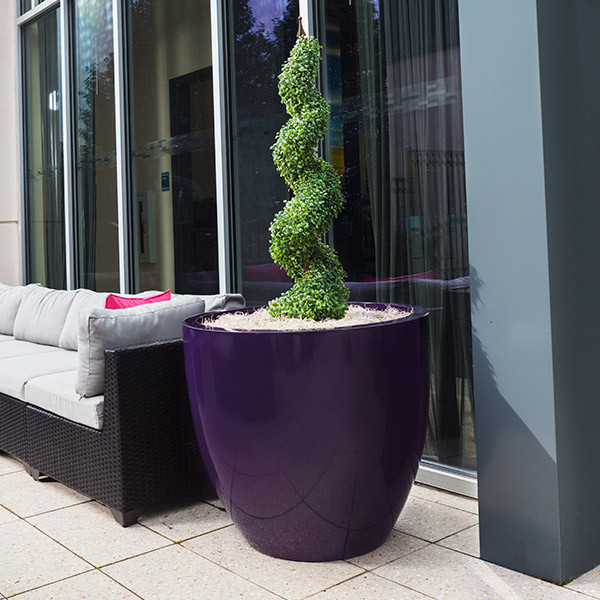
Wannsee Round Tree Planter
Best for: Palms, ficus, statement specimens, hotel entries, rooftops, and commercial landscapes.
A large round fiberglass tree planter for projects that need enough visual weight and root volume for real specimens without the handling burden of concrete.
View Wannsee Planter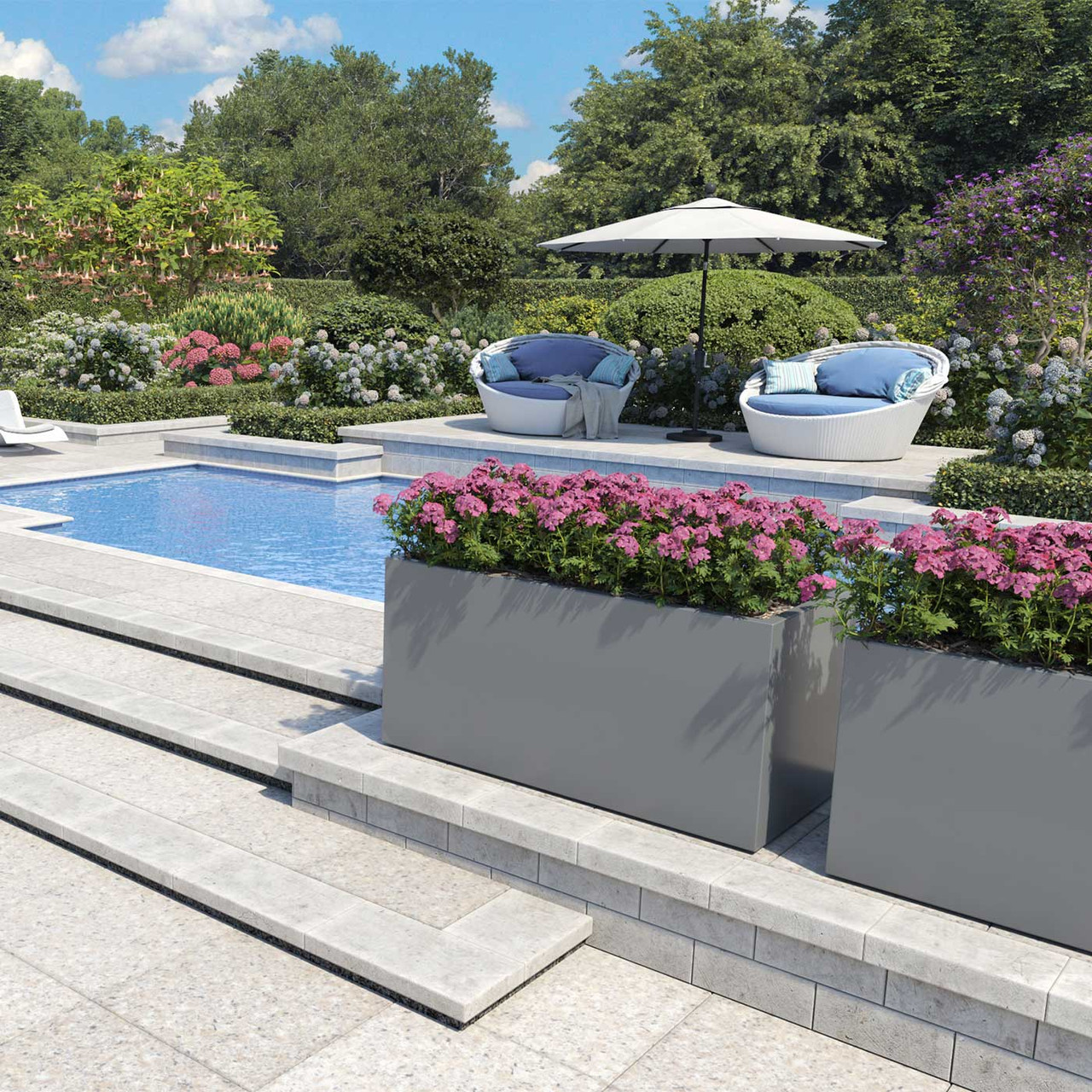
Brisbane Extra Large Planter Box
Best for: Large outdoor commercial installs, pool decks, patios, courtyards, and broad landscape applications.
An extra-large fiberglass planter box for commercial projects that need scale, clean lines, and a strong architectural presence.
View Brisbane Planter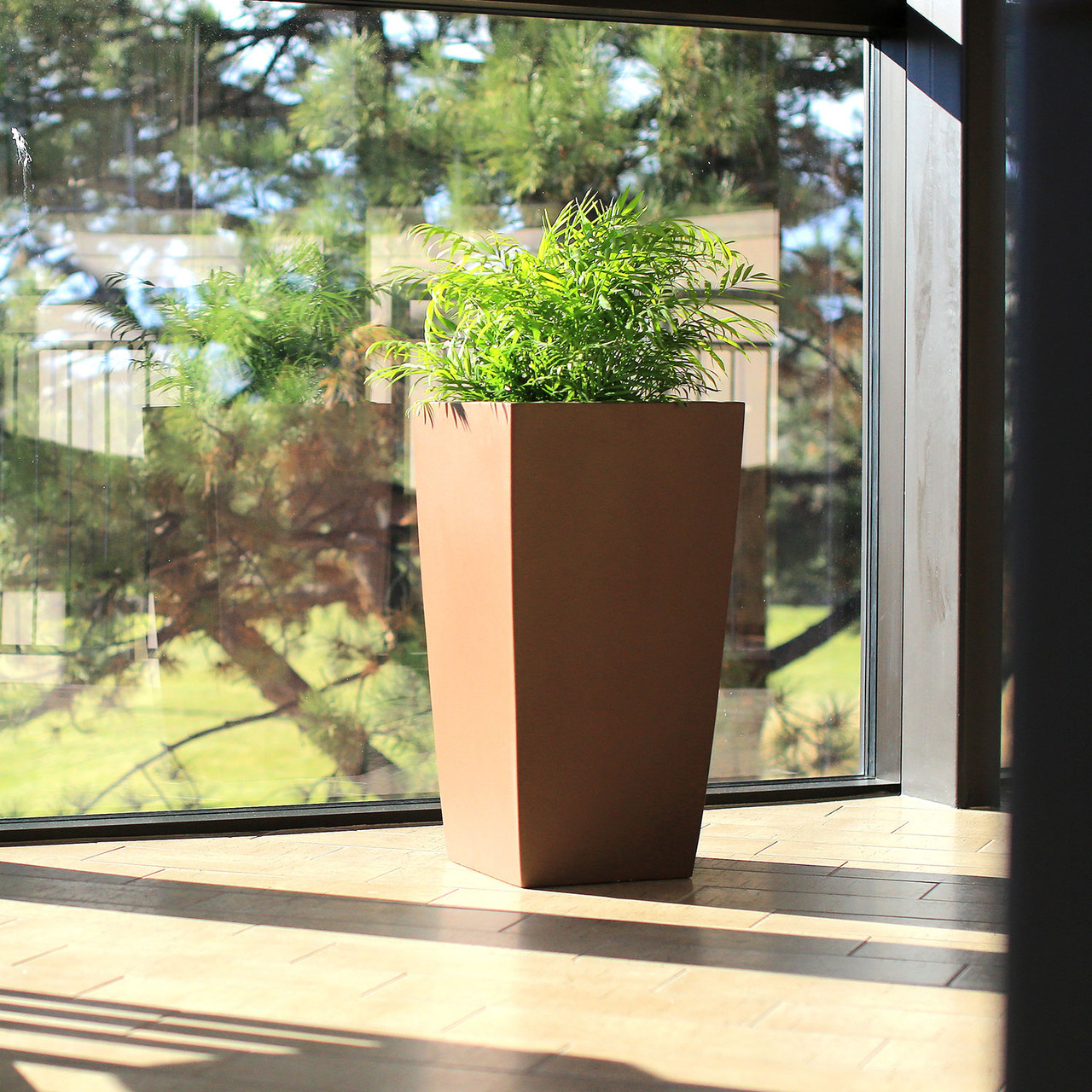
Toulan Tall Tapered Planter
Best for: Entries, vertical accents, hotel lobbies, office spaces, patios, and commercial entrances.
A tall tapered square planter that gives entries and commercial spaces vertical presence without feeling bulky or overbuilt.
View Toulan Planter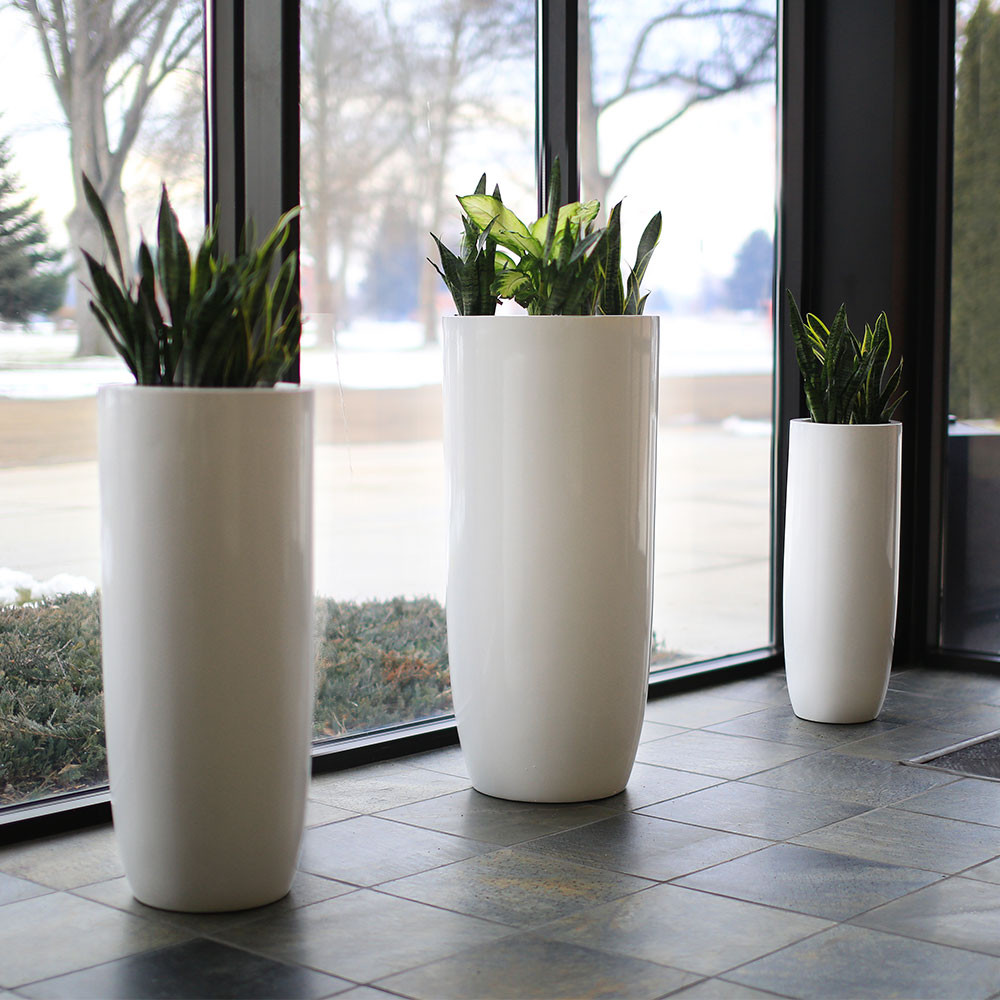
St. Tropez Tall Vase Planter
Best for: Lobbies, offices, hotels, restaurants, hospitality interiors, and polished entry spaces.
A tall vase-style fiberglass planter for commercial interiors and hospitality spaces where the planter needs to feel finished, decorative, and intentional.
View St. Tropez Planter
Amesbury Tall Narrow Planter Box
Best for: Privacy, dividers, office spaces, patios, balconies, and constrained commercial layouts.
A tall narrow fiberglass planter box for projects that need vertical greenery, space definition, or privacy without taking over the floor plan.
View Amesbury PlanterIf you already know the shape you need, you can also browse large planters, tall planters, privacy planters, and commercial planter boxes.
What to Send When Requesting a Commercial Planter Quote
The fastest way to get a useful quote is to send the project details up front.
Include in your quote request:
- Project type
- City and state
- Indoor or outdoor use
- Desired sizes
- Quantity
- Preferred shape
- Finish or color requirements
- Plant material, if known
- Delivery timeline
- Site constraints
- Whether the project needs trade, wholesale, or project pricing
When to Request a Project Quote
You do not need a finalized spec to request pricing. If you know the project type, rough quantity, preferred sizes, finish direction, and delivery location, we can usually help narrow the right planter formats and prepare a project quote.
Planning a commercial planter project and need custom trade pricing? Our commercial-grade fiberglass planters offer lightweight structural integrity, UV-stable finishes, and long-term durability for high-visibility spaces. Backed by a 3-year warranty and available in 20+ professional colors. Call us at (888) 381-9501 or reach out to our team for custom project quotes.
FAQ
How much do commercial planters cost?
Commercial planter costs vary by size, material, finish, quantity, freight, customization, and lead time. Small standard planters are usually the lowest-cost option. Large planters, long planter boxes, tree-scale containers, custom colors, and oversized commercial projects cost more because they require more material, packaging, freight space, and handling.
Why are commercial planters more expensive than retail pots?
Commercial planters usually need stronger construction, exterior-rated finishes, larger sizes, better consistency across multiple pieces, freight-safe packaging, and longer project life. They are built for real job sites, public use, weather exposure, and commercial design expectations.
What material is best for commercial planters?
The best material depends on the site. Fiberglass is often a strong choice for commercial projects because it is durable, lightweight compared with concrete, available in many finishes, and practical for large outdoor or indoor installations. Concrete, metal, fiberstone, and plastic can also work depending on the project requirements.
Are fiberglass planters a good choice for commercial projects?
Yes, fiberglass planters are often a good choice for commercial projects that need durability, lower weight, large sizes, and a polished finish. They are commonly used for hotels, restaurants, rooftops, offices, multifamily properties, patios, entries, and commercial outdoor spaces.
Do large planters cost more to ship?
Usually, yes. Large planters can be lightweight but still take up significant freight space. Shipping cost is affected by dimensions, quantity, packaging, destination, delivery method, and handling requirements.
Can I get trade or project pricing on commercial planters?
Many commercial projects qualify for project pricing depending on quantity, product type, timing, and account type. If you are buying for a hotel, restaurant, multifamily property, office, commercial campus, landscape project, or design specification, send the project details and ask for a quote.
What information do I need to request a commercial planter quote?
Send the project type, city and state, indoor or outdoor use, sizes, quantity, finish requirements, plant material, delivery timeline, and any site constraints. If available, include drawings, renderings, photos, or a rough layout.
How do I keep planter costs under control without choosing the wrong product?
Use standard sizes and finishes when possible. Confirm quantity early. Choose fiberglass when weight and freight matter. Use long planter boxes for long runs instead of many small pots. Match planter size to the plant material. Plan ahead so you are not forced into rush substitutions.