Indoor commercial planters are not just decorative pots. They are part of how an interior space looks, functions, and stays maintainable.
The right indoor planters can improve lobbies and reception areas, soften hard interior finishes, define seating and lounge zones, add privacy in open office layouts, support biophilic design, and make offices, hotels, restaurants, retail spaces, tenant areas, and shared interiors feel more intentional.
That matters because indoor commercial planters are viewed up close.
They sit beside finished floors, reception desks, furniture, elevator banks, corridors, dining areas, tenant spaces, and high-traffic common areas.
A strong indoor commercial planter program helps answer practical questions:
What planter scale fits the lobby, reception area, or interior space?
How will liners, water management, and floor protection be handled?
Which planters look professional up close?
Can planters divide space without permanent construction?
How will maintenance teams access the planting?
Can finishes and sizes be repeated across floors, buildings, or future phases?
This guide will help office property managers, corporate workplace teams, interior designers, architects, hospitality designers, hotel teams, restaurant designers, retail store designers, commercial real estate owners, facilities teams, contractors, landscape architects, plant maintenance companies, and tenant improvement teams choose indoor commercial planters.
Indoor commercial planters are judged at close range.
Guests, tenants, customers, employees, and visitors may walk right beside them, sit next to them, or view them from reception areas, waiting areas, dining spaces, elevator banks, and corridors.
That means finish quality matters.
The planter also has to work around finished interiors. It cannot be selected only for shape or color.
Indoor commercial planters need to account for:
Finished floors
Liners and water management
Cleaning crews
Furniture
Carts
Tenant and visitor traffic
Reception desks
Elevator banks
Maintenance access
Repeatability
The goal is not just to add a plant. The goal is to improve the interior while protecting the space and keeping the installation practical for the people who use and maintain it.
Where Indoor Commercial Planters Are Used
Office Lobbies
Office lobby planters help shape the first impression.
They can soften hard surfaces, frame reception areas, add scale near elevator banks, define seating zones, and make a commercial lobby feel more finished.
Large lobbies usually need planters with enough size and presence. Small residential pots can look temporary or underbuilt beside tall ceilings, large reception desks, broad flooring, and commercial furniture.
Corporate office planters can support work zones, collaboration areas, conference rooms, lounges, corridors, and divider runs.
They can help create softer boundaries in open office plans without adding permanent partitions.
Long planter boxes, tall narrow planters, low profile planters, cube planters, and modular planter boxes can all work depending on layout and privacy goals.
Hotels and Hospitality Interiors
Hotel and hospitality interiors need planters that look polished and consistent.
Planters may be used in lobbies, restaurants, lounges, corridors, event spaces, reception zones, and elevator areas.
Because guests see these planters up close, the finish, form, scale, and planting plan all matter.
Indoor planters can help restaurants and bars define dining areas, frame host stands, create lounge separation, soften entry moments, and make the space feel more complete.
They can also help separate seating zones without building permanent dividers.
Restaurant planters should be selected around guest flow, table spacing, cleaning routines, finish visibility, and maintenance access.
Retail Stores and Showrooms
Retail and showroom planters can guide movement, soften displays, frame entrances, define product zones, and support lounge or fitting areas.
The planter should work with the brand environment, merchandise, lighting, flooring, and customer path.
In retail, planters should add polish without becoming obstacles.
Multifamily Amenity Spaces
Multifamily interiors often include leasing offices, clubrooms, resident lounges, mailrooms, coworking rooms, fitness-adjacent areas, and shared corridors.
Planters can make these spaces feel more finished and consistent with the broader property.
They may also need to match outdoor courtyards, rooftop amenities, pool decks, and entry planters.
Healthcare and wellness interiors use planters in waiting rooms, reception areas, corridors, and shared spaces where the environment should feel calmer and more considered.
Claims should stay practical and design-focused.
Planters can soften interiors, add visual warmth, and help organize waiting areas, but they should not be framed as solving health, safety, air-quality, or compliance requirements.
Tenant Improvement Projects
Tenant improvement projects often need repeatable planter formats that can fit new layouts, phased work, and future changes.
Planters may be used to divide work zones, add reception polish, soften corridors, frame collaboration spaces, or create a more finished interior without permanent construction.
For TI work, delivery path, elevator access, finished floor protection, and schedule coordination matter.
Indoor Atriums and Courtyards
Indoor atriums and courtyards can support larger planters, tree-scale interiors, and statement planting.
These spaces often need planters with more visual weight because the scale is closer to a commercial exterior than a residential room.
Large round planters, cube planters, and tree planters can work well when the planting plan, root volume, floor protection, and maintenance approach are coordinated.
Choosing the Right Indoor Commercial Planter Format
The right indoor planter format depends on the space, visibility, plant material, floor protection, maintenance plan, and installation path.
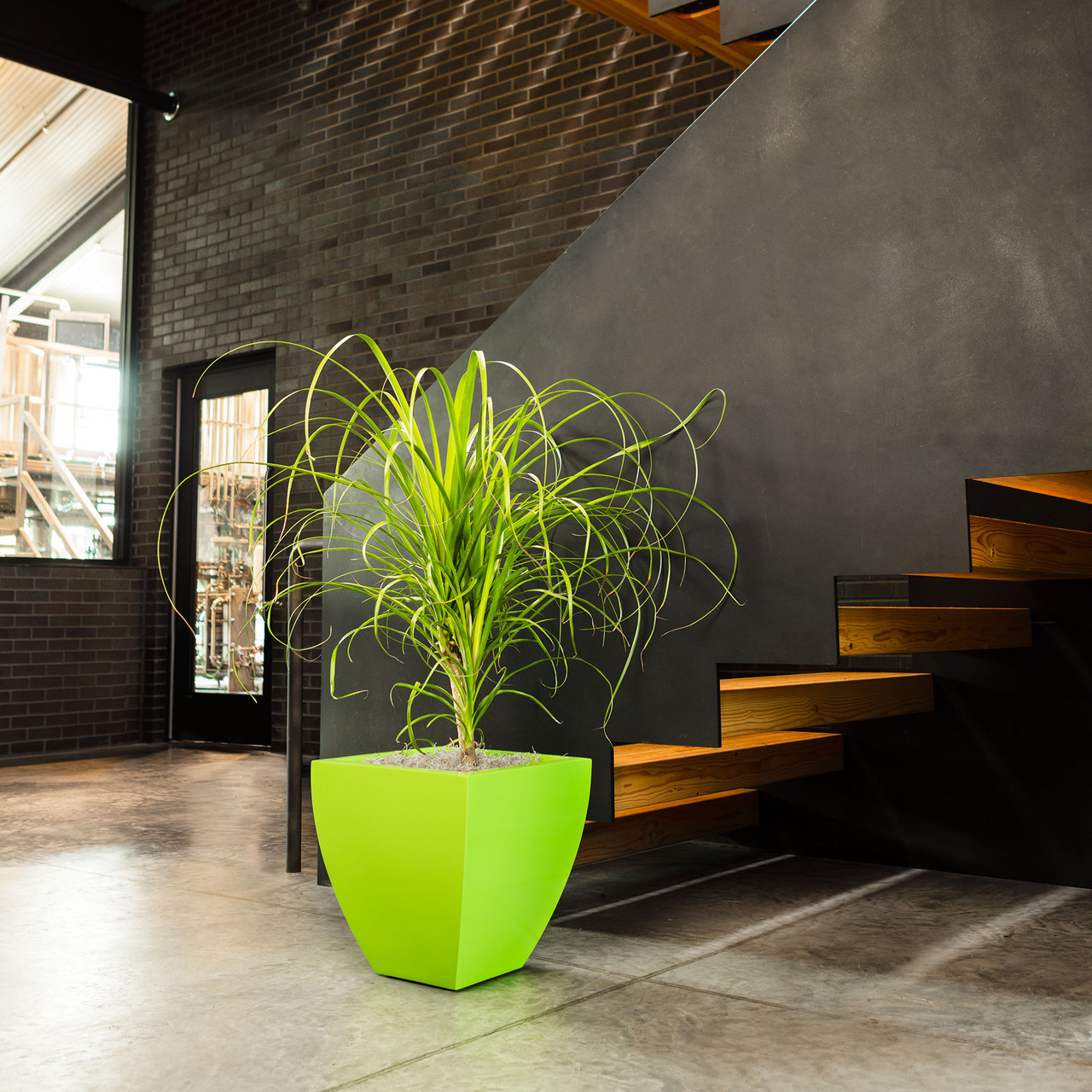
Tall Planters
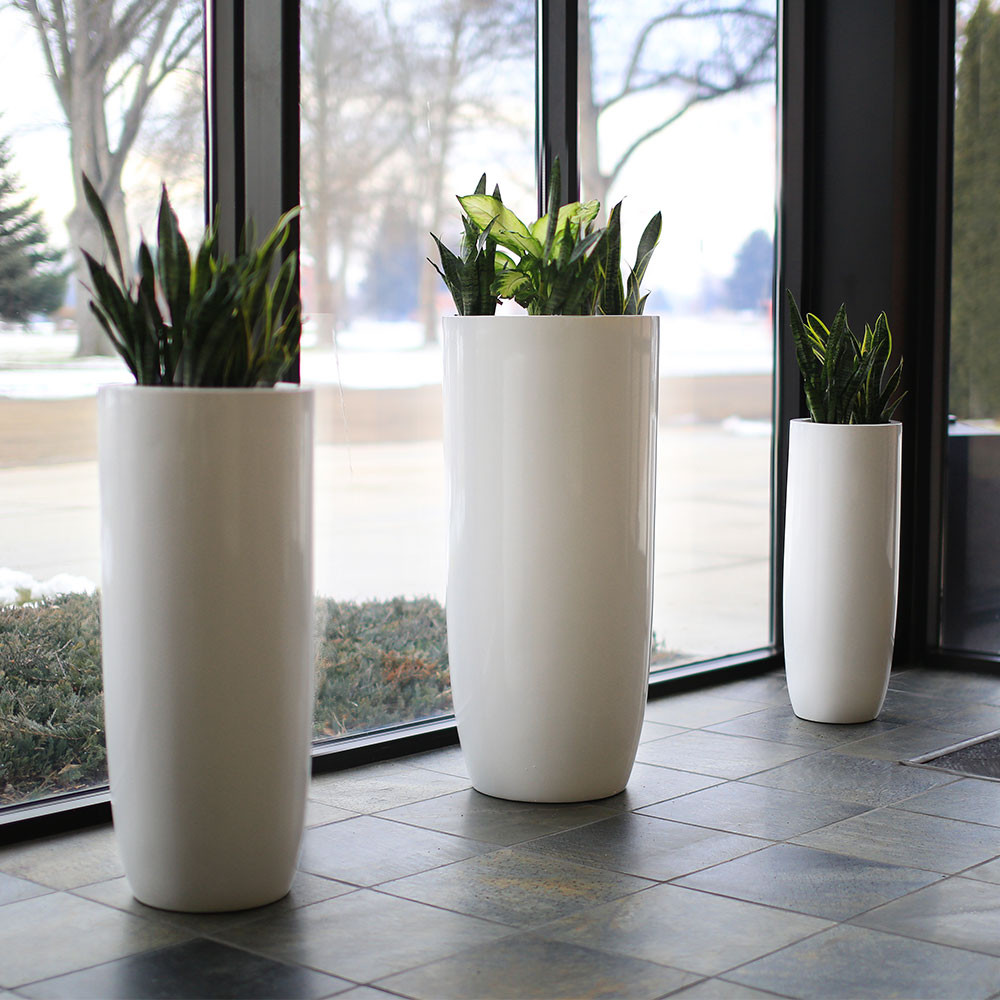
Tall planters work well in lobbies, reception areas, elevator banks, entry approaches, corridors, and vertical accent locations.
They add height without needing as much floor area as a large low planter.
Tall planters can also help frame doors, columns, reception desks, and interior transitions.
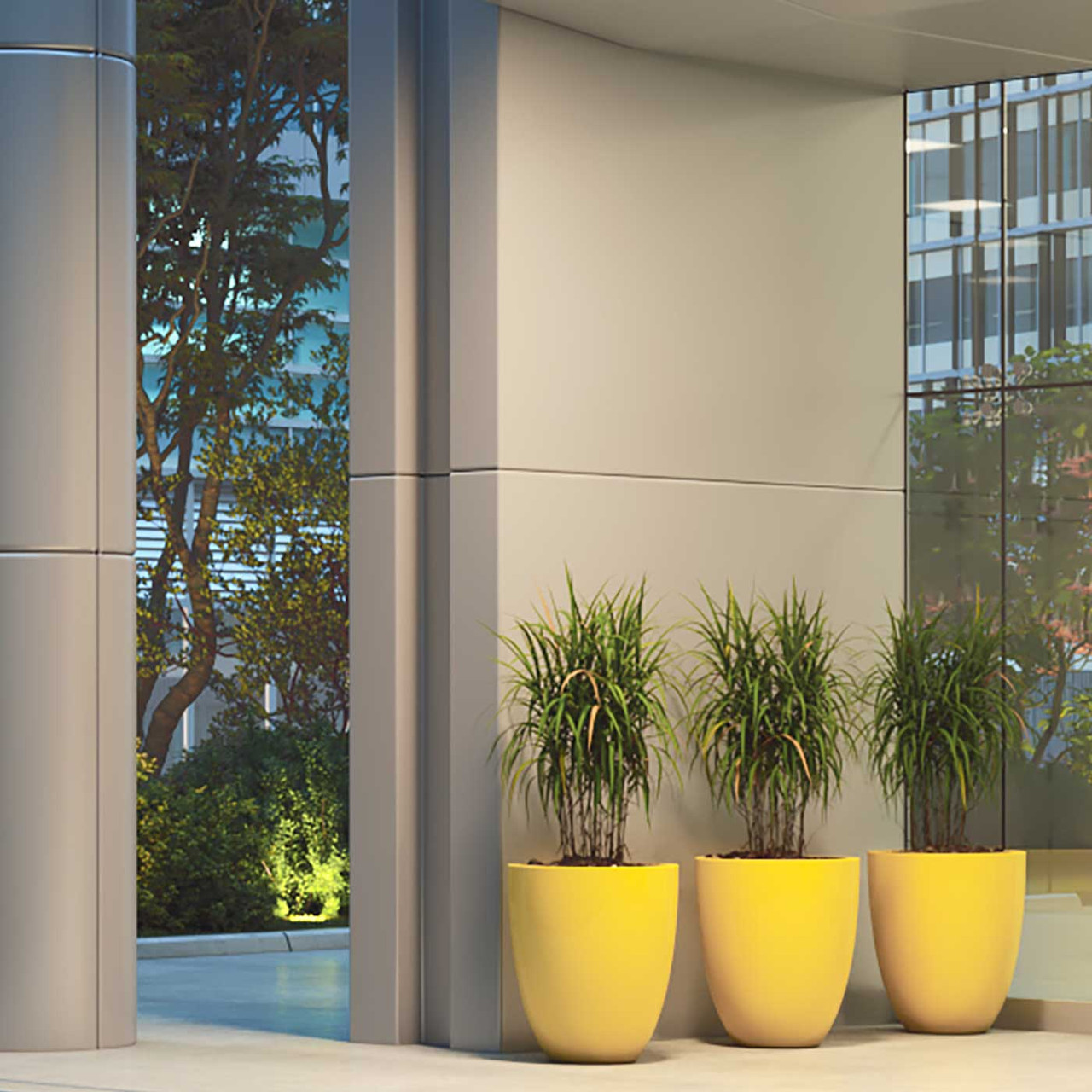
Decorative round planters are useful in close-up interiors.
They can work well in lounges, restaurants, hotels, reception areas, seating zones, and refined commercial spaces where the planter is part of the interior design.
The form should feel polished, but the planter still needs to be practical for maintenance and floor protection.
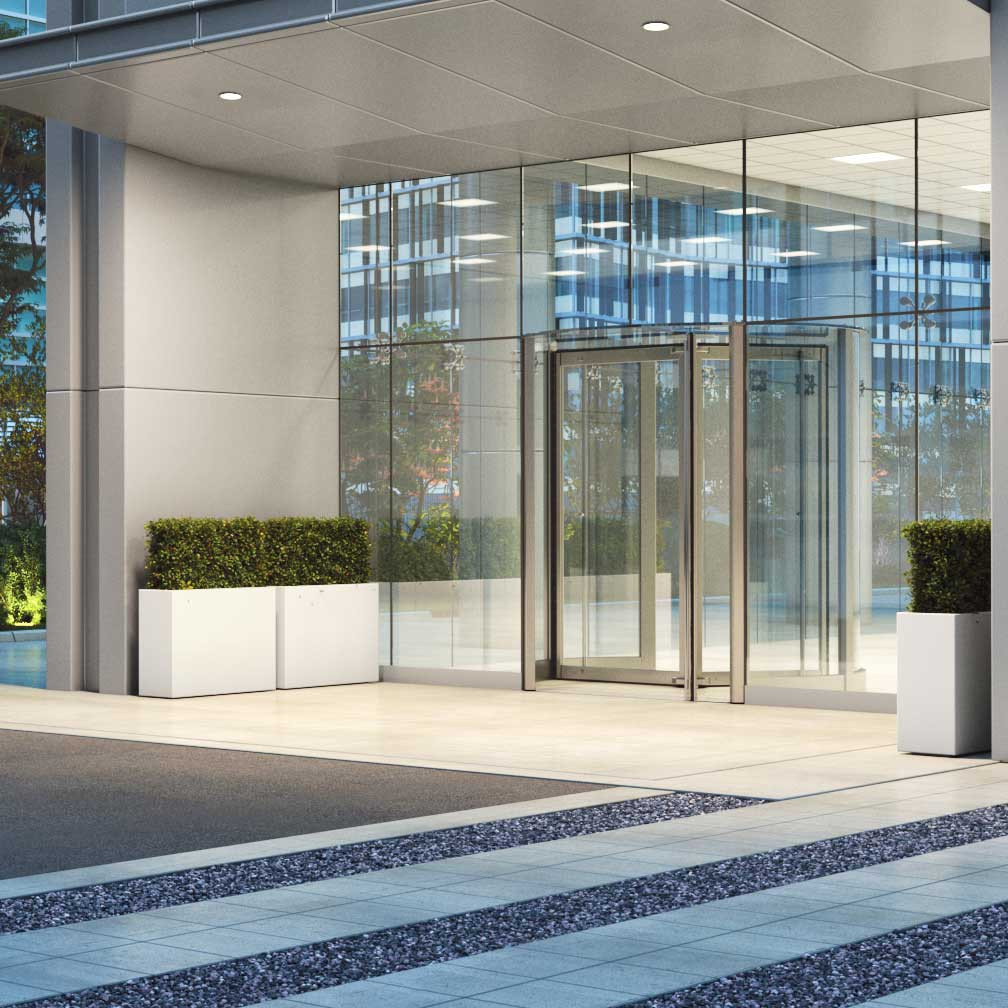
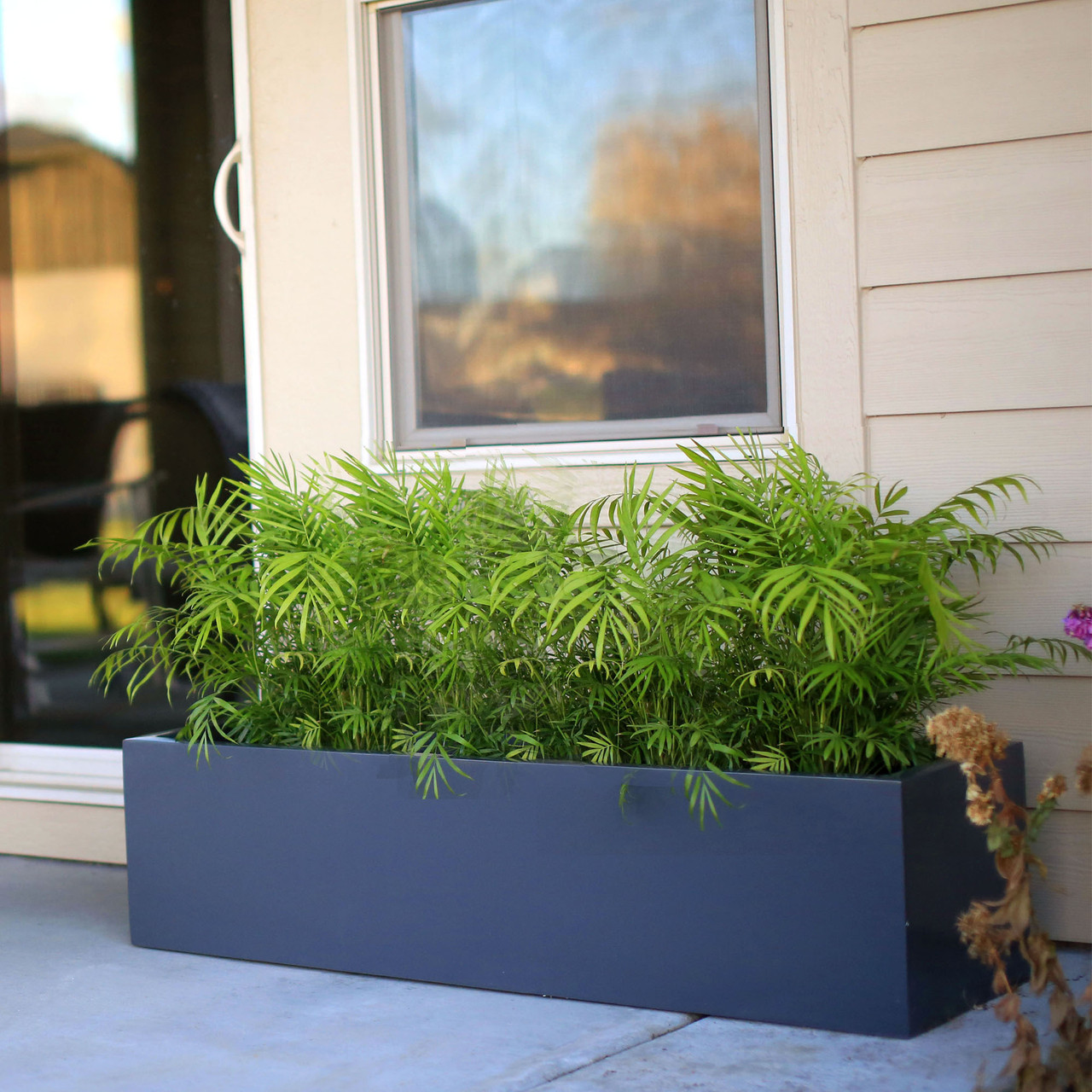
Long planter boxes are strong for dividers, corridors, seating edges, reception boundaries, and repeated interior runs.
They can define a space more cleanly than many small pots.
Long planter boxes are especially useful in offices, restaurants, hotels, retail spaces, and tenant interiors where the planter needs to organize movement or create a boundary.
Low profile planters create soft separation without blocking sightlines.
They are useful for reception edges, lounge zones, corridor transitions, seating areas, and hospitality interiors where visibility should remain open.
Low planters can help define space while keeping the interior light and easy to navigate.
Modular Planter Boxes
Modular planter boxes are useful for repeatable office, retail, restaurant, and tenant layouts.
They can support phased projects, future reconfigurations, multi-floor installations, and spaces where exact run lengths may vary.
Consistency is the main advantage.
Slim Planters
Slim planters work well in tight corridors, narrow reception areas, wall-adjacent interiors, rail-adjacent interiors, and compact divider runs.
They are useful when the project needs planting or privacy but cannot give up much floor depth.
Slim planters should still be selected with plant material, maintenance access, and stability in mind.
Floor Protection, Liners, and Water Management
Floor protection is one of the most important parts of indoor commercial planter planning.
Indoor planters sit on finished surfaces. That may include carpet, wood, stone, tile, polished concrete, lobby flooring, restaurant flooring, retail flooring, and tenant-improvement finishes.
Before ordering indoor commercial planters, consider:
Liners
Reservoirs
Saucers where appropriate
Interior floor protection
Irrigation coordination
Maintenance access
Finished flooring material
Cleaning routines
Avoiding uncontrolled water exposure
Drainage options can be selected at order and should be coordinated with the site, planting plan, and maintenance approach. For indoor leak-free environments, review our guide on plants that thrive without drainage holes.
The right water-management approach depends on the planter, plant material, irrigation method, maintenance team, flooring, and installation location.
This is especially important near reception desks, elevator banks, seating areas, retail displays, restaurant dining zones, corridors, and high-value interior finishes.
Indoor planters are useful when a commercial interior needs separation without permanent construction.
They can help divide:
Open office zones
Reception boundaries
Lounge areas
Restaurant dining spaces
Hotel lobby seating
Retail zones
Conference and collaboration areas
Tenant improvement layouts
The planter creates the boundary. The plant material completes the screen.
For a low separation, a low profile planter may be enough. For privacy, a long planter box or tall narrow planter with the right planting may work better.
Planter dividers can help organize the space, but they should not block circulation, doors, reception lines, elevator banks, or staff access.
Indoor commercial spaces are often larger than residential rooms.
That means indoor commercial planters need enough scale to hold visual presence.
A planter that looks large in a product photo may look small in a lobby, atrium, hotel lounge, or corporate reception area.
When choosing indoor commercial planter size, consider:
Lobby volume
Ceiling height
Doorways
Reception desk scale
Elevator bank size
Seating areas
Corridor width
Furniture layout
Guest, visitor, tenant, and staff movement
Cleaning access
Plant material and root volume
Sightlines
Path-of-travel planning as a practical consideration
The right planter improves the interior without making it harder to use.
Large lobbies may need larger planters or fewer properly scaled pieces. Narrow corridors may need slim or low profile formats. Open offices may need long divider runs. Restaurants may need planters that define dining without crowding tables.
Material choice affects appearance, weight, delivery, installation, durability, water management, maintenance, and future matching.
Fiberglass is often the practical default for indoor commercial planter programs because it can deliver a polished professional finish with less empty weight and more format flexibility than many heavier materials.
Fiberglass Planters
Fiberglass planters are strong for indoor commercial projects because they are:
Polished enough for professional interiors
Durable indoors and outdoors
Lighter than concrete when empty
Available in tall, round, square, long, low, large, and decorative formats
Flexible across many finish directions
Easier to receive and place than heavier materials
Easier to match across floors, buildings, or future phases
For offices, hotels, restaurants, retail spaces, multifamily amenity interiors, and tenant improvement projects, that consistency matters.
Concrete planters can make sense for permanent ground-level interiors where weight and installation are acceptable.
The tradeoffs are empty weight, delivery complexity, movement, upper-floor limitations, replacement complexity, and less flexibility for reconfiguration.
Metal and Aluminum Planters
Metal and aluminum planters can work in custom architectural interiors.
They may be useful when the project requires precise fabrication, specific profiles, or a modern metal finish. The tradeoffs can include higher cost, longer lead times, denting risk, and finish considerations.
Ceramic and Terracotta Planters
Ceramic and terracotta planters can work in smaller decorative interiors. They are less practical for high-traffic commercial interiors where breakage, inconsistent replacement, and close-up wear matter.
Wood Planters
Wood planters can add warmth to commercial interiors. They also require more maintenance and may stain, absorb moisture, or change appearance over time depending on construction, exposure, and upkeep.
Plastic and Resin Planters
Plastic and resin planters can work for budget or temporary use. For professional interiors, they may not provide the finish quality, scale, durability, or commercial presence expected in lobbies, offices, hotels, restaurants, retail spaces, or shared interiors.
Freight, Delivery, and Installation
Indoor commercial planter projects should be planned around the delivery path.
That is especially true in finished interiors, occupied buildings, multi-floor offices, hotels, restaurants, retail spaces, tenant improvement projects, and buildings with tight service access.
Before ordering, confirm:
Loading dock access
Elevator dimensions
Doorway widths
Service corridor access
Finished floor protection
Staging areas
Tenant improvement schedules
Occupied building constraints
Who receives the freight
Who places the planters
Multi-floor delivery needs
Lead time and future matching needs
Large planters and long planter boxes may be lightweight relative to concrete but still physically large. Dimensions matter as much as weight.
Choosing Residential-Looking Pots for Commercial Interiors
Commercial interiors need planters that match their scale and visibility. Small residential pots can make a lobby, reception area, restaurant, hotel, or office look underbuilt.
Forgetting Liners and Floor Protection
Indoor planters need water-management planning. Liners, reservoirs, saucers where appropriate, floor protection, and maintenance access should be considered before installation.
Using Too Many Small Pots
Many small pots can create clutter. Fewer properly scaled planters usually look more commercial and are easier to maintain.
Undersizing Planters for Large Lobbies
Large lobbies need planters with enough visual presence. If the planter is too small, the space can still feel empty or unfinished.
Blocking Circulation, Doors, Reception Lines, or Elevator Banks
Planters should improve the space, not create obstacles. Placement should account for guests, visitors, tenants, staff, carts, doors, reception queues, elevator banks, corridors, and cleaning access.
Choosing Divider Planters Without Plant Material Planning
The planter alone does not create the full divider. Choose the planter and plant material together so the screen has the right height, density, root volume, and maintenance approach.
Ignoring Maintenance Access
Plant maintenance needs space. Make sure teams can water, prune, clean, replace plant material, and move through the area without disrupting the interior.
Ignoring Delivery Path and Elevator Access
Planters have to reach the installation location. Confirm loading docks, elevators, doorways, service corridors, stairways, finished floors, and staging areas before ordering.
Recommended PPM Indoor Commercial Planters
St. Tropez Tall Vase Fiberglass Planter
Best for: Lobbies, reception areas, hotels, restaurants, and polished commercial interiors.
The vase-style form adds refined vertical shape without looking heavy.
Planning indoor commercial planters for an office, lobby, hotel, restaurant, retail space, or tenant project? Our indoor fiberglass planters and commercial planter collections are engineered to protect sensitive flooring while elevating interior aesthetics. Backed by a 3-year warranty and available in 20+ professional finishes. Call us at (888) 381-9501 or reach out to our team for trade quotes and custom lead times.
What planters are best for indoor commercial spaces?
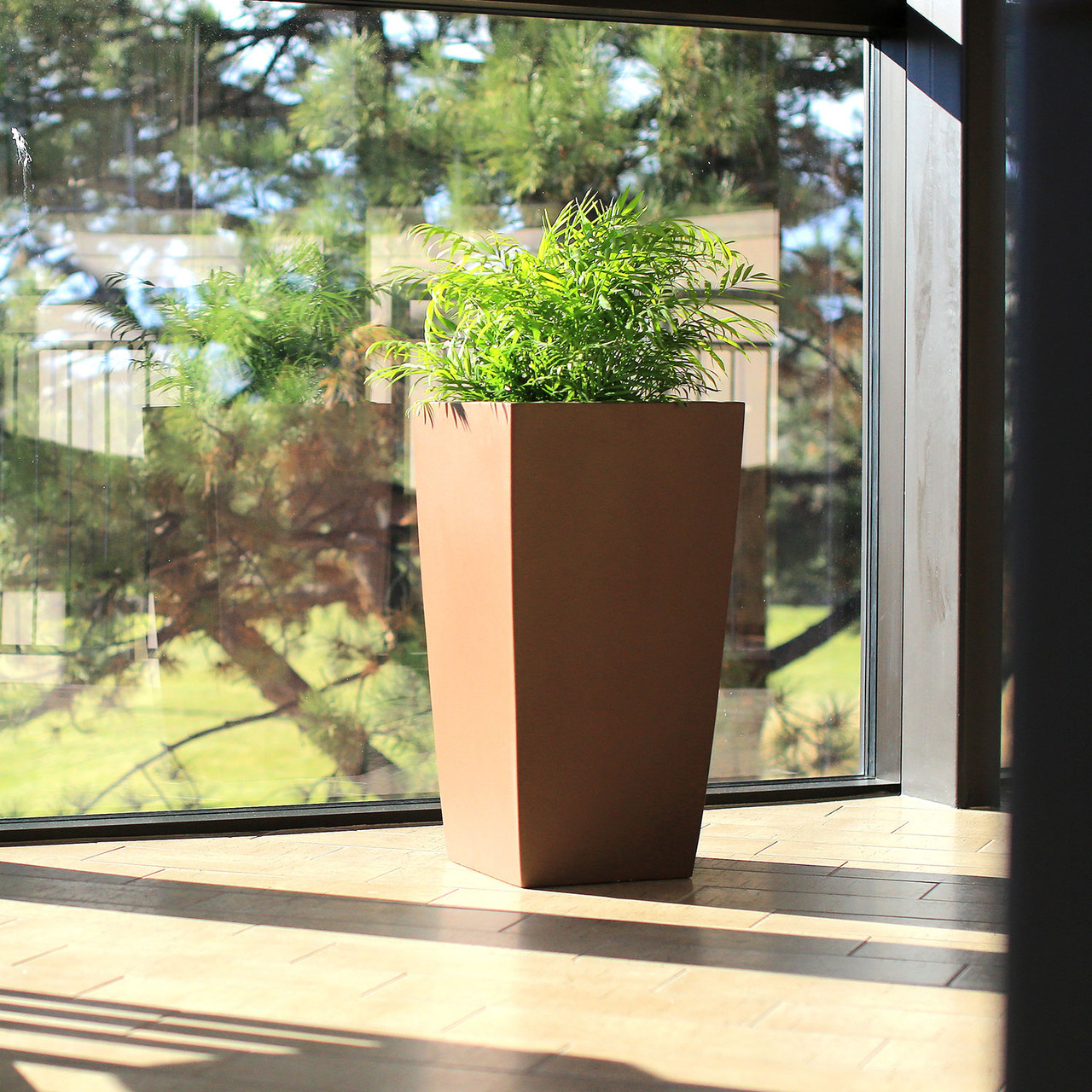
The best indoor commercial planters depend on the space, scale, visibility, floor protection needs, and planting plan. Tall planters work well for lobbies and vertical accents. Decorative round planters are strong for close-up interiors. Long planter boxes work well as dividers and reception boundaries. Cube and square planters fit modern structured interiors.
What planters work best for office lobbies?
Office lobby planters should match the scale and finish quality of the lobby. Tall planters, decorative round planters, cube planters, large round planters, and long planter boxes can all work depending on ceiling height, reception layout, elevator banks, seating areas, and circulation.
Can planters be used as indoor dividers?
Yes. Planters can be used as indoor dividers in offices, hotels, restaurants, retail spaces, tenant areas, and lobbies. For divider planters, choose the planter and plant material together so the divider has the right height, density, root volume, and maintenance approach.
What material is best for indoor commercial planters?
Fiberglass is often the practical default for indoor commercial planters because it is polished, durable, lighter than concrete when empty, available in many shapes and finishes, and easier to match across floors, buildings, or future phases. Concrete, metal, ceramic, wood, plastic, and resin can also work in certain settings, but each comes with tradeoffs around weight, finish, durability, maintenance, or replacement consistency.
Are fiberglass planters good for indoor commercial spaces?
Yes. Commercial-grade fiberglass planters are a strong option for many indoor commercial spaces because they can look polished in professional interiors, support many shapes and sizes, and reduce empty weight compared with concrete. They are especially useful when a project needs coordinated planters across lobbies, offices, hotels, restaurants, retail interiors, tenant spaces, and future phases.
Do indoor commercial planters need liners?
Indoor commercial planters often need liners or other water-management solutions to help protect finished floors and interior surfaces. The right approach depends on the planter, plant material, irrigation method, maintenance plan, flooring, and installation location.
Do indoor commercial planters need drainage holes?
Indoor commercial planters need drainage and water-management planning, but the right approach depends on the site and planting plan. Drainage options can be selected at order and should be coordinated with the site, planting plan, and maintenance approach.
What plants work best in indoor commercial planters?
The best plants for indoor commercial planters depend on light, maintenance, irrigation, planter size, desired privacy, and interior conditions. For windowless interior spaces, explore our recommendations for plants for an office with no windows.
What should I check before ordering indoor commercial planters?
Before ordering, confirm the space type, planter locations, sizes, quantities, finish direction, planting plan, liner or drainage needs, floor protection requirements, delivery path, elevator access, installation timing, and whether future reorders need to match.