Hotel Planters Buying Guide
How to choose hotel planters for entries, lobbies, patios, rooftops, pool decks, courtyards, restaurants, and hospitality spaces.
Hotel planters are not just decoration.
They are part of the guest experience.
The right planters can frame the entrance, soften the lobby, define a patio, divide a rooftop lounge, organize a pool deck, add privacy to outdoor dining, and make a hotel feel more maintained and intentional.
That matters because hotel guests judge the property from the first arrival moment through every shared space they use.
A strong hotel planter program helps answer practical questions:
- What should guests see when they arrive?
- How should the entry, lobby, restaurant, pool deck, rooftop, and courtyard feel connected?
- Where does the property need privacy, softness, or scale?
- Which planters can handle daily hospitality traffic?
- How will finishes stay consistent across multiple spaces or future properties?
- Can the planters be received, staged, installed, maintained, and reordered without creating friction?
This guide will help hotel owners, hospitality designers, procurement teams, property managers, landscape architects, contractors, and F&B teams choose hotel planters for entries, lobbies, patios, rooftops, pool decks, courtyards, restaurants, valet zones, and amenity spaces.
If you already know the general direction, start with commercial planters, outdoor planters, indoor planters, large planters, or porch and entry planters.
Why Hotel Planters Are Different
Hotel planters have to look polished and handle daily use.
That combination is what makes hospitality planters different from residential decor.
A planter in a hotel entry, lobby, rooftop, or pool deck may be seen by hundreds or thousands of guests. It may sit near luggage carts, valet traffic, cleaning crews, dining furniture, pool splash, seasonal planting changes, and constant close-up visibility.
Hotel planters need to support:
- First impressions
- Guest visibility
- Durability
- Finish quality
- Daily traffic
- Cleaning routines
- Seasonal refreshes
- Multi-area consistency
- Repeatability for multiple properties
- Freight and installation coordination
The planter does not need to be complicated.
It needs to look intentional, match the space, and survive the environment.
That is why hotel planter selection should start with the guest journey and the operating conditions, not just a product photo.
Where Hotel Planters Are Used
Hotel Entrances and Valet Zones
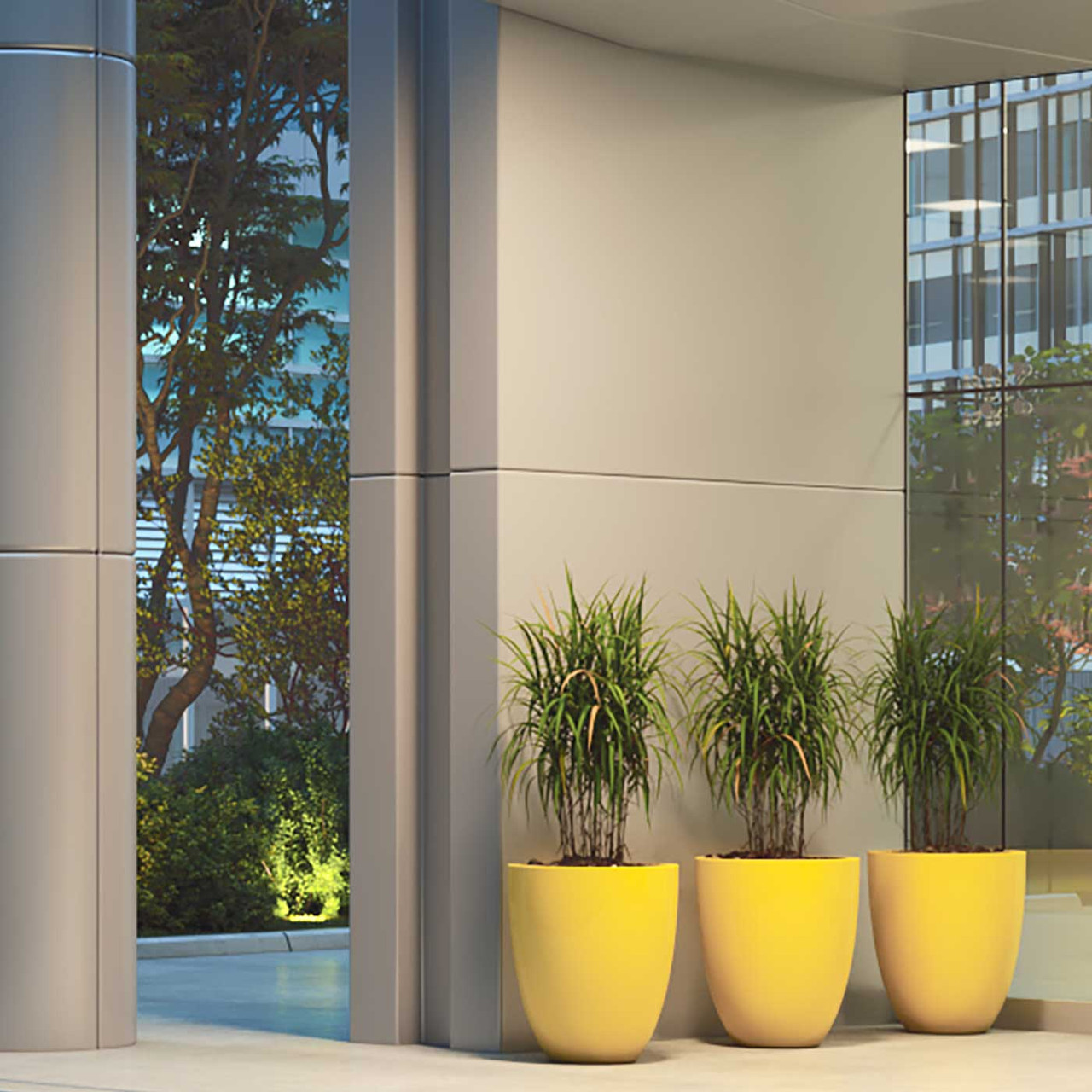
Hotel entrance planters shape the arrival experience.
They may frame the front doors, mark the valet area, soften the transition from driveway to lobby, or make a large facade feel more welcoming.
Scale matters here. Small planters can look temporary next to a hotel entrance, especially near tall doors, columns, porte-cocheres, signage, and wide paved areas.
Tall planters, large round planters, cubes, and statement tree planters often work well because they give the entry enough visual weight.
The placement also needs to respect guest movement. Planters should guide people toward the entrance, not block luggage carts, valet circulation, wheelchairs, strollers, or the main path of travel.
For deeper entry planning, see the Entry Planters for Commercial Buildings.
Hotel Lobbies
Hotel lobby planters need to look good up close.
Guests may pass them at reception, near elevator banks, beside seating areas, or along the transition from exterior entry to interior lobby.
In a lobby, finish quality is especially important. The planter is not just viewed from a distance. It is part of the interior environment, alongside furniture, lighting, flooring, millwork, and art.
Lobby planters also need practical planning around liners, floor protection, cleaning access, and mobility for events or seasonal changes.
Tall vase planters, decorative round planters, cube planters, and large statement planters can all work depending on the lobby scale and design language.
For more interior use cases, see the Indoor Commercial Planters Buying Guide.
Restaurants and Bars
Hotel restaurants use planters to support both design and operations.
Planters can frame a host stand, define a dining zone, soften a bar area, create privacy between tables, or separate outdoor dining from walkways and property traffic.
For hotel F&B spaces, the planter needs to feel guest-ready from every angle. Diners may sit beside it for an hour or more, so the finish, planting, and scale all matter.
Long planter boxes, privacy planters, decorative round planters, low profile planters, and tall accents are common formats for restaurant and bar spaces.
For restaurant-specific planning, see the Restaurant Patio Planters Buying Guide.
Rooftop Terraces
Hotel rooftop planters need extra planning because the space is elevated, exposed, and often access-constrained.
They may define lounge zones, add privacy from neighboring buildings, frame views, soften hard surfaces, or organize rooftop dining areas.
For commercial rooftops, balconies, terraces, and elevated decks, final placement and load approval should come from the structural engineer of record.
The full planted system matters. That includes the planter shell, soil, water, drainage material, liner or reservoir system, and plant material.
Fiberglass is often useful on hotel rooftops because it gives the project large-format planter options with lower empty weight than concrete.
For more rooftop-specific planning, see the Rooftop Planters Buying Guide.
Pool Decks
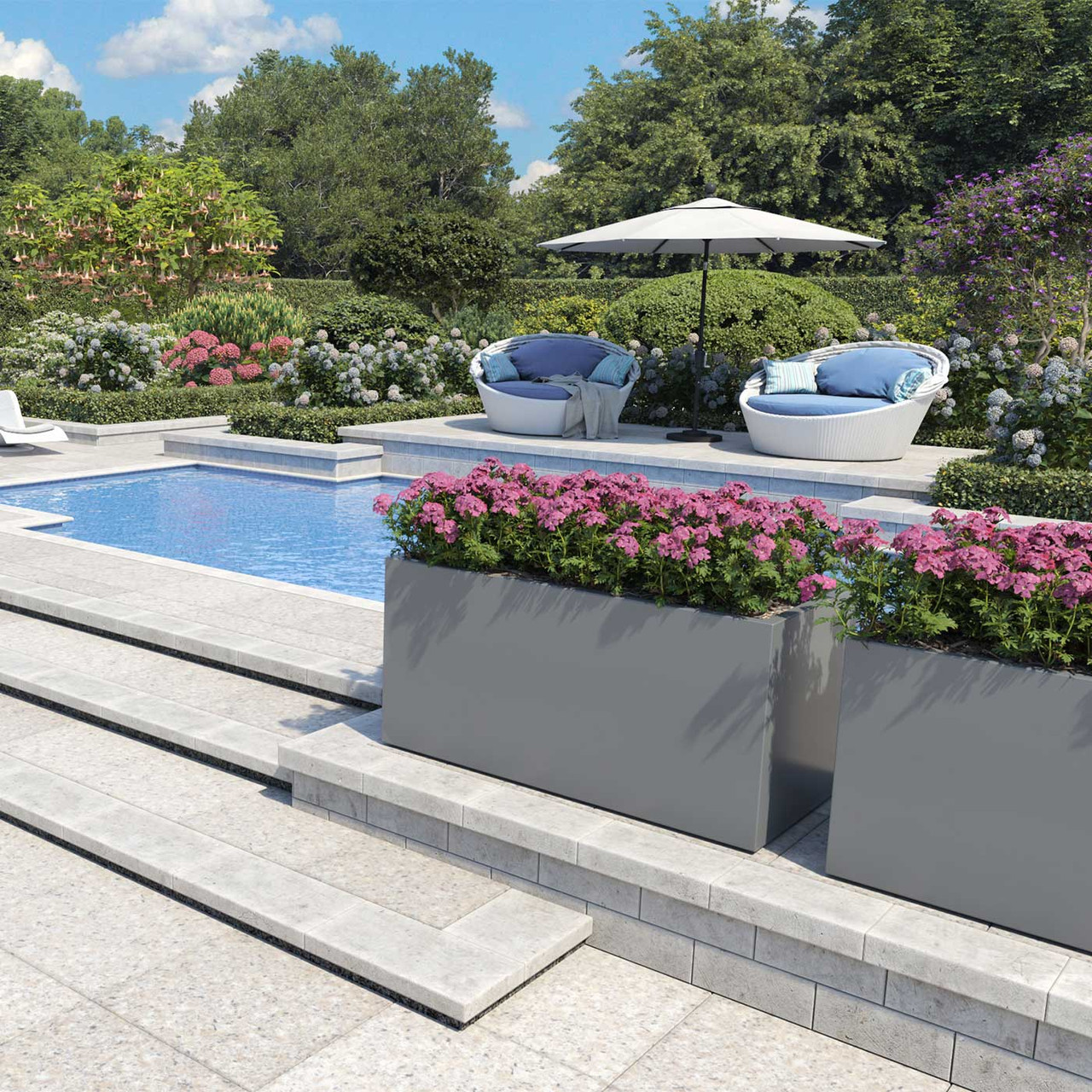
Hotel pool planters help turn a paved pool area into a more complete hospitality environment.
They can define lounge zones, frame cabanas, soften paving, add privacy, separate dining from pool traffic, and create a more resort-style feel.
Pool deck planters need to account for sun exposure, splash, foot traffic, lounge furniture, cleaning routines, and clear walking paths.
Low profile planter boxes can define edges without blocking sightlines. Large planters and tree planters can add stronger resort scale. Privacy planters can help separate cabanas, dining areas, and lounge zones.
For a dedicated pool use case, see the Pool Deck Planters Buying Guide.
Courtyards
Hotel courtyards often need planters that create a sense of place.
Planters may define seating areas, soften hardscape, create outdoor rooms, add shade planting, or make the courtyard feel more finished from guest rooms above.
Courtyards can usually handle larger formats than narrow walkways or balconies, but access still matters. Large planters may need to fit through gates, corridors, service paths, elevators, or staged construction zones.
Round planters, cubes, large rectangular planter boxes, tree planters, and sculptural forms can all work well in hotel courtyards.
Event Spaces
Hotel event spaces need flexibility.
Planters may be used to frame ceremonies, define cocktail areas, divide lounges, soften temporary layouts, or create a more polished event backdrop.
The best event planters are substantial enough to look intentional, but practical enough to move or stage when the space changes.
Finish consistency matters here because planters are often photographed during weddings, corporate events, and hospitality activations.
Walkways and Arrival Paths
Hotel walkways need rhythm and clarity.
Planters can guide guests from parking, valet, sidewalk, pool deck, courtyard, or restaurant areas toward the next destination.
Long runs should feel planned. A few properly scaled planters usually look more commercial and architectural than many small unmatched pots.
For walkways, planter boxes and repeated tall or square planters can create a cleaner visual line.
Balcony and Terrace Areas
Balcony and terrace planters need careful sizing.
Depth may be limited, and the space still needs to support guest movement, furniture, cleaning access, wind exposure, and drainage planning.
Slim modular planter boxes, tall narrow planters, and low profile planters can work well where the layout is tight.
For elevated balconies and terraces, final placement and load approval should come from the structural engineer of record.
Mixed-Use Hospitality Properties
Mixed-use hospitality properties may include hotel entries, restaurants, residential amenities, retail edges, rooftop decks, office lobbies, and shared courtyards.
In these projects, planters help create consistency across different uses.
The goal is not to use the same planter everywhere. The goal is to build a coordinated system of shapes, finishes, and scales that feels connected across the property.
Choosing the Right Hotel Planter Format
The right hotel planter format depends on the space, the guest experience, the plant material, and the installation plan.
Tall Entry Planters
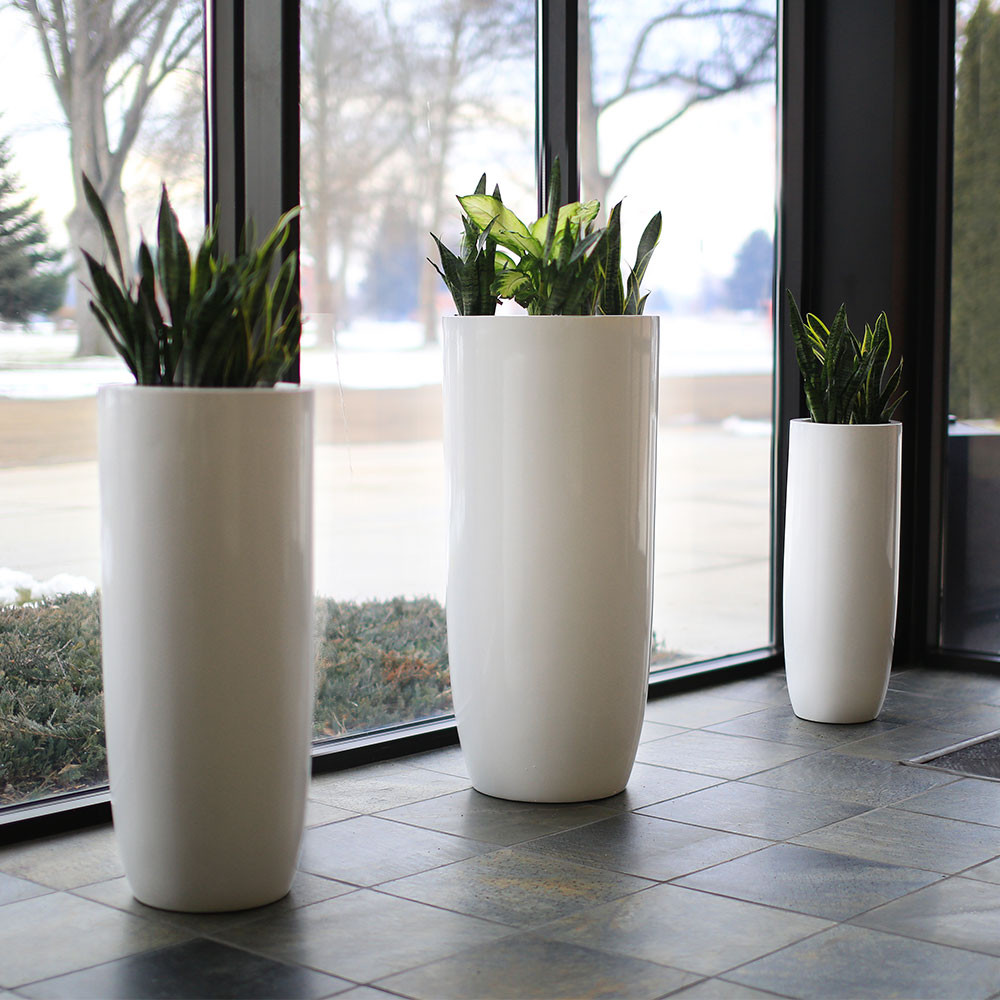
Tall planters work well at hotel entries, valet zones, lobby approaches, restaurant fronts, and column-adjacent spaces.
They add vertical presence without requiring as much floor area as a very wide planter.
Tall planters are especially useful when the building has height, strong vertical lines, or doors that need to be framed.
See tall planters for more format options.
Large Round Planters
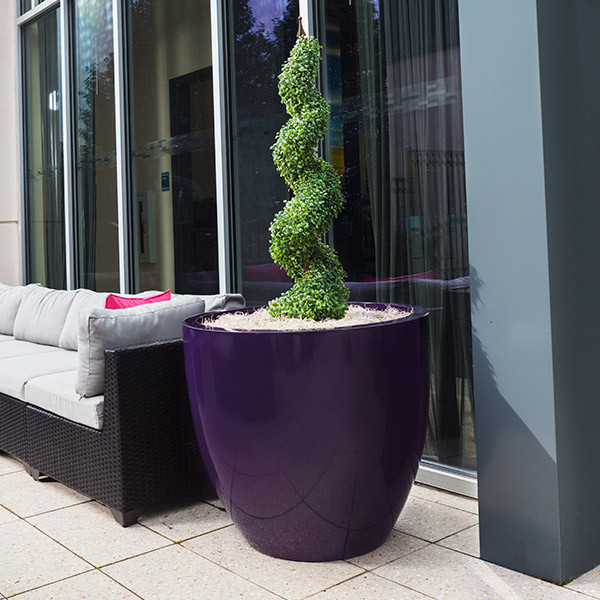
Large round planters are strong for hotel entries, plazas, courtyards, pool decks, and rooftop focal points.
They soften hard corners and create a more welcoming shape than a strict rectangular box.
Round planters also work well for specimen plantings, palms, ficus, olive trees, and other statement plants when the size and root volume are appropriate.
See round planters for related options.
Cube and Square Planters
Cube and square planters work well in modern hotel environments.
They fit symmetrical layouts, tree plantings, entry pairs, courtyard grids, and architectural spaces where clean geometry matters.
Square planters can feel substantial without looking decorative or overly ornate.
See square planters for more options.
Long Rectangular Planter Boxes
Long rectangular planter boxes are useful when the hotel needs to define a line.
They can separate restaurant seating, create rooftop privacy runs, organize walkways, define pool zones, or guide guests through courtyards and arrival paths.
Long planter boxes usually create a cleaner commercial result than many small pots lined up together.
See planter boxes for related formats.
Low Profile Planters
Low profile planters work well when the hotel needs separation without blocking views.
They can define pool deck edges, walkway boundaries, patio zones, lounge areas, and rooftop seating without making the space feel closed off.
Low planters are especially helpful where visibility matters for staff, guests, pool attendants, or event teams.
Privacy Planters
Privacy planters help hotel spaces feel more comfortable.
They can screen cabanas, separate restaurant tables, divide rooftop lounges, create more intimate courtyard areas, and buffer guests from sidewalks, parking, neighboring buildings, or service paths.
The planter provides the structure. The plant material completes the screen.
For deeper privacy planning, see the Privacy Planters Buying Guide or browse privacy planters.
Decorative Round Planters
Decorative round planters can work well where guests see the planter up close.
They are useful in lobbies, restaurants, bars, entry corners, lounge areas, and hospitality interiors where the form should feel more refined than purely architectural.
Decorative shapes should still be selected for scale, finish, and maintenance. In hotels, even decorative planters need to perform.
Entry, Lobby, Patio, Pool, and Rooftop Use Cases
Hotel planter planning is easier when each area is treated as part of the guest journey.
Entry Planters for Arrival Impact
The entry is the first impression.
Entry planters should match the scale of the building, frame the approach, and make the arrival feel intentional.
Pairs work well for doors and columns. Larger single planters can work in plazas, wide entries, or valet zones.
The main risk is undersizing. A small planter beside a large hotel entrance can make the property feel less finished.
Lobby Planters for Interior Polish
Lobby planters should support the interior design.
They need the right finish, shape, and scale for the furniture, flooring, reception area, elevator banks, and circulation paths.
They also need liners or floor protection when appropriate. Interior planters should be planned with maintenance access in mind.
For interior commercial use cases, see the Indoor Commercial Planters Buying Guide.
Restaurant Patio Planters for F&B Spaces
Hotel restaurant planters need to support the dining layout.
They may define outdoor dining, create privacy, frame the entry, guide guests to the host stand, or separate restaurant seating from hotel circulation.
The planter should help the restaurant feel like a deliberate hospitality space, not a leftover area beside the building.
Pool Deck Planters for Resort-Style Zoning
Pool deck planters can make a hotel pool area feel more resort-like.
They help define cabanas, lounges, walkways, dining zones, and quieter seating areas.
Planter height matters here. Too low may not create enough separation. Too tall may block views or make the area feel crowded.
Rooftop Planters for Amenity Spaces
Rooftop hotel planters need to balance visual impact with practical constraints.
They may create privacy, divide lounges, soften rooftop hardscape, support tree-scale planting, or organize a restaurant terrace.
Wind, filled weight, access, drainage, and maintenance all need to be considered early.
Privacy Planters for Cabanas, Lounges, and Dining
Hotel guests often want separation without feeling boxed in.
Privacy planters can create softer divisions between cabanas, pool lounges, dining areas, rooftop seating, and courtyard zones.
The best privacy planter is not always the tallest planter. A well-sized planter with the right plant material can create a better screen than a tall planter with the wrong planting plan.
Material Choice for Hotel Planters
Material choice affects appearance, weight, freight, installation, durability, maintenance, and future matching.
Fiberglass is often the practical default for hotel planter programs because it can deliver a polished commercial look without the empty weight of concrete.
Fiberglass Planters
Fiberglass planters are strong for hotel projects because they are:
- Polished enough for hospitality spaces
- Lighter than concrete when empty
- Durable indoors and outdoors
- Available in tall, round, square, long, large, and decorative formats
- Flexible across many finish directions
- Easier to receive and place than heavier materials
- Easier to match across multiple areas or future locations
For hotel projects that need repeated planters across entries, lobbies, patios, rooftops, pool decks, and courtyards, that consistency matters.
See fiberglass planters or the Fiberglass vs. Concrete Planters Buying Guide for a deeper material comparison.
Concrete Planters
Concrete planters can make sense for permanent ground-level installations where weight is acceptable and the design specifically calls for real concrete.
The tradeoffs are freight, receiving, installation, movement, freeze-thaw exposure, and replacement complexity.
For many hotel projects, concrete can make the planter itself harder to work with before soil or plant material is added.
Metal and Aluminum Planters
Metal or aluminum planters can work for custom architectural hotel specs.
They may be useful when the project requires precise fabrication, specific profiles, or a modern metal finish.
The tradeoffs can include higher cost, longer lead times, heat exposure, denting risk, and finish considerations depending on the project.
Ceramic and Terracotta Planters
Ceramic and terracotta planters can be attractive in smaller decorative hospitality settings.
They are less ideal for high-traffic commercial hotel environments where breakage, weather exposure, and replacement consistency matter.
Wood Planters
Wood can bring warmth to patios, pool decks, and hospitality spaces.
It also requires more maintenance and may weather, rot, stain, or change appearance over time depending on exposure and construction.
Plastic and Resin Planters
Plastic and resin planters can work for budget or temporary use.
For high-visibility hotel environments, they may not provide the finish quality, weight, scale, or durability expected in commercial hospitality design.
Size, Scale, and Placement
Hotel planters should be sized to the space, not just the plant.
A planter that looks large in a product photo may look undersized at a hotel entrance, pool deck, rooftop terrace, or wide courtyard.
When choosing size, consider:
- Building scale
- Door height
- Lobby volume
- Pool deck size
- Rooftop exposure
- Patio depth
- Walkway widths
- Guest flow
- Path-of-travel planning
- Luggage carts and valet movement
- Maintenance and cleaning access
- Plant material and root volume
The goal is to create enough visual presence without blocking movement.
At entries, paired planters can create symmetry. In lobbies, a single statement planter may work better than several smaller pieces. On pool decks and rooftops, longer runs can define zones more cleanly than scattered pots.
ADA path of travel, safety clearances, and local code requirements should be confirmed with the property team, the architect, and the local jurisdiction. Planters are part of the layout solution, not a substitute for compliance review.
For project sizing strategy, see the Commercial Planter Sizing Guide.
Durability, Maintenance, and Replacement
Hotel planters live in working environments.
They need to handle more than normal decorative use.
Plan for:
- Cleaning crews
- Luggage carts
- Chairs and tables
- Pool splash
- Sun exposure
- Rain and freeze-thaw exposure outdoors
- Seasonal planting changes
- Finish wear
- Reorders and future matching
- Multi-property consistency
This is one reason finish consistency matters.
A hotel may need planters across several areas now, then more units for a renovation, replacement, expansion, or second property later. Choosing a commercial planter line with repeatable shapes and finishes makes that easier.
Drainage, Liners, and Indoor Protection
Drainage and water management should be planned before ordering.
Outdoor hotel planters may need drainage options, risers, liners, reservoirs, irrigation coordination, and maintenance access depending on the site.
Indoor lobby planters need extra attention to liners and floor protection.
Drainage options can be selected at order and should be coordinated with the site, planting plan, and maintenance approach.
For pool decks, rooftops, patios, and courtyards, water management should also account for where runoff goes and how cleaning crews will work around the planters.
For more detail, see the Planter Drainage Guide.
Freight, Lead Time, and Multi-Property Rollouts
Hotel planter programs should be planned around receiving and installation.
Large planters take freight space even when they are lightweight relative to concrete. Long planter boxes, oversized round planters, and extra-large formats may require planning around dock access, gates, elevators, service corridors, rooftop access, pool deck access, and staging areas.
Before ordering, confirm:
- Quantities by area
- Finish direction
- Delivery timing
- Receiving location
- Dock access
- Elevator and doorway dimensions
- Rooftop, pool, or courtyard access
- Who receives the freight
- Who moves the planters after delivery
- Whether reorders need to match future phases or additional properties
Lead time matters for hotel openings, renovations, seasonal refreshes, and peak travel periods.
Flat rate shipping & handling. Curbside shipping & handling included on orders over $3,500.
For more planning detail, see the Commercial Planter Delivery Guide and the Commercial Planter Cost Guide.
Common Mistakes to Avoid
Choosing Planters That Are Too Small for the Hotel Scale
Hotel spaces are usually larger than residential spaces.
A planter that looks substantial online may disappear beside a hotel facade, lobby, pool deck, or rooftop lounge.
Treating Hotel Planters Like Residential Decor
Hotel planters have to perform in public, commercial, high-visibility spaces.
They should be selected as part of the guest experience and operating plan, not as finishing accessories.
Using Mismatched Planters Across Property Zones
Not every planter needs to match exactly, but the property should feel coordinated.
Different shapes can work together when the finishes, proportions, and design intent are consistent.
Forgetting Lobby Liners and Floor Protection
Interior hotel planters need water management and floor protection.
This should be planned before installation, especially near reception, seating areas, elevator banks, and high-value finishes.
Ignoring Pool, Rooftop, or Exterior Exposure
Hotel exterior planters need to handle sun, moisture, cleaning, wind, freeze-thaw conditions where relevant, and ongoing maintenance.
Pool decks, rooftops, and coastal hotels need especially careful material and finish planning.
Blocking Guest Flow, Valet Movement, or Luggage Carts
Planters should shape movement, not create obstacles.
Entry, lobby, valet, restaurant, and walkway placements should account for how guests, staff, luggage carts, strollers, wheelchairs, service teams, and cleaning crews move through the space.
Choosing Fragile Materials for High-Traffic Zones
Fragile decorative materials may look good in photos but create problems in high-use hotel environments.
For busy hospitality areas, durability and replacement consistency should be part of the decision.
Waiting Too Long Before Opening or Season
Hotel planter programs often involve multiple sizes, finishes, locations, and delivery requirements.
Waiting too long can create unnecessary pressure around opening dates, seasonal refreshes, or renovation timelines.
Not Planning Future Replacements or Multi-Location Matching
Hotels often need to reorder.
That may be for damage, expansion, new properties, additional patios, seasonal refreshes, or future renovations.
Choosing planters that can be matched later helps protect the design system.
Ignoring Freight and Access Constraints
Dimensions matter as much as weight.
A planter may be lightweight enough to move, but still too long, tall, or wide for an elevator, door, corridor, rooftop hatch, service path, or courtyard access point.
Recommended PPM Hotel Planters
These products are common starting points for hotel planter projects. The right choice depends on property type, area, plant material, finish direction, site conditions, delivery timing, and opening or refresh date.

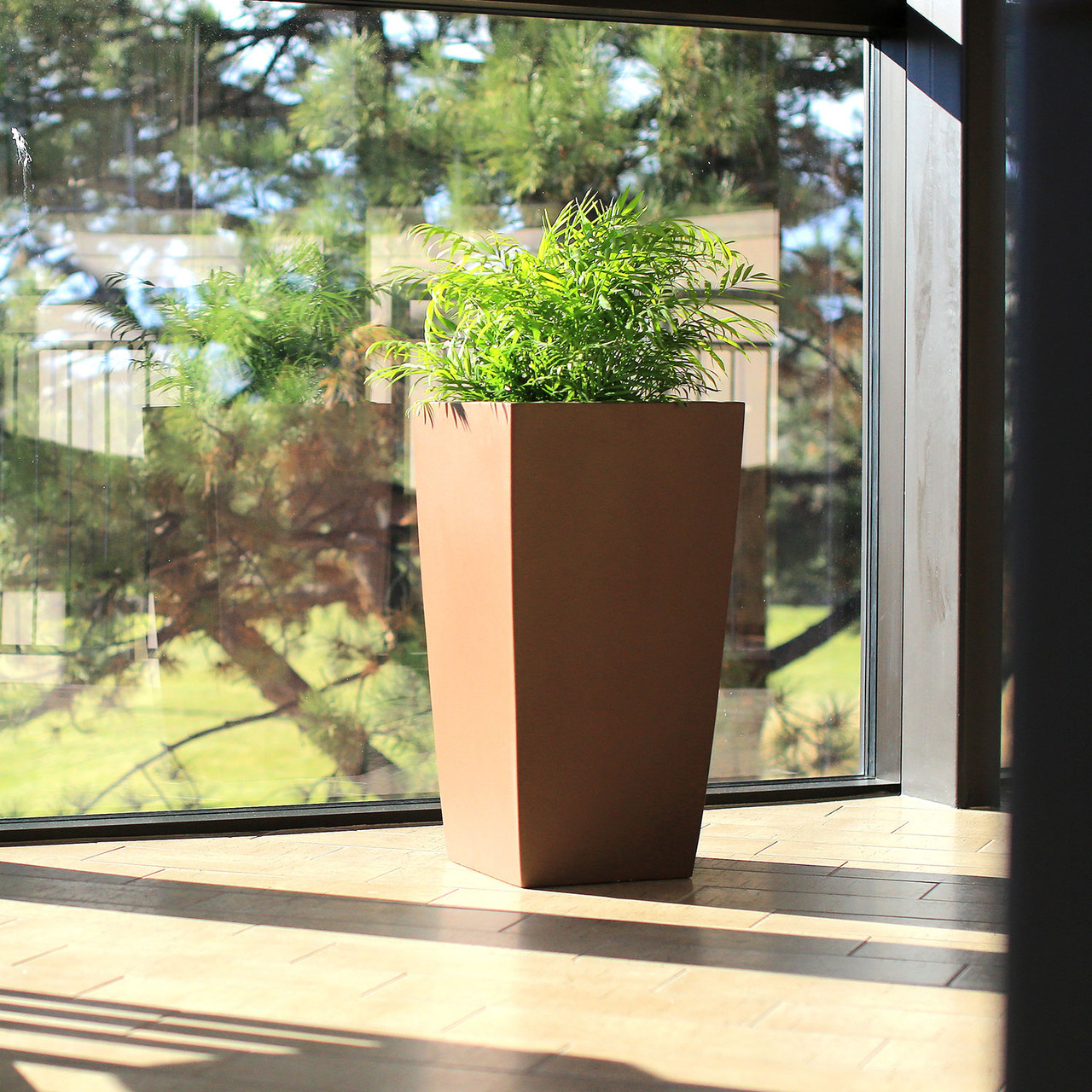
Toulan Tall Tapered Square Planter
Best for: Hotel entries, valet zones, lobby-adjacent spaces, and vertical accents.
Why it fits: Tall tapered form frames hospitality entries with polished vertical presence.
View Toulan Planter
St. Tropez Tall Vase Fiberglass Planter
Best for: Lobbies, hotel entries, restaurants, and polished hospitality interiors.
Why it fits: Vase-style form adds refined hospitality shape without looking heavy.
View St. Tropez Planter
Wannsee Large Round Tree Planter
Best for: Hotel entries, rooftops, pool decks, palms, ficus, and statement planting.
Why it fits: Large round form gives tree-scale planting strong hospitality presence.
View Wannsee Planter
Montroy Cube Fiberglass Planter
Best for: Modern hotel entries, courtyards, tree planting, and symmetrical layouts.
Why it fits: Cube format adds architectural weight and works well in pairs.
View Montroy Planter
Valencia Decorative Round Fiberglass Planter
Best for: Hotel lobbies, restaurants, lounges, patios, and decorative hospitality spaces.
Why it fits: Decorative round form works well where guests see the planter up close.
View Valencia Planter
Tolga Long Rectangular Fiberglass Planter
Best for: Hotel patios, rooftop dividers, restaurant edges, walkways, and privacy runs.
Why it fits: Long rectangular format defines hospitality spaces with clean lines.
View Tolga Planter
Brisbane Extra Large Planter Box
Best for: Pool decks, courtyards, large patios, rooftop terraces, and broad hospitality spaces.
Why it fits: Extra-large format gives large hotel spaces the scale they need.
View Brisbane Planter
Globe Spherical Fiberglass Planter
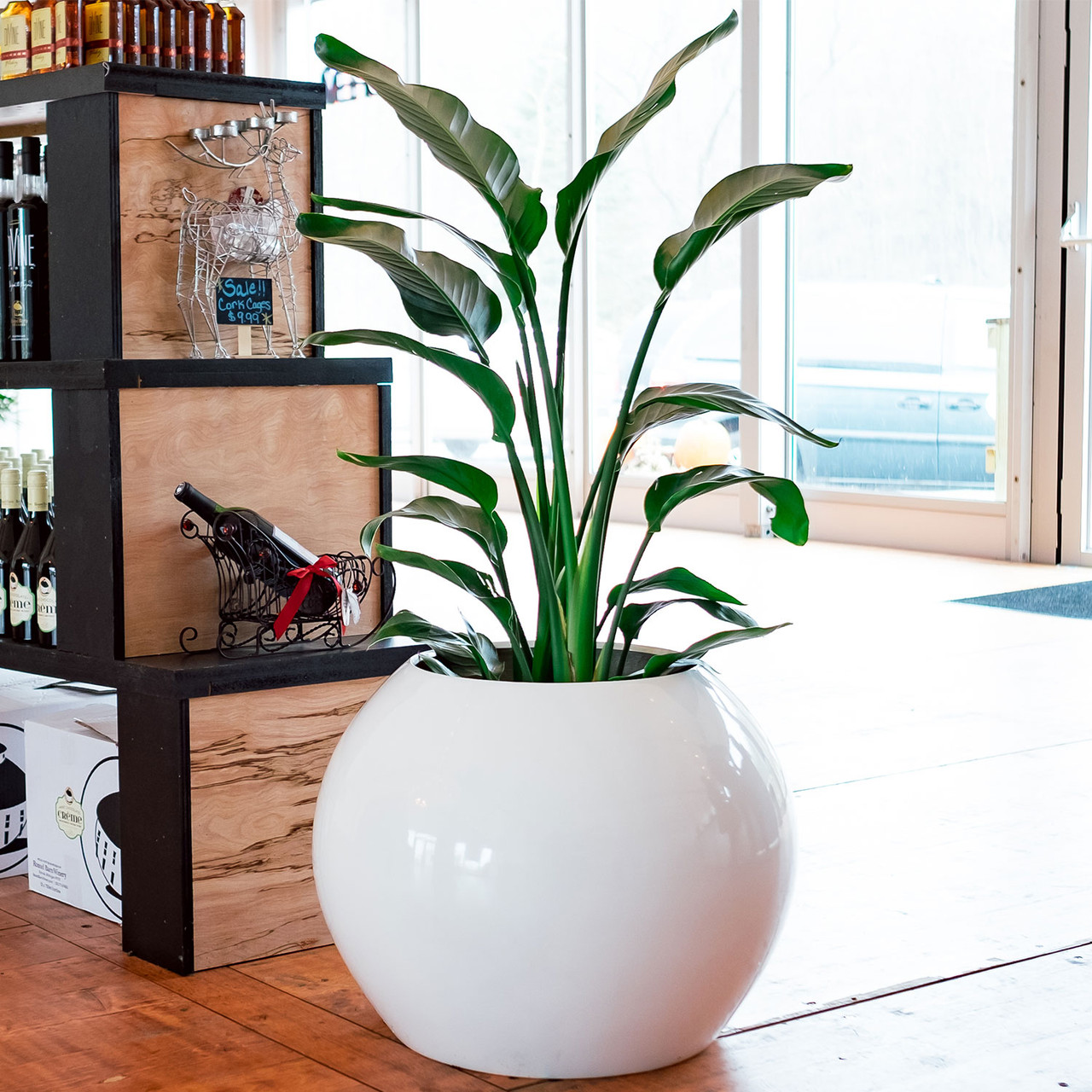
Best for: Hotel courtyards, plazas, focal points, and sculptural entry moments.
Why it fits: Spherical form creates a memorable hospitality focal point.
View Globe PlanterPlanning Hotel Planters for a Property or Renovation?
Send us your property type, areas being planned, quantities, preferred finishes, planting plan, site conditions, delivery timing, and opening or refresh date. We can help recommend hotel planter formats that fit the space, support the guest experience, and work with the practical requirements of the project.
Start with commercial planters, outdoor planters, indoor planters, large planters, or tall planters.
For broader planning, see the Entry Planters for Commercial Buildings, Restaurant Patio Planters Buying Guide, Pool Deck Planters Buying Guide, Rooftop Planters Buying Guide, Privacy Planters Buying Guide, Planter Drainage Guide, Commercial Planter Delivery Guide, and Commercial Planter Cost Guide.
FAQ
What planters are best for hotels?
The best hotel planters depend on where they will be used. Tall planters often work well at entries. Decorative round planters can work well in lobbies and restaurants. Long planter boxes are useful for patios, rooftops, walkways, and privacy runs. Large round or cube planters are strong for trees, palms, courtyards, and statement planting.
For most hotel projects, the right choice depends on scale, finish, durability, guest flow, plant material, and installation conditions.
What planters work best for hotel entrances?
Hotel entrance planters should match the scale of the building and frame the arrival experience.
Tall planters, cube planters, large round planters, and statement tree planters are often strong options. They can be used in pairs for symmetry or as single focal points in wider entry and valet areas.
Can planters be used in hotel lobbies?
Yes. Planters can be used in hotel lobbies to soften reception areas, define seating zones, frame elevator banks, and support biophilic design.
Indoor hotel planters should be planned with liners, floor protection, finish quality, maintenance access, and guest circulation in mind.
What material is best for hotel planters?
Fiberglass is often the practical default for hotel planters because it is polished, durable, lighter than concrete when empty, available in many shapes and finishes, and easier to match across multiple areas or future orders.
Concrete, metal, ceramic, wood, plastic, and resin can also work in certain situations, but each comes with tradeoffs around weight, durability, finish, maintenance, or replacement consistency.
Are fiberglass planters good for hotels?
Yes. Commercial-grade fiberglass planters are a strong option for many hotel projects because they can be used indoors or outdoors, support large-format designs, offer finish flexibility, and reduce empty weight compared with concrete.
They are especially useful when a hotel needs a coordinated planter program across entries, lobbies, patios, rooftops, pool decks, courtyards, and restaurants.
What planters work for hotel pool decks?
Hotel pool decks often use low profile planters, privacy planters, long rectangular planter boxes, large planter boxes, and tree-scale planters.
The right format depends on whether the goal is to define lounge zones, screen cabanas, soften paving, create resort-style planting, or separate dining from pool traffic.
How do I choose planters for hotel rooftops?
Hotel rooftop planters should be chosen around filled weight, wind exposure, drainage, access, privacy, plant material, and guest use.
For commercial rooftops, balconies, terraces, and elevated decks, final placement and load approval should come from the structural engineer of record.
Do hotel planters need drainage holes?
Outdoor hotel planters often need drainage planning, but drainage should be coordinated with the site and planting plan.
Drainage options can be selected at order and should be coordinated with the site, planting plan, and maintenance approach. Indoor lobby planters may also require liners, reservoirs, or floor protection depending on the installation.
What should I check before ordering hotel planters?
Before ordering, confirm the areas being planned, planter sizes, quantities, finish direction, planting plan, drainage needs, freight access, receiving location, installation path, lead time, and whether future reorders need to match.
For rooftops, balconies, terraces, or elevated decks, structural review should also be handled by the engineer of record.