Loading cart...
Rooftop Planters
Rooftop Planters Buying Guide
How to choose rooftop planters for terraces, amenity decks, hotels, multifamily properties, restaurants, offices, and commercial rooftop spaces.
Rooftop planters are not chosen from a product photo.
They are chosen around the full rooftop condition: structure, filled weight, wind exposure, access, drainage, maintenance, layout, and how people will use the space.
That is what makes rooftop planter projects different from ground-level patio or entry projects.
A rooftop is elevated. It is exposed. It may have limited access. It may need privacy without permanent partitions. It may need enough planting to make the space feel finished, but not so much weight or maintenance that the project becomes difficult to manage.
This guide will help project teams choose rooftop planters for terraces, amenity decks, hotels, multifamily properties, restaurants, offices, commercial rooftops, and high-end residential roof decks.
If you are already comparing options, start with outdoor planters, commercial planters, large planters, privacy planters, or planter boxes.
Why Rooftop Planters Require More Planning
Rooftop planters do more than hold plants.
They define outdoor rooms. They create privacy. They soften exposed edges. They organize lounge areas. They help make a roof deck feel like a finished amenity instead of leftover space.
But they also introduce real project questions.
Rooftop planter selection needs to account for:
- Filled weight
- Structural review
- Wind exposure
- Drainage
- Access and freight
- Maintenance
- Privacy and layout
- Plant selection
For commercial rooftops, balconies, terraces, and elevated decks, final placement and load approval should come from the structural engineer of record.
That does not mean rooftop planters have to be complicated. It means they need to be planned in the right order.
First, understand the rooftop condition. Then choose the planter format.
Where Rooftop Planters Are Used
Multifamily Rooftop Amenity Decks
Multifamily rooftop decks often need planters to create zones.
They can separate grilling areas, lounge seating, pool-adjacent spaces, fire pits, walkways, and resident gathering areas.
For multifamily properties, repeatable planter formats are often useful because the layout may need several runs, edges, or privacy zones that still feel consistent.
See our Multifamily Property Planters Buying Guide for broader property planning.
Hotel Rooftop Terraces
Hotel rooftop terraces need planters that look polished and perform under heavy use.
Planters may define seating areas, soften railings, screen service areas, support palms or statement planting, and make the terrace feel more private.
Hospitality rooftops also have more guest traffic, more cleaning routines, and higher expectations for finish quality.
See our Hotel Planters Buying Guide for more hospitality-specific planning.
Restaurant Rooftops
Restaurant rooftops need planters that help the space work.
They can define the dining area, create privacy from neighboring buildings, guide server movement, soften exposed edges, and make the rooftop feel less temporary.
For restaurants, planter placement should be planned around tables, service paths, host flow, and guest comfort.
See our Restaurant Patio Planters Buying Guide for related restaurant layout guidance.
Office Rooftop Lounges
Office rooftops and corporate amenity spaces use planters to create softer outdoor work and gathering areas.
Planters can separate seating zones, frame views, guide circulation, and make the space feel more intentional for tenants or employees.
The planter format should match the building's design language and maintenance expectations.
Mixed-Use Developments
Mixed-use rooftops may combine residential, retail, restaurant, office, or hospitality uses.
That means the planter plan often needs to do several things at once: create privacy, guide movement, organize zones, and keep a consistent look across a complex space.
High-End Residential Roof Decks
High-end residential roof decks use planters for privacy, greenery, outdoor rooms, and screening.
The buyer may care about the same project constraints as a commercial team: access, wind, drainage, weight, maintenance, and finish quality.
Rooftop Gardens
Rooftop gardens need planters that support the planting plan first.
That may mean planter boxes for shrubs and grasses, tree planters for statement planting, or modular formats for repeatable planting zones.
Plant health, maintenance, irrigation, drainage, and filled weight matter more than picking the largest planter available.
Pool-Adjacent Roof Decks
Pool-adjacent rooftop decks need planters that can define lounge areas, soften paving, and create a resort-style feel without blocking movement.
Pool areas may also add splash, cleaning routines, moisture, sun exposure, and maintenance requirements.
Low profile planter boxes, large planter boxes, and privacy planters can all work depending on the layout.
See our Pool Deck Planters Buying Guide for more pool-area planning.
Choosing the Right Rooftop Planter Format
The right rooftop planter format depends on what the planter needs to do.
Is it creating privacy? Defining a lounge area? Holding a tree? Softening a railing? Lining a walkway? Breaking up a large deck?
Choose the format around the job.
Long Rectangular Planter Boxes
Long rectangular planter boxes are best for rooftop edges, terrace dividers, privacy runs, restaurant rooftops, and continuous boundaries.
They create clean lines with fewer pieces.
Use long planters or planter boxes when the rooftop needs a continuous edge or divider.
Privacy Planters
Privacy planters are useful when the rooftop feels exposed.
They can screen neighboring buildings, separate seating areas, soften railings, or make lounge zones feel more comfortable.
The planter and plant material need to be planned together. Tall plantings catch wind, so rooftop privacy requires more care than ground-level privacy.
See our Privacy Planters Buying Guide for more detail.
Large Tree Planters
Large rooftop planters can support trees, palms, ficus, olive trees, large shrubs, or statement planting when the site conditions allow.
Tree-scale planting can make a rooftop feel established, but it also increases filled weight, wind exposure, maintenance needs, and drainage complexity.
For broader tree guidance, see Large Planters for Trees and Palms.
Tall Narrow Planters
Tall narrow planters work well where floor space is limited.
They can add vertical definition, soften exposed corners, create partial privacy, or frame rooftop seating areas without taking over the layout.
Browse tall planters when the project needs height in a tight footprint.
Low Profile Planters
Low profile planters define space without blocking views.
They are useful for lounge edges, pool-adjacent decks, walkways, terrace zones, and places where the planter should guide movement without becoming a wall.
Modular Planter Boxes
Modular planter boxes work well for repeatable rooftop runs, rail-adjacent spaces, tight terraces, and phased layouts.
They can help create privacy, planting zones, and layout definition in sections while allowing access points where people need to move.
Weight and Structural Review
Weight is one of the biggest rooftop planter issues.
Empty weight is only one part of the calculation. Filled weight includes:
- Planter shell
- Soil
- Water
- Drainage material
- Liner or reservoir system
- Plant material
Fiberglass planters can help reduce the starting weight compared with concrete. That gives project teams more flexibility. But the full planted system still matters.
A lightweight planter shell does not make soil, water, drainage material, or plant material weight disappear. To optimize container weight without compromising root depth, see our step-by-step guide on how to fill a large planter using lightweight pot fillers.
For commercial rooftops, balconies, terraces, and elevated decks, final placement and load approval should come from the structural engineer of record.
PPM can provide planter dimensions, product information, and material guidance to support that review.
The practical question is not only: "How much does the planter weigh?"
It is: "How much will the complete planted system weigh in the exact location where it will sit?"
For related planning, see our Fiberglass vs. Concrete Planters Guide, Large Planters for Trees and Palms, and Commercial Planter Sizing Guide.
Wind and Stability
Rooftops are more exposed than ground-level spaces.
Wind can be stronger. Corners can behave differently than protected zones. Open edges, parapets, neighboring buildings, and mechanical screens can all affect exposure.
That matters because taller plantings catch wind.
Privacy screens, tall grasses, shrubs, palms, and trees all need more thought on a roof than they might at ground level.
Planter stability depends on:
- Planter size
- Filled weight
- Plant material
- Placement
- Wind exposure
- Layout
- Maintenance plan
Plant choice matters as much as planter size.
For rooftop privacy, avoid thinking only in terms of height. A very tall planting may create screening, but it may also create wind and maintenance problems.
The better question is: "How much privacy do we need, and what is the safest, most maintainable way to create it?"
Drainage and Water Management
Rooftop drainage has to be coordinated.
Outdoor planters may need drainage holes, risers, liners, reservoirs, irrigation coordination, or other water-management details depending on the project.
Drainage options can be selected at order and should be coordinated with the rooftop drainage plan.
This matters because uncontrolled runoff can create maintenance issues, staining, slip concerns, plant health problems, or conflicts with the roof's existing drainage system.
Before ordering rooftop planters, clarify:
- Where water should go
- Whether the planter should drain freely
- Whether liners or reservoirs are needed
- Whether irrigation is planned
- Who maintains the planting
- How the roof drains today
- Whether the planter location affects existing drains
Do not leave drainage to installation day.
For more detail, see our Planter Drainage Guide.
Access, Freight, and Installation
Rooftop access can be the difference between a smooth install and a jobsite problem.
Large rooftop planters need to reach the roof.
That sounds obvious until the planter has to fit through an elevator, stairwell, roof hatch, gate, narrow hallway, or finished interior space.
Before ordering, confirm:
- Elevator dimensions
- Stair access
- Roof hatch constraints
- Door and gate clearances
- Crane or lift needs
- Staging space
- Who receives freight
- Who moves planters after delivery
- Whether the site is finished when planters arrive
Long planter boxes may be lightweight compared with concrete, but length still affects handling.
Large planter boxes may be easier to handle in fiberglass than concrete, but dimensions still matter.
The planter has to fit the access path, not just the rendering.
For more planning help, see our Commercial Planter Delivery Guide.
Material Choice for Rooftop Planters
Fiberglass is often the practical default for rooftop planters. It is lighter than concrete when empty, durable outdoors, available in large, long, tall, and modular formats, finish-flexible, easier to receive and place, and useful for repeatable commercial rooftop runs.
That makes fiberglass a strong fit for:
- Rooftop terraces
- Amenity decks
- Restaurant rooftops
- Hotel rooftops
- Multifamily roofs
- Office lounges
- Pool-adjacent roof decks
- High-end residential roof decks
Other materials carry tradeoffs: concrete weight can become a major structural issue; metal can increase costs and lead times; wood requires frequent maintenance; cheap plastics wear poorly in commercial settings.
Fiberglass is often chosen because it gives the project team size and finish without making empty weight and handling harder than they need to be.
Planting Considerations for Rooftops
The best rooftop planting plan depends on wind, sun, irrigation, maintenance, climate, and how the space will be used.
Common rooftop planting options include:
- Grasses
- Shrubs
- Small trees
- Palms where climate and exposure allow
- Hedging and privacy planting
- Seasonal planting
- Artificial planting where maintenance or light is a problem
Grasses can create movement and soft screening. Shrubs can create density. Small trees and palms can create focal points. Hedging can create privacy. Seasonal planting can refresh the space without committing to a permanent screen.
Artificial planting can be appropriate where maintenance, light, or irrigation is a problem. In a commercial rooftop space, quality matters. Low-quality artificial planting can make the whole space feel cheaper.
The planter should be chosen around the planting plan, not the other way around.
Common Mistakes to Avoid
Choosing by Photo Only
A rooftop planter has to work with weight, wind, drainage, access, and layout. A product photo does not answer those questions.
Ignoring Filled Weight
Filled weight includes the planter, soil, water, drainage material, liner or reservoir system, and plant material. Do not evaluate the planter shell alone.
Ignoring Structural Review
For commercial rooftops, balconies, terraces, and elevated decks, final placement and load approval should come from the structural engineer of record.
Treating Rooftop Planters Like Ground-Level Planters
Rooftops have different exposure, access, drainage, and wind conditions. Plan accordingly.
Choosing Tall Privacy Planting Without Considering Wind
Tall planting can create privacy, but it also catches wind. On rooftops, privacy and stability have to be planned together.
Forgetting Drainage Coordination
Drainage options can be selected at order and should be coordinated with the rooftop drainage plan. Do not wait until the planters arrive to decide where water goes.
Ignoring Elevator and Access Constraints
The planter must fit the path to the roof. Check elevators, stairs, hatches, gates, and staging areas before ordering.
Undersizing Planters for Large Rooftop Spaces
Large rooftop terraces can make small pots look temporary. Use planter formats with enough scale to hold the space.
Recommended PPM Rooftop Planters
These products are common starting points for rooftop planter projects. The right choice depends on layout, access, plant material, privacy needs, finish, and structural review.

Tolga Long Rectangular Fiberglass Planter
Best for: Rooftop edges, privacy runs, terrace dividers, and restaurant rooftops.
Why it fits: Long rectangular form creates clean rooftop boundaries with fewer pieces.
View Tolga Planter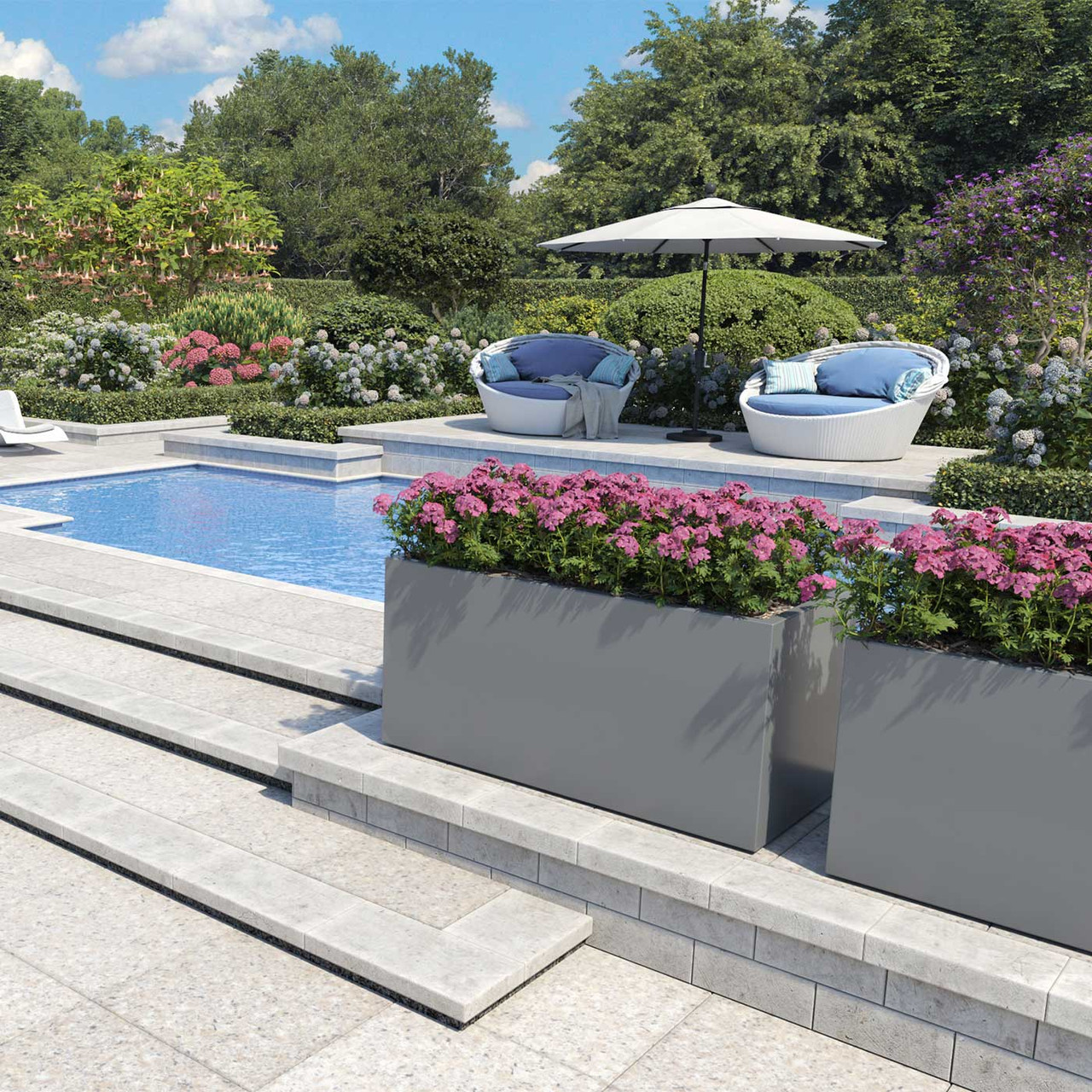
Brisbane Extra Large Planter Box
Best for: Large rooftop terraces, amenity decks, tree-scale planting, and pool-adjacent spaces.
Why it fits: Extra-large format adds scale while avoiding concrete empty weight.
View Brisbane Planter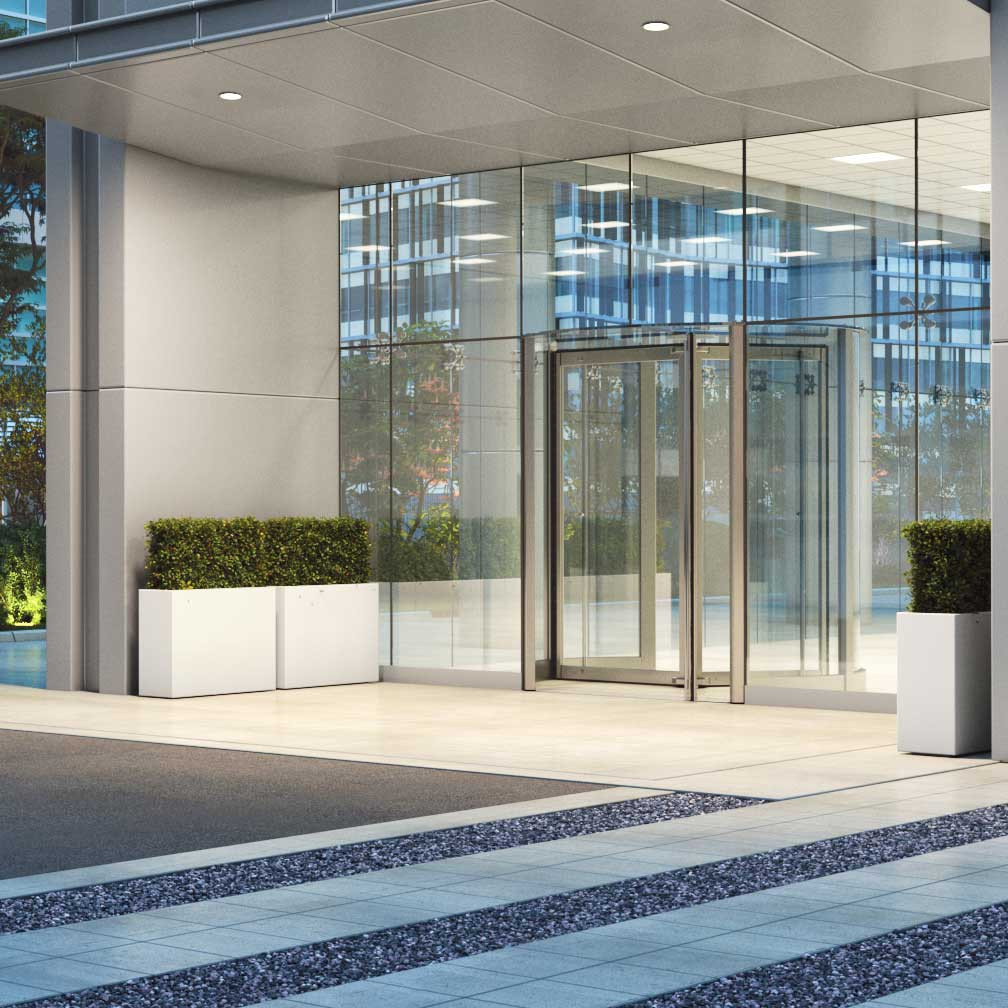
Amesbury Tall Narrow Fiberglass Planter Box
Best for: Narrow rooftop edges, privacy, dividers, and tight layouts.
Why it fits: Tall narrow format adds vertical definition without taking over floor area.
View Amesbury Planter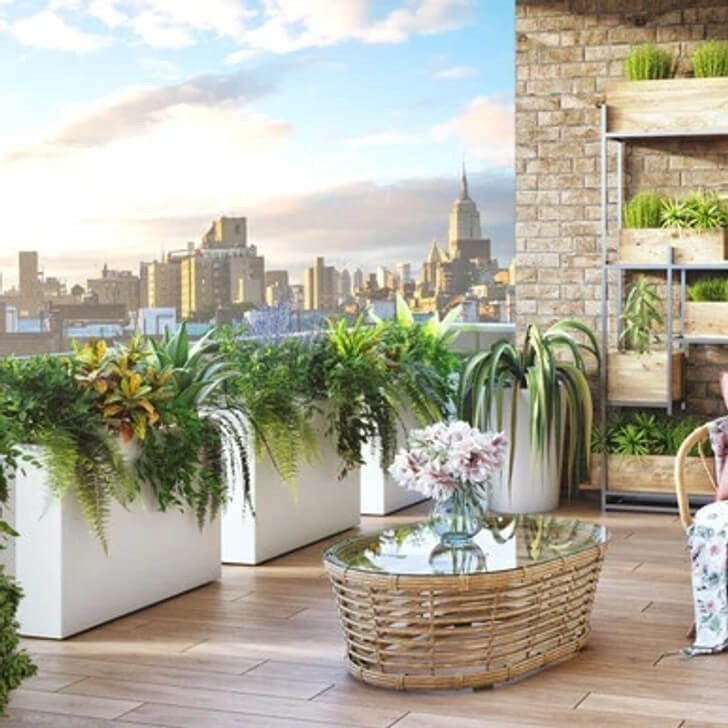
Modular 12 Inch Wide Planter Box
Best for: Slim rooftop runs, rail-adjacent spaces, tight terraces, and balcony-like rooftop edges.
Why it fits: Modular slim profile works where depth is limited.
View Modular 12 Planter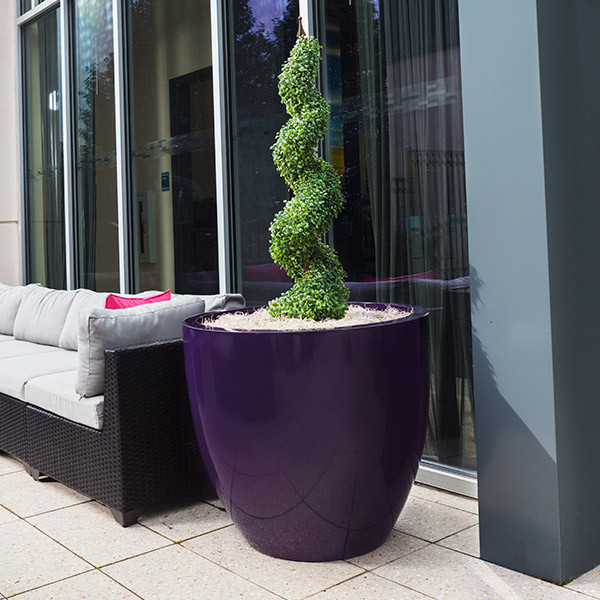
Wannsee Large Round Tree Planter
Best for: Rooftop trees, palms, statement planting, hotel terraces, and lounge zones.
Why it fits: Large round format gives tree-scale planting a strong focal point.
View Wannsee Planter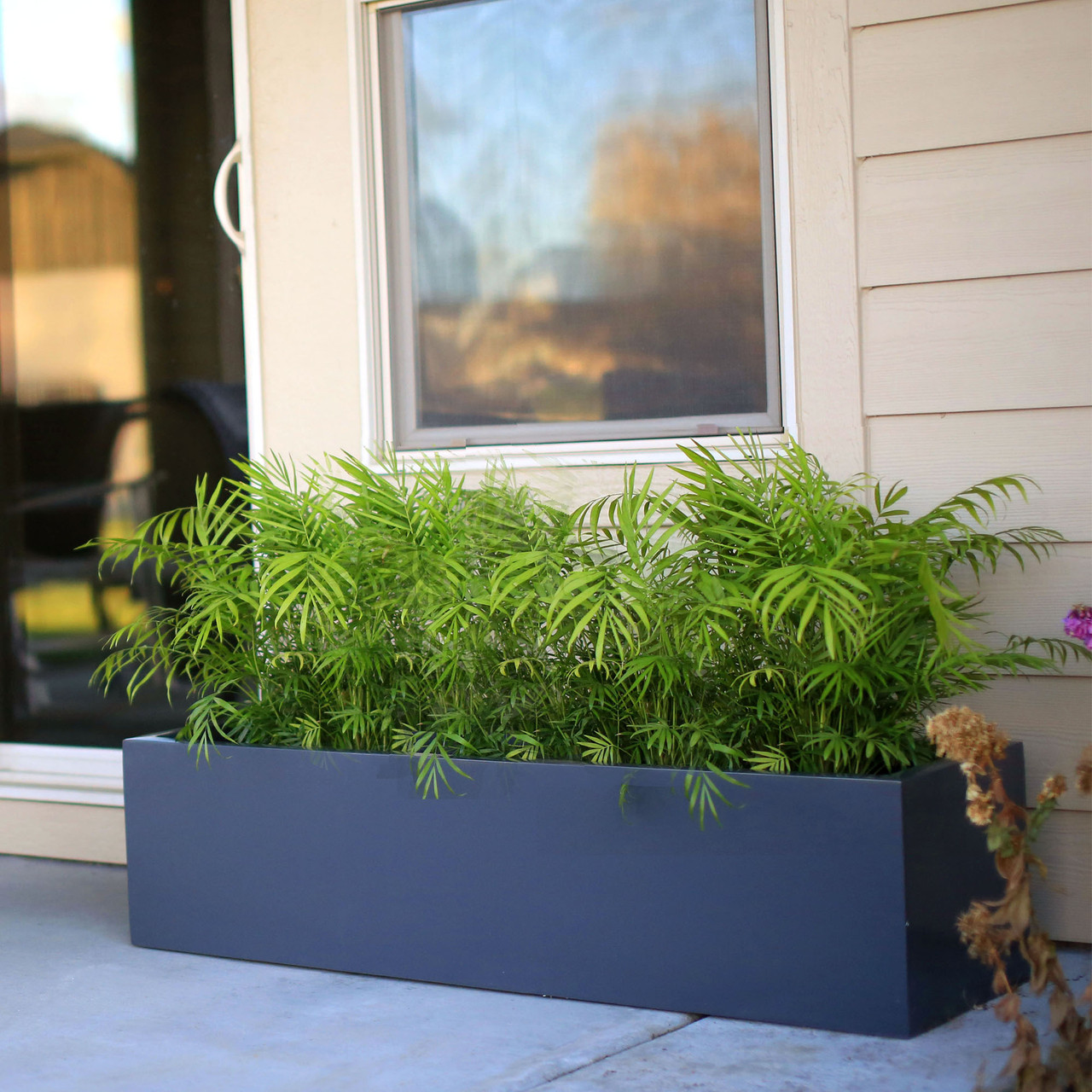
Low Profile Planter Boxes
Best for: Rooftop lounge edges, pool-adjacent decks, walkways, and low visual separation.
Why it fits: Defines space without blocking views.
View Low Profile Planters
Perth Tall Rectangular Fiberglass Planter Box
Best for: Rooftop privacy, tall planting, dividers, and commercial terrace layouts.
Why it fits: Tall rectangular profile supports vertical screening and structured rooftop zones.
View Perth PlanterPlanning a Rooftop Planter Project?
Send us your rooftop layout, planter location, dimensions, desired privacy level, plant material, finish direction, access constraints, and target timeline. We can help recommend rooftop planter formats that fit the space, planting plan, access path, and project requirements.
Start with outdoor planters, browse commercial planters, compare privacy planters, review planter boxes, or explore large planters for rooftop terraces, amenity decks, hotels, multifamily properties, restaurants, offices, and commercial rooftop spaces.
For broader planning, see our Large Outdoor Planters Buying Guide, Privacy Planters Buying Guide, Commercial Planter Boxes Buying Guide, Fiberglass vs. Concrete Planters Guide, Commercial Planter Sizing Guide, Planter Drainage Guide, and Commercial Planter Delivery Guide.
FAQ
What planters are best for rooftops?
The best rooftop planters depend on the layout, filled weight, wind exposure, access, drainage, plant material, and privacy needs. Long rectangular planter boxes, privacy planters, low profile planters, modular planter boxes, and large fiberglass planters are common rooftop options.
Are fiberglass planters good for rooftops?
Yes. Fiberglass planters are often a practical choice for rooftops because they are lighter than concrete when empty, durable outdoors, available in large and long formats, finish-flexible, and easier to receive and place.
Can large planters be used on rooftops?
Large planters can be used on rooftops when filled weight, access, wind exposure, drainage, and structural approval are handled correctly. For commercial rooftops, balconies, terraces, and elevated decks, final placement and load approval should come from the structural engineer of record.
How heavy are rooftop planters when filled?
Filled weight includes the planter shell, soil, water, drainage material, liner or reservoir system, and plant material. The final weight depends on planter size, material, planting plan, and drainage approach.
Do rooftop planters need drainage holes?
Rooftop planters need a drainage plan. Drainage options can be selected at order and should be coordinated with the rooftop drainage plan. Depending on the project, that may include drainage holes, risers, liners, reservoirs, or irrigation coordination.
What plants work best in rooftop planters?
Common rooftop planting options include grasses, shrubs, small trees, palms where climate and exposure allow, hedging, privacy planting, seasonal planting, and high-quality artificial planting where maintenance or light is a problem.
What planter boxes work best for rooftop privacy?
Long rectangular planter boxes, tall narrow planters, modular planter boxes, and larger privacy planters often work well for rooftop privacy. The best option depends on desired privacy height, wind exposure, available depth, access, and plant material.
How do I choose lightweight rooftop planters?
Start with material, size, and the full planted system. Fiberglass is often used as a lightweight alternative to concrete because it reduces empty planter weight. Filled weight still includes soil, water, drainage material, and plant material.
What should I check before ordering rooftop planters?
Check structural review requirements, filled weight, wind exposure, drainage, plant material, access path, elevator or stair dimensions, roof hatch constraints, delivery plan, staging space, and who will move the planters after delivery.