Loading cart...
Commercial Planter Boxes
Commercial Planter Boxes Buying Guide
How to choose commercial planter boxes for patios, entries, rooftops, walkways, privacy screens, pool decks, and commercial landscape projects.
Planter boxes are one of the most useful formats in commercial exterior and interior design because they solve layout problems.
They can define a patio edge, create a privacy run, guide traffic, frame an entry, line a walkway, or organize an amenity space without building a permanent wall.
That is why commercial planter boxes show up in restaurants, hotels, multifamily properties, office campuses, rooftops, pool decks, courtyards, walkways, and high-end residential projects.
For commercial projects, the planter box has to do more than hold plants. It has to look architectural, hold real planting, survive the site conditions, ship cleanly, and repeat consistently across the project.
A planter box is often less about decoration and more about control: controlling edges, movement, privacy, scale, and planting zones.
This guide will help you choose the right planter box shape, size, material, and format for a real project.
If you already know you need a rectangular or box-style planter, start with our planter boxes, rectangular planters, or long planters.
Why Commercial Planter Boxes Are Specified So Often
Commercial planter boxes are popular because they are predictable.
That matters on real projects.
A clean rectangular planter is easier to align with architecture, paving, railings, patio edges, storefronts, pool decks, walkways, and interior layouts. It gives the project team a repeatable footprint and a clear way to organize space.
Planter boxes work well because they are:
- Clean and architectural
- Easy to align with buildings and hardscape
- Predictable in footprint
- Good for repeated runs
- Useful for privacy and space division
- Practical for patios, walkways, rooftops, pool decks, entries, and commercial landscapes
- Easier to plan than many decorative shapes
When a project needs structure, planter boxes are often the simplest answer.
They do not fight the architecture. They support it.
Where Commercial Planter Boxes Are Used
Restaurant Patios
Restaurant patios need boundaries.
Commercial outdoor planter boxes can separate diners from sidewalks, parking lots, service paths, streets, and neighboring tables. They can also make an exposed patio feel more comfortable without building permanent walls or fencing.
For restaurants, long planter boxes are especially useful because they create a clean edge with fewer pieces.
The buyer question is simple:
"How do we make this patio feel finished, protected, and easy to move through?"
Planter boxes help answer that.
Commercial Entries
Entries need scale without clutter.
Planter boxes can frame doors, soften hardscape, organize the approach, and make the front of a building feel more intentional.
For hotels, offices, retail centers, restaurants, and multifamily buildings, the entry is often the first proof point. If it feels empty or underbuilt, the property feels less finished.
Commercial planter boxes can add structure without making the entry feel crowded.
Walkways and Drive Entries
Long walkways can feel cold when they are all concrete, stone, or pavers.
Planter boxes create rhythm. They guide movement. They soften hardscape. They give the eye something to follow.
For drive entries, walkways, and long approach paths, repeatable rectangular planter boxes often work better than a mix of decorative pots.
The goal is not to decorate every few feet. The goal is to make the path feel designed.
Rooftops and Amenity Decks
Rooftops and amenity decks often need zones.
Planter boxes can define lounge areas, create privacy, organize outdoor rooms, soften railings, and support planting without permanent construction.
For elevated spaces, filled weight, drainage, wind, access, and placement all matter. Large planter boxes should be selected with the full site in mind, not just the product photo.
Fiberglass planter boxes are often useful here because they provide scale without the empty weight of concrete.
Pool Decks and Courtyards
Pool decks and courtyards need separation that still feels open.
Planter boxes can divide lounge areas, frame seating zones, soften paving, and create a more resort-style layout.
Low profile planter boxes can define space without blocking views. Larger planter boxes can support more substantial planting where the space needs weight and softness.
Multifamily and Mixed-Use Properties
Multifamily and mixed-use properties often need consistent planter formats across several areas.
Entries, courtyards, balconies, pool decks, rooftop amenities, leasing offices, and pedestrian paths may all need planting, but they should not feel like separate design decisions.
Repeatable planter box formats help create consistency.
They also make future replacement, reordering, and maintenance easier.
Interior Commercial Spaces
Planter boxes are not only for exteriors.
Interior commercial spaces use planter boxes for lobby dividers, office separation, biophilic design, circulation control, and movable space definition.
In lobbies, offices, hotels, and hospitality interiors, planter boxes can divide space without building permanent partitions.
The planter has to look clean up close because people will see it from a few feet away.
Choosing the Right Planter Box Shape
"Planter box" does not mean one shape.
The right format depends on what the planter needs to do.
Long Rectangular Planter Boxes
Long rectangular planter boxes are best for edges, dividers, privacy runs, patios, walkways, and linear installations.
Use them when the project needs:
- A clean boundary
- A long planting run
- Patio separation
- Privacy screening
- Walkway rhythm
- Commercial edge definition
Long planter boxes usually look more intentional than many small pots lined up in a row.
Browse long planters when the project needs continuous space definition.
Low Profile Planter Boxes
Low profile planter boxes are best when you need separation without blocking sightlines.
They work well for:
- Pool decks
- Walkways
- Patio edges
- Balconies
- Amenity decks
- Visual boundaries
Use low profile planters when you want to define space, not close it off.
Tall Narrow Planter Boxes
Tall narrow planter boxes are useful when depth is limited but vertical presence matters.
They work well for:
- Privacy
- Office dividers
- Balcony edges
- Narrow patios
- Entry accents
- Constrained commercial spaces
They add height and screening without taking over the floor plan.
Extra-Large Planter Boxes
Extra-large planter boxes are best for big outdoor spaces, tree-scale planting, pool decks, courtyards, broad patios, and commercial landscape applications.
Use them when the space needs real scale.
Small planter boxes can disappear in large commercial settings. Extra-large formats help the planting hold its own against the building, paving, seating, and surrounding architecture.
Modular Planter Boxes
Modular planter boxes are useful for repeatable layouts, long runs, phased projects, and tight spaces.
They can help project teams build a run in sections, create openings where needed, and repeat the same format across multiple areas.
For commercial properties, modularity can make planning, installation, and future changes easier.
Size: Length, Width, Height, and Root Volume
Planter box size is not only about appearance.
It affects the planting, freight, installation, stability, and how the space functions.
Length Controls the Run
Length determines how much edge, walkway, patio, or boundary one planter can cover.
For privacy runs, patio edges, and commercial dividers, longer planter boxes often create a cleaner result than many shorter pieces.
Width and Depth Control Planting Options
Width and depth affect what the planter can hold.
Shrubs, grasses, hedges, and trees need more root volume than small decorative planting.
If the planter box is too narrow, the planting options may be limited.
Height Controls Presence
Height affects how the planter reads in the space.
A taller planter can add vertical presence, help screen views, or make an entry feel more substantial. A lower planter can define space without blocking views.
The right height depends on the job.
Root Volume Matters
Root volume is where design meets plant health.
If the planting plan includes shrubs, grasses, hedges, or trees, the planter box needs enough soil volume to support the material.
A planter that looks right but cannot support the planting is not the right planter.
Do Not Oversize Without Checking Access
Oversized planter boxes can create freight and installation problems.
Before choosing a very large format, confirm doors, gates, elevators, dock access, rooftop access, staging space, and who will move the planters after delivery.
Do Not Undersize the Space
Undersized planter boxes can make a commercial space look cheap or unfinished.
Large patios, entries, walkways, and amenity decks usually need planters with enough scale to match the surroundings.
The right size fits the space, the planting, and the installation plan.
Material Choice for Commercial Planter Boxes
Material affects weight, freight, finish, durability, installation, and maintenance.
For commercial planter boxes, fiberglass has a practical advantage.
Fiberglass is often the default choice because it is:
- Lightweight compared with concrete
- Durable outdoors
- Available in long, low, tall, and large formats
- Useful indoors and outdoors
- Flexible in finish options
- Easier to receive and place
- Good for repeatable commercial runs
Here is the basic comparison.
| Material | Best For | Watchouts |
|---|---|---|
| Fiberglass | Commercial projects needing scale, durability, finish options, and lower weight | Quality varies by supplier |
| Concrete | Permanent ground-level installations | Heavy, with more freight and installation complexity |
| Metal / Aluminum | Custom architectural specifications | Higher cost and longer lead times |
| Wood | Warm decorative look | Maintenance, rot, and weathering |
| Plastic / Resin | Budget or temporary use | Can look weak or fade in commercial settings |
Fiberglass is not always the cheapest material. It is often the most practical one when the project needs scale, finish consistency, and manageable handling.
For a deeper material comparison, see our Fiberglass vs. Concrete Planters Guide.
Outdoor Conditions to Consider
Commercial outdoor planter boxes need to survive the actual site.
That means the project team should think beyond shape and color.
UV Exposure
Outdoor planter boxes may sit in direct sun all day.
Finish quality matters because fading is visible, especially on restaurant patios, hotel entries, pool decks, rooftops, and commercial walkways. Look for UV protective finishes built for outdoor commercial use.
Freeze-Thaw
In colder climates, outdoor planters need to handle temperature swings and water management.
Material choice and drainage planning both matter.
Wind
Wind matters most on rooftops, balconies, terraces, coastal sites, and exposed patios.
Tall planting can catch wind. Large planter boxes may need to be planned around stability, filled weight, and placement.
Drainage
Drainage should be handled before installation.
Depending on the application, the planter box may need drainage holes, risers, liners, reservoirs, or irrigation coordination.
Irrigation
Commercial projects often need predictable maintenance.
If irrigation is part of the plan, coordinate it with planter size, planting material, and drainage.
Cleaning Crews and Foot Traffic
Planter boxes in restaurants, hotels, offices, and multifamily spaces may be bumped by chairs, luggage carts, floor scrubbers, maintenance crews, or everyday foot traffic.
High-traffic areas need planters that can handle real use, not just look good at install.
Pool, Coastal, and High-Moisture Exposure
Pool decks and coastal sites can add moisture, splash, chemicals, salt air, and cleaning routines.
Salt spray resistant finishes and a clear maintenance plan should be part of the discussion.
Filled Weight
Filled weight includes the planter, soil, water, drainage material, and plants.
That matters for rooftops, balconies, decks, and any elevated structure.
For commercial rooftops, balconies, terraces, and elevated decks, final placement and load approval should come from the structural engineer of record.
Freight, Access, and Installation
Planter boxes can be long even when they are lightweight.
That matters.
Long dimensions affect freight, packaging, receiving, staging, and movement through the site.
Before ordering, confirm:
- Delivery address
- Loading dock access
- Gate clearances
- Door clearances
- Elevator dimensions
- Rooftop or courtyard access
- Staging area
- Who receives the order
- Who moves the planter boxes after delivery
- Installation schedule
Large commercial runs should be quoted with freight and lead time in mind.
The planter box price is only useful if the boxes can arrive on time, fit through the site, and be placed where they belong.
Common Mistakes to Avoid
Choosing Planter Boxes Only by Photo
A product photo does not show how the planter box will scale against the building, patio, walkway, or landscape.
Choose based on the space, not just the image.
Buying Too Many Small Boxes
Many small boxes can make a commercial run look busy.
Fewer properly scaled planter boxes often create a cleaner, more architectural result.
Ignoring Width and Root Volume
The planter box needs to support the plant material.
If the width and depth are too limited, the planting plan may suffer.
Ignoring Access Constraints
Large planter boxes need to reach the final location.
Check doors, gates, elevators, loading docks, rooftops, and staging areas before ordering.
Forgetting Drainage
Drainage affects plant health, maintenance, and long-term performance.
Do not treat it as an afterthought.
Treating Long Planter Boxes Like Parcel Items
Long planter boxes may need freight shipping because of their dimensions.
Even lightweight planter boxes can require special handling if they are long or oversized.
Not Confirming Finish Consistency
Commercial projects often need multiple units to match.
Confirm finish consistency when ordering several planter boxes for the same project or property.
Waiting Too Long to Order
Commercial projects need lead time.
Waiting too long can create rush decisions, limited finish options, freight pressure, and install risk.
Recommended PPM Planter Boxes
These products are common starting points for commercial planter box projects. The right option depends on layout, run length, site conditions, plant material, finish, and timeline.

Tolga Long Rectangular Planter
Best for: Patios, walkways, dividers, long runs, and commercial edges.
A long rectangular fiberglass planter for continuous lines, clean space definition, and commercial planting runs.
View Tolga Planter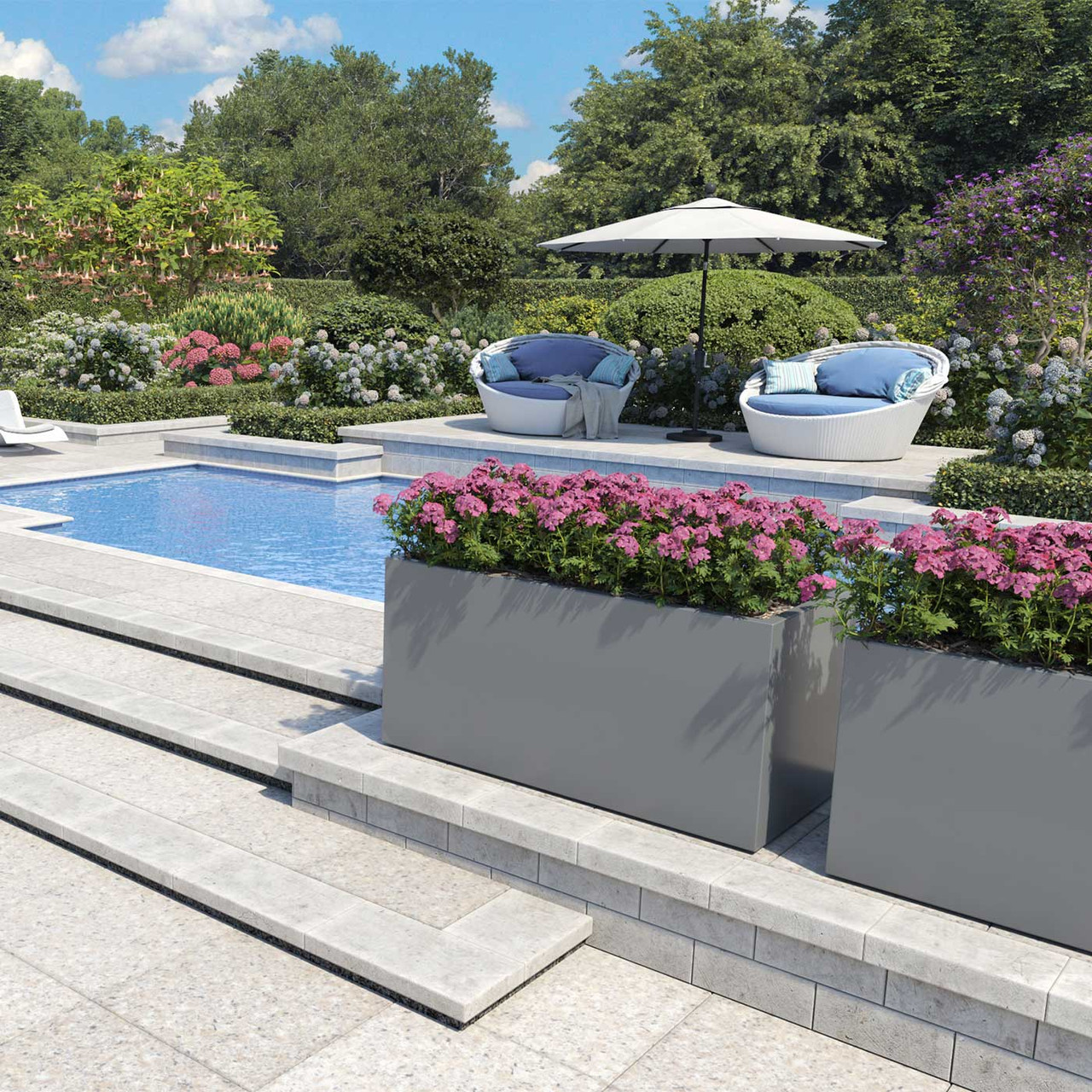
Brisbane Extra Large Planter Box
Best for: Large outdoor projects, pool decks, courtyards, entries, and commercial landscapes.
An extra-large fiberglass planter box with strong architectural presence for broad commercial spaces.
View Brisbane Planter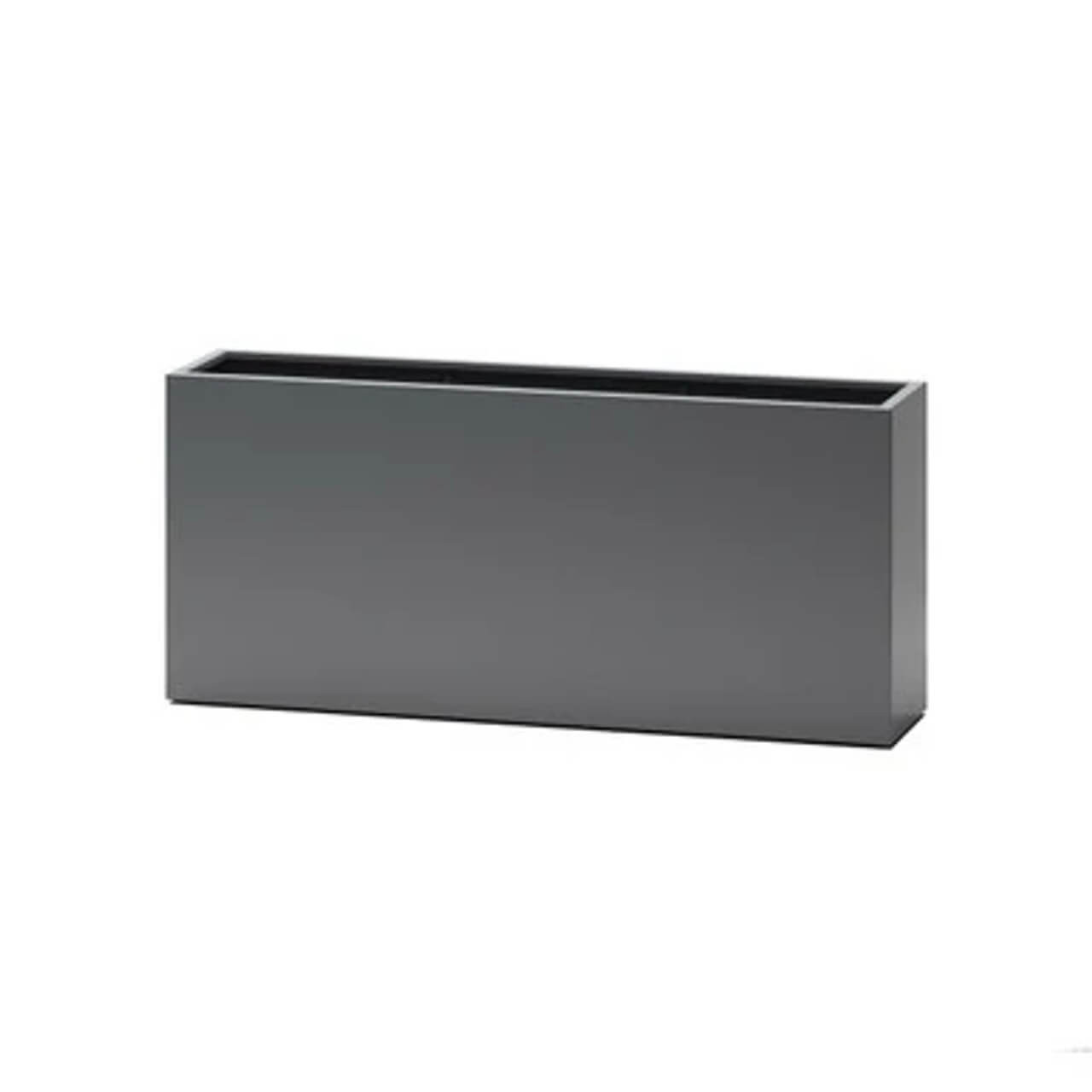
Modular 12 Inch Wide Planter Box
Best for: Narrow patios, balconies, rail-adjacent spaces, and tight commercial runs.
A slim modular fiberglass planter box for constrained layouts where depth is limited.
View Modular 12 Planter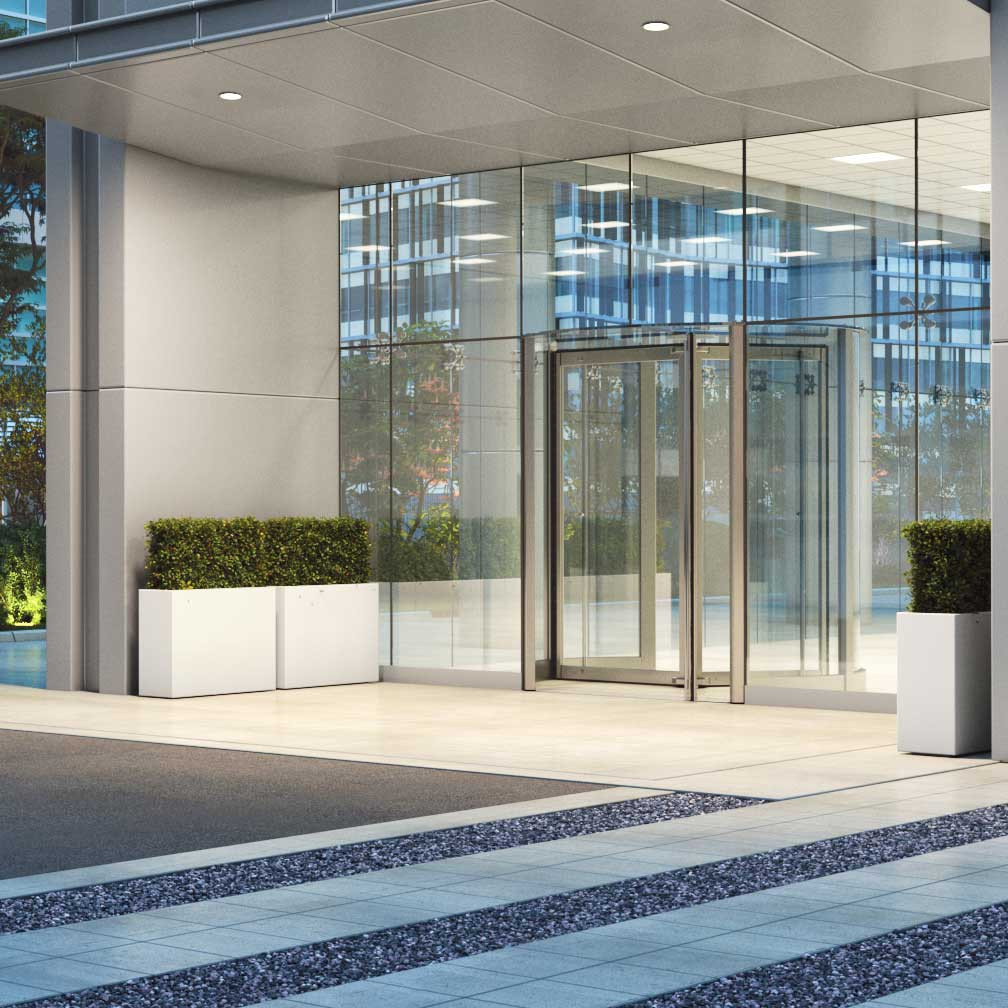
Amesbury Tall Narrow Planter Box
Best for: Privacy, office dividers, balconies, entries, and narrow commercial spaces.
A tall narrow fiberglass planter box that creates vertical presence and screening without taking over the floor plan.
View Amesbury Planter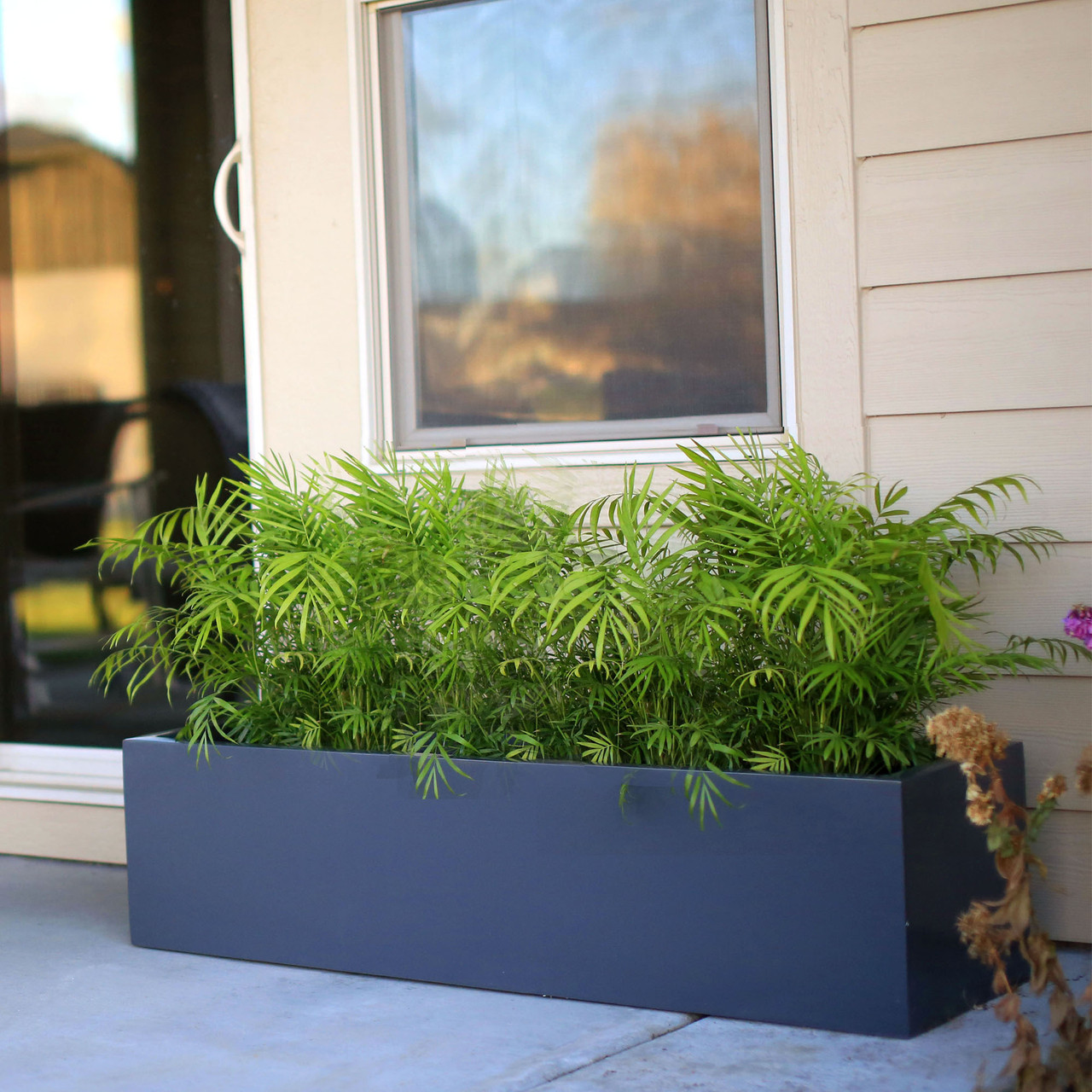
Low Profile Planter Boxes
Best for: Low separation, patio edges, walkways, pool decks, and visual boundaries.
Low-profile fiberglass planter boxes that define space without blocking views.
View Low Profile Planters
Perth Tall Rectangular Planter Box
Best for: Tall privacy runs, commercial dividers, and vertical screening.
A tall rectangular fiberglass planter box for structured privacy, vertical definition, and commercial space division.
View Perth PlanterPlanning a Commercial Planter Box Project?
Send us your layout, run length, preferred sizes, finish needs, site conditions, and target timeline. We can help recommend planter box formats that fit the space, planting plan, and project requirements.
Start with planter boxes, compare rectangular planters, browse commercial planters, or review privacy planters if the project needs screening or separation.
Related guides: Privacy Planters, Large Outdoor Planters, Fiberglass vs. Concrete Planters, and Commercial Planter Cost.
FAQ
What are commercial planter boxes?
Commercial planter boxes are rectangular or box-style planters used in restaurants, hotels, offices, multifamily properties, commercial landscapes, patios, rooftops, walkways, and interior spaces. They are used to define edges, create privacy, guide traffic, frame entries, and support planting in project environments.
What size planter box do I need for a commercial project?
The right size depends on the run length, plant material, space scale, site access, and design goal. Length controls how much area the planter defines. Width and depth control planting options and stability. Height controls visual presence and soil volume.
Are fiberglass planter boxes good for outdoor use?
Yes. Commercial fiberglass planter boxes are often a strong choice for outdoor use because they are lighter than concrete, durable outdoors, available in long and large formats, and flexible in finish options.
What is the best planter box shape for privacy?
Long rectangular planter boxes and tall narrow planter boxes are often best for privacy. Long boxes create continuous runs, while tall narrow boxes add vertical screening in tighter spaces.
Are long planter boxes better than multiple small planters?
For patios, walkways, privacy runs, and commercial edges, long planter boxes often look cleaner and more intentional than many small planters. They create stronger lines and reduce visual clutter.
Do commercial planter boxes need drainage holes?
Outdoor planter boxes usually need a drainage plan. Depending on the site and planting plan, that may include drainage holes, risers, liners, reservoirs, or irrigation coordination.
Can planter boxes be used indoors and outdoors?
Yes. Planter boxes can be used indoors and outdoors when the material, finish, drainage, and planting plan are appropriate for the location. Interior projects may focus more on finish and space division, while exterior projects need to account for weather, drainage, and exposure.
Are large planter boxes expensive to ship?
Large planter boxes can cost more to ship because dimensions affect freight space and handling. Even lightweight fiberglass planter boxes may require freight shipping when they are long or oversized.
What material is best for commercial planter boxes?
Fiberglass is often a practical choice for commercial planter boxes because it balances scale, durability, lower weight, finish flexibility, and ease of handling. Concrete, metal, wood, plastic, and resin can also work depending on the project, but each has tradeoffs.