Loading cart...
Restaurant Patio Planters
Restaurant Patio Planters Buying Guide
How to choose restaurant patio planters for outdoor dining, privacy, traffic flow, sidewalk edges, entries, rooftops, and commercial hospitality spaces.
Restaurant patio planters are not just decor.
They shape the guest experience.
The right planters can define a patio edge, create privacy, guide movement, soften a sidewalk, separate diners from traffic, frame the entry, and make outdoor dining feel like a real part of the restaurant instead of extra tables pushed outside.
That matters because guests decide quickly whether an outdoor dining space feels comfortable enough to stay in.
A good restaurant patio planter program helps answer practical questions:
- Where does the patio start and stop?
- How do guests enter?
- How do servers move?
- How exposed do diners feel?
- What separates tables from the sidewalk, street, parking lot, or service path?
- Will the space still look good after weather, cleaning, chairs, traffic, and seasonal planting changes?
This guide will help restaurant owners, hospitality teams, designers, contractors, and property teams choose patio planters for outdoor dining, sidewalk patios, rooftop restaurants, courtyards, hotel restaurants, and commercial hospitality spaces.
If you already know you need outdoor dining planters, start with outdoor patio planters, commercial planters, privacy planters, or planter boxes.
Why Restaurant Patio Planters Are Different
A restaurant patio planter is part of the operating layout.
It has to look good, but that is not enough.
It also needs to support:
- Guest comfort
- Privacy
- Sidewalk and street separation
- Traffic flow
- Server paths
- Entry framing
- Durability
- Cleaning routines
- Seasonal planting changes
- Brand impression
This is why restaurant outdoor planters should be selected differently than decorative pots for a backyard.
A restaurant patio is a working space. Servers move through it. Guests pull out chairs. Cleaning crews wash around it. Weather hits it. People bump into it. The layout may change with the season.
The planter has to survive all of that and still make the dining area feel intentional.
Where Restaurant Patio Planters Are Used
Sidewalk Patios
Sidewalk patios need clear boundaries.
Guests need to feel like they are sitting in the restaurant, not in pedestrian traffic. Pedestrians need a clear path. Servers need room to move. The city or landlord may also have rules around how the patio is defined.
Slim planter boxes, modular planters, and long rectangular planters often work well because they create a clean edge without taking up too much depth.
For sidewalk patios, the key question is: "How do we create enough separation without making the space feel cramped?"
Street-Facing Patios
Street-facing patios need more screening.
Cars, parked vehicles, traffic noise, headlights, and passersby can make diners feel exposed. Planters can soften that edge and make outdoor dining feel more comfortable.
Long planter boxes and privacy planters are often useful here because they create a more continuous buffer than individual pots.
The planting matters too. Tall grasses, shrubs, hedging, and seasonal planting all create different levels of privacy.
Rooftop Restaurants
Rooftop restaurants need planters that handle weight, wind, access, drainage, and guest experience.
Planters may define dining zones, soften roof edges, create privacy from neighboring buildings, or frame views.
For rooftop restaurants, balconies, terraces, and elevated decks, final placement and load approval should come from the structural engineer of record.
For more rooftop-specific planning, see our Rooftop Planters Buying Guide.
Courtyard Dining
Courtyards often need planters to create smaller, more comfortable dining zones.
A courtyard can feel too open if every table sits in one large hardscape area. Planters help break the space into sections without building permanent walls.
Large planter boxes, low profile planters, and statement planters can all work depending on the layout.
Hotel Restaurants
Hotel restaurants need planters that feel polished from every angle.
The patio may serve hotel guests, outside diners, events, pool traffic, lobby traffic, or courtyard seating. The planters need to match the hospitality environment and still handle daily use.
For hotel restaurants, consistency with the rest of the property matters. The patio planters should feel connected to the entry, pool deck, lobby, courtyard, and brand standard.
See our Hotel Planters Buying Guide for broader hospitality planning.
Mixed-Use Developments
Restaurants in mixed-use developments often share space with sidewalks, retail, multifamily, offices, parking, and public walkways.
Planters help define where the restaurant starts and where the shared property continues.
They can also help the restaurant feel like its own environment inside a larger development.
Quick-Service and Fast-Casual Patios
Quick-service and fast-casual patios need planters that are durable, simple, and easy to maintain.
The goal is usually to organize seating, create a clean boundary, and soften hard surfaces without creating a high-maintenance planting plan.
Repeatable planter boxes often work well here.
High-End Dining Patios
High-end dining patios need planters that feel intentional and finished.
The planter finish, scale, plant material, and placement all affect the perceived quality of the restaurant.
In these spaces, cheap-looking planters can drag down the whole patio.
Entry and Host-Stand Areas
Planters can help frame the restaurant entrance, soften the host stand, or guide guests from the sidewalk to the patio or front door.
Tall planters, tapered planters, and decorative round planters often work well here because guests see them up close.
For more entry planning, see our Entry Planters for Commercial Buildings guide.
Choosing the Right Restaurant Patio Planter Format
The planter format should match the job.
Do you need privacy? A boundary? A low divider? A host-stand accent? A long sidewalk edge? A rooftop layout? A more polished entry?
Start there.
Long Rectangular Planter Boxes
Long rectangular planter boxes are one of the best formats for restaurant patios.
They work well for:
- Patio edges
- Outdoor dining boundaries
- Sidewalk separation
- Privacy runs
- Traffic guidance
- Restaurant rooftops
- Long exterior edges
They create a cleaner line with fewer pieces than many small pots.
Browse long planters and planter boxes when the patio needs a continuous edge.
Privacy Planters
Privacy planters help diners feel less exposed.
They are useful for screening sidewalks, parking lots, streets, adjacent tables, neighboring businesses, service areas, and rooftop edges.
The planter creates the structure. The planting creates the screen.
For deeper guidance, see our Privacy Planters Buying Guide.
Low Profile Planters
Low profile planters define space without blocking visibility.
They are useful when you want to separate areas but still keep the patio open.
Use them for dining zones, walkways, poolside restaurant areas, entry transitions, and low visual boundaries.
Tall Planters
Tall planters work well for restaurant entries, host-stand areas, patio corners, and vertical accents.
They add height without requiring a long run.
Use tall planters where the patio needs vertical presence or where floor space is limited.
Large Planter Boxes
Large planter boxes are useful for bigger patios, hotel restaurants, courtyards, poolside dining, and broad hospitality spaces.
They can hold more substantial planting and help large outdoor dining areas feel finished.
Browse large planters when the patio needs more scale.
Modular Planter Boxes
Modular planter boxes work well for sidewalk patios, tight restaurant edges, phased layouts, and multi-location programs.
They make it easier to build a run in sections and leave access points where servers, guests, or staff need to move.
Round or Statement Planters
Round planters and statement planters work well at entries, host stands, courtyards, focal points, and hospitality areas where guests see the planter up close.
Use round planters when the goal is softness or a more decorative focal point.
Layout, Traffic Flow, and Guest Experience
This is where restaurant patio planters matter most.
A good patio layout makes guests comfortable and makes staff faster.
A bad layout creates bottlenecks, awkward seating, blocked views, and frustrated servers.
Before choosing planters, map the patio. Think through:
- Server paths
- Guest walkways
- ADA path of travel
- Host stand visibility
- Table spacing
- Patio boundaries
- Entry transitions
- Emergency access
- Sightlines
- Cleaning access
- Where guests wait
- Where guests enter and exit
The planter should make the layout easier to understand. It should not make the patio feel cramped.
ADA path of travel, local code requirements, permitting, and any encroachment rules for sidewalk patios should be confirmed with the restaurant team, the landlord, and the local jurisdiction. Planters are part of the layout solution, not a substitute for compliance review.
For restaurant operators, the reason this matters is simple: if the patio feels exposed, awkward, or hard to move through, guests do not stay as long and staff cannot work as cleanly.
Planters should improve the operating flow, not just the photo.
Privacy and Street Separation
Outdoor dining often fails when guests feel like they are sitting in the path of traffic.
Privacy planters can help by:
- Screening sidewalks
- Separating diners from parked cars
- Creating a buffer from traffic
- Reducing exposure to neighboring tables
- Creating smaller dining zones
- Softening street-facing edges
- Making patios feel less temporary
You do not always need a wall or fence. In many cases, long planter boxes with the right plant material create enough separation while still keeping the patio open and inviting.
Durability, Cleaning, and Maintenance
Restaurant patio planters live in a rough environment. They deal with foot traffic, chairs, cleaning crews, food/beverage spills, weather, and seasonal planting changes.
Finish durability matters, as does replacement and matching. If a restaurant needs to replace one planter later, or add planters to a second location, the format and finish should be repeatable.
This is one reason commercial fiberglass planters are often a practical choice. They give restaurants a polished look without the weight and handling problems of concrete.
Weight, Wind, and Outdoor Exposure
Outdoor restaurant planters need to be planned around exposure. Filled weight includes the planter shell, soil, water, drainage material, and plant material.
Wind matters too, especially on rooftops, corners, sidewalk patios, and exposed street-facing spaces. Tall plantings catch wind. Privacy screens catch wind. Large planters can help create stability, but the full planted system still needs to make sense for the site.
For rooftop restaurants, balconies, terraces, and elevated decks, final placement and load approval should come from the structural engineer of record.
Drainage and Irrigation
Restaurant patios need drainage planning because water creates real problems near guests. Poor drainage can create puddles, runoff, plant health issues, staining, slip concerns, and maintenance headaches.
Drainage options can be selected at order and should be coordinated with the patio, rooftop, or maintenance plan. For sidewalk patios, confirm where water can go. For rooftop restaurants, coordinate with the rooftop drainage plan. For interior-adjacent patios, think about water movement near doors and thresholds.
For more detail, see our Planter Drainage Guide.
Material Choice for Restaurant Patio Planters
Fiberglass is often the practical default for restaurant patio planters. It is lighter than concrete when empty, durable outdoors, finish-flexible, available in long, tall, large, and modular formats, easier to receive and place, easier to match across multiple units or locations, and strong for high-visibility hospitality use.
Other materials carry tradeoffs: concrete is heavy and hard to move; metal can increase cost and lead times; wood requires frequent maintenance; cheap plastic wears poorly in commercial hospitality settings.
For a full comparison, see our Fiberglass vs. Concrete Planters Guide.
Common Mistakes to Avoid
Choosing Planters Only for Decor
A restaurant patio planter needs to shape the space. If it only looks good but does not help layout, privacy, or traffic flow, it is not doing enough.
Blocking Server Paths
Servers need clean paths. Do not place planters where they slow service, block access, or force staff to weave through the patio.
Making the Patio Feel Cramped
Planters should make the patio feel better, not smaller. Use the right scale, but protect movement and table spacing.
Ignoring Privacy From Street or Sidewalk
Guests do not want to feel like they are eating in traffic. If the patio faces a street, sidewalk, parking lot, or neighboring tables, plan for screening.
Using Too Many Small Pots
Many small pots can look cluttered and create maintenance work. Fewer properly scaled planter boxes often create a cleaner patio.
Forgetting Maintenance Access
Someone has to water, clean, prune, and replace planting. Leave enough access.
Ignoring Drainage
Water near diners creates problems. Coordinate drainage before ordering.
Not Matching Planters Across Multiple Locations
If the restaurant has multiple locations, or plans to add more, repeatability matters. Choose planter formats and finishes that can be matched later.
Recommended PPM Restaurant Patio Planters
These products are common starting points for restaurant patio projects. The right choice depends on patio layout, available depth, privacy needs, plant material, finish, site conditions, and timing.

Tolga Long Rectangular Fiberglass Planter
Best for: Patio edges, outdoor dining boundaries, sidewalk separation, and privacy runs.
Why it fits: Long rectangular form creates clean patio definition with fewer pieces.
View Tolga Planter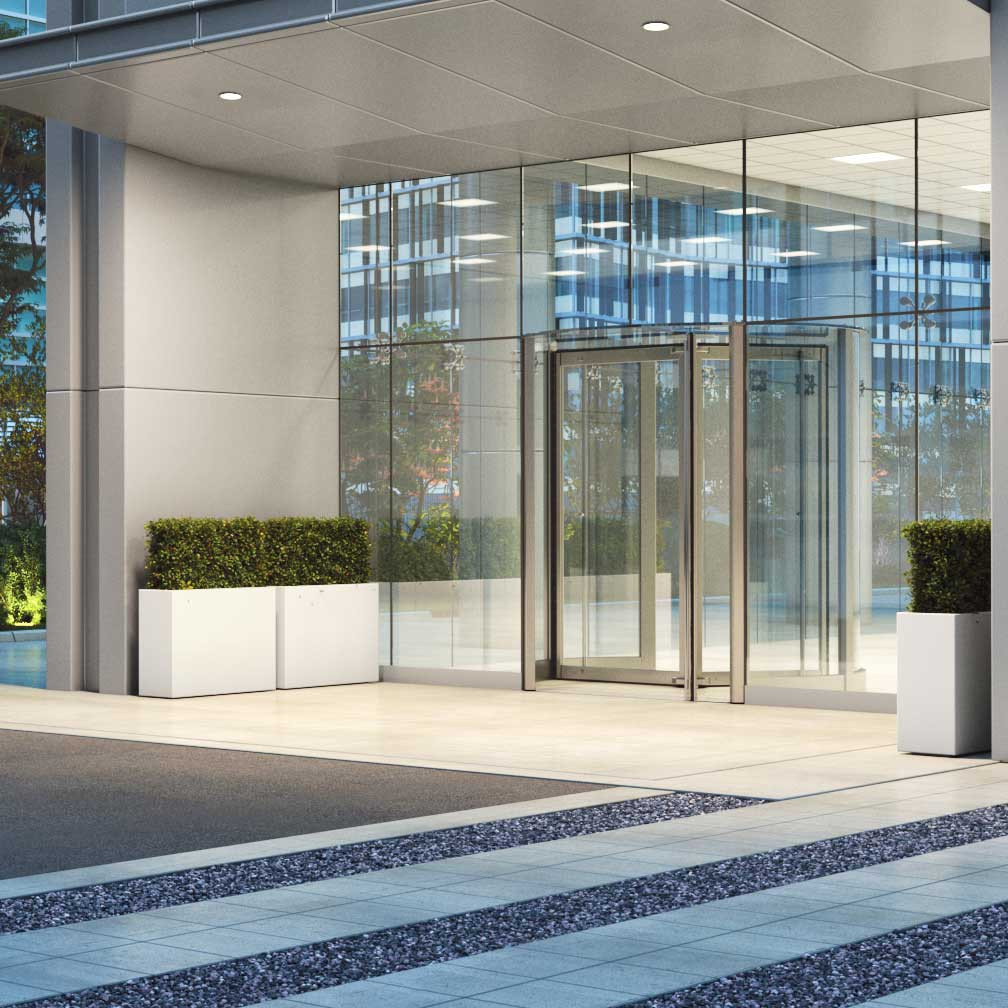
Amesbury Tall Narrow Fiberglass Planter Box
Best for: Narrow patios, host areas, privacy, dividers, and constrained layouts.
Why it fits: Tall narrow shape adds screening without taking over floor area.
View Amesbury Planter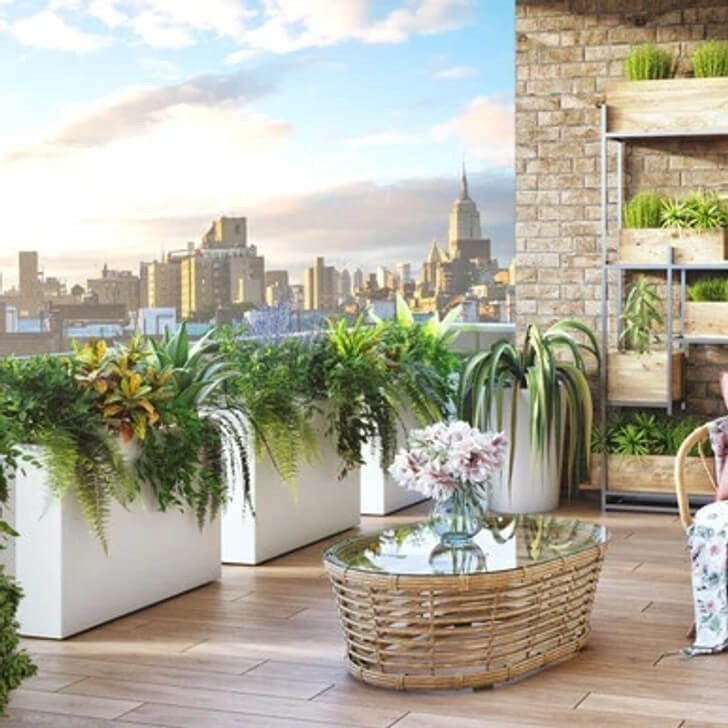
Modular 12 Inch Wide Planter Box
Best for: Sidewalk patios, tight restaurant edges, rail-adjacent spaces, and small outdoor dining areas.
Why it fits: Slim modular profile works where depth is limited.
View Modular 12 Planter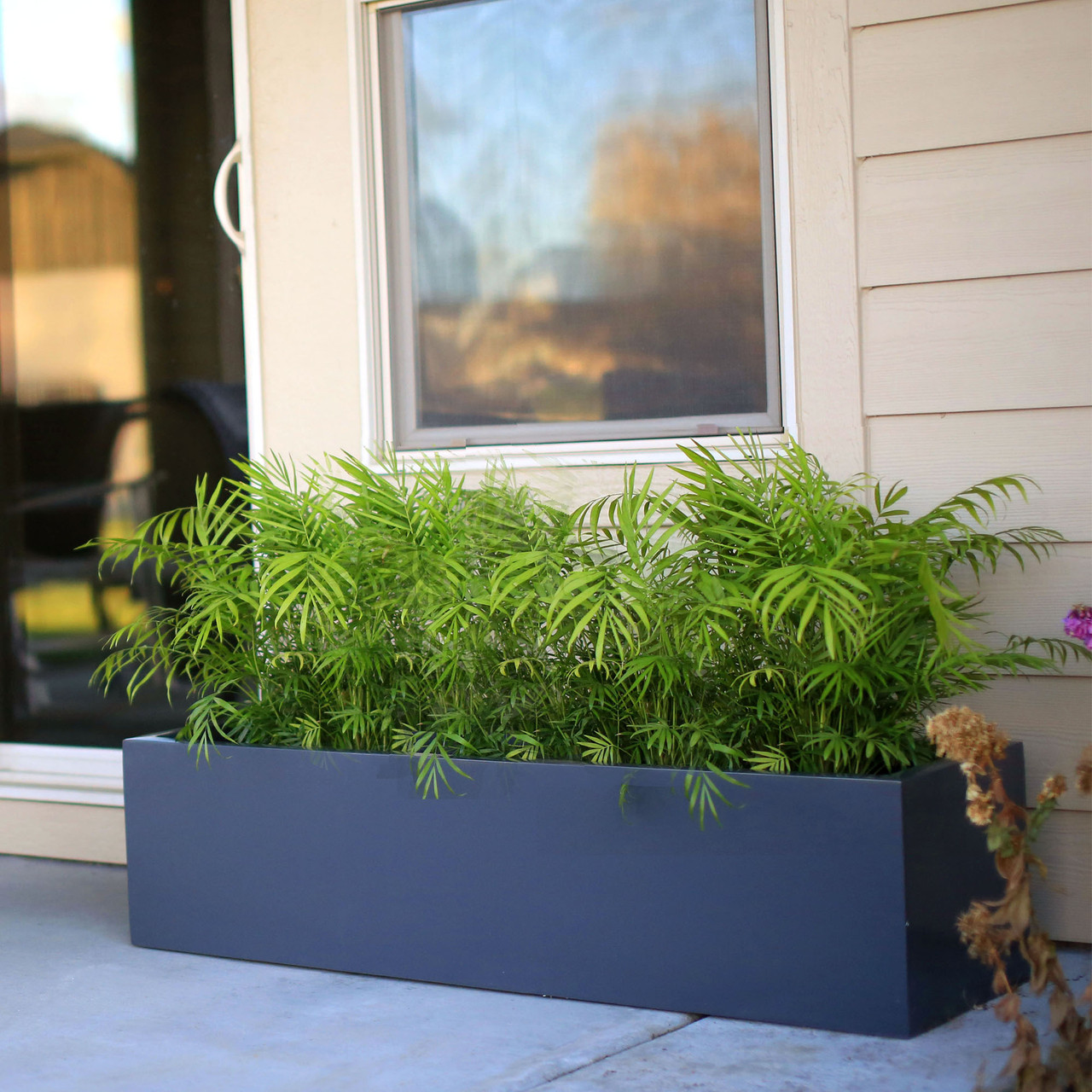
Low Profile Planter Boxes
Best for: Patio edges, walkways, dining zones, and low visual separation.
Why it fits: Defines space without blocking visibility.
View Low Profile Planters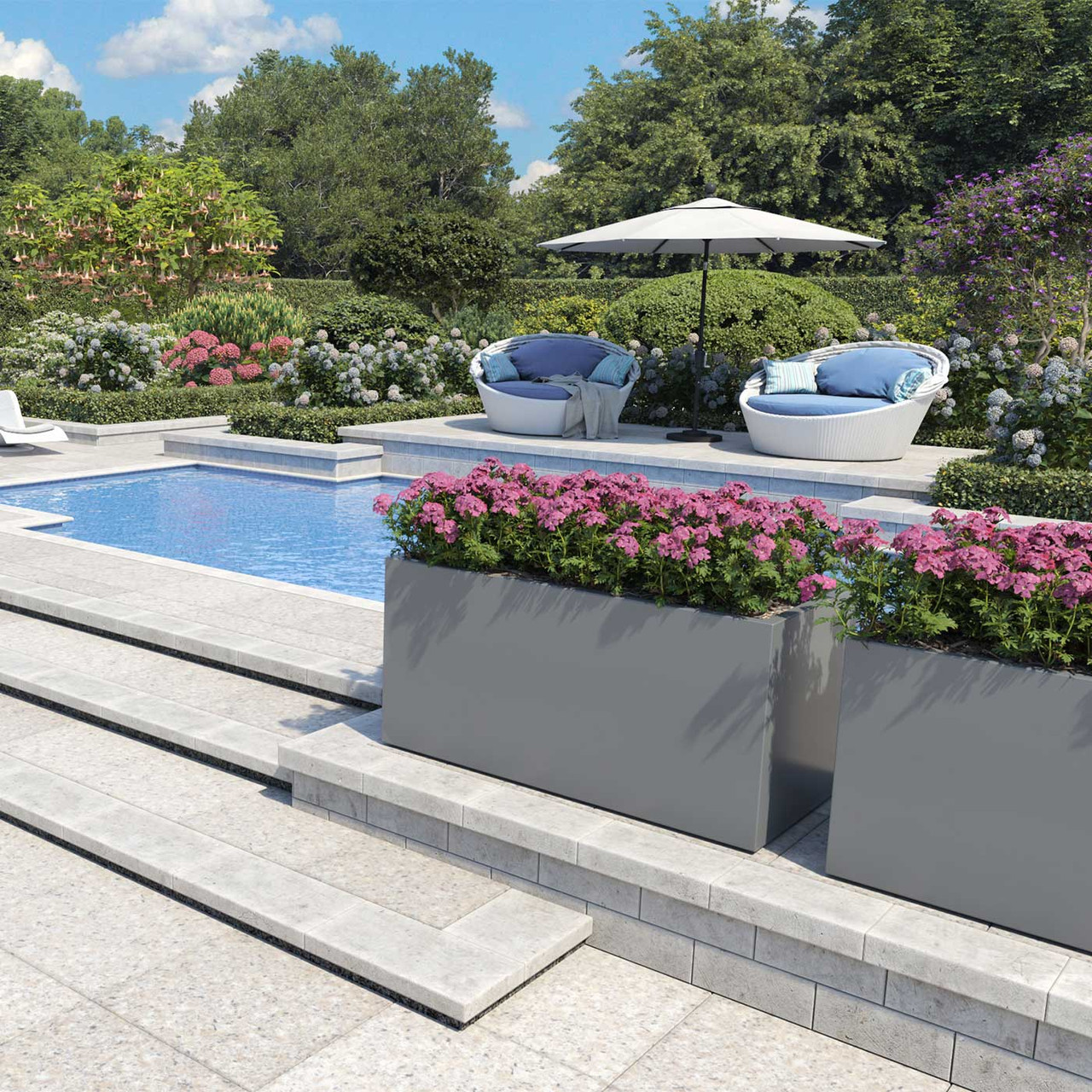
Brisbane Extra Large Planter Box
Best for: Large patios, hotel restaurants, courtyards, poolside restaurants, and broad hospitality spaces.
Why it fits: Extra-large format gives larger dining areas more scale.
View Brisbane Planter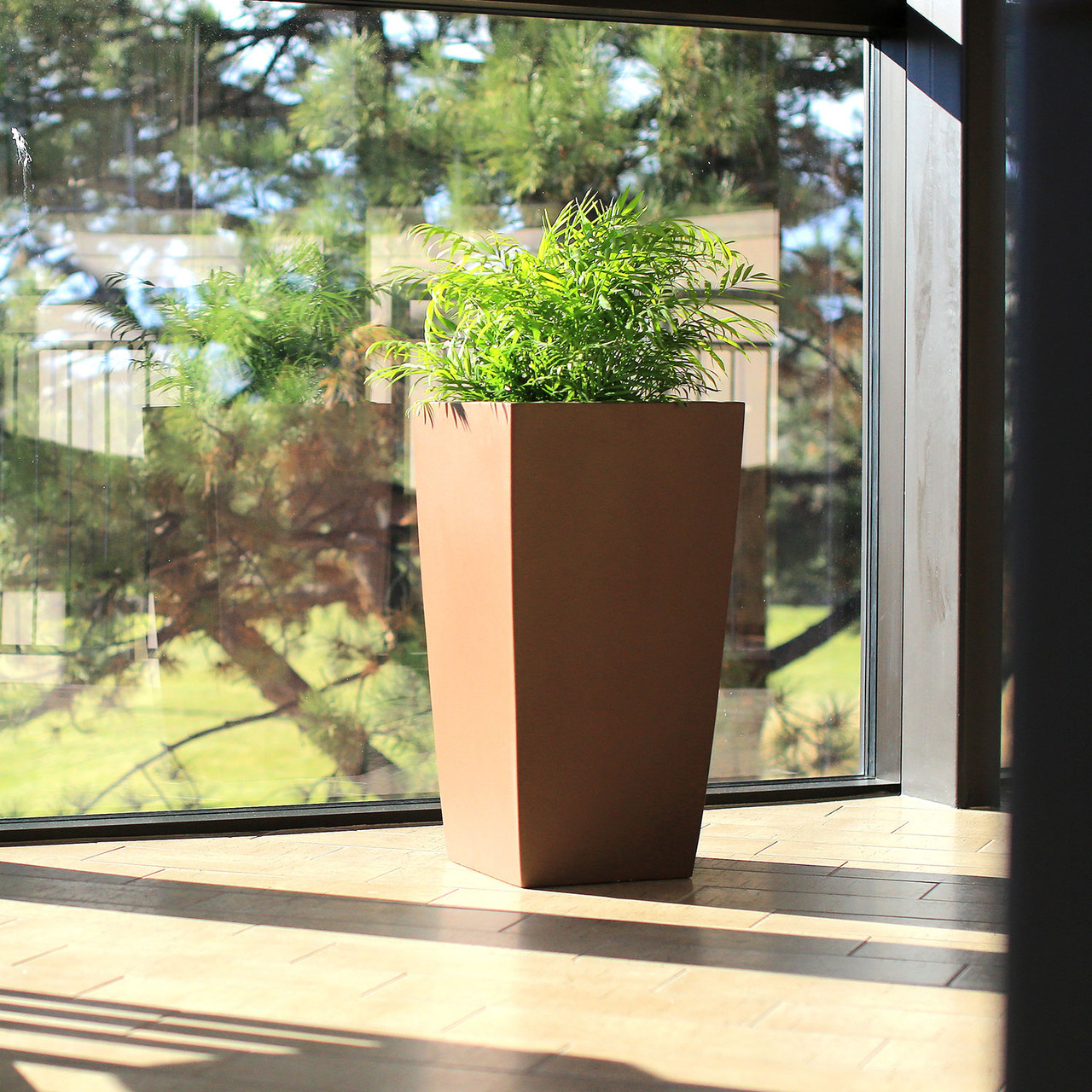
Toulan Tall Tapered Square Planter
Best for: Restaurant entries, host-stand areas, patio corners, and vertical accents.
Why it fits: Tall tapered form gives restaurant fronts a polished entry presence.
View Toulan Planter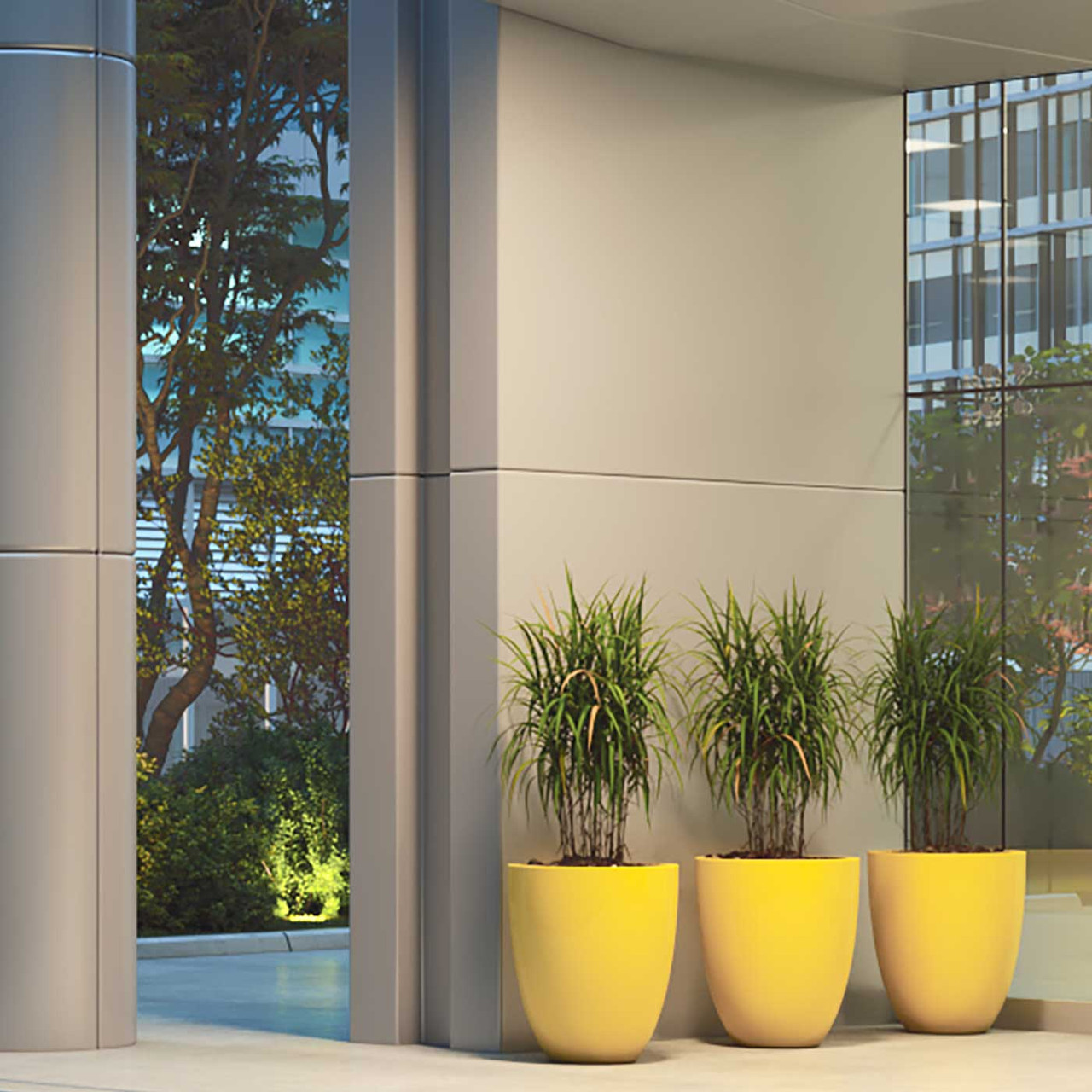
Valencia Decorative Round Fiberglass Planter
Best for: Upscale restaurants, hospitality interiors, patios, and entry accents.
Why it fits: Decorative round form works well where the planter is seen up close.
View Valencia PlanterPlanning a Restaurant Patio Planter Project?
Send us your patio layout, available depth, desired privacy level, table plan, planter quantities, finish direction, site conditions, and target timeline. We can help recommend restaurant patio planter formats that make the space more comfortable, organized, and durable without overbuilding the layout.
Start with outdoor patio planters, browse commercial planters, review privacy planters, or explore planter boxes for restaurant patios, sidewalk dining, rooftops, courtyards, and hospitality spaces.
For broader planning, see our Privacy Planters Buying Guide, Commercial Planter Boxes Buying Guide, Rooftop Planters Buying Guide, Entry Planters for Commercial Buildings, Hotel Planters Buying Guide, Planter Drainage Guide, Commercial Planter Delivery Guide, and Commercial Planter Cost Guide.
FAQ
What planters are best for restaurant patios?
Long rectangular planter boxes, privacy planters, low profile planters, tall planters, modular planter boxes, and large planter boxes are often best for restaurant patios. The right choice depends on layout, available depth, privacy needs, traffic flow, and site exposure.
How do planters create privacy for outdoor dining?
Planters create privacy by defining patio edges, screening sidewalks or streets, separating diners from traffic, and creating smaller dining zones. The planter provides structure, while the plant material creates the actual screen.
What planter boxes work best for sidewalk patios?
Slim modular planter boxes, long rectangular planters, and tall narrow planter boxes often work well for sidewalk patios because they create separation without taking too much depth from the dining area or pedestrian path.
Are fiberglass planters good for restaurant patios?
Yes. Fiberglass planters are often a practical choice for restaurant patios because they are lighter than concrete when empty, durable outdoors, finish-flexible, available in several formats, and easier to match across multiple pieces or locations.
How do I choose planters without blocking server paths?
Map the patio before choosing planters. Mark server paths, guest walkways, table spacing, ADA path of travel, host stand visibility, entry transitions, and emergency access. Planters should guide movement, not obstruct it.
Do restaurant patio planters need drainage holes?
Restaurant patio planters need a drainage plan. Drainage options can be selected at order and should be coordinated with the patio, rooftop, or maintenance plan. The goal is to avoid puddles, runoff, and plant health problems near diners.
What plants work best for restaurant patio planters?
Common options include tall grasses, shrubs, hedging, seasonal planting, palms where climate allows, and high-quality artificial planting where maintenance or light is a problem. Review our guide on low-maintenance commercial landscaping ideas for resilient outdoor plant choices that thrive in busy dining environments.
Can planters be used for rooftop restaurants?
Yes. Planters can be used for rooftop restaurants when filled weight, wind exposure, drainage, access, and structural review are handled correctly. For rooftop restaurants, balconies, terraces, and elevated decks, final placement and load approval should come from the structural engineer of record.
What should I check before ordering restaurant patio planters?
Check patio layout, available depth, server paths, table plan, privacy needs, pedestrian flow, drainage, sun and wind exposure, delivery access, finish requirements, maintenance plan, and target timeline before ordering.