null Skip to main content

Fiberglass Planters: PPM QuickShip in about a week off-peak · two weeks May–July

(888) 381-9501
(888) 381-9501

Entry Planters for Commercial Buildings

How to choose entry planters for hotels, offices, restaurants, retail storefronts, multifamily properties, commercial buildings, and high-end residential entries.

The entry is the first place where a visitor decides what kind of property they are walking into.

A planter at the entrance has to do more than hold a plant. It has to frame the space, match the scale of the building, look polished up close, survive daily traffic, and make the arrival feel intentional.

That matters for hotels, offices, restaurants, retail storefronts, multifamily properties, commercial buildings, and high-end residential projects.

An entry planter is often the smallest project detail that changes how finished the property feels.

This guide will help you choose entry planters for building entrances, lobby approaches, storefronts, restaurant fronts, hospitality entries, and property arrival sequences.

If you already know you need front entry planters, start with our porch planters, tall planters, or commercial planters.

For commercial entries, the best planter is usually the one that balances scale, traffic flow, plant material, finish quality, and long-term maintenance.

Why Entry Planters Matter

Entry planters change how a property reads before anyone walks inside.

They help create a first impression. They add scale. They frame doors. They soften hardscape. They guide movement. They help transition people from exterior to interior. They signal that the property is maintained.

That is why entry planters are not just decoration.

They can solve practical design problems:

  • A wide entrance feels empty.
  • A storefront needs softness.
  • A hotel arrival zone needs polish.
  • An office building needs a stronger approach.
  • A restaurant front needs curb appeal.
  • A multifamily entry needs to feel more finished.
  • A lobby needs a cleaner transition from reception to circulation.

The right planter makes the entry feel deliberate.

The wrong planter looks like an afterthought added because the space felt bare.

Where Entry Planters Are Used

Hotel Entrances

Hotel entrance planters need scale and polish.

They may frame the front doors, mark the valet zone, soften the lobby transition, or make the arrival feel more guest-ready.

For hotels, symmetry often matters. A pair of tall planters or large statement planters can make the entrance feel more intentional without changing the architecture.

The planters also need to survive real hospitality use: luggage carts, foot traffic, cleaning crews, seasonal planting changes, and constant close-up visibility.

Office Buildings

Office entry planters help create a professional first impression.

They can soften concrete, glass, steel, and stone. They can also help guide visitors from the sidewalk or parking area toward the lobby.

For office buildings and corporate campuses, consistency matters. If there are multiple entrances, planters should feel like part of the same property system, not one-off decorations.

Good office entry planters look clean, durable, and appropriate to the building scale.

Restaurant Fronts

Restaurant entry planters do more than decorate the door.

They create curb appeal, soften the storefront, guide guests toward the entrance, and help transition between sidewalk, patio, host stand, and dining space.

For restaurants with outdoor seating, entry planters can also help define the patio edge without building a permanent barrier.

The goal is simple:

Make the restaurant feel open, maintained, and worth walking into.

Retail Storefronts

Retail storefront planters help create a softer edge between the sidewalk and the store.

They can support merchandising, brand color, seasonal changes, traffic guidance, and curb appeal.

For retail properties, finish alignment matters. The planter should work with the storefront, signage, facade, and brand palette.

It should add polish without crowding the entrance.

Multifamily Properties

Multifamily entry planters can improve the leasing office, front entry, pool entry, amenity entry, and resident arrival experience.

For apartments, condos, and mixed-use properties, entries are part of the perceived value of the property. A bare entry can make a building feel unfinished. A well-scaled planter program can make it feel maintained and intentional.

Repeatable formats are useful here because the property may need planters across multiple entrances, courtyards, pool decks, and amenity zones.

High-End Residential Entries

High-end residential designers use entry planters to frame front doors, add scale to porches, soften hardscape, and support statement planting.

The risk is undersizing.

A small planter beside a large door, stone facade, or wide porch can make the entry look weaker, not better.

For luxury residential entries, the planter needs to match the scale of the architecture.

Interior Lobby Entries

Entry planters are also used inside.

Lobby planters can define reception zones, soften elevator banks, divide seating areas, and create a more finished transition from outside to inside.

Interior planters are seen up close, so finish quality matters. They also need liners, floor protection, and enough mobility for cleaning, events, or layout changes.

Browse indoor planters when the entry condition is inside a lobby, office, hotel, or hospitality interior.

Choosing the Right Entry Planter Shape

The right shape depends on the entrance.

Start with what the planter needs to do: frame, soften, guide, screen, add height, or create a focal point.

Tall Planters

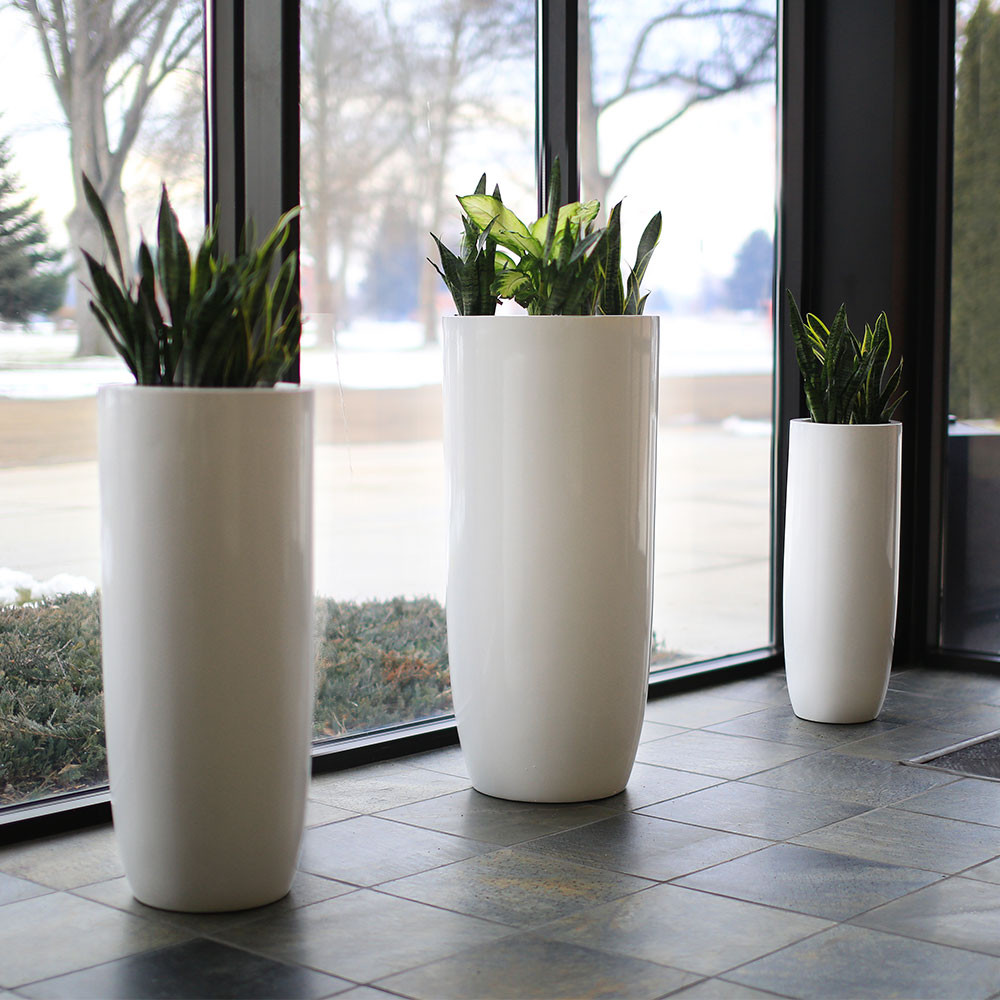
Tall entry planters are best for flanking doors, columns, vertical accents, hotel entries, office entries, and restaurant fronts.

They add height without requiring a large footprint.

Use tall planters when the entry needs more vertical presence or when the floor area is limited.

Tall planters work especially well in pairs.

Round Planters

Round planters soften hard corners and create standalone focal points.

They work well in plazas, circular drives, hotel entries, courtyards, and wider arrival zones.

Use round planters when the entrance has too many hard lines or needs a more welcoming shape.

Square and Cube Planters

Square and cube planters are best for modern entries, symmetrical layouts, trees, and architectural entrances.

They feel clean and substantial.

Use square planters when the building has strong geometry or when the planter needs to hold a larger specimen without looking decorative.

Vase and Tapered Planters

Vase and tapered planters work well for hospitality entries, decorative entrances, lobby-adjacent spaces, restaurants, and polished front doors.

They add shape and vertical movement without feeling as heavy as a cube.

Use them when the entrance needs a more refined or hospitality-driven look.

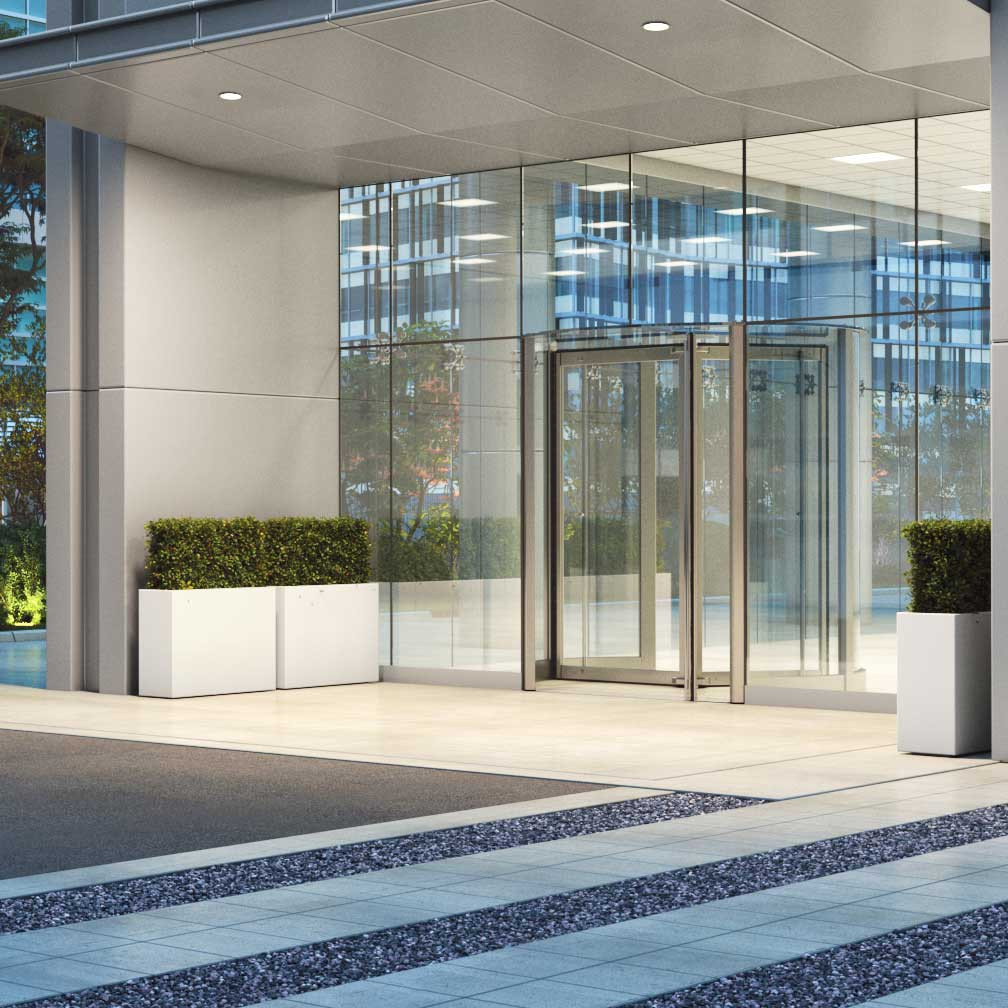
Rectangular Planter Boxes

Rectangular planter boxes are useful for wider entry zones, storefront edges, traffic guidance, and entry-adjacent privacy.

They can help guide movement toward the door or soften a long facade.

For larger entry layouts, planter boxes can work better than individual pots because they create a clearer line.

For more on box formats, see our Commercial Planter Boxes Buying Guide.

Size and Scale

Entry planters need to match the building.

Too small looks cheap. Too large can block movement.

The right size depends on:

  • Door height
  • Facade width
  • Column spacing
  • Signage
  • Sidewalk width
  • Pedestrian flow
  • Plant material
  • Indoor vs. outdoor use
  • Whether the planters are paired or used alone

Paired Planters

Paired planters create symmetry.

They work well at hotel doors, office entries, restaurant fronts, retail storefronts, and formal residential entries.

When using pairs, make sure the planters are large enough to frame the entrance. If they are too small, they can look like afterthoughts.

Single Statement Planters

Single statement planters can work in wider entries, plazas, courtyards, and lobby approaches.

They are useful when the space needs a focal point instead of a symmetrical frame.

Round, cube, and large statement planters often work well in this role.

Root Volume

Root volume matters if the planter will hold palms, trees, ficus, topiary, large shrubs, or formal plantings.

Do not choose the planter only by height. Make sure it can support the plant material.

An entry planter that looks good empty but cannot support the planting plan will create problems later.

Indoor vs. Outdoor Entry Conditions

An entry planter may be outside, inside, or right at the transition between the two.

That changes the buying decision.

Outdoor Entry Planters

Outdoor entry planters need to handle exposure.

Consider:

  • UV
  • Rain
  • Freeze-thaw cycles
  • Wind
  • Foot traffic
  • Cleaning crews
  • Salt and snow removal where relevant
  • Drainage
  • Seasonal planting changes

Outdoor planters also need to hold up visually because entry areas are high-visibility spaces.

If the planter fades, cracks, stains, or looks undersized, visitors notice. Look for UV protective finishes built for outdoor commercial use.

Indoor and Lobby Entry Planters

Indoor entry planters need to look polished up close.

They also need practical details:

  • Liners
  • Floor protection
  • Finish quality
  • Mobility for cleaning or events
  • Scale relative to furniture and reception areas
  • Plant maintenance access

Interior lobby planters are often used to soften hard finishes, define reception areas, and create a better transition from exterior to interior.

They should look like part of the interior package, not leftover exterior decor.

Material Choice for Entry Planters

Fiberglass is often the practical default for commercial entry planters.

It works because it balances appearance, weight, durability, finish flexibility, and project handling.

Fiberglass entry planters are:

  • Lightweight compared with concrete
  • Durable
  • Finish-flexible
  • Useful indoors and outdoors
  • Available in tall, round, cube, and large formats
  • Easier to move for cleaning or events
  • Good for matching multiple entrances or properties

Here is the basic comparison.

Material Best For Watchouts
Fiberglass Commercial entries needing polish, durability, lower weight, and finish options Quality varies by supplier
Concrete Permanent ground-level entries Heavy, difficult to move, freeze-thaw risk
Metal / Aluminum Custom architectural entries Higher cost and longer lead times
Ceramic / Terracotta Decorative residential entries Fragile, weather limitations
Plastic / Resin Budget use Can look cheap in commercial settings

Concrete can work for some permanent ground-level entries. Metal can work for custom architectural projects. Ceramic can work in some residential or interior settings.

But for many commercial entries, fiberglass is the easiest material to specify because it can look polished without making freight, placement, or future movement harder than needed.

For more material guidance, see our Fiberglass vs. Concrete Planters Guide.

Planting Considerations

The planter and plant material should be chosen together.

Different plantings create different entry effects.

Palms

Palms create vertical impact and are common in hospitality, pool, resort, lobby, and warm-climate entry settings.

They need enough planter volume to look proportional and support the plant.

Ficus and Small Trees

Ficus and small trees can make an entry feel more upscale and established.

They work well in large round, cube, or tree-scale planters.

Grasses

Grasses add movement and softness.

They can work well for restaurants, office entries, multifamily properties, and exterior approaches where the goal is less formal.

Topiary and Hedging

Topiary and hedging create formal symmetry.

They are useful for hotel entries, residential-luxury front doors, retail storefronts, and classic commercial entrances.

Seasonal Planting

Seasonal planting works well for hospitality, retail, restaurants, and multifamily properties that want a fresh entry look throughout the year.

If seasonal changes are part of the plan, choose planters that make maintenance and replanting practical.

Artificial Planting

Artificial plants can be appropriate when maintenance is a major concern or when the space has poor light.

Use them carefully. In high-end entries, the quality of artificial planting needs to match the quality of the property.

Traffic, Safety, and Placement

Entry planters should guide movement, not obstruct it.

Before placing planters, think through:

  • Door swing
  • ADA path of travel
  • Sidewalk width
  • Valet movement
  • Luggage carts
  • Strollers
  • Wheelchairs
  • Delivery traffic
  • Host stand access
  • Retail entry flow
  • Emergency access

Do not narrow the entry path just to make the planters feel symmetrical.

The best entry planters make movement clearer. They show people where to go. They frame the entrance without becoming a barrier.

For outdoor entries, also consider wind exposure and tip risk, especially with taller planters and taller plant material.

Common Mistakes to Avoid

Choosing Planters Too Small for the Building

This is the most common mistake.

Small planters can make a large entry look unfinished.

Match the planter to the building scale, not just the door.

Blocking the Entrance

Planters should not block doors, create pinch points, or interfere with pedestrian flow.

If the entry becomes harder to use, the planter is in the wrong place.

Ignoring Pedestrian Flow

A planter can guide movement, but it can also create confusion.

Think about how guests, residents, staff, deliveries, and maintenance crews move through the entry.

Choosing Fragile Materials for High-Traffic Entries

Commercial entries get used.

Avoid materials that are not suited for daily traffic, cleaning, carts, weather, or repeated close contact.

Forgetting Drainage Outdoors

Outdoor entry planters need drainage planning.

Depending on the site, that may mean drainage holes, liners, risers, or coordination with maintenance.

Forgetting Liners and Floor Protection Indoors

Indoor lobby planters need floor protection.

Do not place live planting indoors without thinking through liners, watering, overflow, and maintenance.

Using Mismatched Planters at Multi-Entry Properties

Hotels, offices, multifamily buildings, and retail centers often have more than one entry.

Using mismatched planters can make the property feel pieced together.

Choosing Plant Material Before Confirming Planter Size

The plant may need more root volume than the planter provides.

Choose the planter and planting plan together.

Treating Entry Planters as Decor

Entry planters are part of the arrival experience.

They should be selected with the same care as signage, lighting, paving, furniture, and facade details.

Recommended PPM Entry Planters

These products are common starting points for commercial entry planter projects. The right choice depends on building scale, placement, plant material, finish, and whether the planter is indoors or outdoors.

St. Tropez Tall Vase Planter

Best for: Hospitality entries, lobbies, restaurants, offices, and polished front doors.

A tall vase-style fiberglass planter that gives entry spaces vertical polish without feeling heavy.

View St. Tropez Planter

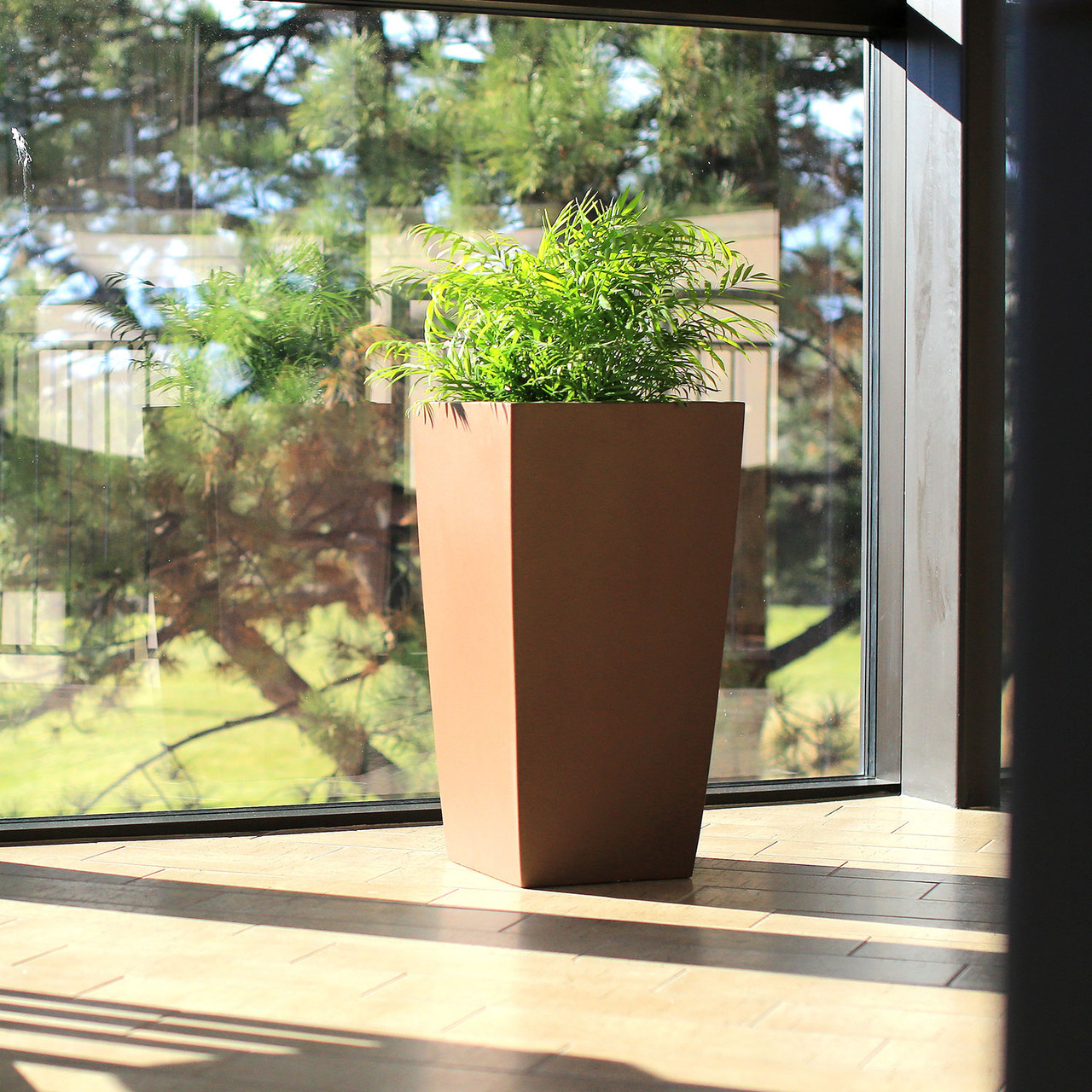
Toulan Tall Tapered Planter

Best for: Hotel entries, office entries, commercial entrances, and vertical accents.

A tall tapered square planter that frames doors and columns cleanly.

View Toulan Planter

Montroy Cube Planter

Best for: Modern entries, tree plantings, symmetrical layouts, and commercial entrances.

A cube fiberglass planter that adds architectural weight and works well in pairs.

View Montroy Planter

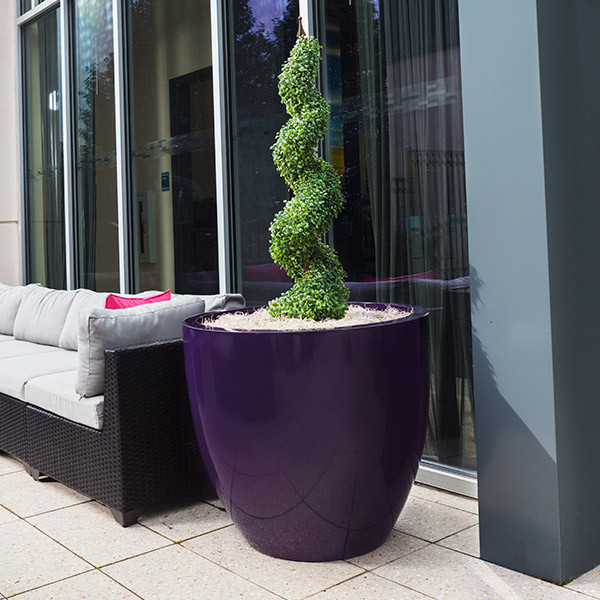
Wannsee Round Tree Planter

Best for: Hotel entries, plazas, trees, palms, and statement plantings.

A large round tree planter that adds softness, specimen scale, and visual weight to commercial entries.

View Wannsee Planter

Valencia Decorative Round Planter

Best for: Restaurants, lobbies, hospitality interiors, and entry accents.

A decorative round fiberglass planter for polished entry environments that need softness and shape.

View Valencia Planter

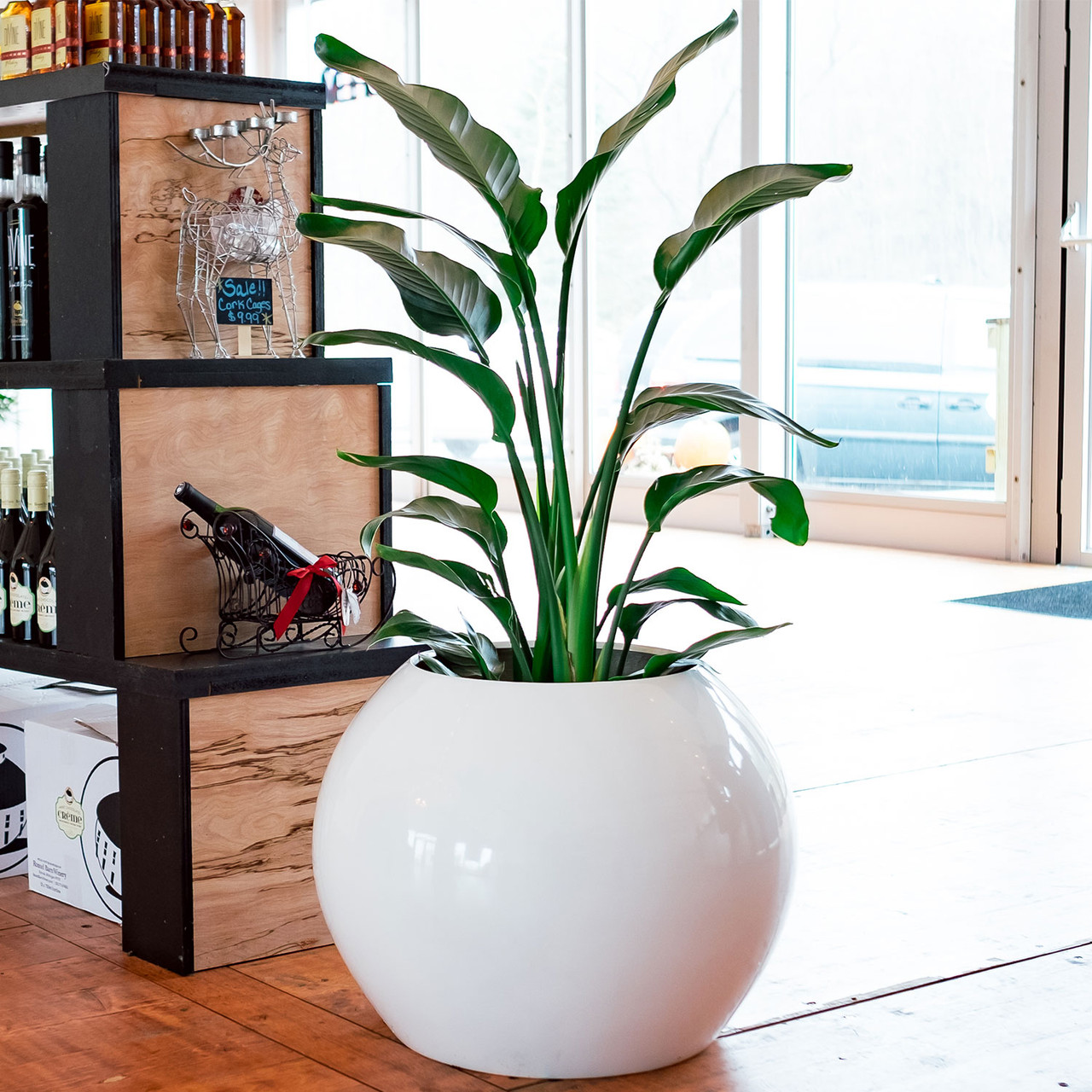
Globe Spherical Planter

Best for: Plazas, courtyards, modern entries, and focal points.

A sculptural round fiberglass planter that creates a clear entry focal point.

View Globe Planter

Amesbury Tall Narrow Planter Box

Best for: Narrow entries, storefronts, office dividers, and entry-adjacent screening.

A tall narrow fiberglass planter box that adds vertical presence where space is limited.

View Amesbury Planter

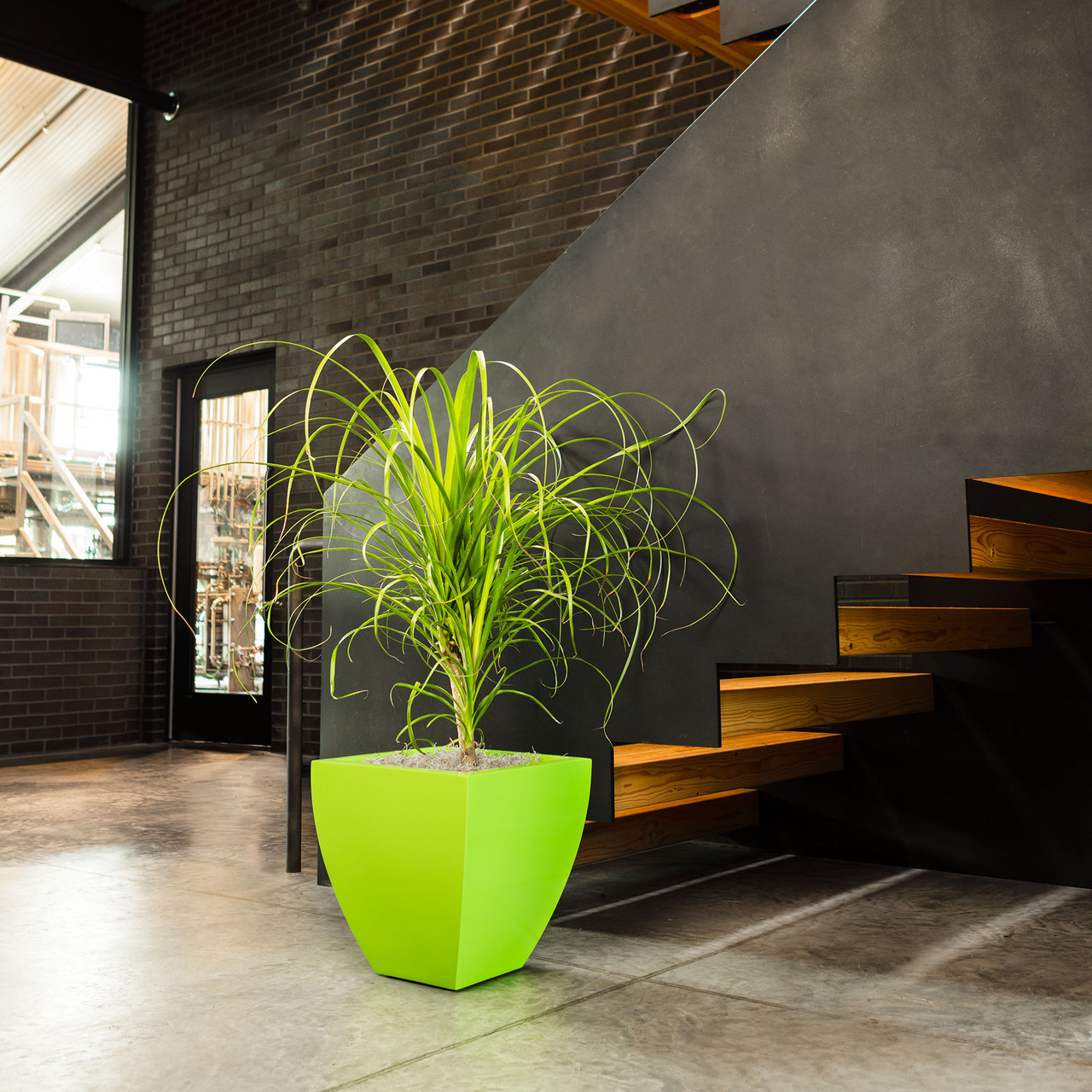
Lima Tapered Square Planter

Best for: Smaller entries, paired front doors, residential-luxury entries, and compact commercial spaces.

A tapered square fiberglass planter that gives entry spaces structure without oversized scale.

View Lima Planter

Planning Planters for a Commercial Entry?

Send us your entry photos, dimensions, preferred height, finish direction, plant material, and timeline. We can help recommend entry planter formats that match the building scale and project requirements.

Start with porch planters, browse tall planters, or compare commercial planters for hotels, offices, restaurants, retail storefronts, multifamily properties, and commercial buildings.

For broader planning, see our Commercial Planter Cost Guide, Large Outdoor Planters Buying Guide, Fiberglass vs. Concrete Planters Guide, and Commercial Planter Boxes Buying Guide.

FAQ

What are the best planters for a commercial building entrance?

The best planters for a commercial building entrance match the scale of the building, frame the entrance without blocking movement, support the right plant material, and hold up to traffic and exposure. Tall planters, cube planters, round statement planters, and rectangular planter boxes are common choices.

What size entry planter do I need?

Entry planter size depends on door height, facade width, signage, sidewalk width, pedestrian flow, and plant material. The planter should be large enough to hold visual scale, but not so large that it blocks the entrance or creates a pinch point.

Are tall planters good for entrances?

Yes. Tall planters are often a strong choice for entrances because they add vertical presence, frame doors, and work well where floor space is limited. They are commonly used for hotels, offices, restaurants, storefronts, and residential-luxury front entries.

Should entry planters be used in pairs?

Entry planters are often used in pairs when the goal is symmetry. Paired planters work well at front doors, hotel entrances, office entries, restaurant fronts, and formal residential entries. Single statement planters can also work in wider plazas, courtyards, and lobby approaches.

What material is best for outdoor entry planters?

Fiberglass is often a practical choice for outdoor entry planters because it is durable, lighter than concrete, finish-flexible, and available in tall, round, cube, and large formats. Concrete, metal, ceramic, and resin can also work depending on the site and project needs.

Can entry planters be used indoors?

Yes. Entry planters can be used indoors in lobbies, reception areas, elevator banks, office entries, hotels, and hospitality interiors. Indoor planters should be planned with liners, floor protection, finish quality, and maintenance access.

Do outdoor entry planters need drainage holes?

Outdoor entry planters usually need a drainage plan. Depending on the site, planting, and maintenance plan, that may include drainage holes, liners, risers, or other drainage coordination.

What plants work best in entry planters?

Common entry planter options include palms, ficus, small trees, grasses, topiary, hedging plants, and seasonal planting. The best choice depends on climate, light, maintenance, planter size, and whether the entry is formal, hospitality-focused, commercial, or residential-luxury.

How do I choose planters for a hotel, office, or restaurant entrance?

Start with the building scale, entry width, traffic flow, and desired first impression. Hotels often need polish and symmetry. Offices need a professional approach. Restaurants need curb appeal and a clear transition from sidewalk to entry or patio. Choose the planter shape, size, material, and planting plan around that job.