How to choose large planters for trees, palms, ficus, olive trees, rooftops, entries, courtyards, hotels, offices, and commercial landscapes.
A tree planter is not just a bigger pot.
It has to support the plant, match the scale of the space, manage drainage, remain stable, and still be practical to ship, receive, place, and maintain.
That matters when you are choosing planters for palms, ficus, olive trees, large shrubs, hotel entries, rooftops, pool decks, office lobbies, courtyards, restaurants, multifamily properties, and commercial landscapes.
The planter and the plant material need to be chosen together.
This guide will help project teams choose large planters for trees and palms based on shape, size, root volume, filled weight, drainage, site conditions, and material.
Tree planters do more work than standard decorative planters.
They need to support root volume. They need enough scale to look right in the space. They need to stay stable once planted. They need a drainage plan. They need to work with the maintenance plan. And they need to get to the site without creating installation problems.
When a tree planter is wrong, the issue is not just cosmetic.
It can affect:
Plant health
Stability
Drainage
Filled weight
Freight and access
Maintenance
Replacement cost
How finished the space feels
That is why tree planters should not be chosen by height alone. The right planter is the one that fits the plant, the site, and the job it needs to do.
Where Large Tree Planters Are Used
Hotel Entries
Hotel entries often use tree planters for scale, polish, and arrival impact.
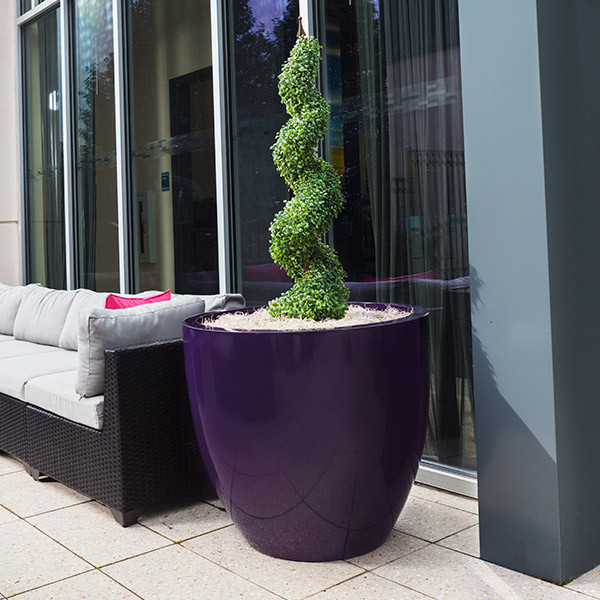
Large round planters, cube planters, and tall planters can hold palms, ficus, topiary, or other statement plantings near doors, valet zones, and lobby transitions.
For hotels, the planter needs to look finished up close and substantial from the curb. For more on hospitality applications, see our Hotel Planters Buying Guide.
Office Buildings
Office buildings use large tree planters to soften hard materials, frame entrances, improve lobby approaches, and create a more professional arrival experience.
For corporate campuses and multi-entry properties, consistency matters. A repeatable planter format can make the property feel more organized.
Multifamily Courtyards
Multifamily courtyards often need tree-scale planting to make shared outdoor spaces feel more established.
Large tree planters can define seating areas, soften paving, frame amenity spaces, and make courtyards feel less exposed.
Rooftop terraces need careful tree planter planning.
Filled weight, wind, access, drainage, and plant selection all matter. Large fiberglass planters are often considered because they provide scale with lower empty weight than concrete.
For commercial rooftops, balconies, terraces, and elevated decks, final placement and load approval should come from the structural engineer of record. For deeper rooftop-specific guidance, see our Rooftop Planters Buying Guide.
Pool Decks
Pool decks often use palms, grasses, shrubs, and small trees to create a resort-style environment.
Large planters can define lounge zones, soften hardscape, and add shade or vertical interest.
Pool environments may also involve splash, cleaning chemicals, sun exposure, and frequent maintenance, so material and finish choice matter. See our Pool Deck Planters Buying Guide for more.
Restaurant Patios
Restaurant patios use tree planters to create atmosphere, privacy, shade, and visual separation.
A few properly scaled tree planters can make an outdoor dining area feel more comfortable and intentional.
For restaurants, consider traffic flow, server paths, guest movement, and how the planters affect seating layout.
Commercial Landscapes
Commercial landscapes often use tree planters where in-ground planting is not practical.
That may include plazas, paved courtyards, building entries, rooftops, retail centers, office campuses, and mixed-use developments.
In these settings, the planter needs to look architectural and perform like part of the project, not a temporary container.
Interior Lobbies
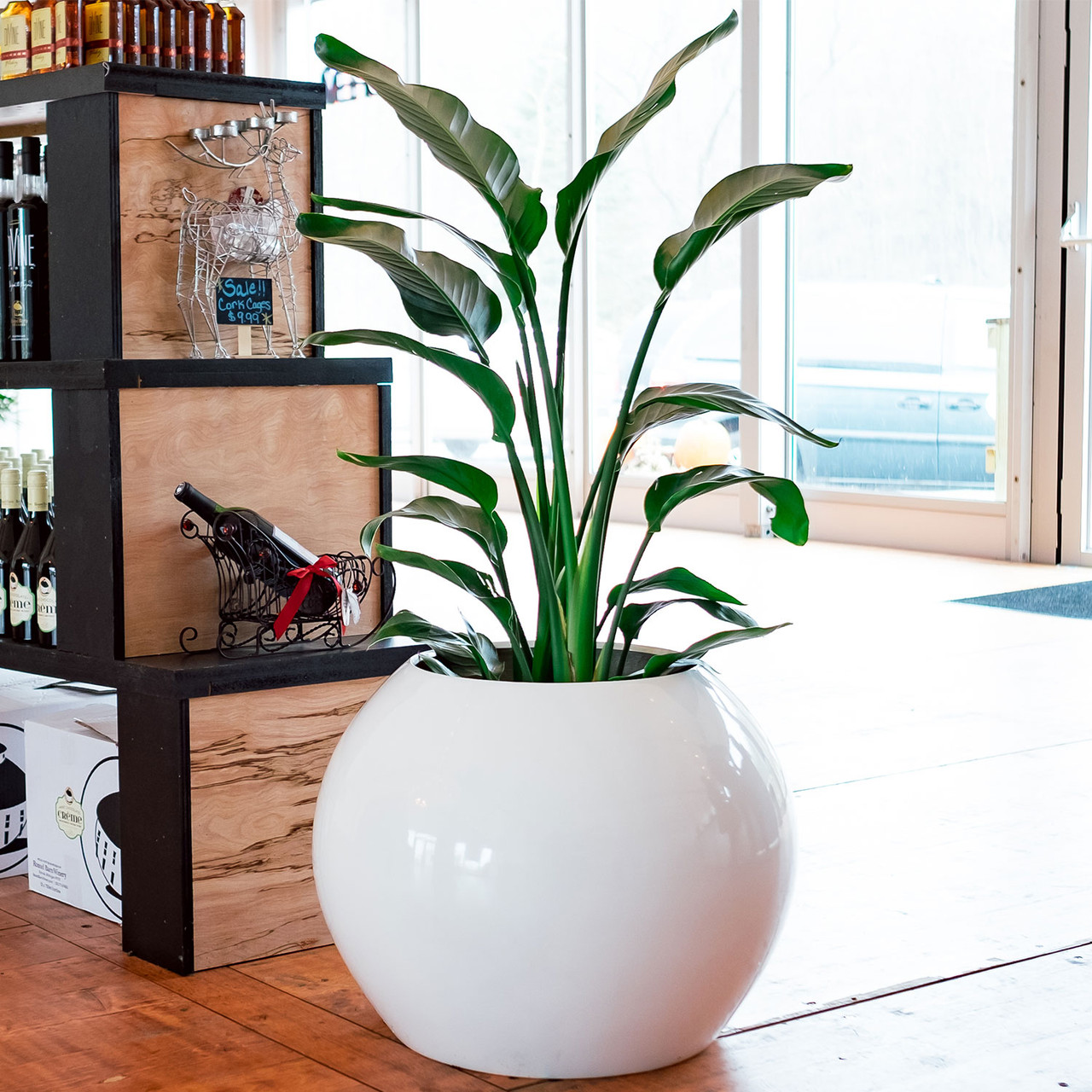
Interior lobbies use large planters for ficus, palms, olive trees, and other statement plants.
For interior tree planters, finish quality matters because people see the planter up close. Liners, floor protection, maintenance access, and mobility for cleaning or events also matter. For more on indoor commercial applications, see our Indoor Commercial Planters Buying Guide.
High-End Residential Exteriors
High-end residential designers use large tree planters for front entries, courtyards, pool areas, terraces, drive entries, and outdoor rooms.
The main risk is undersizing. A small planter beside a large facade, pool deck, or outdoor living area can make the entire space feel underbuilt.
Choosing the Right Planter Shape
The best tree planter shape depends on the plant material, site, and design intent.
Round Planters
Round planters are a natural fit for trees and palms.
They work well for hotel entries, plazas, courtyards, lobbies, rooftops, and statement plantings because the shape feels balanced around a central specimen.
Use round planters when the planting is meant to become a focal point.
Cube and Square Planters
Cube and square planters work well for modern entries, commercial landscapes, symmetrical layouts, and tree plantings that need architectural weight.
They are clean, repeatable, and easy to align with buildings, paving, columns, and entries.
Use square planters when the project needs a more structured look.
Extra-Large Rectangular Planter Boxes
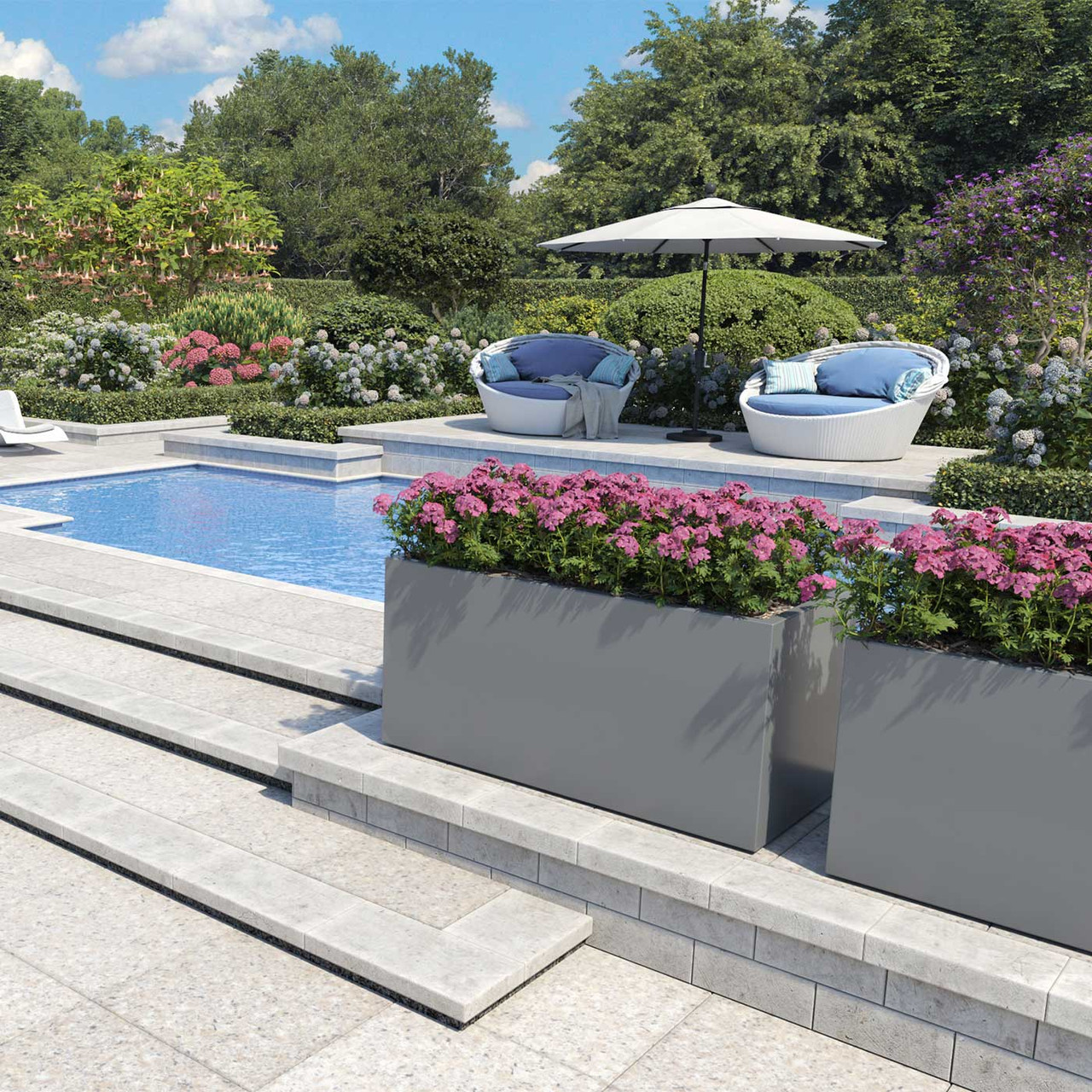
Extra-large rectangular planter boxes are useful for larger shrubs, multi-stem plantings, grouped plantings, and broad commercial landscape applications.
They can also support tree-scale planting where the layout needs a linear form.
Use planter boxes when the planter needs to define an edge, support a longer planting bed, or create a more architectural run.
Tall Planters
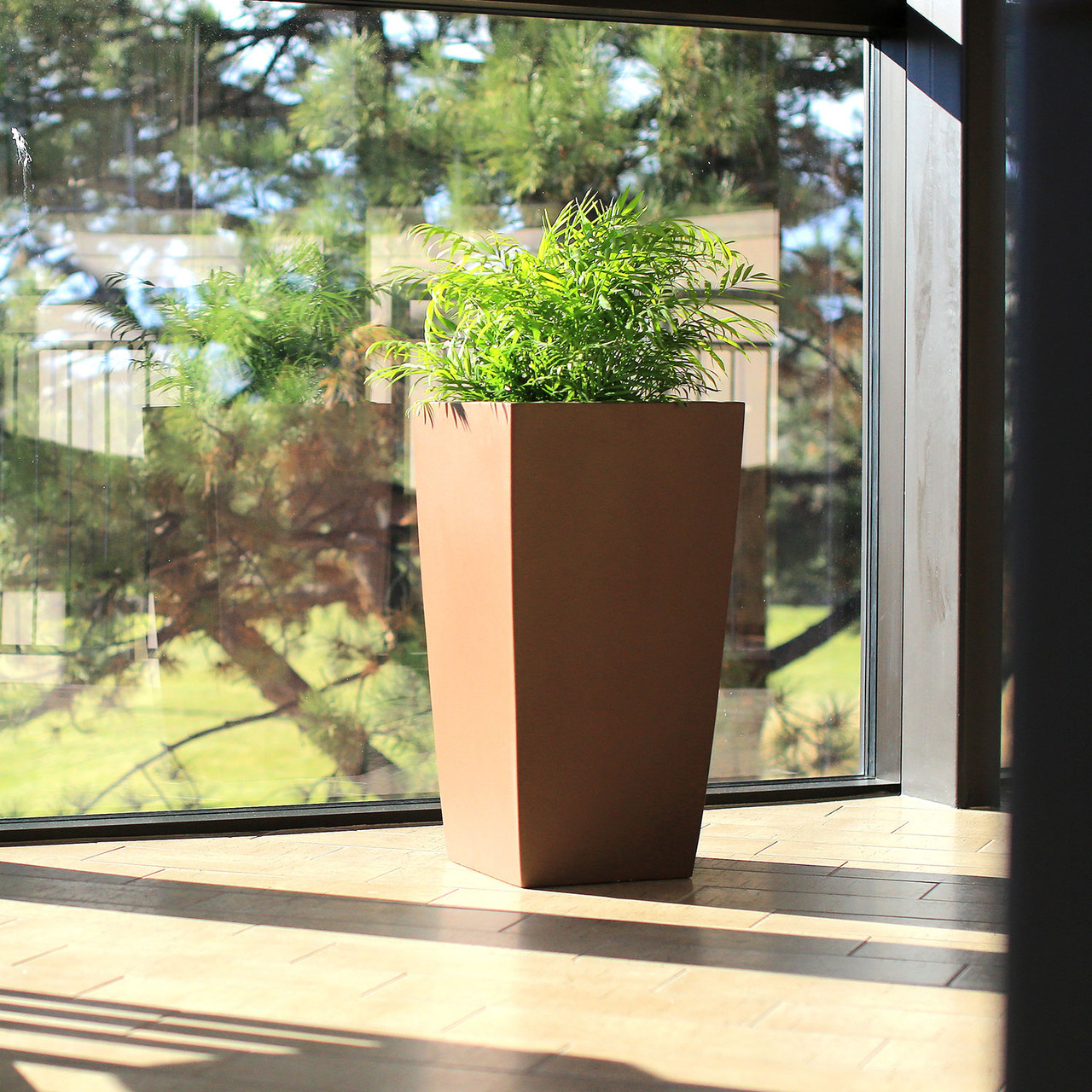
Tall planters can work for vertical planting, palms, entry accents, and commercial entrances.
They add height and presence without requiring as much floor space.
The key is root volume. A tall planter may look substantial, but the plant still needs enough usable interior space for the root system and maintenance plan.
Browse tall planters when the project needs vertical scale.
Low and Wide Planters
Low and wide planters can work well for certain shrubs, small trees, and broad planting arrangements.
They are useful when the project needs stability, horizontal mass, or a lower sightline.
Size and Root Volume
This is one of the most important decisions.
Tree planter size depends on more than the visual size of the pot.
It depends on:
Tree type
Root ball size
Mature planting size
Indoor vs. outdoor use
Wind exposure
Maintenance plan
Whether the planting is seasonal or long-term
Whether the planter needs to move
How much visual scale the space requires
Do not choose a tree planter by height only.
The planter needs enough usable volume for the root system, soil, drainage approach, and maintenance plan. A planter can look tall and still be too narrow for the plant.
For palms, ficus, olive trees, large shrubs, and other statement plantings, the project team should confirm the planting plan before finalizing the planter size. Review our list of the best trees for pots for specifier guidelines on tree species and container ratios.
Large tree planters can become very heavy once planted.
Filled weight includes:
Planter shell
Soil
Water
Drainage material
Liner or reservoir system
Plant material
This matters for rooftops, balconies, terraces, elevated decks, and interior spaces above grade.
Fiberglass planters are lighter than concrete when empty, which can give the project more flexibility. But filled weight still needs to be planned. To optimize container weight without compromising root depth, see our guide on how to fill a large planter using lightweight pot fillers.
For commercial rooftops, balconies, terraces, and elevated decks, final placement and load approval should come from the structural engineer of record.
Drainage and Irrigation
Tree planters need a drainage plan.
That plan may include:
Drainage holes
Risers
Liners
Reservoirs
Irrigation coordination
Indoor floor protection
Maintenance access
Drainage options can be selected at order. Outdoor tree planters often need drainage to protect plant health and reduce maintenance issues. Indoor tree planters may need liners, waterproofing, saucers, reservoirs, or other protection depending on the setting.
For commercial tree planters, fiberglass is often the practical default.
It gives project teams large formats, lower empty weight than concrete, outdoor durability, finish flexibility, easier freight and placement, and consistency across multiple units.
Fiberglass tree planters are often chosen because they offer:
Large formats
Lower empty weight than concrete
Outdoor durability
Finish flexibility
Easier freight and placement
Consistency across multiple units
Indoor and outdoor use
Other materials can work, but each has tradeoffs. Concrete is heavy and harder to ship, move, and place. Metal or aluminum can work for custom architectural specs, but cost and lead time may be higher. Wood requires ongoing maintenance.
Height does not tell the whole story. Root volume, width, depth, stability, and plant requirements matter.
Undersizing the Planter
Tree-scale planting needs a planter that can support the plant and match the space. An undersized planter can make the installation look temporary or underbuilt.
Ignoring Root Volume
Root volume affects plant health and long-term performance. Choose the planter and plant material together.
Ignoring Filled Weight
Filled weight includes the planter, soil, water, drainage material, and plant. This is especially important for rooftops, balconies, terraces, decks, and elevated spaces.
Forgetting Access, Freight, and Placement
Large tree planters need to reach the site and final position. Confirm delivery, dock access, gates, elevators, doors, rooftop access, staging, and who will move the planters after delivery. For more on what to expect, see our Commercial Planter Delivery Guide.
Recommended PPM Tree Planters
These products are common starting points for trees, palms, ficus, olive trees, large shrubs, and statement plantings. The right choice depends on plant material, site conditions, quantity, finish, and timeline.
Wannsee Large Round Tree Planter
Best for: Trees, palms, hotel entries, rooftops, plazas, and statement planting.
Why it fits: Large round form with strong tree-scale presence.
Specifying large tree planters for a hotel entry, corporate lobby, rooftop terrace, or commercial courtyard? Our tree planters and large fiberglass planters are engineered to hold heavy root volumes, resist wind tipping, and withstand severe freeze-thaw cycles without cracking. Backed by a 3-year warranty and available in 20+ professional finishes. Call us at (888) 381-9501 or reach out to our team for custom trade quotes and volume lead times.
The right size depends on the tree type, root ball size, mature planting size, indoor or outdoor use, wind exposure, and maintenance plan. Do not choose by height alone. The planter needs enough usable volume for the root system, soil, drainage approach, and plant health.
Can fiberglass planters hold trees?
Yes. Commercial-grade fiberglass planters can be used for trees, palms, ficus, olive trees, large shrubs, and statement plantings when the planter size, root volume, drainage plan, and site conditions are appropriate.
What shape planter is best for trees?
Round planters are often a natural fit for specimen trees and palms. Cube and square planters work well for modern entries and structured layouts. Extra-large rectangular planter boxes can work for broader planting beds, large shrubs, and commercial landscape applications.
What planters work best for palm trees?
Palms often need planters with enough height, stability, root volume, and visual scale. Large round planters, cube planters, and tall planters are common options depending on the site and desired look.
Are large tree planters good for rooftops?
Large tree planters can be used on rooftops, but filled weight, wind, access, drainage, and structural approval matter. For commercial rooftops, balconies, terraces, and elevated decks, final placement and load approval should come from the structural engineer of record.
Do tree planters need drainage holes?
Tree planters usually need a drainage plan. Drainage options can be selected at order and may include drainage holes, risers, liners, reservoirs, or irrigation coordination depending on the site and planting plan.
How heavy are large tree planters when filled?
Filled weight includes the planter shell, soil, water, drainage material, liner or reservoir system, and plant material. Weight depends on planter size, material, and planting plan. Filled weight should be reviewed carefully for rooftops, balconies, terraces, and elevated spaces.
Can tree planters be used indoors?
Yes. Tree planters can be used indoors for lobbies, offices, hotels, reception areas, and hospitality interiors. Indoor applications need liners, floor protection, maintenance access, and plant material suited to the light and environment.
What material is best for commercial tree planters?
Fiberglass is often a practical choice for commercial tree planters because it offers large formats, lower empty weight than concrete, outdoor durability, finish flexibility, easier freight and placement, and consistency across multiple units.