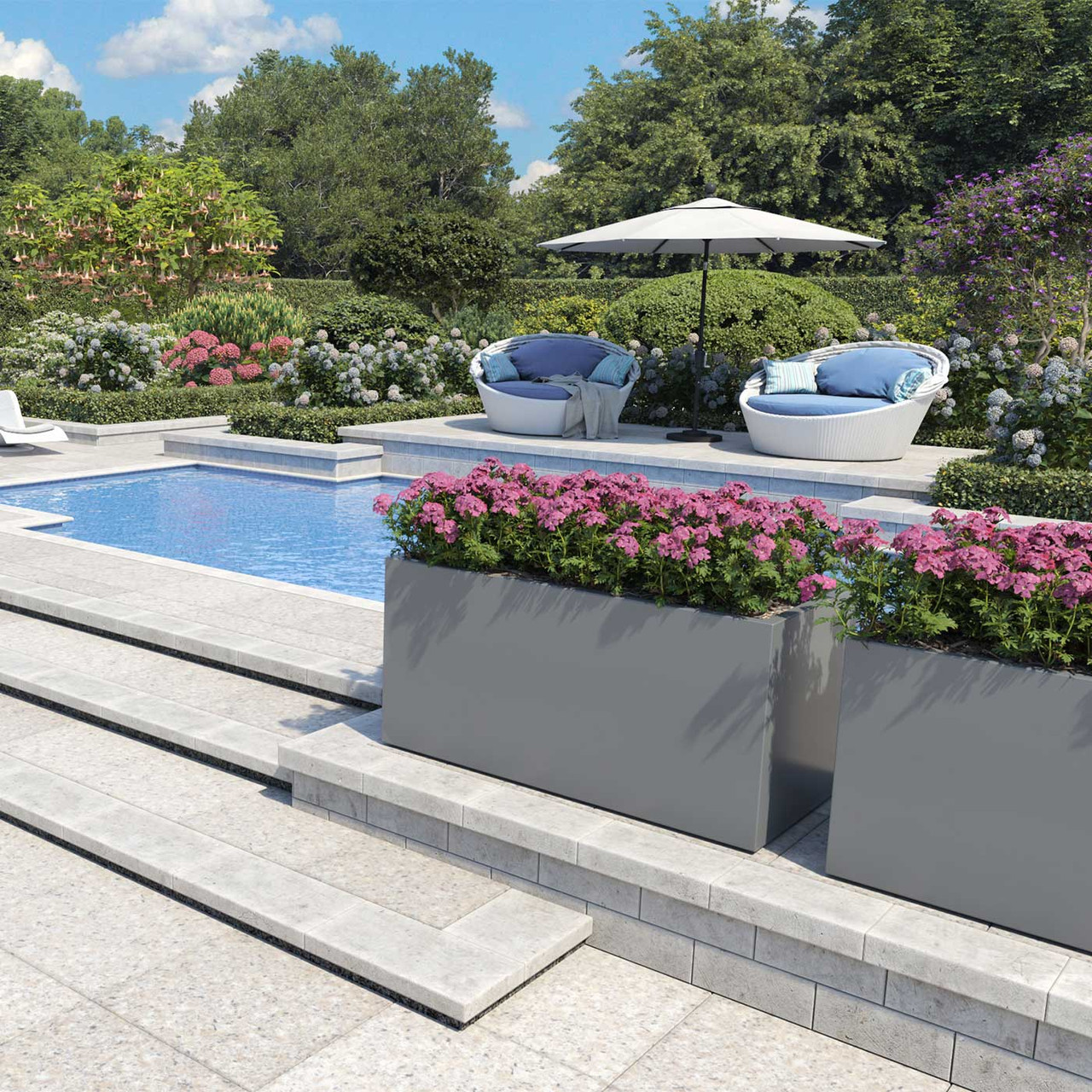
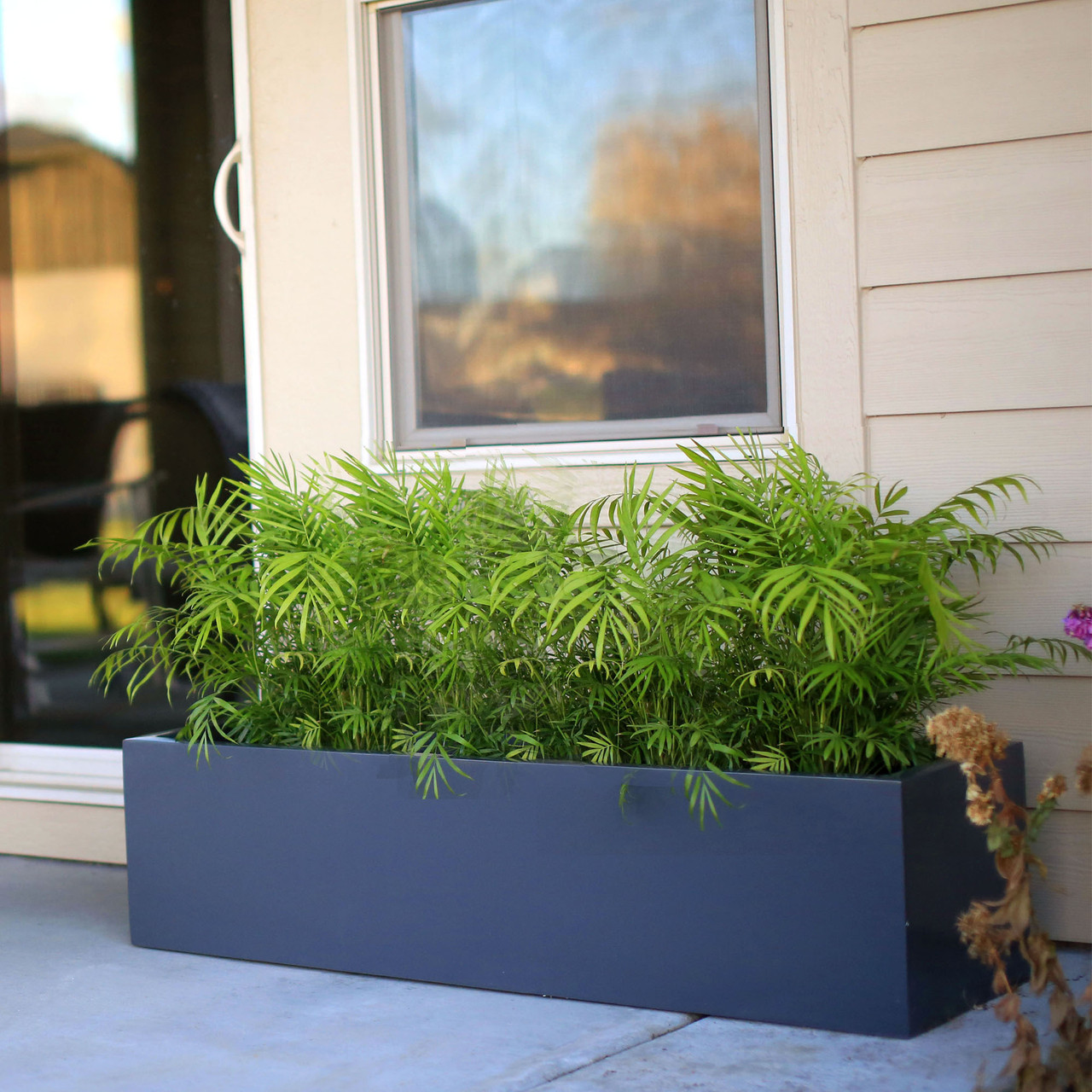
Low Profile Planter Boxes
Best for: Pool deck edges, lounge zones, walkways, and low visual separation.
Low profile format defines pool areas without blocking views.
View Low ProfilePool deck planters are not just decorative containers around water. They are part of how the pool area works.
The right planters can define lounge zones, soften paving, create privacy, frame cabanas, separate dining from pool traffic, add resort-style planting, and make a pool deck feel like a planned amenity instead of open hardscape with furniture.
That matters for hotels, resorts, multifamily properties, clubs, commercial pool areas, courtyards, rooftops, restaurants with poolside dining, and high-end residential projects.
A strong pool deck planter program helps answer practical questions:
This guide will help hotel teams, resort teams, multifamily property managers, developers, landscape architects, pool deck designers, hospitality designers, general contractors, commercial property managers, and high-end residential designers choose pool deck planters for commercial and hospitality environments.
If you already know the general direction, start with pool planters, outdoor planters, commercial planters, large planters, or privacy planters.
Pool deck planters have to support the pool experience and survive the pool environment.
They sit near water, sun, bare feet, lounge chairs, towels, cleaning routines, pool furniture, dining areas, and constant movement.
That makes them different from simple decorative pots.
Pool deck planters need to account for:
The planter needs to look good, but it also needs to fit the operating layout.
If the planter blocks access, crowds the lounge chairs, creates maintenance problems, or looks too small for the pool deck, it is not doing the job.
Hotel pool planters help make the pool deck feel more finished.
They can define lounge zones, frame cabanas, create privacy, soften paving, separate food and beverage areas, and add resort-style planting.
Hotel pool planters need to look polished because guests see them up close for long periods of time.
They also need to handle daily hospitality use, including pool splash, cleaning crews, lounge furniture, towels, foot traffic, and seasonal refreshes.
For broader hospitality planning, see the Hotel Planters Buying Guide.
Resort pool decks often need more scale.
Large pool areas can make small pots look temporary or underbuilt. Oversized hardscape, cabanas, umbrellas, outdoor dining, and wide walkways usually need larger planters or repeated planter runs to create enough visual presence.
Large planter boxes, tree planters, long rectangular planters, privacy planters, and sculptural round planters can help make the pool area feel intentional.
The goal is to create zones without making the space feel crowded.
Multifamily pool planters support resident experience.
They can define lounge areas, separate grill zones, soften courtyard pools, add privacy from adjacent units or walkways, and make the pool deck feel more like an amenity.
For multifamily properties, durability and repeatability matter.
The planter program may need to match entries, courtyards, rooftops, balconies, and other common areas.
See the Multifamily Planters Buying Guide when planning across a full property.
Rooftop pool planters need the most planning.
The site is elevated, exposed, and often difficult to access.
Planters may define lounge zones, create privacy, soften rooftop hardscape, add planting around dining areas, or frame views.
For commercial rooftops, balconies, terraces, and elevated decks, final placement and load approval should come from the structural engineer of record.
The full planted system matters. That includes the planter shell, soil, water, drainage material, liner or reservoir system, and plant material.
For rooftop-specific planning, see the Rooftop Planters Buying Guide.
Courtyard pools often need planters that create a more complete environment.
The pool may be surrounded by paving, walls, windows, balconies, or hard edges.
Planters can soften those surfaces and create a better view from guest rooms, apartment units, offices, or restaurant spaces above.
Large planters, low profile planter boxes, long rectangular planters, and tree-scale planting can all work depending on the courtyard size and access path.
Club and recreation pool planters need to be practical.
They may define seating, separate dining, soften walking routes, or create privacy around gathering zones.
Because these spaces often have high foot traffic, the planter material, placement, and maintenance plan matter.
The goal is to improve the pool environment without creating obstacles or fragile elements that are difficult to maintain.
Poolside dining areas need planters that separate dining from pool traffic while keeping the atmosphere open.
Planters can define restaurant edges, create privacy between dining and lounge areas, guide guests to host stands, and soften the transition between wet and dry zones.
Long planter boxes, low profile planters, privacy planters, and tall accents can all be useful depending on the layout.
For food and beverage use cases, see the Restaurant Patio Planters Buying Guide.
High-end residential pool planters need the same design discipline as commercial projects.
They can create privacy, soften modern hardscape, define lounge areas, frame outdoor kitchens, and add resort-style planting.
The best residential pool planters are usually scaled to the architecture and outdoor living layout, not chosen as decorative afterthoughts.
Indoor pool areas need careful material, drainage, floor protection, and maintenance planning.
Humidity, splash, indoor flooring, mechanical systems, and cleaning routines all matter.
Planters in indoor pool areas should be coordinated with the maintenance plan and the planting approach before ordering.
The right pool deck planter format depends on the layout, pool scale, desired privacy level, plant material, exposure, and installation plan.
Low profile planters define space without blocking views.
They are useful for pool deck edges, lounge zones, walkways, dining transitions, and low visual separation.
Low planters can help organize a pool area while keeping visibility open for guests and staff.
Large planter boxes work well when the pool deck needs scale.
They can support larger planting, create stronger boundaries, soften broad paved areas, and make large hospitality or multifamily pools feel more finished.
Large formats are especially useful around resort pools, courtyards, hotel pools, and amenity decks where small pots would look underbuilt.
See planter boxes for related options.
Privacy planters help pool areas feel more comfortable.
They can screen cabanas, separate lounge zones, create quieter seating areas, soften exposed pool edges, and buffer dining areas from pool traffic.
The planter provides the structure. The plant material completes the screen.
Browse privacy planters or see the Privacy Planters Buying Guide for deeper screening strategy.
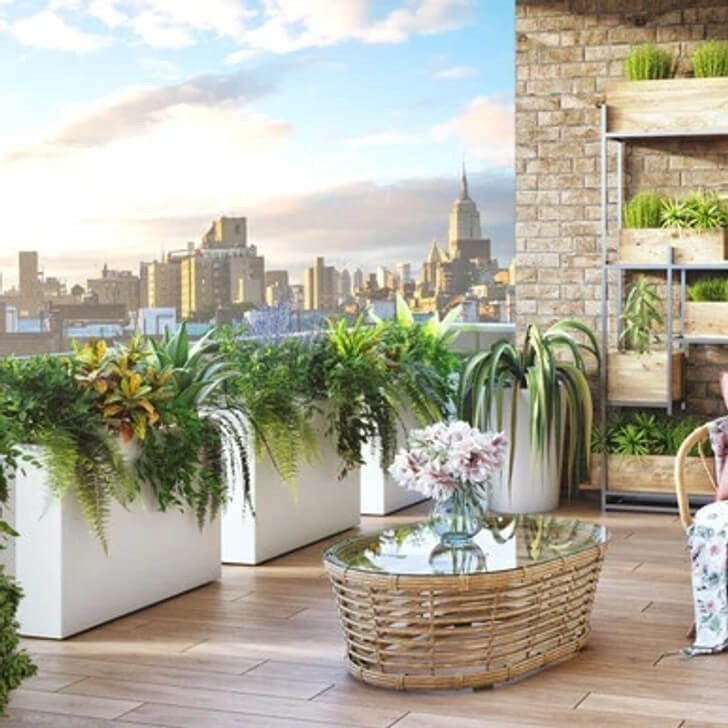
Long rectangular planter boxes are strong for pool edges, lounge dividers, dining separation, and privacy runs.
They create clean boundaries with fewer pieces and usually look more commercial than many small pots lined up together.
See long planters for related formats.
Tree and palm planters can give pool decks a stronger resort feel.
They are useful for hotel pools, courtyards, high-end residential pools, and large amenity decks where the planting needs real visual scale.
Tree planters need more than height. They need root volume, drainage planning, filled-weight planning, and the right relationship between planter size and plant material.
See tree planters and the Large Planters for Trees and Palms for more detail.
Tall planters can add vertical presence around pool entries, cabana edges, restaurant transitions, and narrow areas where floor space is limited.
They can also help create partial privacy when paired with the right plant material.
Tall planters should be placed carefully so they do not crowd walkways or create unnecessary visual obstruction.
See tall planters for more options.
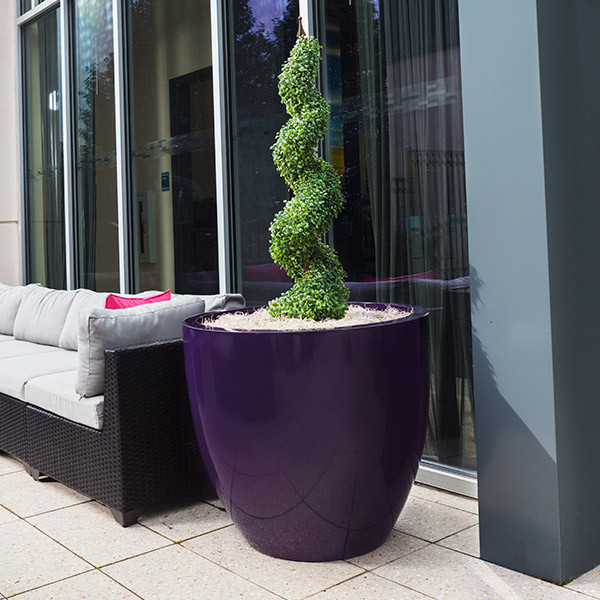
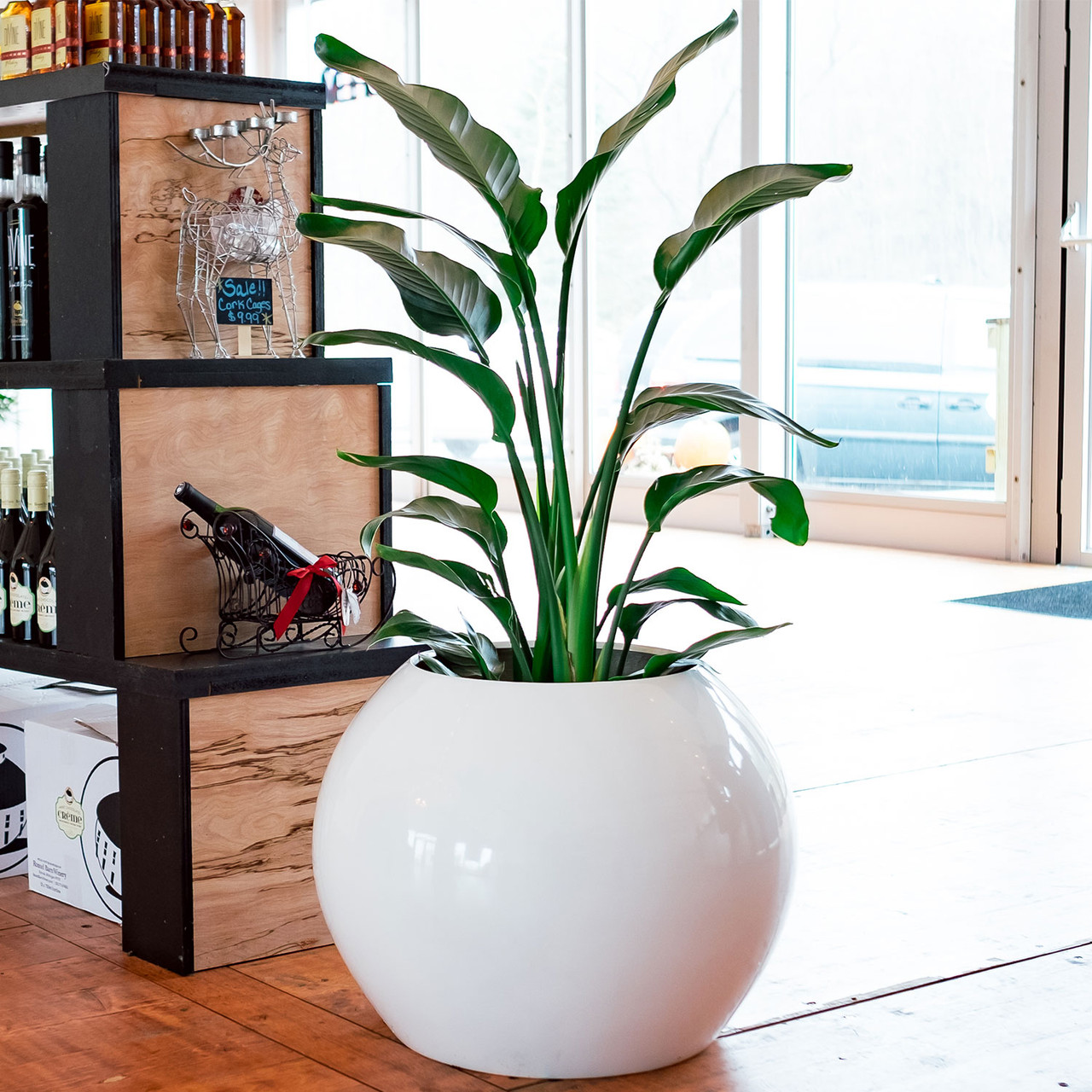
Round statement planters work well for poolside entries, courtyards, resort-style focal points, and places where the pool deck needs a softer shape.
They can break up long straight lines and add a more relaxed visual rhythm.
See round planters for related options.
Modular planter boxes are useful for tight pool deck runs, rooftop pool areas, rail-adjacent spaces, and phased layouts.
They help create repeated planter runs where depth is limited or where the layout needs flexibility.
Pool deck planters should make the space easier to use. They should not become obstacles.
Planters can support:
Start with the layout before choosing the planter.
Where do people walk? Where do lounge chairs move? Where do guests enter the pool? Where do staff need access? Where are towels, dining, cabanas, restrooms, gates, or service paths?
The best planter layout improves the pool deck without making it feel cramped.
Long planter boxes can define edges. Low profile planters can separate zones without blocking sightlines. Privacy planters can create more intimate areas. Large planters can anchor wide decks and corners.
The wrong layout can make a pool deck harder to clean, harder to staff, and less comfortable for guests.
Pool areas often need privacy, but permanent walls can make the space feel closed off.
Planters offer a softer option.
They can help:
The plant material matters as much as the planter.
Tall grasses, palms, shrubs, hedging, and upright foliage all create different privacy effects.
A shorter planter with the right planting can sometimes create a better poolside screen than a taller planter with the wrong plant material.
Pool deck planters live in a demanding environment.
They may be exposed to moisture, splash, sun, cleaning routines, foot traffic, furniture movement, and seasonal refreshes.
Plan for:
Avoid choosing a planter only because it looks good in a dry product photo.
The finish, material, size, and placement should make sense for the actual pool deck conditions.
Drainage and water management should be planned before ordering.
Pool deck planters may need drainage options, risers, liners, reservoirs, irrigation coordination, and maintenance access depending on the site and planting plan.
Drainage options can be selected at order and should be coordinated with the pool deck, planting plan, and maintenance approach.
The goal is to avoid puddles, uncontrolled runoff, and maintenance problems near guests, furniture, dining areas, and walking paths.
Cleaning routines matter too.
If the pool deck is regularly hosed down, pressure washed, or cleaned by staff, planter placement and drainage planning should support that routine.
For more detail, see the Planter Drainage Guide.
Large pool planters need filled-weight planning.
The empty planter shell is only one part of the total weight.
Filled weight can include:
This matters around rooftop pools, elevated amenity decks, balconies, terraces, and areas where weight or access is constrained.
Wind also matters.
Tall plantings can catch wind, especially on rooftop pool decks and exposed hospitality spaces. The planting plan, planter size, layout, and exposure conditions should be considered together.
For commercial rooftops, balconies, terraces, and elevated decks, final placement and load approval should come from the structural engineer of record.
For more elevated-site planning, see the Rooftop Planters Buying Guide and the Large Planters for Trees and Palms.
Material choice affects appearance, weight, freight, installation, durability, maintenance, and future matching.
Fiberglass is often the practical default for pool deck planter programs because it offers commercial scale, outdoor durability, and finish flexibility without the empty weight of concrete.
Fiberglass planters are strong for pool deck projects because they are:
For hotels, resorts, multifamily properties, and commercial pool areas, that consistency matters.
See fiberglass planters or the Fiberglass vs. Concrete Planters Buying Guide for more material comparison.
Concrete planters can make sense for permanent ground-level pool areas where weight is acceptable and the design specifically calls for real concrete.
The tradeoffs are freight, receiving, installation, movement, freeze-thaw exposure, and replacement complexity.
Concrete can be less practical for rooftops, upper decks, seasonal reconfiguration, or projects where handling and access are difficult.
Metal planters can work in custom architectural pool deck designs.
They may be useful when the project requires precise fabrication or a modern metal finish.
The tradeoffs can include higher cost, longer lead times, heat exposure, finish considerations, and denting risk depending on the environment.
Wood planters can add warmth around pools and patios.
They also require more maintenance and may weather, rot, stain, or change appearance over time depending on exposure, construction, and maintenance.
Ceramic planters can work in smaller decorative settings.
They are less practical for high-traffic commercial pool decks where breakage, weight, replacement consistency, and weather exposure matter.
Plastic and resin planters can work for budget or temporary use.
For commercial pool areas, they may not provide the finish quality, scale, or durability expected in hotel, resort, multifamily, or hospitality environments.
Pool deck planters should be sized to the deck, the furniture, and the planting plan.
Small pots can look weak around a large pool.
Very large planters can create access, freight, weight, or layout problems if they are not planned carefully.
When choosing pool deck planter size, consider:
The right size is the one that fits the pool environment, the planting plan, and the operating layout.
For project sizing strategy, see the Commercial Planter Sizing Guide.
Pool deck planter projects should be planned around access.
Large planters take freight space even when they are lightweight relative to concrete.
Before ordering, confirm:
Dimensions matter as much as weight.
A planter may be manageable to lift but still too long, tall, or wide for an elevator, gate, service corridor, rooftop hatch, courtyard path, or pool deck access point.
Flat rate shipping & handling. Curbside shipping & handling included on orders over $3,500.
For more planning detail, see the Commercial Planter Delivery Guide and the Commercial Planter Cost Guide.
Large pool decks need planters with enough scale. Small pots can look temporary, cluttered, or underbuilt beside broad paving, cabanas, lounge zones, and hospitality furniture.
Planters should shape the pool deck, not block it. Placement should account for guests, staff, lounge chairs, gates, pool access, dining routes, restrooms, towels, and cleaning paths.
Pool deck planters need to handle real exposure. Moisture, sun, cleaning routines, pool furniture, and foot traffic should be part of the material and finish decision.
Drainage should be coordinated with the pool deck, planting plan, and maintenance approach. Do not assume drainage details are automatic or universal.
Plant material should be chosen with the planter and site conditions. Privacy goals, wind exposure, maintenance, irrigation, sun, and root volume all matter.
Many small pots can make a pool deck feel cluttered. Fewer properly scaled planters usually create a cleaner, more commercial result.
Elevated pool decks need careful filled-weight planning. For commercial rooftops, balconies, terraces, and elevated decks, final placement and load approval should come from the structural engineer of record.
Pool decks are active spaces. Fragile materials can create maintenance, replacement, and safety-adjacent concerns in busy hospitality, resort, multifamily, or club environments.
Pool deck planting may change with season, climate, property refreshes, or operating needs. Choose planters and layouts that allow maintenance teams to refresh planting without rebuilding the layout.
Commercial pool areas often need future matching. That may be for replacements, additional phases, new pool areas, property renovations, or matching across entries, patios, rooftops, and courtyards.
These products are common starting points for pool deck planter projects. The right choice depends on layout, exposure, desired privacy level, plant material, finish direction, access constraints, and target timeline.

Best for: Pool deck edges, lounge zones, walkways, and low visual separation.
Low profile format defines pool areas without blocking views.
View Low Profile
Best for: Large pool decks, resort-style planting, courtyards, hotel pools, and multifamily pool areas.
Extra-large format gives broad pool spaces the scale they need.
View Brisbane
Best for: Pool edges, lounge dividers, dining separation, and privacy runs.
Long rectangular form creates clean pool deck boundaries with fewer pieces.
View Tolga
Best for: Palms, ficus, statement planting, hotel pools, and resort-style pool decks.
Large round form gives pool areas tree-scale visual impact.
View Wannsee
Best for: Cabana separation, privacy, narrow pool deck edges, and constrained layouts.
Tall narrow profile adds vertical screening without taking over floor space.
View Amesbury
Best for: Tight pool deck runs, rail-adjacent areas, rooftop pools, and phased layouts.
Slim modular profile works where depth is limited.
View Modular 12
Best for: Resort-style focal points, hotel pools, courtyards, and poolside entries.
Spherical form creates a sculptural poolside accent.
View GlobeSend us your pool deck layout, planter locations, desired privacy level, plant material, quantity, finish direction, exposure conditions, access constraints, and target timeline.
We can help recommend pool deck planter formats that fit the space, support the planting plan, and work with the practical requirements of the project.
Start with pool planters, outdoor planters, commercial planters, large planters, or privacy planters.
For broader planning, see the Privacy Planters Buying Guide, Rooftop Planters Buying Guide, Large Planters for Trees and Palms, Hotel Planters Buying Guide, Multifamily Planters Buying Guide, Restaurant Patio Planters Buying Guide, Large Outdoor Planters Buying Guide, Fiberglass vs. Concrete Planters Buying Guide, Commercial Planter Sizing Guide, Planter Drainage Guide, Commercial Planter Delivery Guide, and Commercial Planter Cost Guide.
The best pool deck planters depend on the layout and the goal.
Low profile planters work well for defining edges without blocking views. Long rectangular planters are useful for boundaries and privacy runs. Large planter boxes and tree planters add scale around hotels, resorts, multifamily pools, and courtyards. Tall narrow planters can help with cabana separation and tighter layouts.
Yes. Commercial-grade fiberglass planters are a strong option for many pool deck projects because they are durable outdoors, lighter than concrete when empty, available in many sizes and shapes, and easier to match across property areas or future orders.
They should still be selected with the actual pool deck exposure, maintenance routine, planting plan, and installation conditions in mind.
Hotel pool decks often use a mix of large planter boxes, low profile planters, long rectangular planters, privacy planters, round statement planters, and tree-scale planters.
The right mix depends on whether the goal is to define lounge zones, screen cabanas, separate dining, soften paving, or create resort-style planting.
Planters create privacy by combining the planter structure with the right plant material.
Long planter boxes, tall narrow planters, privacy planters, and large planter boxes can hold planting that screens cabanas, lounge areas, dining zones, walkways, or exposed pool edges.
Pool deck planters need drainage planning, but the right approach depends on the site and planting plan.
Drainage options can be selected at order and should be coordinated with the pool deck, planting plan, and maintenance approach.
The best pool deck plants depend on climate, sun exposure, wind, irrigation, maintenance, and desired privacy.
Common approaches include palms, grasses, shrubs, hedging plants, ficus where appropriate, seasonal planting, and other outdoor plants selected for the local conditions.
Large planters can be used on some rooftop pool decks, but filled weight, wind, access, drainage, and structural review all need to be considered.
For commercial rooftops, balconies, terraces, and elevated decks, final placement and load approval should come from the structural engineer of record.
Start with the pool deck layout before choosing the planter.
Confirm walkways, lounge chair zones, gates, pool entry points, dining routes, staff paths, cleaning access, and visibility needs. Then choose planter sizes and formats that define the space without creating obstacles.
Before ordering, confirm the pool deck layout, planter locations, sizes, quantities, finish direction, planting plan, drainage approach, exposure conditions, delivery path, access constraints, and target installation timeline.
For rooftop pools or elevated decks, structural review should also be handled by the engineer of record.