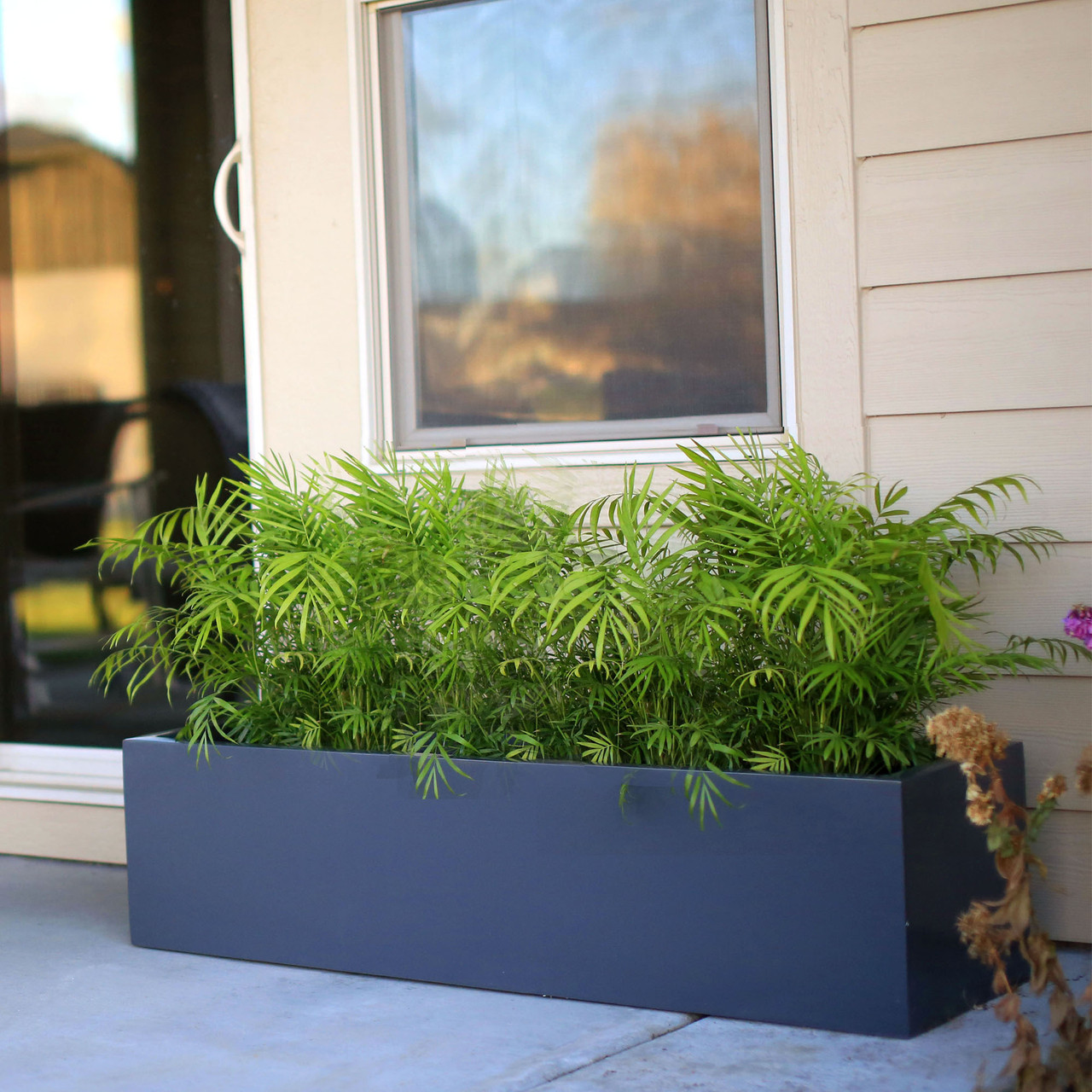
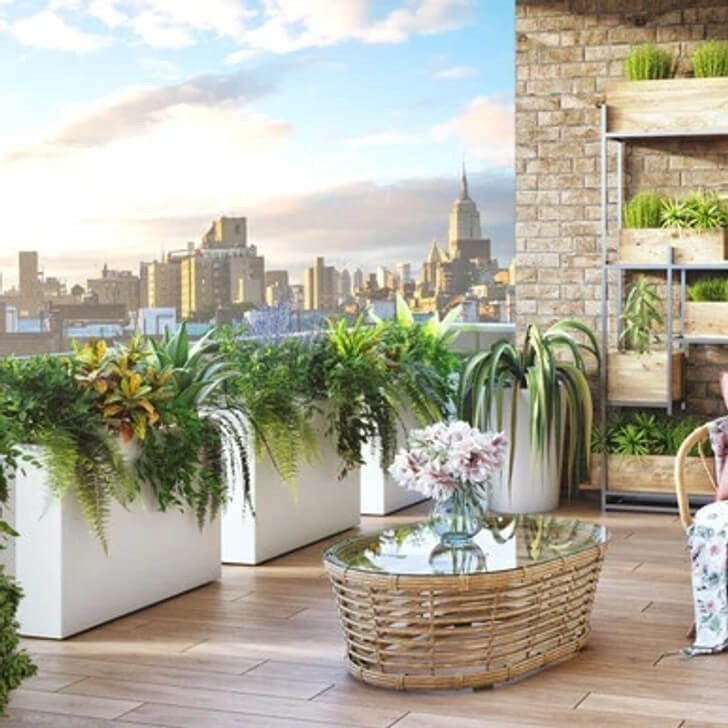
Office planters are not just office plant pots. They are space-planning tools.
The right planters can soften hard commercial interiors, improve lobbies, guide movement, divide work zones, add privacy, support biophilic design, and make office environments feel more intentional.
That matters in office buildings, corporate campuses, coworking spaces, tenant improvements, reception areas, rooftop lounges, and shared commercial spaces.
A strong office planter program helps answer practical questions:
How should the lobby feel when tenants and visitors arrive?
Where does the office need softness, privacy, or visual structure?
Can planters divide space without permanent construction?
How will the planters protect floors and finished interiors?
Which formats work across lobbies, workspaces, entries, patios, and rooftops?
Can the planters be matched across floors, buildings, or future phases?
This guide will help office property managers, corporate workplace teams, designers, architects, tenant improvement teams, coworking operators, commercial real estate owners, facilities teams, landscape architects, and contractors choose office planters for lobbies, workspaces, entries, dividers, patios, rooftops, tenant spaces, and commercial buildings.
Office planters have to look clean, stay practical, and support how people move and work.
They may sit near a reception desk, divide workstations, frame an elevator bank, soften a conference area, define a lounge, or create a better entry experience.
That means they are judged up close.
They also have to work around finished flooring, cleaning crews, maintenance teams, chairs, carts, tenant traffic, visitor circulation, and future reconfigurations.
Office planters need to support:
Professional appearance
Close-up visibility
Indoor floor protection
Maintenance access
Space division
Tenant and visitor experience
Repeatability across floors or locations
Durability near traffic, chairs, carts, and cleaning crews
The goal is not just to add plants. The goal is to make the office feel more finished, more comfortable, and easier to organize without making the space harder to use.
Where Office Planters Are Used
Office Lobbies
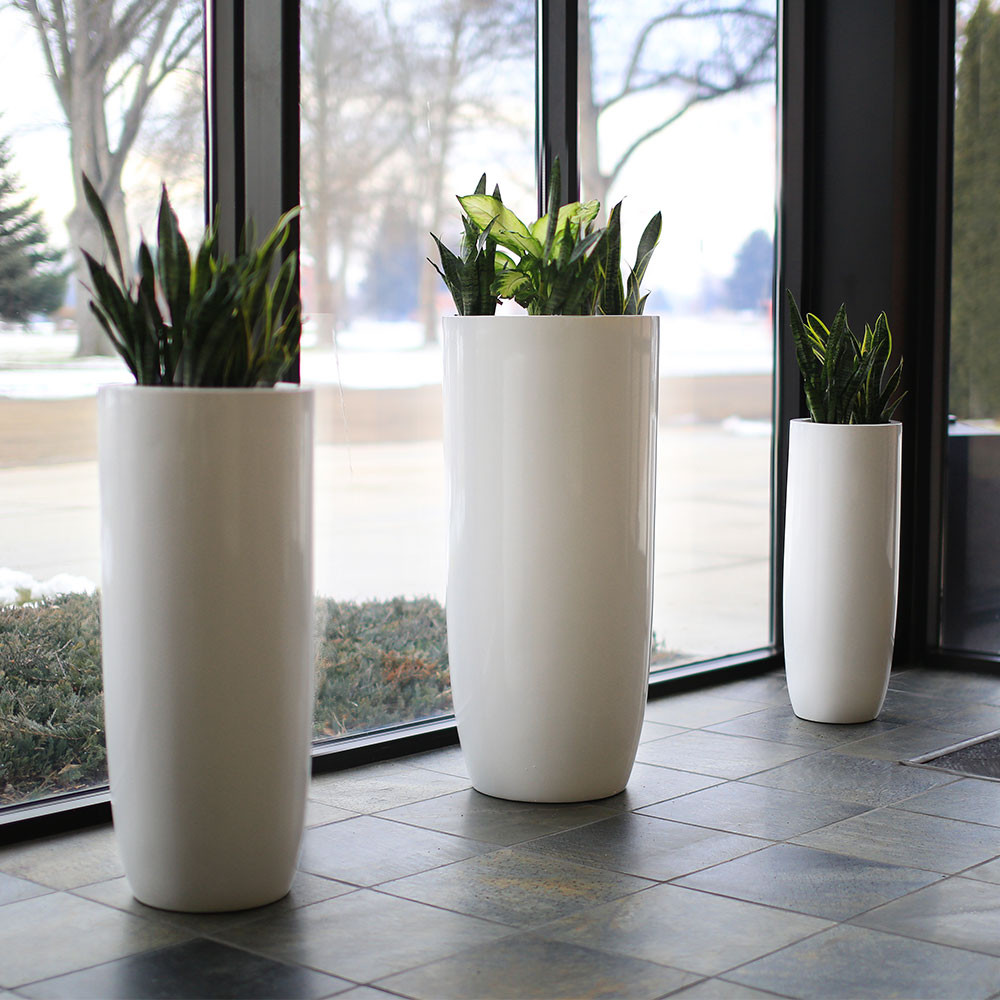
Office lobby planters create the first impression for tenants, employees, clients, vendors, and visitors.
They can soften glass, stone, concrete, metal, and other hard commercial finishes. They can also add scale to a lobby that feels empty or too cold.
Lobby planters need to look polished from close range. The finish, shape, planting, and placement should work with the reception desk, seating, lighting, flooring, elevator banks, and building signage.
For large lobbies, undersized pots can make the space look unfinished. Larger planters, tall planters, cubes, decorative round planters, and statement planters often create a more commercial result.
Reception Areas
Reception planters help make the arrival point feel organized.
They can frame the reception desk, guide visitors toward check-in, separate waiting areas, or soften the transition between entry and circulation.
Because reception areas are highly visible, the planter finish and plant material need to be clean and consistent.
Indoor water management matters here. Liners, floor protection, and maintenance access should be planned before installation.
Open Office Workspaces
Open offices often need softness and structure.
Planters can help divide work areas, reduce the feeling of one large open room, create quieter visual zones, and add biophilic design without building permanent walls.
Long planter boxes, tall narrow planters, modular planters, and low profile planters can all work depending on the desired level of separation.
The planter should support the workspace layout. It should not block circulation, crowd desks, or make maintenance difficult.
Conference and Meeting Zones
Planters can soften conference areas and meeting zones.
They can create a visual buffer around glass conference rooms, define informal meeting spaces, or make lounge-style collaboration areas feel more finished.
Low profile planters can separate spaces without blocking visibility. Taller planters or planter boxes with the right plant material can create more privacy.
The best format depends on whether the goal is visual softness, privacy, traffic guidance, or interior polish.
Office Dividers and Privacy Runs
Office divider planters are useful when a space needs separation without permanent construction.
They can divide workstations, create lounge boundaries, separate reception from circulation, guide movement, or soften the edge of conference and meeting areas.
The planter creates the structure. The plant material completes the screen.
For divider runs, longer planter boxes often look cleaner than many small pots lined up together.
Elevator banks and corridors often need visual interest without clutter.
Planters can make these transition spaces feel more intentional, especially in multi-tenant buildings where the common areas influence the property experience.
The key is placement. Planters should support circulation and visibility. They should not narrow corridors, interfere with doors, block signage, or make cleaning harder.
Tall narrow planters, compact square planters, decorative round planters, and low profile planters can all work depending on the width and scale of the space.
Commercial Building Entries
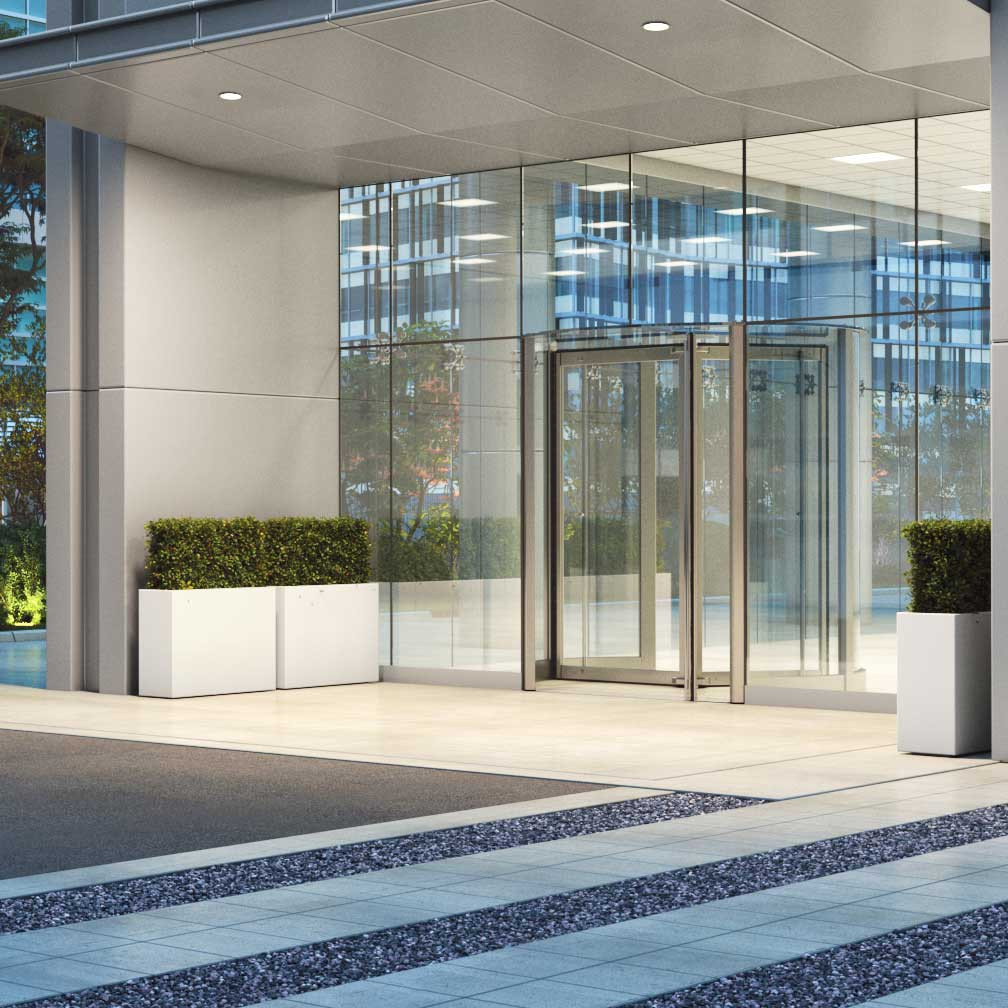
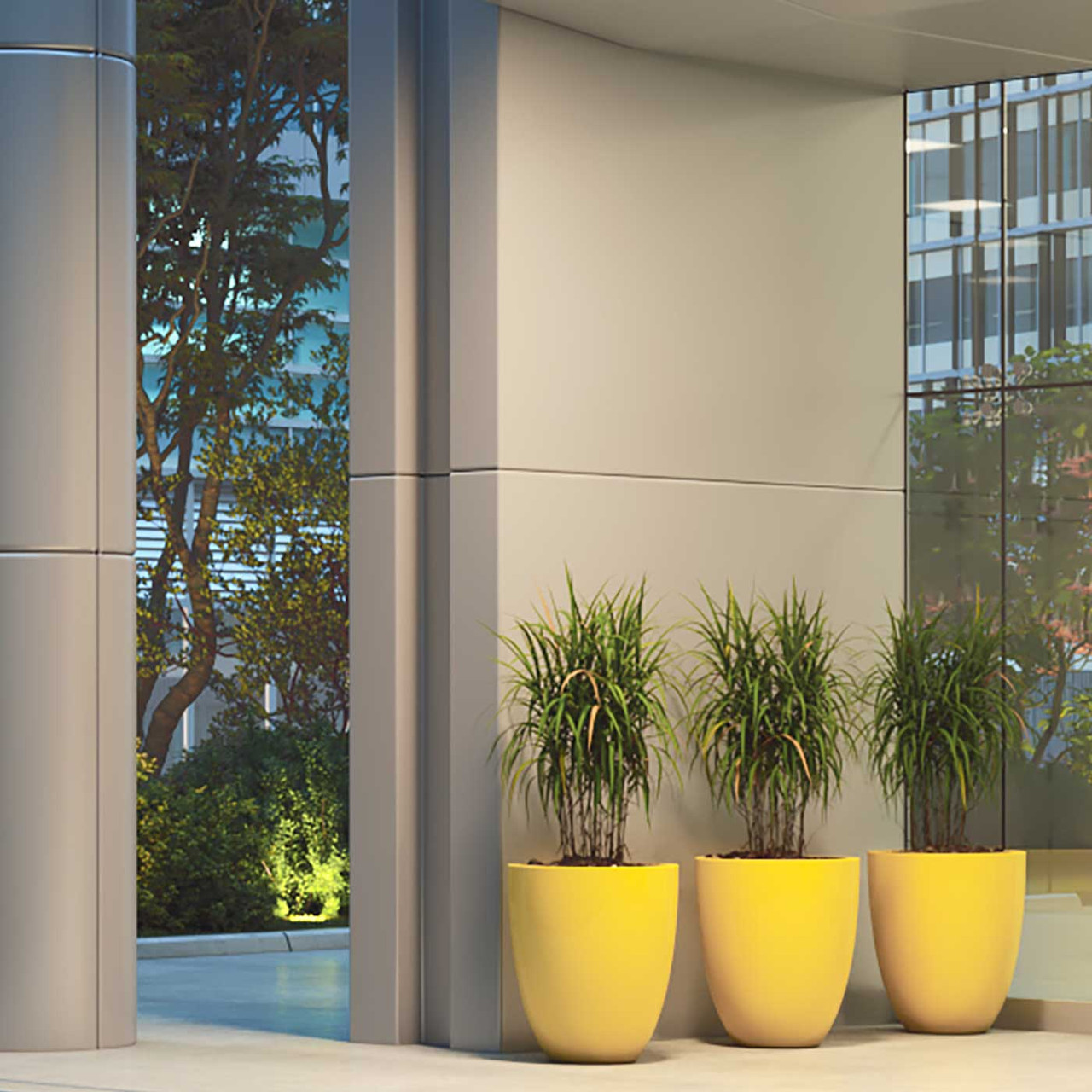
Office building entry planters help connect the exterior arrival experience with the lobby.
They may frame doors, soften the facade, add scale to the approach, guide visitors toward the entrance, or make a multi-tenant building feel more maintained.
Outdoor office entry planters need to handle UV, rain, wind, freeze-thaw cycles where relevant, cleaning crews, pedestrian traffic, and drainage planning.
Office patios can be used for breaks, meetings, tenant events, or informal work areas.
Planters help define seating zones, soften paving, add privacy, and make the patio feel like a usable amenity instead of leftover exterior space.
Long planter boxes, low profile planters, privacy planters, and large planters can all work depending on patio depth, seating layout, and planting goals.
Rooftop Office Lounges
Rooftop office lounges need planters that account for weight, wind, access, drainage, and how people use the space.
Planters may define lounge zones, create privacy, soften rooftop hardscape, frame views, or support planting that makes the roof feel more comfortable.
For commercial rooftops, balconies, terraces, and elevated decks, final placement and load approval should come from the structural engineer of record.
They may separate lounge zones, soften shared work areas, frame reception, divide phone booths or meeting areas, and help the space feel more designed.
Because coworking spaces often change layout, planter mobility, durability, and finish consistency matter.
Modular planter boxes, tall narrow planters, and long rectangular planters are often useful because they can define space without construction.
Corporate Campuses
Corporate campuses need consistency across many areas.
Planters may be used at entries, courtyards, patios, walkways, cafeterias, lobbies, rooftop spaces, and tenant amenity zones.
The goal is not always to use the same planter everywhere. The goal is to create a coordinated system of sizes, shapes, finishes, and planting styles that supports the full campus experience.
Choosing the Right Office Planter Format
The right office planter format depends on the use case, available space, plant material, interior protection needs, and installation plan.
Long Planter Boxes
Long planter boxes are strong for office dividers, open workspace zones, corridors, patios, lobby edges, and repeated runs.
They create clean lines and make it easier to define space with fewer pieces.
Long planter boxes are especially useful when the goal is to separate areas, guide circulation, or create a continuous planted edge.
Decorative round planters are useful in close-up interior environments.
They can work in office lobbies, reception zones, lounges, seating areas, and hospitality-style workplace interiors where the planter should feel polished and refined.
Decorative does not mean fragile. In commercial offices, the planter still needs to handle daily visibility, cleaning, and maintenance.
Low Profile Planters
Low profile planters define space without blocking sightlines.
They are useful for reception edges, lounge zones, office dividers, corridor transitions, and patios where visual separation is needed but openness matters.
Low profile formats can help shape a space while keeping the office feeling open and easy to navigate.
Modular Planter Boxes
Modular planter boxes are useful for repeatable office layouts.
They can support divider runs, corridors, tight spaces, phased projects, and multi-floor installations.
They are especially helpful where the project needs consistency but the exact run length or placement may vary by area.
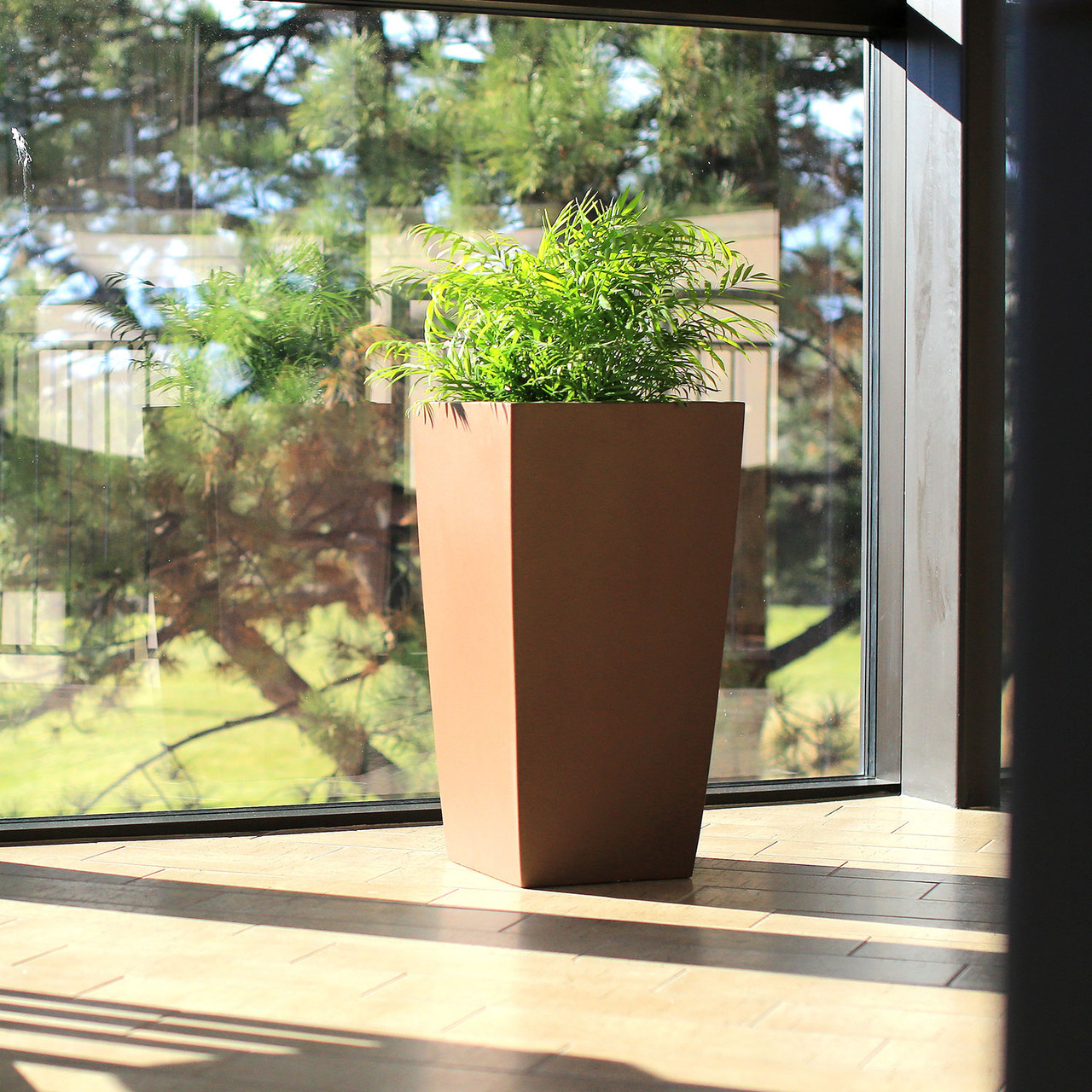
Indoor Office Planters and Floor Protection
Indoor office planters need more planning than most people expect.
The planter has to work with flooring, furniture, cleaning routines, plant maintenance, and future reconfigurations.
Before choosing indoor office planters, consider:
Liners
Floor protection
Water management
Interior finish quality
Cleaning access
Plant maintenance
Mobility for events or reconfigurations
Avoiding damage to flooring, reception areas, and tenant spaces
Drainage options can be selected at order and should be coordinated with the site, planting plan, and maintenance approach. For indoor leak-free environments, review our guide on plants that thrive without drainage holes.
Interior planters may also need liners, reservoirs, saucers, or other water-management solutions depending on the installation.
This is especially important near reception desks, finished wood, stone, carpet, elevator lobbies, tenant spaces, and high-value flooring.
Planters are one of the easiest ways to divide an office without permanent construction.
They can help create softer boundaries between workstations, lounges, reception areas, conference zones, corridors, and collaboration spaces.
Office divider planters can support:
Visual privacy
Space definition
Circulation guidance
Softer conference areas
More comfortable seating zones
Flexible layouts
A less sterile open-office feel
The plant material matters as much as the planter.
Tall grasses, upright foliage, shrubs, preserved planting, artificial planting, or interior trees all create different levels of screening and maintenance.
A shorter planter with the right plant material can sometimes create a better office divider than a taller planter with the wrong planting plan.
Office Entries, Lobbies, and Shared Spaces
Office entries and shared spaces shape how tenants and visitors judge the building.
Planters can help a property feel more maintained, more professional, and more intentional.
Use planters to support:
First impressions
Tenant experience
Reception areas
Elevator banks
Common corridors
Multi-tenant building consistency
Finish continuity across floors or properties
For office lobbies that borrow from hospitality design, it can be useful to review hotel-style planter planning as well. See the Hotel Planters Buying Guide for examples of how planters can support arrival, lobby, amenity, and shared-space experiences.
Outdoor Office Planters
Office planters are not limited to interiors.
Outdoor office planters can improve building entries, courtyards, patios, rooftop lounges, commercial campuses, walkways, and tenant amenity spaces.
Outdoor office planters need planning around:
UV exposure
Rain
Freeze-thaw cycles where relevant
Wind
Drainage
Filled weight
Irrigation
Cleaning crews
Foot traffic
Freight and access
For elevated outdoor spaces, the full planted system matters. That includes the planter shell, soil, water, drainage material, liner or reservoir system, and plant material.
For commercial rooftops, balconies, terraces, and elevated decks, final placement and load approval should come from the structural engineer of record.
Material choice affects appearance, weight, freight, installation, durability, maintenance, and future matching.
Fiberglass is often the practical default for office planter programs because it can look polished in professional interiors while still working outdoors.
Fiberglass Planters
Fiberglass planters are strong for office projects because they are:
Polished enough for offices and lobbies
Durable indoors and outdoors
Lighter than concrete when empty
Available in long, tall, square, round, and decorative formats
Flexible across many finish directions
Easier to receive, place, and reposition than heavier materials
Easier to match across floors, buildings, or future phases
For office projects that need repeated planters across lobbies, workspaces, entries, patios, rooftops, and common areas, consistency matters.
Concrete planters can make sense for permanent ground-level exterior office installations where weight is acceptable and the design specifically calls for real concrete. The tradeoffs are freight, receiving, installation, movement, freeze-thaw exposure, and replacement complexity.
Metal and Aluminum Planters
Metal or aluminum planters can work for custom architectural office projects. The tradeoffs can include higher cost, longer lead times, heat exposure outdoors, denting risk, and finish considerations.
Ceramic and Terracotta Planters
Ceramic and terracotta planters can work in smaller decorative interior settings. They are less ideal for high-traffic commercial offices where breakage, replacement consistency, and weather limitations matter.
Wood Planters
Wood planters can add warmth to office interiors, patios, and amenity spaces. They also require more maintenance and may weather, rot, stain, or change appearance over time depending on exposure and construction.
Plastic and Resin Planters
Plastic and resin planters can work for budget or temporary use. For professional office environments, they may not provide the finish quality, scale, durability, or commercial presence expected in lobbies, reception areas, and tenant spaces.
Size, Scale, and Placement
Office planters should be sized to the space and the use case.
A planter that works beside a desk may look too small in a lobby. A planter that works in a lobby may crowd a corridor. A divider planter that is too shallow may not support the planting needed for privacy.
When choosing office planter size, consider:
Lobby volume
Reception desk scale
Ceiling height
Corridor width
Conference room adjacency
Seating zones
Workstation layouts
Doorways and circulation
Cleaning and maintenance access
Plant material and root volume
Path-of-travel planning as a practical consideration
The planter should make the office easier to use, not harder.
At entries, planters can frame movement. In lobbies, they can add scale. In workspaces, they can divide zones. In corridors, they should support circulation without creating pinch points.
Choosing Residential-Looking Pots for Commercial Offices
Office planters should match the scale, finish, and visibility of a professional environment. Small residential pots can make lobbies, reception areas, and shared spaces feel underbuilt.
Forgetting Liners and Floor Protection
Indoor office planters need water management. Liners, floor protection, reservoirs, and maintenance access should be considered before installation.
Blocking Circulation or Lobby Flow
Planters should guide movement, not obstruct it. Placement should account for visitors, tenants, cleaning crews, carts, doors, elevator banks, reception lines, and shared circulation.
Using Too Many Small Pots
Many small pots can create clutter. Fewer properly scaled planters often look more commercial and are easier to maintain.
Ignoring Maintenance Access
Plants need care, and planters need cleaning. Make sure the layout allows maintenance teams to water, prune, replace plant material, clean around the planter, and move through the space.
Choosing Divider Planters Without Plant Material Planning
The planter alone does not create the full screen. Choose the planter and plant material together so the divider has the right height, density, root volume, and maintenance approach.
Undersizing Planters for Large Lobbies
Large lobbies need planters with enough scale to hold visual presence. Small planters can make a commercial lobby feel unfinished.
Ignoring Delivery Path and Elevator Access
Planters have to reach the installation location. Confirm loading dock, elevator, corridor, doorway, and staging requirements before ordering.
Recommended PPM Office Planters
These products are common starting points for office planter projects. The right choice depends on interior or exterior location, space constraints, privacy needs, plant material, finish direction, delivery path, and timeline.
Amesbury Tall Narrow Fiberglass Planter Box
Best for: Office dividers, narrow lobbies, reception areas, and vertical screening.
Tall narrow format adds privacy and vertical presence without taking over floor space.
Planning office planters for a lobby, workspace, or commercial building? Our office planters and indoor commercial containers are engineered to protect finished flooring while creating productive, biophilic work environments. Backed by a 3-year warranty and available in 20+ professional finishes. Call us at (888) 381-9501 or reach out to our team for custom trade quotes and volume lead times.
The best office planters depend on the space and the goal. Long planter boxes work well for dividers and repeated runs. Tall narrow planters are useful for vertical screening and tight layouts. Decorative round planters work well in lobbies and reception areas. Cube and square planters support modern commercial interiors.
What planters work best for office lobbies?
Office lobby planters should match the scale and finish quality of the lobby. Tall planters, decorative round planters, cube planters, large round planters, and statement planters can all work depending on ceiling height, reception layout, circulation, and interior design.
Can planters be used as office dividers?
Yes. Planters can be used as office dividers to separate work zones, lounges, conference areas, reception spaces, and circulation paths without permanent construction. For divider planters, choose the planter and plant material together so the screen has the right height, density, stability, and maintenance plan.
What material is best for office planters?
Fiberglass is often the practical default for office planters because it is polished, durable, lighter than concrete when empty, available in many shapes and finishes, and easier to match across floors, buildings, or future phases. Concrete, metal, ceramic, wood, plastic, and resin can also work in certain situations, but each comes with tradeoffs around weight, finish, durability, maintenance, or replacement consistency.
Are fiberglass planters good for office spaces?
Yes. Commercial-grade fiberglass planters are a strong option for office spaces because they can work indoors and outdoors, support large and narrow formats, offer finish flexibility, and reduce empty weight compared with concrete. They are especially useful for offices that need coordinated planters across lobbies, workspaces, entries, patios, rooftops, and common areas.
Do indoor office planters need liners?
Indoor office planters often need liners or other water-management solutions to protect floors and finished interiors. The right approach depends on the planter, plant material, irrigation method, maintenance plan, and installation location.
Do office planters need drainage holes?
Office planter drainage depends on whether the planter is used indoors or outdoors and how the planting will be maintained. Drainage options can be selected at order and should be coordinated with the site, planting plan, and maintenance approach. Indoor office planters may also require liners, reservoirs, or floor protection.
What plants work best in office planters?
The best plants for office planters depend on light, maintenance, irrigation, planter size, and whether the space is indoors or outdoors. For windowless interior work environments, see our list of 14 plants for an office with no windows.
What should I check before ordering office planters?
Before ordering, confirm the areas being planned, planter sizes, quantities, finish direction, planting plan, liner or drainage needs, delivery path, elevator access, installation timing, and whether future reorders need to match. For rooftops, balconies, terraces, or elevated decks, structural review should also be handled by the engineer of record.