Storefront planters are not just decorative pots by the door.
They are commercial exterior planning tools.
The right storefront planters can shape the first impression, frame the entrance, soften hard commercial facades, define outdoor edges, support patio or sidewalk layouts, and make a business look more maintained from the street.
That matters for retail stores, restaurants, offices, hotels, mixed-use buildings, shopping centers, service businesses, street-facing patios, and multi-location brands.
A strong storefront planter program helps answer practical questions:
How should the business look from the street, sidewalk, or parking area?
Where should customers enter, wait, walk, or sit?
What planter size fits the storefront, doors, windows, signage, and facade?
Does the storefront need curb appeal, privacy, patio separation, or entry framing?
How will drainage, planting, cleaning, and seasonal refreshes be handled?
Can planters be repeated across multiple locations or future rollouts?
This guide will help retail store owners, restaurant operators, hospitality teams, commercial property managers, office building managers, mixed-use property owners, developers, landscape architects, architects, exterior designers, general contractors, facilities teams, shopping center teams, downtown business owners, and franchise or multi-location operators choose storefront planters.
Storefront planters sit in visible, public-facing, high-traffic areas.
They are seen by customers, pedestrians, drivers, guests, tenants, staff, delivery teams, cleaning crews, and passersby before anyone walks inside.
That means they need to look intentional and handle real commercial use.
Storefront planters need to account for:
Street visibility
Pedestrian movement
Door access
Window displays
Signage
Outdoor dining or waiting areas
Cleaning crews
Deliveries
Weather exposure
Damage and scuff risk
Repeatability across locations
Maintenance access
The goal is not just to add plants.
The goal is to make the business look more finished, guide people naturally, and support the storefront layout without creating access, maintenance, or visibility problems.
Where Storefront Planters Are Used
Retail Storefronts
Retail storefront planters help create curb appeal.
They can frame the entrance, soften window displays, support brand presentation, and make the storefront feel more maintained from the sidewalk.
For retail stores, planters should work with the door, windows, signage, lighting, merchandise displays, and customer path.
They should add polish without blocking what the store needs people to see.
Restaurant Storefronts
Restaurant storefront planters often do more than decorate the entrance.
They can define sidewalk patios, frame host stand areas, separate dining from pedestrian traffic, create outdoor waiting zones, and make the front of the restaurant feel more inviting.
Planters can also create softer boundaries than fencing, especially when paired with the right plant material.
Mixed-use buildings often combine retail, restaurant, residential, office, and hospitality edges.
Planters can help organize these overlapping uses.
They may define restaurant patios, soften retail fronts, frame residential entries, separate office entrances, or create a more coordinated street-level experience.
The goal is to make the property feel connected without using the same planter in every location.
Shopping Centers and Lifestyle Centers
Shopping centers and lifestyle centers often need repeatable storefront treatments.
Planters can help soften pedestrian paths, support tenant consistency, define outdoor seating areas, and create a more finished shopping environment.
Repeatable shapes and finishes matter because the planters may need to work across many tenant fronts, entrances, patios, and future refreshes.
Sidewalks and Pedestrian Zones
Sidewalk planters need careful placement.
They may define storefront edges, create visual interest, separate dining from pedestrian flow, or add planting along long commercial facades.
Storefront planter placement should be coordinated with the site layout, pedestrian movement, door access, and any applicable local requirements.
Dimensions matter here. The planter needs to fit the sidewalk or pedestrian zone without blocking doors, windows, signage, service paths, or necessary movement.
Multi-Location Businesses
Multi-location businesses need planters that can repeat.
A restaurant group, retail brand, hotel group, franchise, or service business may need the same planter program across several storefronts.
Consistent finishes, repeatable formats, and reorder availability make that easier.
Choosing the Right Storefront Planter Format
The right storefront planter format depends on the business type, facade, sidewalk, patio layout, door location, visibility needs, planting plan, and maintenance approach.
Tall Planters
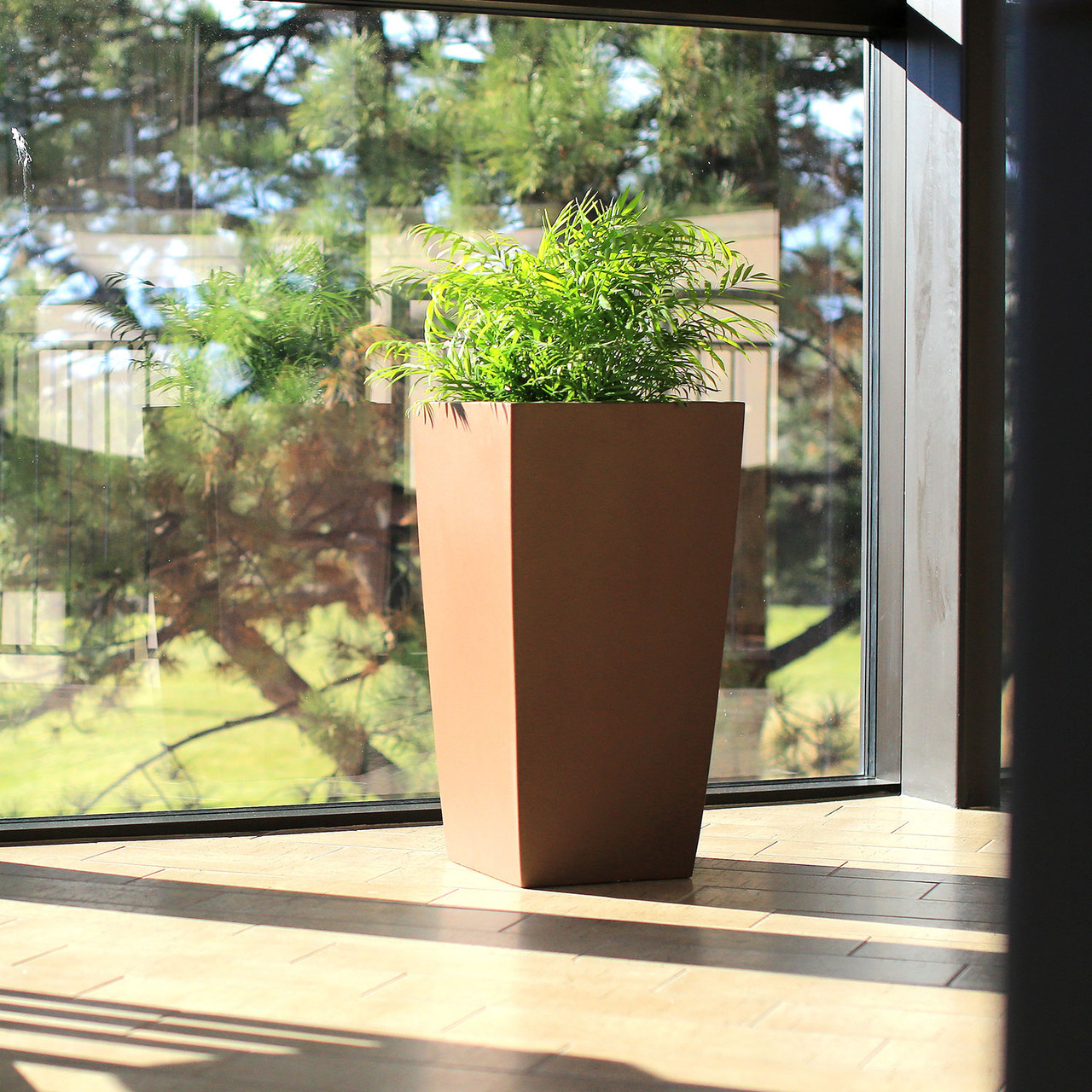
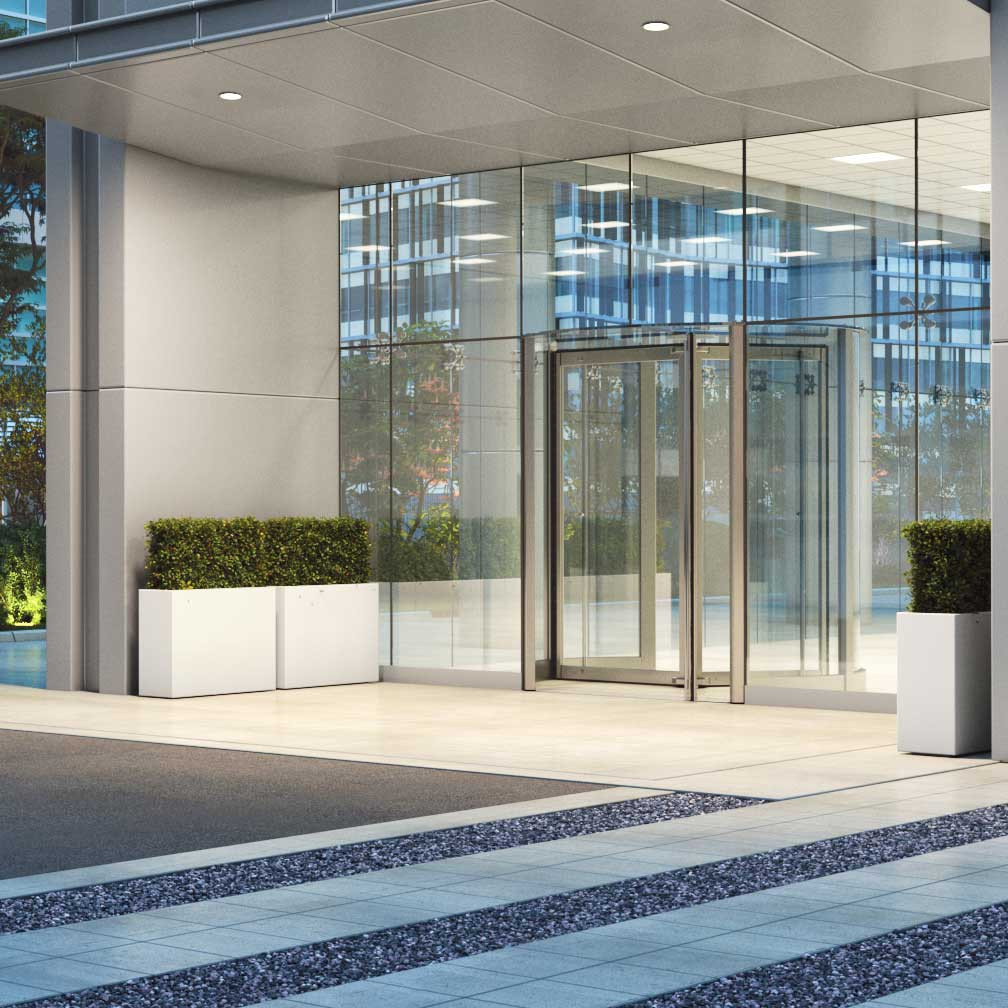
Tall planters work well for entry pairs, door framing, commercial entrances, restaurant fronts, hotel entries, and vertical accents.
They add height without requiring as much floor area as a wider planter.
Tall planters are especially useful when a storefront needs more presence around the door.
Low profile planters define space without blocking sightlines.
They are useful for outdoor dining edges, sidewalk separation, storefront boundaries, and visibility-sensitive areas where the business still needs windows, signage, or the entry to remain visible.
Low planters can help create a boundary without making the storefront feel closed off.
Large Planter Boxes
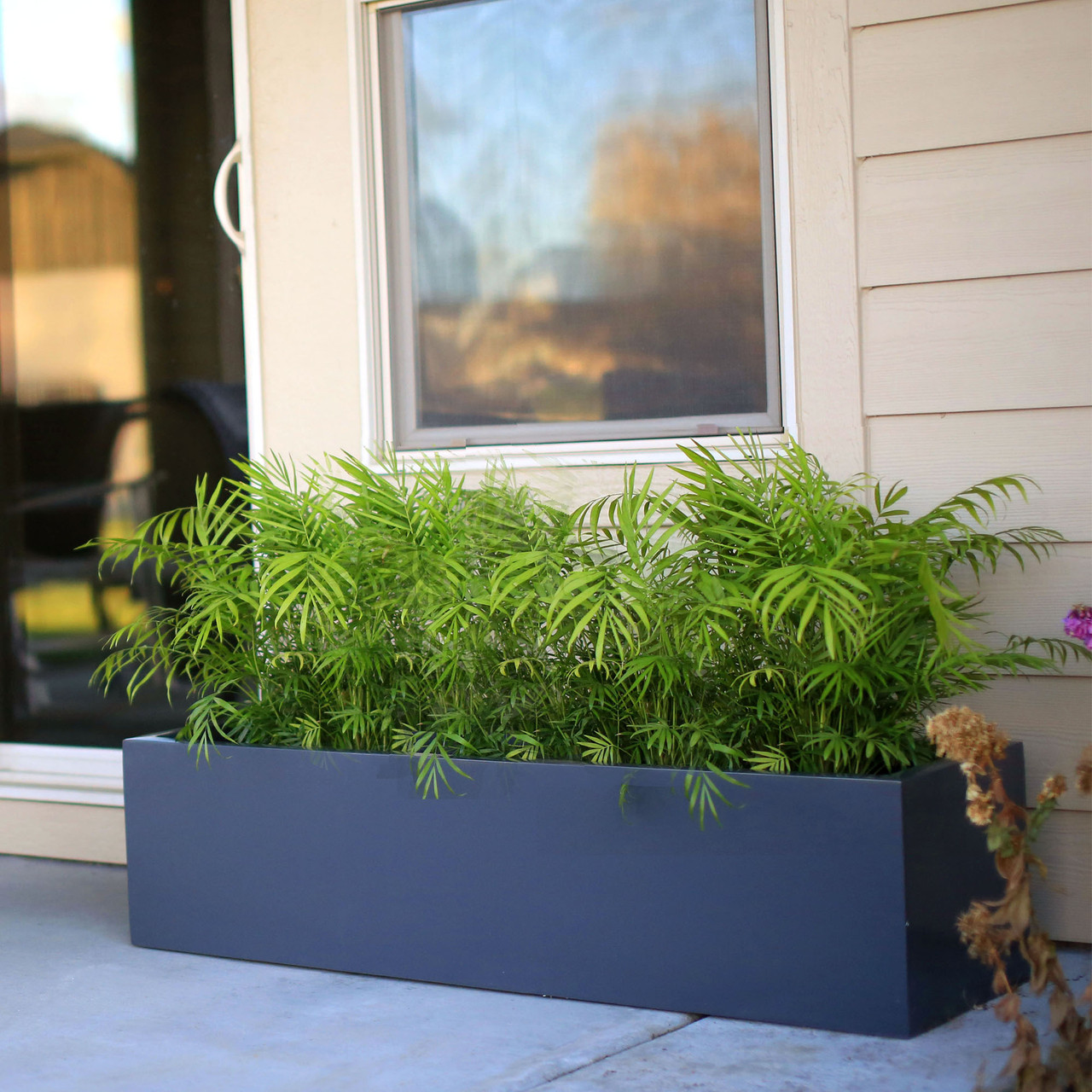
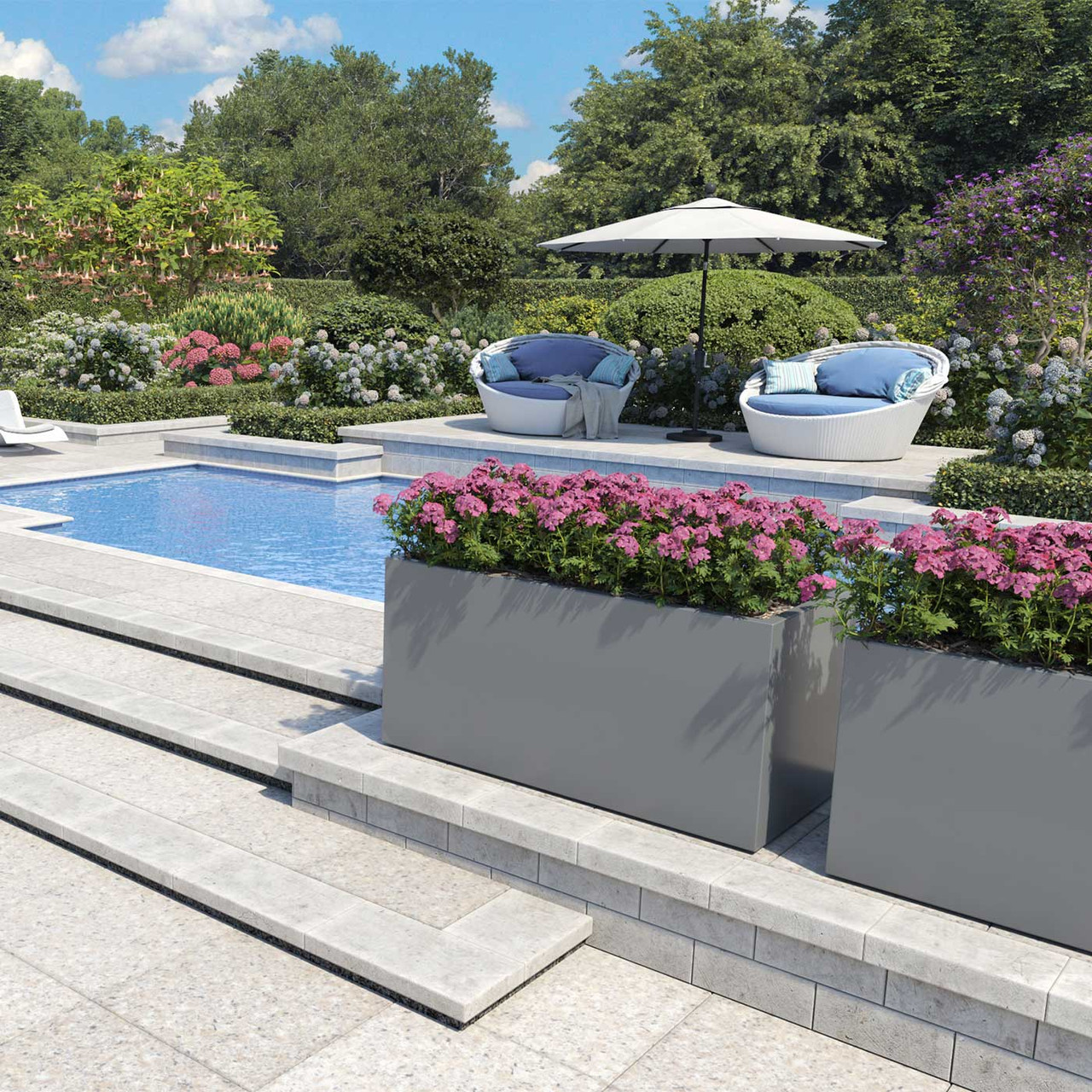
Large planter boxes work well for broad storefronts, commercial entries, shopping centers, large facades, patios, and planted edges.
They give wider storefronts enough scale and help soften hard commercial architecture.
Privacy planters are useful for restaurant patios, sidewalk seating, waiting areas, and adjacent uses.
They can screen diners from pedestrian traffic, buffer seating from parking or sidewalks, and make outdoor waiting or dining areas feel more comfortable.
The planter provides the structure. The plant material completes the screen.
Modular planters are useful for repeatable storefront runs, multi-location projects, phased layouts, and sidewalk or patio edges that need consistent pieces.
They can help create a coordinated look across multiple storefronts while allowing the layout to adapt to different site conditions.
Storefront Layout, Doors, and Pedestrian Flow
Storefront planters should support the layout, not fight it.
They should frame the business, guide movement, and define edges without blocking the storefront.
Planter placement should consider:
Door clearance as a planning consideration
Customer entry and exit paths
Sidewalk width
Window visibility
Signage visibility
Host stands or waiting areas
Delivery paths
Cleaning access
Outdoor seating
Strollers, wheelchairs, carts, and foot traffic as movement considerations
Storefront planter placement should be coordinated with the site layout, pedestrian movement, door access, and any applicable local requirements.
The best storefront planter layout improves the way the business looks from the street and the way people move through the space.
The wrong layout can block windows, crowd the door, hide signage, interfere with service paths, or make outdoor seating harder to use.
Restaurant Storefront and Sidewalk Patio Planters
Restaurant storefront planters are often part of the operating layout.
They can help define dining areas, create privacy, frame host stands, separate tables from pedestrian traffic, and make outdoor seating feel like a real hospitality space.
Restaurant storefront planters can support:
Dining separation
Host stand framing
Outdoor waiting areas
Sidewalk seating edges
Privacy from pedestrian traffic
Softer boundaries than fencing
Cleaning and service paths
Seasonal refreshes
Long planter boxes are often useful for sidewalk patios because they create clean boundaries with fewer pieces.
Low profile planters can define a dining edge while preserving visibility. Tall narrow planters and privacy planters can add screening where diners feel exposed.
Retail storefront planters should support the brand impression.
They can make the store feel more polished before a customer enters.
Retail planters can help with:
First impression
Window displays
Entry framing
Brand presentation
Storefront refreshes
Foot traffic
Maintenance and planting consistency
Multi-location brand consistency
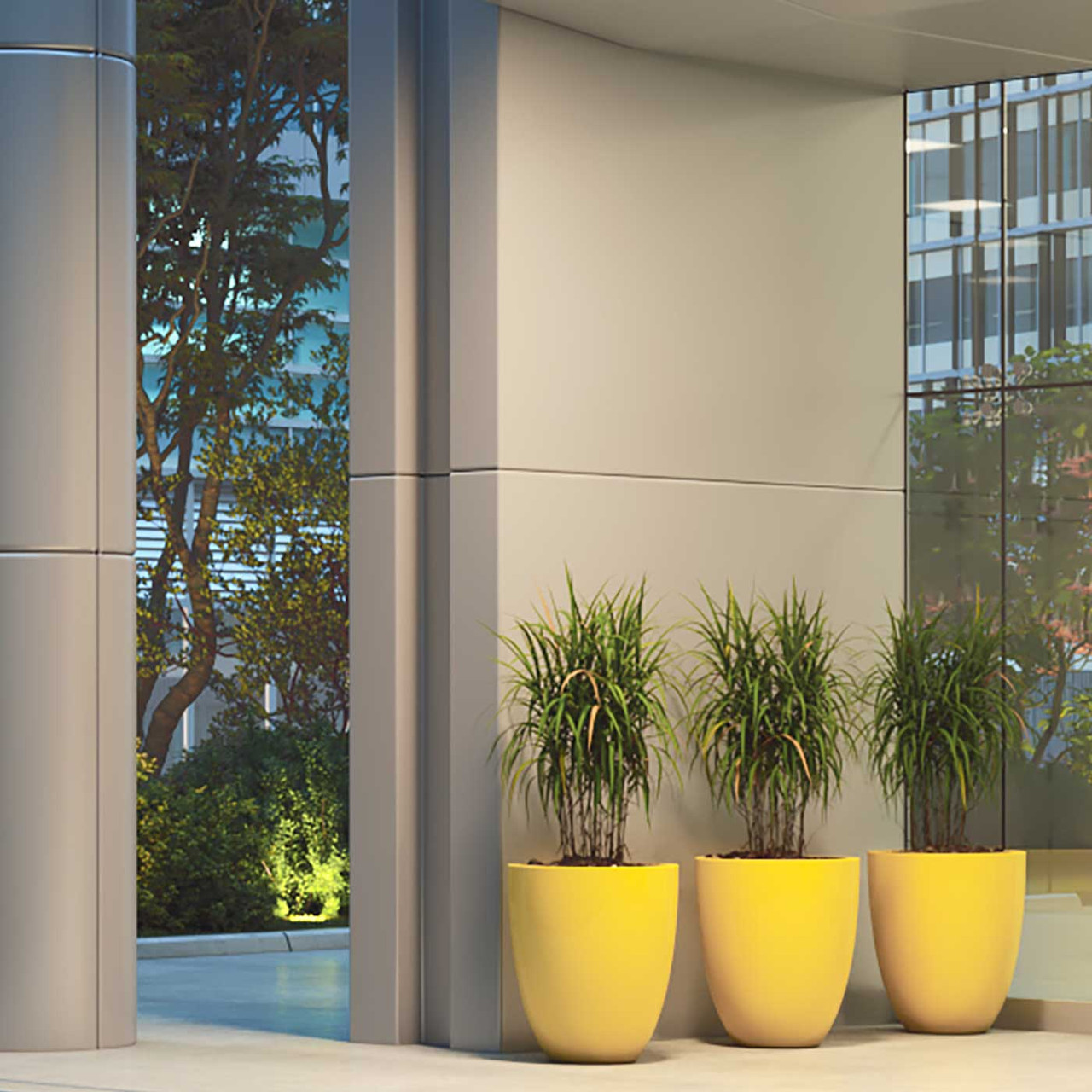
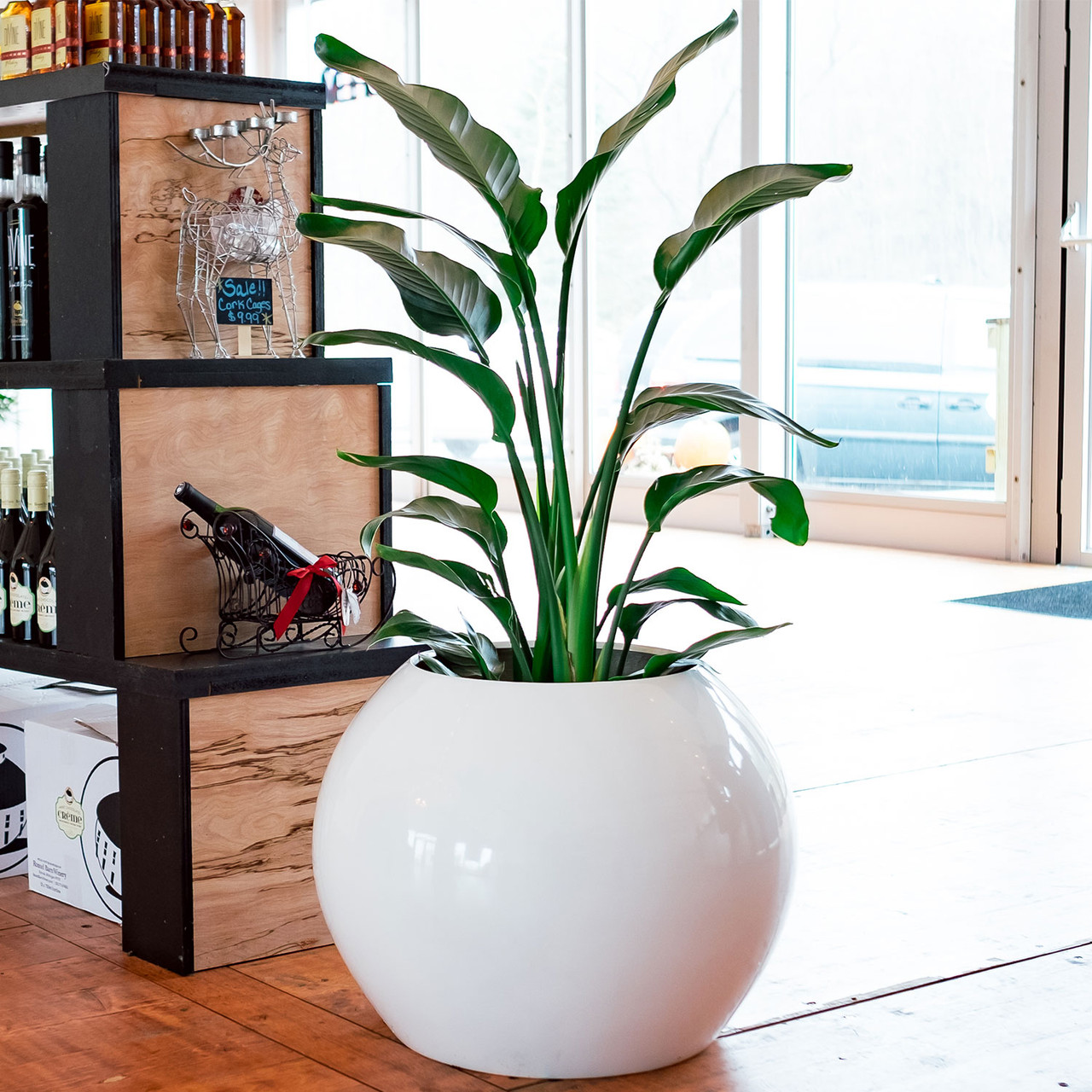
For boutiques and close-up storefronts, decorative round planters or tall planters can add polish.
For larger retail fronts, shopping centers, or lifestyle centers, large planter boxes and repeatable planter runs may create a stronger commercial presence.
Entry Framing and Curb Appeal
Storefront planters are often used to frame the entrance.
Paired planters can make a door feel more intentional. Tall planters can add vertical presence. Cube planters can create a modern symmetrical entry. Large round planters or statement planters can create a stronger focal point.
Planters can also support seasonal planting, soften hard facades, and make the storefront feel more maintained.
They work especially well against glass, concrete, brick, stucco, metal, stone, and other hard commercial surfaces.
Planters should be coordinated with signage, door location, windows, lighting, and the architecture.
Storefront planters can create planted boundaries without making the storefront feel closed off.
They can help define:
Restaurant seating
Cafe patios
Retail waiting areas
Hotel seating
Office building edges
Adjacent sidewalks
Mixed-use transitions
Long planter boxes and privacy planters are especially useful for outdoor seating because they create edges and support planting at the same time.
The plant material matters as much as the planter.
Tall grasses, shrubs, hedging plants, upright foliage, palms, seasonal planting, or artificial planting where appropriate can all create different levels of screening.
Material choice affects appearance, weight, freight, installation, durability, maintenance, and future matching.
Fiberglass is often the practical default for storefront planter programs because it offers commercial finish quality, outdoor durability, format flexibility, and lower empty weight than concrete.
Fiberglass Planters
Fiberglass planters are strong for storefront projects because they are:
Durable outdoors
Lighter than concrete when empty
Available in tall, long, square, round, large, low, privacy, and decorative formats
Flexible across many finish directions
Easier to receive and place than heavier materials
Easier to match across storefronts, patios, entries, and multi-location rollouts
For retail stores, restaurants, hotels, office fronts, shopping centers, and mixed-use properties, that consistency matters.
Concrete planters can make sense for permanent ground-level storefronts where weight is acceptable and the design specifically calls for real concrete.
The tradeoffs are freight, receiving, installation, movement, freeze-thaw exposure, replacement complexity, and less flexibility for seasonal refreshes or multi-location changes.
Metal and Aluminum Planters
Metal and aluminum planters can work in architectural storefronts.
They may be useful when the project requires precise fabrication, specific profiles, or a modern metal finish.
The tradeoffs can include higher cost, longer lead times, heat exposure, denting risk, and finish considerations.
Ceramic and Terracotta Planters
Ceramic and terracotta planters can work for small boutique storefront accents.
They are less practical for high-traffic storefronts where breakage, weather exposure, replacement consistency, and public-facing durability matter.
Wood Planters
Wood planters can add warmth to storefronts and patios.
They also require more maintenance and may weather, rot, stain, or change appearance over time depending on exposure, construction, and upkeep.
Plastic and Resin Planters
Plastic and resin planters can work for budget or temporary use.
For commercial, hospitality, restaurant, and retail storefronts, they may not provide the finish quality, scale, durability, or presence expected in high-visibility locations.
Size, Scale, and Placement
Storefront planters should be sized to the storefront, entrance, sidewalk, patio, and planting plan.
A planter that looks large in a product photo may look small beside a wide storefront. A planter that works at a boutique entrance may not have enough scale for a hotel, shopping center, or large restaurant front.
When choosing storefront planter size, consider:
Storefront width
Door size
Window height
Signage location
Facade height
Sidewalk width
Patio depth
Seating layout
Pedestrian flow
Plant material and root volume
Visibility from the street or parking area
Maintenance access
Delivery and freight constraints
The right size is the one that supports the storefront without crowding the entrance or hiding what customers need to see.
Storefront planter projects should be planned around access and timing.
This matters for businesses opening soon, restaurants preparing for patio season, shopping centers coordinating tenant work, and multi-location rollouts.
Before ordering, confirm:
Storefront access
Sidewalk or curb access
Loading zones
Doorway widths
Staging areas
Finished surface protection
Who receives the freight
Who moves and places the planters
Multi-location delivery needs
Timing before opening, patio season, refresh, or renovation
Dimensions matter as much as weight.
A planter may be manageable to lift but still too long, tall, or wide for a doorway, sidewalk, patio layout, delivery route, or staging area.
Flat rate shipping & handling. Curbside shipping & handling included on orders over $3,500.
Planning Storefront Planters for a Retail Store, Restaurant, Office, Hotel, Shopping Center, or Commercial Building?
Send us your storefront type, planter locations, sidewalk or patio constraints, quantities, desired privacy level, planting plan, finish direction, drainage needs, delivery constraints, and timeline.
We can help recommend storefront planter formats that fit the business exterior, support the planting plan, and work with the practical requirements of the site.
The best storefront planters depend on the entrance, sidewalk, facade, business type, and planting plan.
Tall planters work well for door framing. Long rectangular planter boxes are useful for patio boundaries and sidewalk runs. Low profile planters define outdoor seating without blocking visibility. Cube, round, and large planter boxes can create stronger commercial presence.
What planters work best for restaurant storefronts?
Restaurant storefronts often use long rectangular planter boxes, low profile planters, privacy planters, tall narrow planters, and tall entry planters.
The right format depends on whether the goal is to frame the host area, define outdoor dining, create privacy, separate guests from pedestrian traffic, or improve curb appeal.
Can storefront planters be used for outdoor seating boundaries?
Yes. Storefront planters can be used to define outdoor seating boundaries when the layout, planter size, and plant material are planned together.
Long rectangular planter boxes, low profile planters, and privacy planters are often useful for sidewalk patios, restaurant fronts, and outdoor waiting areas.
Are fiberglass planters good for storefronts?
Yes. Commercial-grade fiberglass planters are a strong option for many storefronts because they are durable outdoors, lighter than concrete when empty, available in many shapes and sizes, and easier to match across storefronts or future locations.
They should still be selected with the actual storefront layout, exposure, drainage plan, planting plan, and maintenance needs in mind.
What planters work best for retail store entrances?
Retail store entrances often work well with paired tall planters, cube planters, decorative round planters, low profile planters, or large planter boxes depending on the storefront size and brand style.
The planter should frame the entrance and support curb appeal without blocking doors, windows, signage, or customer movement.
Do storefront planters need drainage holes?
Storefront planters need drainage planning, but the right approach depends on the site and planting plan.
Drainage options can be selected at order and should be coordinated with the site, planting plan, and maintenance approach.
What plants work best in storefront planters?
The best plants for storefront planters depend on climate, sun exposure, wind, maintenance, irrigation, planter size, and desired visibility or privacy.
Common storefront planting approaches include seasonal planting, shrubs, grasses, upright foliage, palms where appropriate, small trees, and artificial planting where appropriate.
What should I check before ordering storefront planters?
Before ordering, confirm the storefront layout, planter locations, door and window placement, signage visibility, sidewalk or patio constraints, planter sizes, quantities, finish direction, planting plan, drainage approach, delivery path, and target installation timeline.
Storefront planter placement should also be coordinated with the site layout, pedestrian movement, door access, and any applicable local requirements.