Balcony planters are not just small outdoor pots. They are space-planning tools for elevated, narrow, and highly visible outdoor areas.
The right balcony planters can add privacy, soften railings, define seating areas, improve small outdoor spaces, support container planting, and make balconies feel more finished without overwhelming limited square footage.
That matters for apartments, condos, multifamily properties, hotels, offices, rooftop terraces, mixed-use buildings, restaurants, and high-end residential projects.
A strong balcony planter program helps answer practical questions:
How much space is actually available after seating, doors, and circulation?
Does the balcony need privacy, planting, visual softness, or a more finished edge?
Which planter shape works near railings, walls, doors, and furniture?
How will drainage, liners, irrigation, and runoff be handled?
What is the filled weight of the planter system?
Can the planters be received, moved, installed, and matched across units or future phases?
This guide will help multifamily property managers, developers, hotel teams, condo associations, designers, landscape architects, contractors, commercial property managers, office teams, restaurant operators, and high-end residential designers choose balcony planters for elevated outdoor spaces.
Condo balcony planters often need a more polished look.
They may be used to improve private balconies, shared terraces, rooftop decks, or common-area overlooks.
Because condo buildings may have owner rules, association standards, finished flooring, and elevated structural considerations, planters should be selected around size, placement, drainage, and filled weight.
For elevated spaces, final placement and load approval should come from the structural engineer of record where required.
Hotel Balconies
Hotel balcony planters can make guest rooms, suites, rooftop rooms, and hospitality terraces feel more finished.
They may be used to create privacy, soften railings, define small seating areas, or continue the planting style used in hotel entries, courtyards, patios, and pool decks.
Hotel balcony planters need durability and consistency.
They may need to be repeated across many rooms, replaced over time, or matched to broader property planting programs.
Rooftop balconies and terraces need extra planning.
They are often exposed to wind, sun, rain, limited access, and elevated weight constraints.
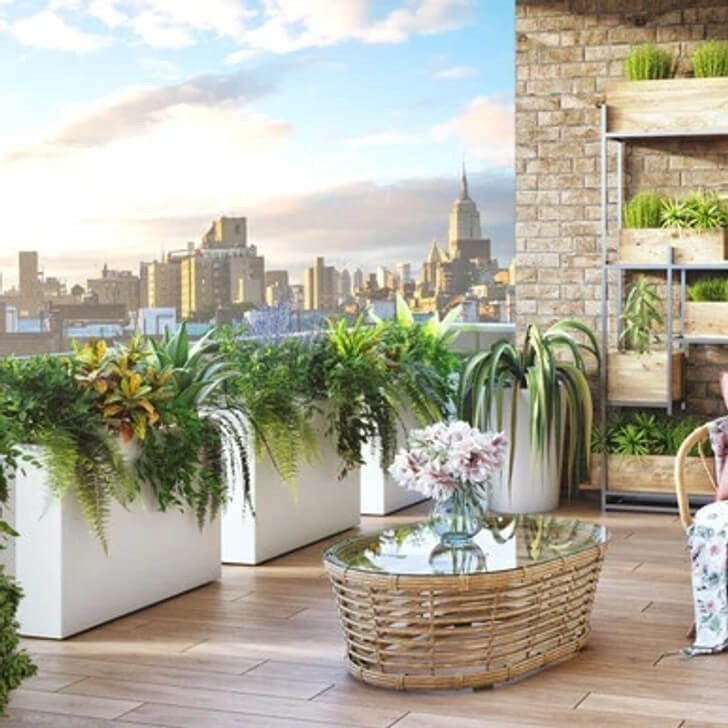
Planters may define lounge areas, soften railings, create privacy, support outdoor dining, or frame views.
For commercial rooftops, balconies, terraces, and elevated decks, final placement and load approval should come from the structural engineer of record.
Office balconies and tenant terraces can become useful outdoor work, break, or meeting spaces when they are planned well.
Planters can define seating zones, soften hard surfaces, add privacy, and make the area feel like an intentional amenity instead of leftover exterior space.
Slim planter boxes, long rectangular planters, low profile planters, and privacy planters can all work depending on the balcony depth and layout.
Restaurant balconies and elevated dining areas need planters that support both atmosphere and operations.
Planters can separate dining from circulation, soften railings, guide guests, add privacy between tables, and create a more polished outdoor dining experience.
The layout should account for tables, chairs, servers, guests, host stands, doors, and cleaning access.
Low profile planters define balcony space without blocking views.
They are useful when the goal is to soften a railing, edge a seating zone, or add planting without creating a visual wall.
Low profile formats can also work where sightlines matter, such as hotel balconies, restaurant balconies, rooftop lounges, and balconies overlooking courtyards or views.
Privacy Planters
Privacy planters help make balconies feel more comfortable.
They can screen neighboring units, soften exposed railings, separate seating areas, or create a more private outdoor room.
The planter provides the structure. The plant material completes the screen.
The empty planter shell is only one part of the total weight.
Filled weight can include:
Planter shell
Soil
Water
Drainage material
Liner or reservoir system
Plant material
This matters for balconies, terraces, elevated decks, rooftops, and multi-story buildings.
Wind also matters.
Tall plantings can catch wind, especially on upper floors, rooftop balconies, corner units, coastal properties, and exposed commercial terraces.
The planter size, plant material, placement, and exposure conditions should be considered together.
For commercial rooftops, balconies, terraces, and elevated decks, final placement and load approval should come from the structural engineer of record.
Drainage and water management should be planned before ordering balcony planters.
Balcony planters may need drainage options, liners, risers, reservoirs, irrigation coordination, saucers, or other water-management solutions depending on the site and planting plan.
Drainage options can be selected at order and should be coordinated with the balcony, planting plan, and maintenance approach.
The goal is to avoid uncontrolled runoff, staining, water damage, neighbor complaints, and maintenance problems.
This is especially important on upper-floor balconies, hotel balconies, condo balconies, apartment units, rooftop terraces, and finished exterior surfaces.
Balcony planters should make the space easier to use.
They should not crowd the balcony.
Planters can support:
Rail-adjacent planting
Seating zones
Outdoor dining
Privacy edges
Doorway accents
Small lounge areas
View framing
More comfortable transitions between indoor and outdoor space
Start with the balcony layout before choosing the planter.
Where do the doors open? Where will chairs go? How much clear walking space remains? Does the balcony need privacy, planting, or just a finished edge? Will maintenance teams need access?
Long planter boxes can define railing edges. Slim planters can fit tight depths. Low profile planters can soften the balcony without blocking views. Tall narrow planters can add height in corners. Modular planters can create flexible runs.
The wrong planter layout can make a balcony feel smaller, harder to clean, and less comfortable to use.
Material Choice for Balcony Planters
Material choice affects appearance, weight, freight, installation, durability, maintenance, and future matching.
Fiberglass is often the practical default for balcony planter programs because it offers commercial finish quality, outdoor durability, and lower empty weight than concrete.
Fiberglass Planters
Fiberglass planters are strong for balcony projects because they are:
Durable outdoors
Lighter than concrete when empty
Available in slim, long, low, tall, square, round, and decorative formats
Flexible across many finish directions
Easier to receive and place than heavier materials
Easier to match across balconies, patios, rooftops, entries, and future phases
For apartments, condos, hotels, offices, and mixed-use properties, that consistency matters.
Concrete planters can make sense for permanent ground-level exterior installations where weight is acceptable and the design specifically calls for real concrete.
The tradeoffs are freight, receiving, installation, movement, freeze-thaw exposure, and replacement complexity.
Concrete is often less practical for balconies, upper floors, rooftops, and spaces where access or filled weight is constrained.
Metal and Aluminum Planters
Metal or aluminum planters can work in custom architectural balcony projects.
They may be useful when the project requires precise fabrication, specific profiles, or a modern metal finish.
The tradeoffs can include higher cost, longer lead times, heat exposure, denting risk, and finish considerations depending on the environment.
Ceramic and Terracotta Planters
Ceramic and terracotta planters can work in smaller decorative balcony settings.
They are less ideal for commercial balcony programs where breakage, weather exposure, replacement consistency, and weight matter.
Wood Planters
Wood planters can add warmth to balconies and terraces.
They also require more maintenance and may weather, rot, stain, or change appearance over time depending on exposure, construction, and maintenance.
Plastic and Resin Planters
Plastic and resin planters can work for budget or temporary use.
For commercial, hospitality, multifamily, and high-visibility balcony environments, they may not provide the finish quality, scale, durability, or consistency expected in a coordinated planter program.
Size, Scale, and Placement
Balcony planters should be sized to the balcony, furniture, railing, and planting plan.
A planter that looks reasonable in a product photo may be too deep for a narrow balcony. A planter that looks small online may disappear on a wide rooftop terrace.
When choosing balcony planter size, consider:
Balcony depth
Balcony length
Railing height and location
Door swing or sliding-door access
Seating and dining furniture
Desired privacy level
Plant material and root volume
Filled weight
Wind exposure
Drainage and runoff
Maintenance access
Delivery path and elevator access
The right size is the one that fits the balcony environment, the planting plan, and the usable layout.
For narrow balconies, long and slim formats are often more efficient than round or deep square planters. For larger terraces, a mix of long boxes, round accents, square planters, and privacy planters may work better.
Balcony planter projects should be planned around access.
Large and long planters take freight space even when they are lightweight relative to concrete.
Before ordering, confirm:
Quantities by balcony or area
Elevator dimensions
Stair access
Loading dock access
Doorway widths
Hallway and corridor access
Balcony door dimensions
Finished surface protection
Staging areas
Receiving location
Who receives the freight
Who moves and places the planters
Lead time before opening, renovation, turnover, or seasonal refresh
Dimensions matter as much as weight.
A planter may be manageable to lift but still too long, tall, or wide for an elevator, doorway, stairwell, hallway, unit entry, or balcony access point.
Flat rate shipping & handling. Curbside shipping & handling included on orders over $3,500.
Choosing Planters That Are Too Deep for the Balcony
Balcony depth is limited. A planter that works on a patio may crowd a balcony, block seating, or make the space harder to use.
Ignoring Filled Weight
The empty planter is only part of the total system. Soil, water, drainage material, liners, reservoirs, and plant material all add weight.
For commercial rooftops, balconies, terraces, and elevated decks, final placement and load approval should come from the structural engineer of record.
Forgetting Drainage and Runoff
Balcony drainage should be coordinated before installation. Do not assume drainage details are automatic or universal.
Drainage options can be selected at order and should be coordinated with the balcony, planting plan, and maintenance approach.
Blocking Doors, Furniture, or Circulation
Planters should improve the balcony layout, not make it harder to use. Placement should account for doors, chairs, tables, lounge furniture, maintenance access, and walking space.
Using Too Many Small Pots
Many small pots can make a balcony look cluttered. Fewer properly scaled planters usually create a cleaner and more intentional result.
Choosing Privacy Planters Without Plant Material Planning
The planter alone does not create the full screen. Choose the planter and plant material together so the screen has the right height, density, root volume, wind tolerance, and maintenance approach.
Ignoring Wind Exposure
Balconies can be windy, especially on upper floors, corners, rooftops, and coastal properties. Planter size, plant material, placement, and exposure should be considered together.
Using Fragile Materials in Commercial Balcony Programs
Fragile materials can create replacement and maintenance problems in multifamily, hotel, restaurant, office, and mixed-use settings. Commercial balcony planters should be selected for durability as well as appearance.
Not Planning Access Before Delivery
Planters have to reach the balcony. Confirm loading dock, elevator, stair, hallway, doorway, unit, rooftop, and balcony access before ordering.
Not Planning Future Matching
Balcony planter programs often expand. Planters may need to match across additional units, new phases, property renovations, rooftop terraces, or future replacements. Choosing repeatable formats and finishes makes that easier.
Recommended PPM Balcony Planters
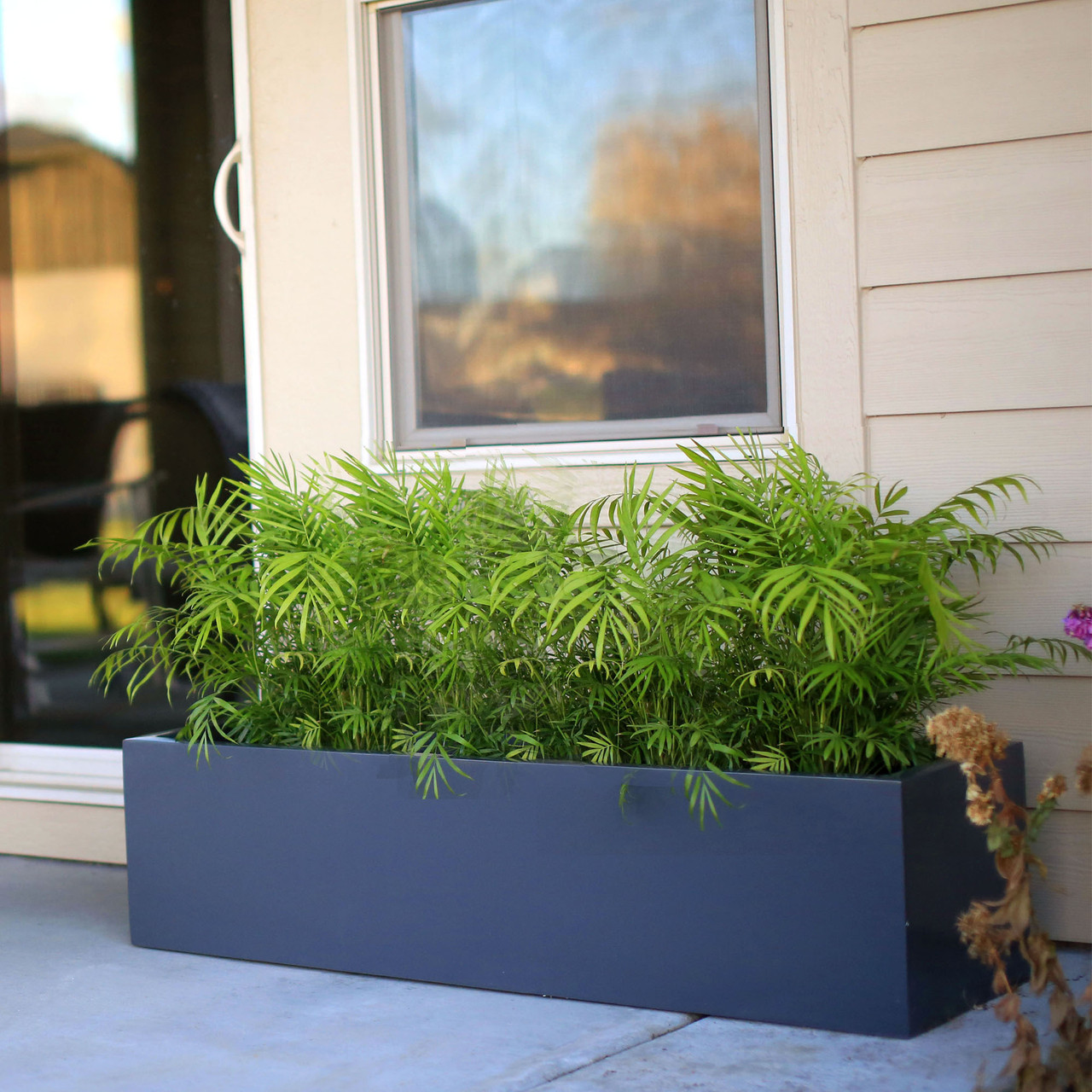
Modular 12 Inch Wide Planter Box
Best for: Apartment balconies, condo balconies, rail-adjacent spaces, tight layouts, and modular runs.
The slim 12 inch wide profile works where balcony depth is limited.
The best balcony planters depend on the balcony size, depth, exposure, privacy needs, and planting plan.
Slim planter boxes, long rectangular planters, low profile planters, privacy planters, and tall narrow planters are often strong options because they can add planting without taking over limited floor space.
What planters work best for apartment balconies?
Apartment balconies often need slim, lightweight, and repeatable planter formats.
Slim planter boxes, modular planter boxes, low profile planters, and tall narrow planters can work well because they help add privacy and planting while preserving usable space.
Can planters be used for balcony privacy?
Yes. Planters can be used for balcony privacy when the planter and plant material are chosen together.
Long planter boxes, privacy planters, tall narrow planters, and slim modular planters can support planting that screens neighboring units, railings, seating areas, or exposed terrace edges.
Are fiberglass planters good for balconies?
Yes. Commercial-grade fiberglass planters are a strong option for many balcony projects because they are durable outdoors, lighter than concrete when empty, available in slim and modular formats, and easier to match across units, properties, or future phases.
They should still be selected with the actual balcony depth, filled weight, wind exposure, drainage plan, and installation path in mind.
Do balcony planters need drainage holes?
Balcony planters need drainage planning, but the right approach depends on the site and planting plan.
Drainage options can be selected at order and should be coordinated with the balcony, planting plan, and maintenance approach.
How do I stop balcony planters from causing runoff problems?
Plan drainage before ordering.
Depending on the installation, balcony planters may need liners, reservoirs, saucers, risers, irrigation coordination, or other water-management solutions to help control runoff and protect finished surfaces.
What plants work best in balcony planters?
The best plants for balcony planters depend on climate, sun exposure, wind, maintenance, irrigation, planter size, and privacy goals.
Common balcony planting approaches include grasses, shrubs, upright foliage, seasonal planting, small trees where appropriate, and artificial planting where appropriate.
Can large planters be used on balconies?
Large planters can be used on some balconies and terraces, but filled weight, wind, access, drainage, and structural review all need to be considered.
For commercial rooftops, balconies, terraces, and elevated decks, final placement and load approval should come from the structural engineer of record.
How do I choose planters that do not crowd a balcony?
Start with the balcony layout before choosing the planter.
Confirm available depth, door access, furniture placement, walking space, railing location, privacy goals, and maintenance access. Then choose planter sizes and formats that improve the space without creating obstacles.
What should I check before ordering balcony planters?
Before ordering, confirm the balcony dimensions, planter locations, available depth, quantities, finish direction, planting plan, drainage approach, filled-weight considerations, wind exposure, delivery path, access constraints, and target installation timeline.
For commercial rooftops, balconies, terraces, or elevated decks, structural review should also be handled by the engineer of record.