Loading cart...
Trusted by teams at:





Browse our tall planters below, add likely sizes to your cart, then choose Checkout or ”confirm pricing and lead times” to request a quote for your project.
Where Tall Planters Earn Their Keep
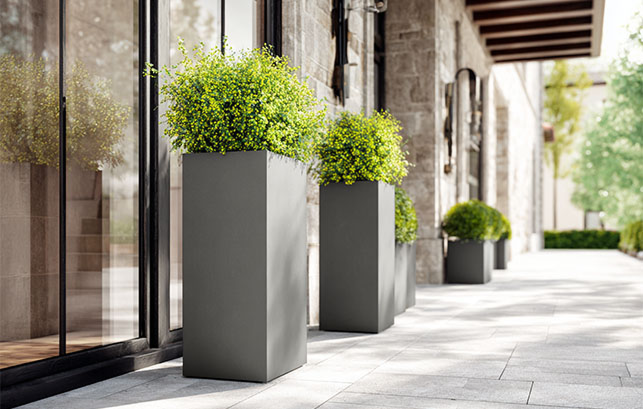
Tall profiles work where standard planters disappear: hotel entries, office lobbies and elevator corridors, rooftop terraces, restaurant patio dividers, retail storefronts, and high-end residential entries where the planter is part of the architecture.
Smart Buying Guide for Tall Planters
1. Match Height to Your Architecture
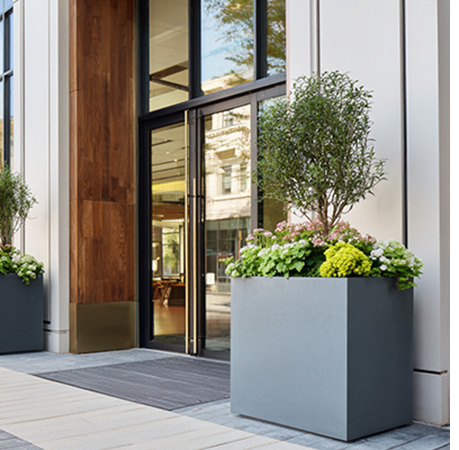
Use door and railing height as your benchmark. For entry flanking, planters that finish at roughly half the door height read as intentional without competing with the architecture. At columns and pillars, run the planter to about two-thirds of the column height for visual balance. For privacy screening on terraces and patios, 48 to 60-inch planters with tall grasses or bamboo give useful visual separation without a fence-like feel.
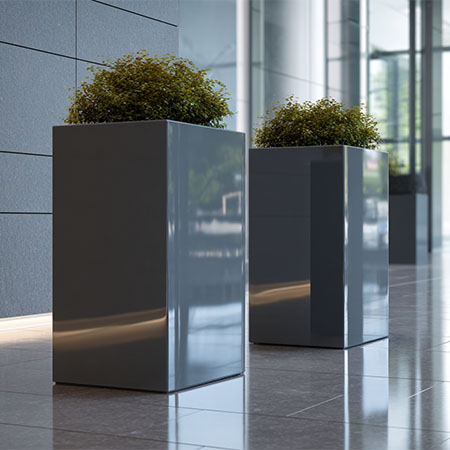
2. Check the Base, Root Volume, and Stability
Tall planters need enough base footprint to stay stable when fully planted. A 48-inch tall form should have at least an 18 to 20-inch base dimension. Confirm that root volume supports what you are planting: palms, ficus, and bamboo need 20-plus gallons of soil to establish properly in a container. On rooftops and exposed terraces, confirm the planter base sits flat on the substrate and factor in wind load when planted with tall specimens.
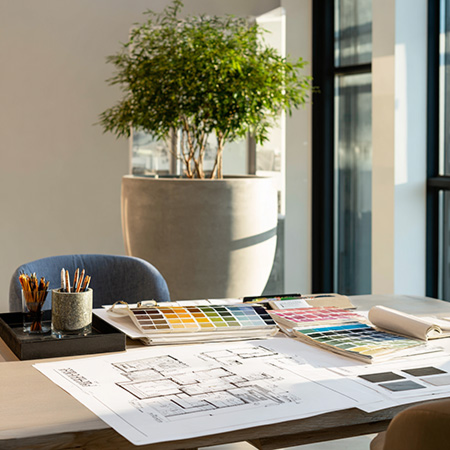
3. Plan for Access, Weight, and Final Position
Tall fiberglass planters are substantially lighter than concrete equivalents, but once planted they are not easy to reposition. Confirm elevator clearances, dock access, and final placement before install day. For phased projects or spaces where layouts change, consider leaving planters unplanted until placement is confirmed, or choose forms with base pads rather than drainage lips that can drag and scratch flooring.
Need a fast gut‑check on sizes and lead times? Send us your plans and we’ll recommend tall planter options for your project.
Tall Planters Built for Real-World Projects
Tall planters are asked to carry more visual weight than any other format. They stand alone at entries, anchor corners, and hold a room's eye line. That means the construction has to hold up across years of weather, cleaning, and replanting cycles.
Our tall fiberglass planters are reinforced against bowing and wall flex when fully planted with potting soil and mature specimens. The base is designed to stay stable without staking or ballast in most standard commercial conditions. Exterior-rated finishes resist UV, pool chemicals, and de-icing salt. Every planter carries a three-year commercial warranty. Core tall SKUs ship in 1 to 2 weeks. Custom heights, colors, and RAL matching are available for larger projects and multi-site rollouts.
Trusted Nationwide for Demanding Installations
Professionals specify our tall planters for:
- → Hotels & hospitality
- → Office towers & corporate campuses
- → Retail & restaurant patios
- → Multifamily developments
- → Rooftop lounges & terraces
- → High-end residential projects
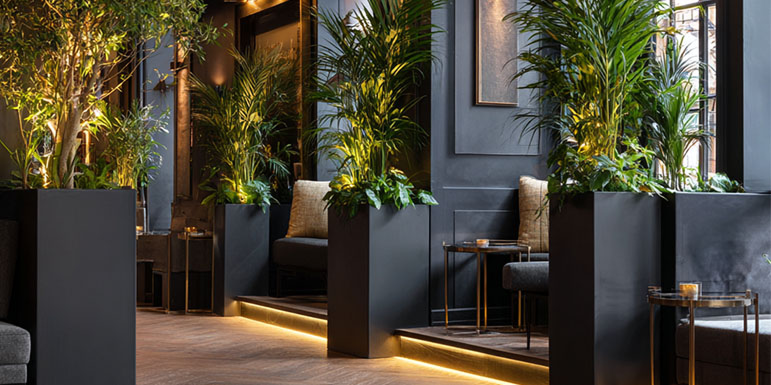
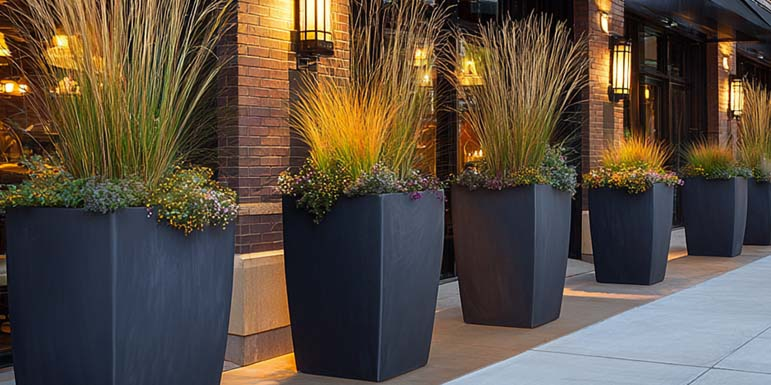
Height Without the Weight
A 48-inch tall fiberglass planter can weigh 30 to 40 pounds empty. A comparable concrete form runs 200-plus pounds. That difference matters on upper-floor lobbies, rooftop terraces, and anywhere structural load limits apply. You get the visual scale of stone without the freight cost, the load calculation, or the installation crew.
Stable When Planted, Moveable Before
Wide-base construction keeps tall planters upright when planted with trees and tall shrubs in commercial conditions. Before planting, one person can reposition most tall forms without equipment, which matters on phased projects and staged installs where final placement changes. No tip-over risk when positioned correctly and planted to spec.
Finishes That Hold at Height
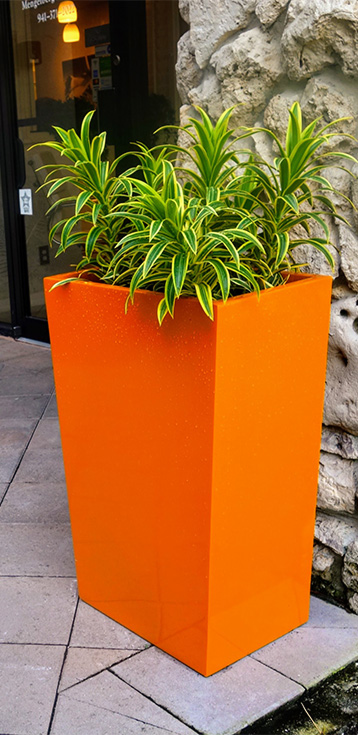
Tall planters face more wind, sun, and exposure than low-profile forms. UV-stable exterior coatings and commercial-grade resin construction keep surfaces clean, color-true, and free of chalking for years. Available in 20-plus standard colors with custom RAL matching for multi-location brand consistency.
Frequently Asked Questions
Generally, tall planters run from 30 inches to 60-plus inches in height. Forms under 24 inches are typically considered medium or standard. Above 36 inches, planters start reading as architectural elements rather than accent pieces, which is where most commercial specifiers reach for tall profiles.
Trees and tall specimens work best: ficus, olive, palm, bamboo, ornamental grasses, and large tropical plants. The key requirement is enough root volume, typically 20 gallons or more for trees, and a planter deep enough to cover the root ball with several inches of soil. Tall narrow forms work well for single-trunk specimens; wider tall forms handle multi-plant arrangements.
Choose a form with a base width of at least 18 to 20 inches for any planter over 42 inches tall. Planted weight helps stability significantly. On rooftops with high wind exposure, consider planting with heavier soil mixes, avoiding very large sail-area specimens like tall palms in the highest-wind zones, and positioning planters against walls or screens where possible.
Yes. Standard SKUs run in common commercial heights, and custom dimensions are available for larger projects. Contact us with your target height, footprint, and finish requirements and we can provide a quote. Custom lead times vary but we can typically advise on feasibility within one business day.
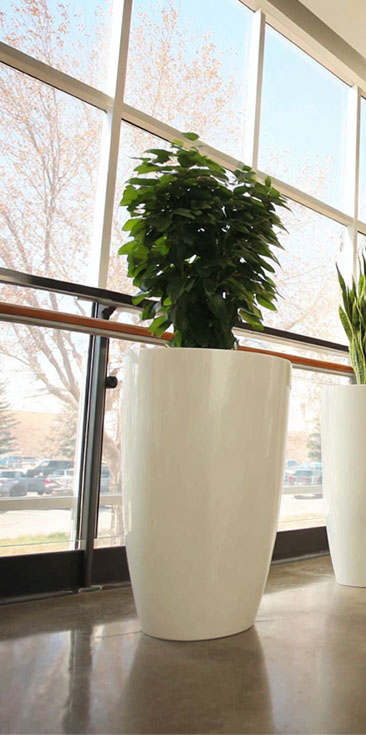
Yes, and this is one of the most common uses. Tall planters in hotel lobbies, office reception areas, and interior retail corridors add vertical scale that low-profile planters cannot achieve. Interior use eliminates freeze-thaw and UV concerns, so the primary considerations shift to root volume, drainage, and floor protection.
Core tall SKUs ship in approximately 1 to 2 weeks from US finishing centers. Custom colors, sizes, and RAL finishes may add lead time. Contact us with quantities and finish requirements for a specific lead time estimate on your project.
If You Need Tall Planters, We Are the Team That Makes Your Life Easier
We help designers and property teams choose tall planters that fit the architecture, handle real conditions, and show up on time for commercial and luxury residential projects.
When the profile, the finish, and the timeline all matter, our tall planters deliver.