Loading cart...
Low Maintenance Commercial Landscaping Ideas
Posted by Jason Wyrwicz on Jul 2nd 2025
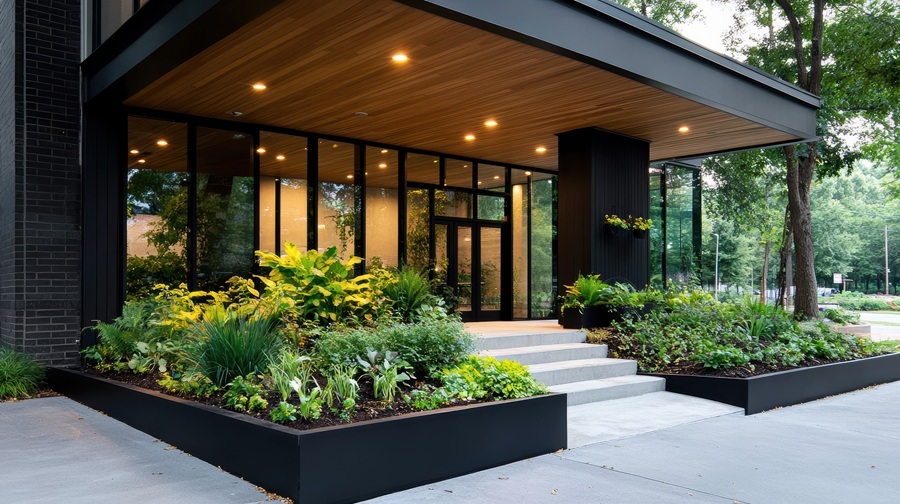
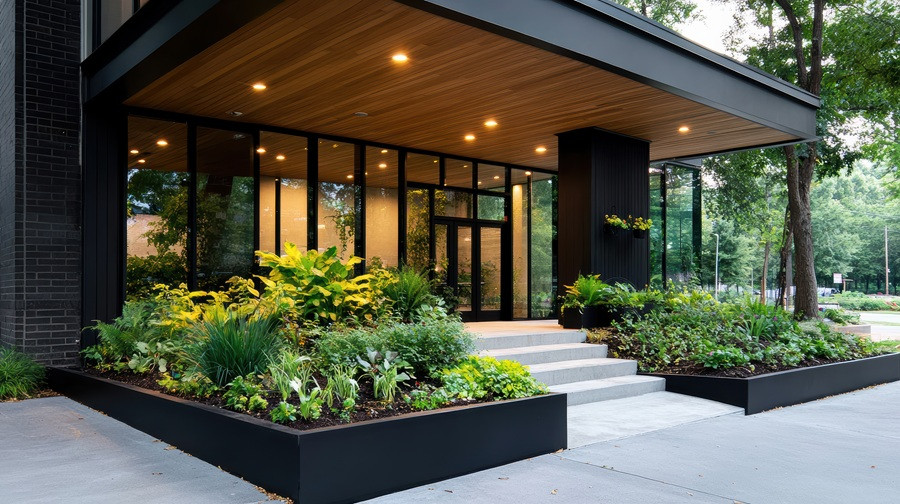
First impressions matter—especially in commercial spaces. But beautiful landscapes often come with hidden costs: constant mowing, seasonal planting, irrigation headaches, and ongoing labor. If you're managing a property, you know how quickly those line items add up.
The good news is that a well-designed, low-maintenance landscape can look just as impressive—with far less effort.
In this guide, we’ll walk you through practical, cost-effective landscaping ideas that are easy to maintain and built to last. Whether you're revamping a retail frontage, upgrading an office courtyard, or managing a large-scale facility, you'll learn how to:
- Choose climate-appropriate plants that thrive with minimal care
- Replace high-maintenance turf with smart ground covers or hardscape
- Cut water and labor costs with smarter irrigation and layout planning
- Maximize ROI and create a polished look year-round
Let’s dive into the strategies that make your landscaping work smarter—not harder.
Why Go Low-Maintenance?
Maintaining a traditional commercial landscape with lawn, seasonal flowers, and high-maintenance greenery typically costs between $1.75 to $3.50 per square foot per year. For a 10,000 sq ft property, that’s $17,500 to $35,000 annually, just to keep things looking presentable.
Now compare that to a low-maintenance approach using native plants, evergreen structure, and smart hardscaping. You’re looking at $0.90 to $1.50 per square foot annually, or $9,000 to $15,000 per year, potentially cutting those costs by 40–60% while still looking polished and professional.
But there’s more to it than just budgets. A well-designed, low-maintenance landscape also means:
- Better ROI: Lower operating costs and less frequent replanting help your investment pay for itself faster.
- Stronger brand perception: Clean, cohesive, sustainable design signals care, professionalism, and forward thinking.
- Higher occupancy and retention: Thoughtful outdoor spaces make commercial properties more welcoming and comfortable.
When curb appeal and cost-efficiency matter more than ever, low-maintenance isn’t just a trend—it’s a competitive edge.
Quick-Fire Idea Index
| Pain Point | High-Effort Fix | Low-Maintenance Swap | Estimated Annual Saving |
|---|---|---|---|
| Weekly mowing | Traditional lawn | Native ground cover (e.g., creeping thyme) | $0.75–$1.50/ft² |
| Seasonal color | Annual flower beds | Evergreen shrubs + perennial bursts | $0.40–$0.95/ft² |
| Irrigation waste | Spray systems | Drip irrigation w/ moisture sensors | $0.25–$0.65/ft² |
| Patchy turf | Reseeding + fertilizing | Pavers + hardy sedum joints | $0.65–$1.25/ft² |
| Edging upkeep | Steel or plastic edging | Natural stone borders | $0.15–$0.30/ft² |
| Staff-intensive pruning | Fast-growing ornamentals | Compact, low-prune native species | $0.30–$0.75/ft² |
Low Maintenance Landscaping Design—The Building Blocks
Smart, sustainable landscapes don’t happen by accident—they’re built with intention. Every element, from plant choice to layout, should serve a purpose: lower upkeep, stronger curb appeal, and long-term cost savings.
Let’s break down the key components of truly low-maintenance landscaping: from plant choices that thrive without fuss, to design strategies that reduce time, cost, and labor.
Choose the Right Plants for Your Weather Zone
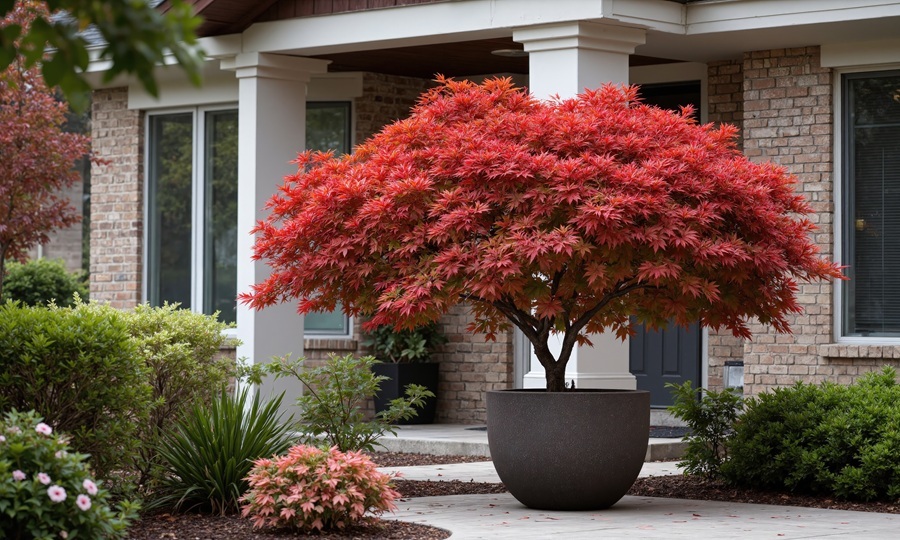
The easiest landscapes to care for are the ones designed for your environment. When you choose low maintenance plants that naturally thrive in your climate, they need less water, less work, and bounce back from the elements without a fuss.
Cold/Snowy Climates
Hardy, salt-tolerant, and built to survive long winters—these plants bring structure and color with minimal upkeep.
| Plant | Type | Features |
|---|---|---|
| Common Juniper (Juniperus communis) | Shrub | Evergreen, salt-tolerant |
| Japanese Spurge (Pachysandra terminalis) | Groundcover | Forms a dense mat, suppresses weeds |
| Red Maple (Acer rubrum) | Tree | Low-maintenance with brilliant fall color |
Temperate/Rainy Climates
These plants love mild weather and regular rain. They grow fast, fill space, and rarely need pruning.
| Plant | Type | Features |
|---|---|---|
| Smooth Hydrangea (Hydrangea arborescens) | Shrub | Bold blooms, minimal pruning |
| Periwinkle (Vinca minor) | Groundcover | Shade-loving, easy perennial |
| Flowering Dogwood (Cornus florida) | Tree | Hardy, with an iconic spring display |
Hot/Dry Climates
Built for heat and drought, these picks stay strong with little water and lots of sun.
| Plant | Type | Features |
|---|---|---|
| Texas Sage (Leucophyllum frutescens) | Shrub | Silvery foliage, thrives in dry heat |
| Trailing Lantana (Lantana montevidensis) | Groundcover | Colorful, low-maintenance ground cover |
| Honey Mesquite (Prosopis glandulosa) | Tree | Provides shade, minimal irrigation need |
Build a Year-Round Backbone with Evergreens and Seasonal Color
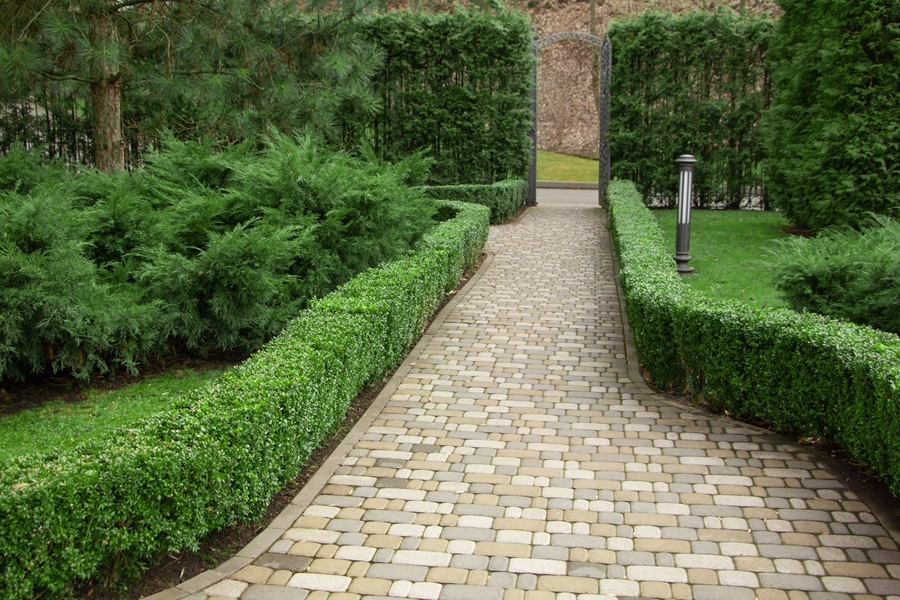
A beautiful, low-maintenance landscape doesn’t mean constant replanting. The trick is to anchor your sustainable design with evergreen structure—plants that hold their shape and color all year—then layer in a few seasonal bloomers for visual interest when it counts. Think of evergreens as the architecture, and perennials as the accessories.
Start with Structure
Choose evergreen plants that look good in all seasons, need little pruning, and offer visual weight.
- Boxwoods: Clean, formal lines; perfect for hedging or framing paths. Easy to shape and control.
- Dwarf pines: Compact, sculptural, and virtually zero-maintenance. Great for modern or minimalist gardens.
- Yews or hollies: Ideal for screens or accents; some varieties produce red berries for added winter interest.
Add Low-Effort Seasonal Pops
Once you’ve got the structure, bring in small touches of color that won’t require much upkeep.
- Coneflowers (Echinacea): Bright, pollinator-friendly, and tough as nails. Bloom midsummer into fall.
- Lavender: Fragrant, drought-tolerant, and ideal for borders or pots. Prune once a year, and it keeps going.
- Salvia or Black-Eyed Susans: Another great choice for long-lasting color with minimal care.
Pro tip: Use perennials in pockets—grouped in threes or fives—so they make an impact without creating chaos.
Swap Turf for Ground-Cover or Hardscape
Traditional turf may look great, but it’s a time and water sink. Between mowing, fertilizing, edging, and irrigation, the average property spends massive labor hours maintaining grass. Luckily, you can reclaim your budget and still have a functional layout by swapping turf for low-maintenance alternatives.
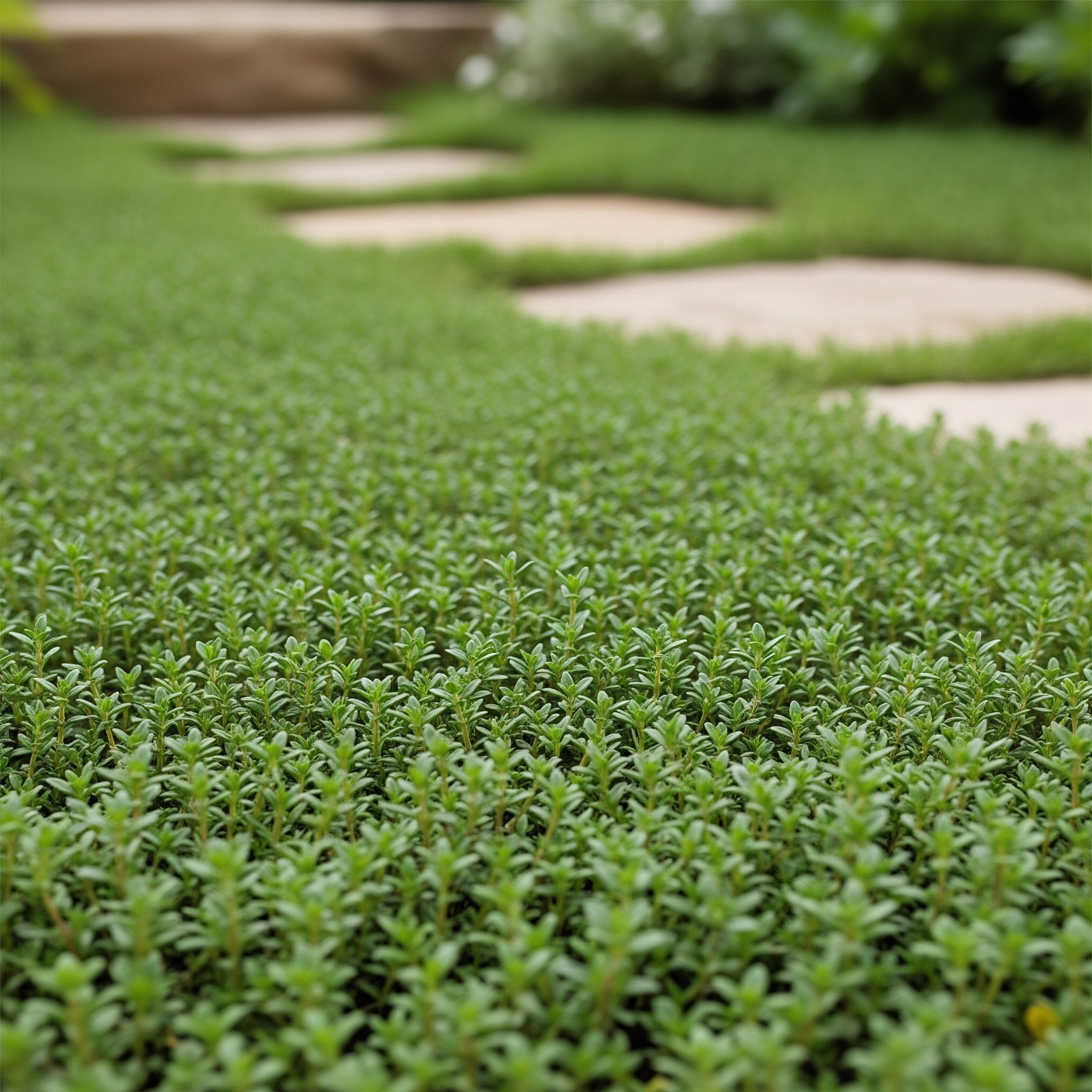
Low-Grow Ground Covers
These living options stay neat, suppress weeds, and require little to no mowing or watering.
- Clover: Stays green with less water, self-fertilizes, and resists foot traffic. Great for eco-lawns.
- Creeping Thyme: Fragrant, drought-tolerant, and blooms in summer. Perfect between pavers or in sunny open areas.
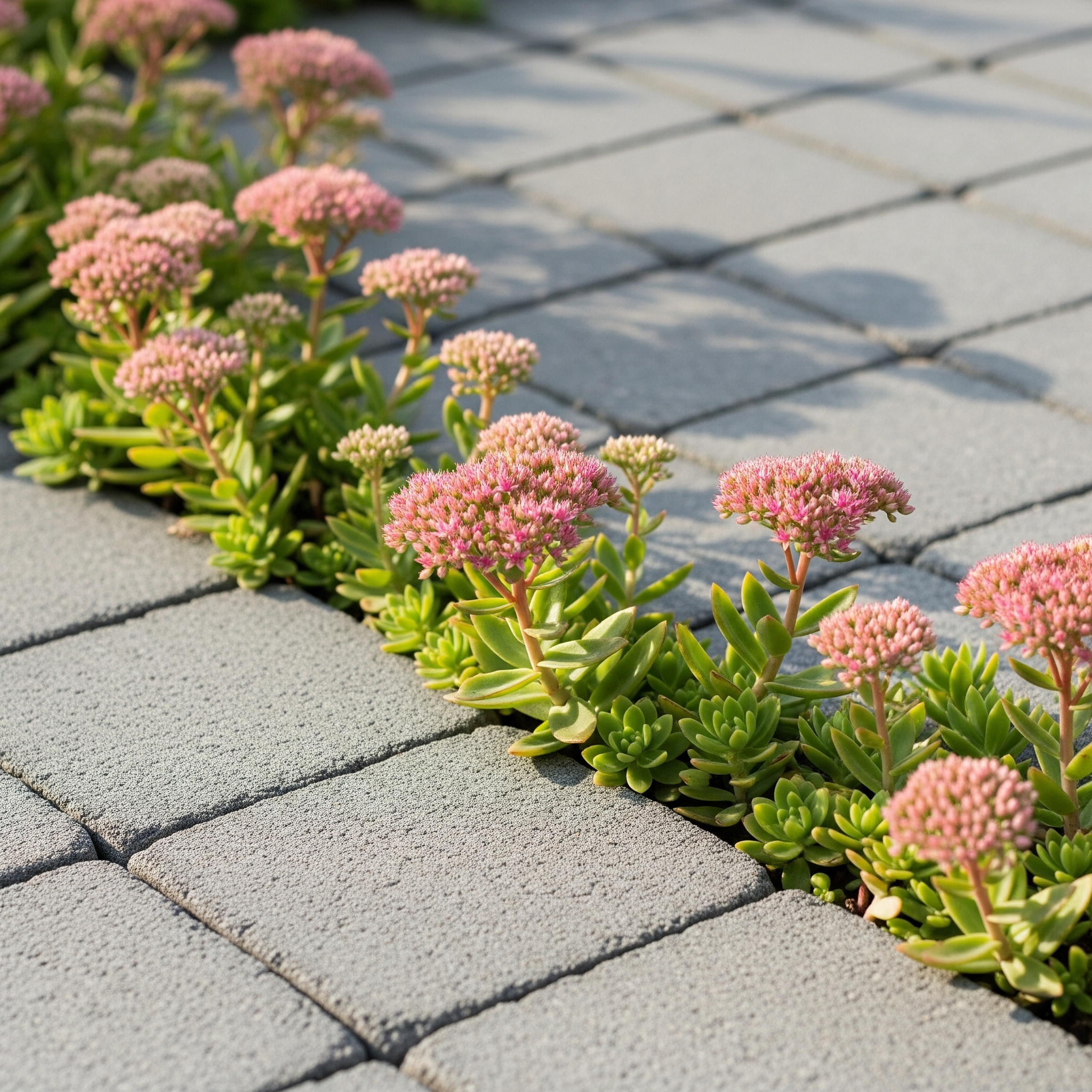
- Sedum (Stonecrop): Succulent ground cover that thrives on neglect and poor soil.
Hardscape
Non-living surfaces reduce upkeep even further, and many are budget- and drainage-friendly.
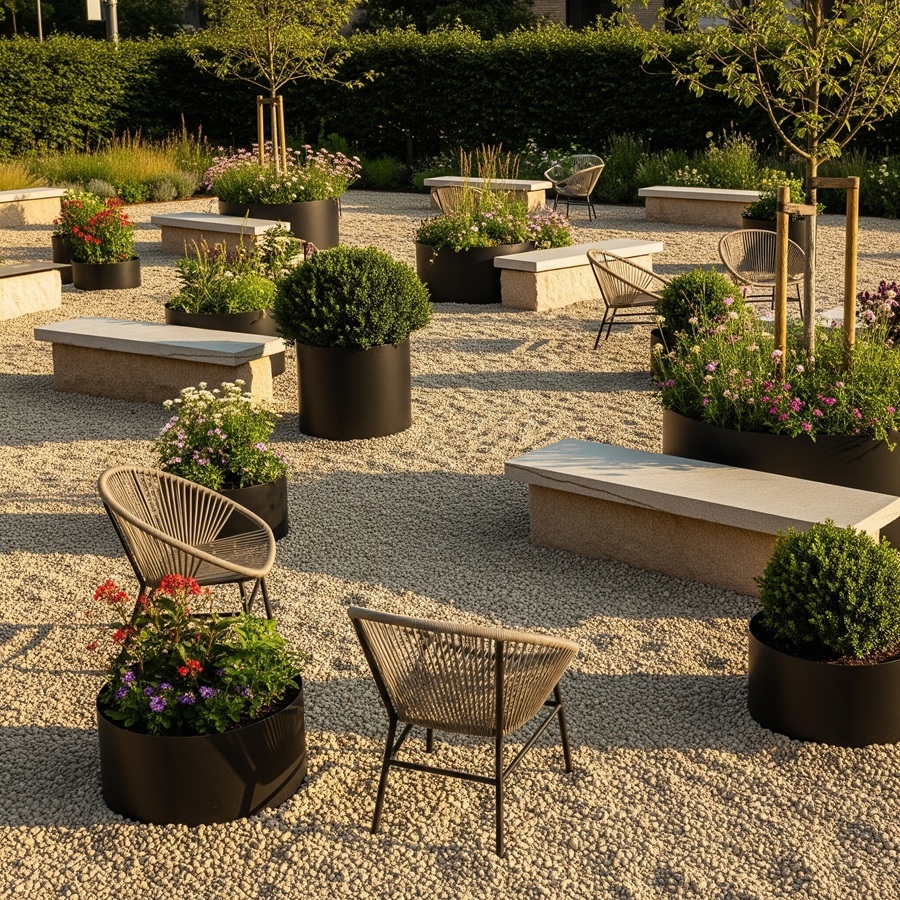
- Gravel paths: Easy to install, permeable, and weed-resistant with the right base.
- Decorative pavers: Durable, stylish, and low-slip. Great for patios or garden walkways.
- Decomposed granite: Affordable, compactable, and natural-looking. Ideal for dry climates or modern designs.
Bonus: Most of these swaps qualify as "xeriscaping," which may be eligible for local rebates or water-saving incentives.
Max Out Benefits and Minimize Upkeep with the Right Mulch
Mulch is one of the easiest, highest-ROI upgrades for any low-maintenance landscape. A proper mulch layer can reduce weeds by up to 80%, lock in moisture, protect soil from erosion, and improve plant health in the long term.
Aim for a 2–4 inch layer for maximum weed control and moisture retention. Too thin and weeds sneak through—too thick and roots can suffocate.
Mulch Types & Price Breakdown
| Type | Look & Feel | Price (Installed) | Pros |
|---|---|---|---|
| Shredded bark | Natural, woodsy aesthetic | $30–$50 per cu yard | Biodegradable, improves soil as it breaks down |
| Rubber mulch | Dark, industrial, long-lasting | $50–$80 per cu yard | Doesn’t decompose, ideal for play areas or high-traffic zones |
| Stone mulch | Clean, modern, ultra low-maintenance | $70–$100 per cu yard | Never breaks down, perfect for dry climates and permanent beds |
Automate Your Watering with Smarter Irrigation
Smart irrigation can be a massive time and water saver, especially in large-scale commercial landscaping projects. Instead of watering everything the same way, you target where and when plants actually need it. This results in healthier landscapes and fewer hours dragging hoses around.
Here’s how you can make it work:
- Drip systems: These deliver water right to the root zone, reducing evaporation and runoff. Ideal for beds, borders, and planter containers.
- Rain sensors: They automatically shut off your system after rainfall, so you’re not paying to water already-soaked soil.
- Zoning: Group plants by water needs (like lawn, shrubs, dry garden) so no one gets too much or too little.
- Automation: Use a controller with timers and moisture sensors to make your system nearly hands-free once installed.
Basic Irrigation Flow: Controller → Valve Box → Zone Pipes → Drip Emitters + Sensors
Upgrade to Hardscape That Saves You Time and Water
A well-designed hardscape works for you season after season. Every element should earn its place by solving a problem or saving you time.
To make your hardscape do double duty, opt for:
- Permeable paving: Lets rainwater soak into the ground instead of pooling or running off. It reduces erosion, can lower stormwater fees, and may qualify for rebates.
- Built-in seating: Stone or timber seating walls never blow away or rot like loose furniture.
- Retaining walls: Great for sloped or uneven ground. They add dimension, prevent erosion, and create new spots for planting without increasing upkeep.
- Low-maintenance materials: Composite decking and faux-stone veneers offer the beauty of wood or stone without annual sealing or staining.
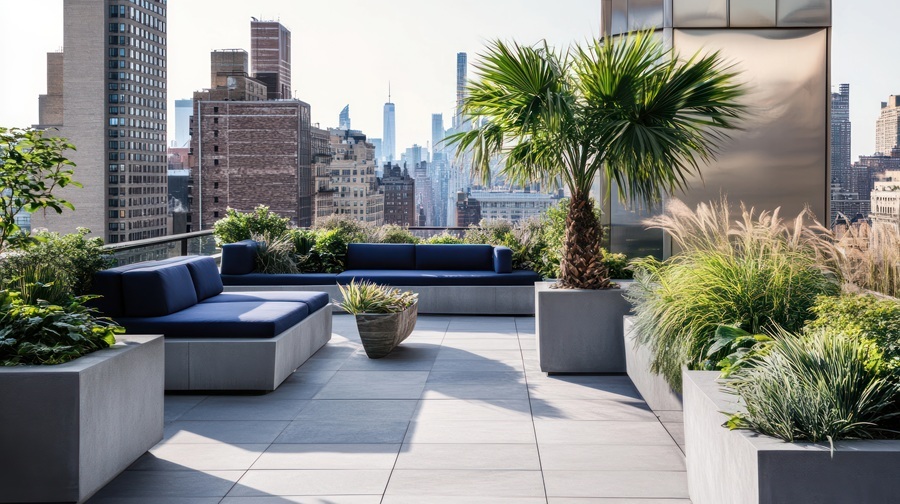
- Fiberglass planters: Lightweight but weather-tough, commercial fiberglass planters won’t crack, rust, or fade like concrete or metal. They’re easier to move and ideal for seasonal swaps or reconfiguring layouts without heavy lifting.
Opt for Simple Layouts for Easy Upkeep
A simple landscape design isn’t just easier on the eyes—it saves you time and money on upkeep. When you keep things straightforward, maintenance becomes faster and less expensive, especially if you hire third-party services.
Here’s how you can design for simplicity and future growth:
- Use raised beds or containers to make weeding easier and seasonal plant swaps quick and mess-free.
- Create modular zones by grouping plants with similar water, soil, and light needs. You can use long rectangular planter boxes to define these zones cleanly—great for separating sun- from shade-loving plants.
- Stick to clean lines and simple shapes to avoid complicated curves that slow down mowing and trimming.
- Design for accessibility so workers can reach plants easily from walkways, saving on labor costs and speeding up maintenance.
Climate-Specific Pitfalls & Pro Tips
Snow & Salt Zones
Winter roads and sidewalks are often treated with salt, which can seriously harm plants if you’re not careful. To protect your landscaping:
- Keep salt-sensitive plants at least 3 to 5 feet away from salted walkways and parking aprons.
- Choose salt-tolerant species like juniper, daylilies, or creeping phlox.
- When possible, switch from traditional road salt to calcium magnesium acetate (CMA). It works just as well but is much gentler on your plants and soil health.
Arid Zones
Dry climates need a specialized approach. Xeriscaping isn’t just about cacti—there are plenty of attractive, drought-friendly options:
- Incorporate ornamental grasses, lantana, or Russian sage for texture and color without high water needs.
- Use light-colored mulch or stone to reflect sunlight and keep soil cooler, reducing evaporation.
- Add shade sails or fabric canopies over patios or gathering spots. This cuts down ground evaporation and helps keep surfaces cool and comfortable.
Cost & Labor Comparison
Landscaping choices affect both how much you spend upfront and the work (and costs) down the line. This table shows typical initial and ongoing expenses over five years to help you see which option saves you money and effort in the long run.
| Landscape Type | Initial Cost (CAPEX) | 5-Year Ongoing (OPEX) | Total 5-Year Cost |
|---|---|---|---|
| Traditional (lawn + annuals) | $10/ft² | $3/ft²/year × 5 = $15 | $25/ft² |
| Native mix + hardscape | $12.50/ft² | $1.10/ft²/year × 5 = $5.50 | $18/ft² |
That’s a 29% total savings over 5 years, not including water rebates or avoided replanting costs.
Mini Case Study: Legacy Park, Olive Branch, MS—Landscape Redesign
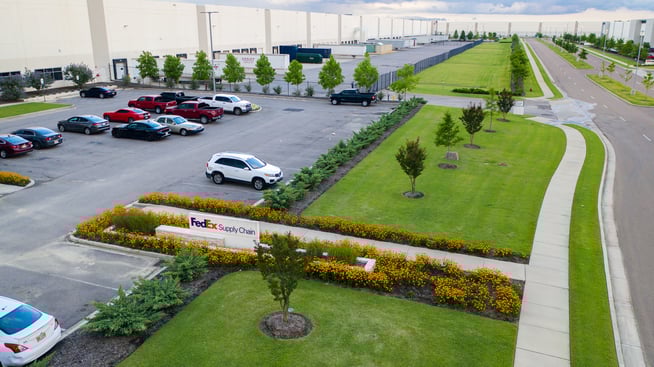
Legacy Park, an industrial park in Olive Branch, Mississippi, transformed its landscape by replacing traditional turf and annuals with drought-tolerant native plants and low-maintenance hardscaping.
Before:
- Weekly mowing and watering for over 15,000 sq ft of turf
- Annual flowers replaced twice a year
- Maintenance costs around $18,000 per year
After:
- Planted native perennials like Black-Eyed Susans and Redbud trees that need little watering or pruning
- Added gravel paths and mulch beds to cut down on the grass area
- Water usage dropped by 60%, saving about $3,500 annually
- Maintenance hours reduced by 40%, cutting labor costs by roughly $7,000 per year
Overall, the park lowered its annual landscape maintenance costs from $18,000 to around $8,000—a savings of more than 55% while improving curb appeal and sustainability.
Sustainability & Incentives
Low-maintenance landscaping can also bring valuable environmental and financial benefits. By choosing sustainable design features, you may qualify for:
- LEED credits awarded for water-efficient landscaping practices and minimizing site disturbance, which can boost your property’s green building certification.
- Local rebates and incentives for installing smart irrigation systems, permeable surfaces, or using native and climate-appropriate plants. Be sure to check with your municipality or local utility programs.
- Stormwater fee reductions or exemptions in some urban areas when you implement permeable paving and other water-friendly landscape features that help manage runoff.
Conclusion
Going low-maintenance doesn’t mean going low-impact. By using the right plants, strategic hardscape, and smart irrigation, you can drastically reduce ongoing landscaping costs without compromising aesthetics. Whether you manage a single storefront or a sprawling tech park, low-maintenance commercial building landscaping guarantees easier upkeep and a healthier budget.
Ready to upgrade your commercial grounds or retail entrance? Our commercial-grade fiberglass planters are engineered to withstand extreme freeze-thaw cycles, UV rays, and heavy foot traffic without cracking or fading. Backed by a 3-year warranty and available in 20+ professional finishes. Call us at (888) 381-9501 or reach out to our team for custom trade quotes and volume lead times.
Frequently Asked Questions
Does low-maintenance mean no maintenance?
Not quite. It means smarter maintenance. Native and climate-adapted plants still need occasional care—just far less watering, pruning, and replanting than traditional gardens.
Do I still need a landscaper with a low-maintenance design?
In most commercial settings, yes—but not as often. A well-planned low-maintenance landscape cuts down on-site visits, hours billed, and unexpected issues.
Do hardscapes make outdoor areas hotter in summer?
They can. To reduce heat buildup, choose light-colored materials, integrate shade (like pergolas or trees), and break up paved areas with planted zones.
Can low-maintenance still look high-end?
Absolutely. Clean lines, evergreen structure, and modern planters give a premium look without daily upkeep. It’s minimalist, modern—and built to impress without constant labor.