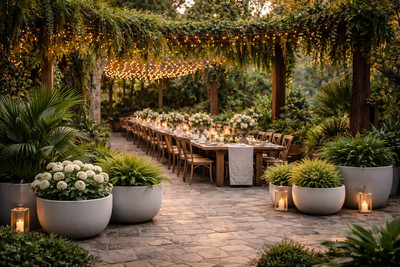
Garden & Landscape Design Ideas: Expert Tips, Styles, and Inspiration for Every Outdoor Space
Posted by Jason Wyrwicz on Jan 12th 2026
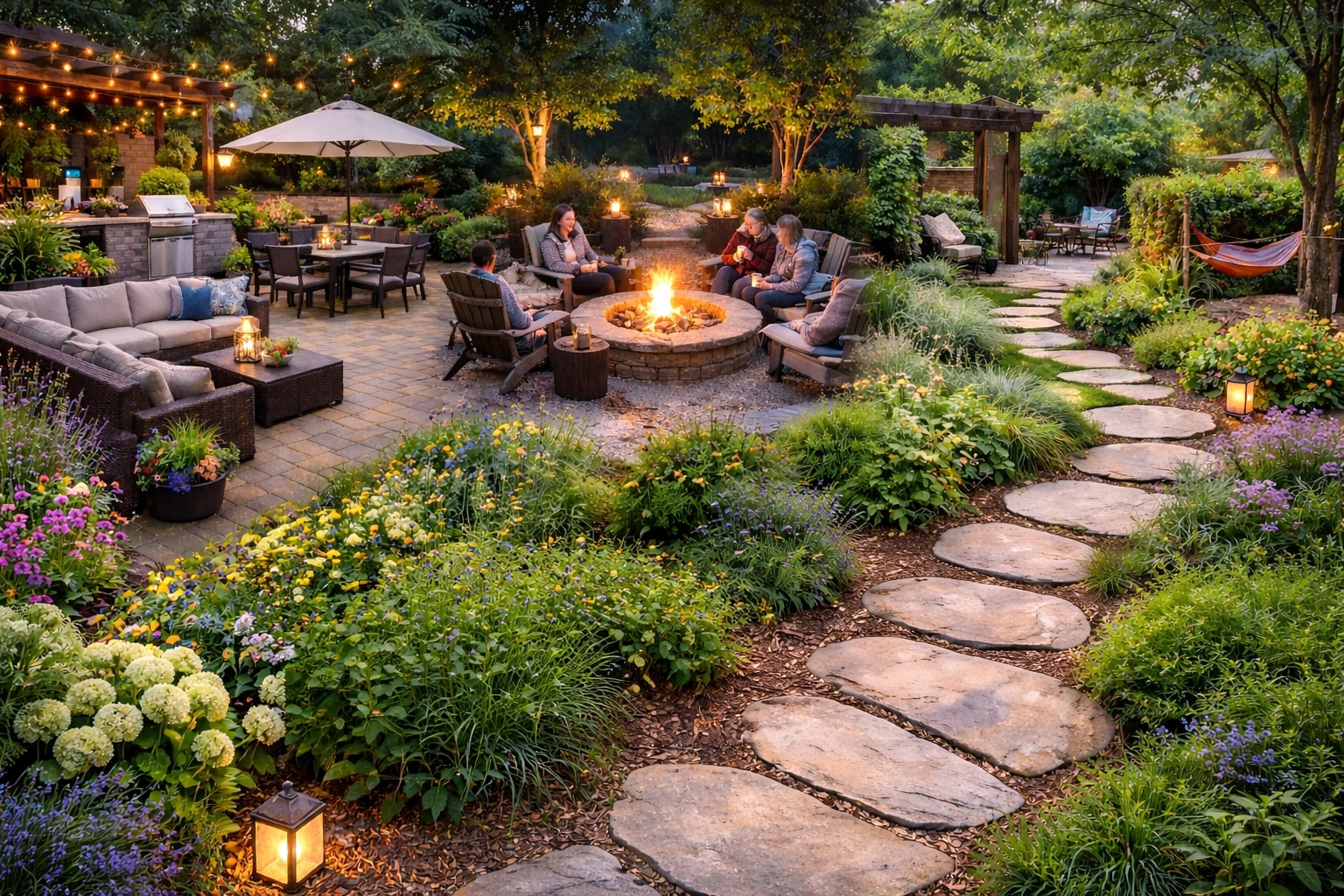
Gardens are about much more than plants. They are about creating space for real moments and a better way of living at home. A thoughtful garden landscape design adds beauty and privacy, while also giving you room to dine outdoors, set up a play area for kids, or create a quiet corner to relax. A good design also boosts the curb appeal of your entire property.
But let’s be honest, without a clear plan, outdoor spaces often grow in bits and pieces. Plants get added wherever there is space, paths end up looking awkward or out of place, and some areas become crowded while others sit unused. Maintenance becomes harder than it needs to be, and it gets difficult to decide what belongs in your garden and what does not.
This article shares practical garden design ideas you can use in your own space. You’ll also learn simple landscaping design principles, and how to plan before planting. The aim is to help you create a garden that fits your space, budget, climate, and the way you use your outdoor area.
Core Design Principles and Elements
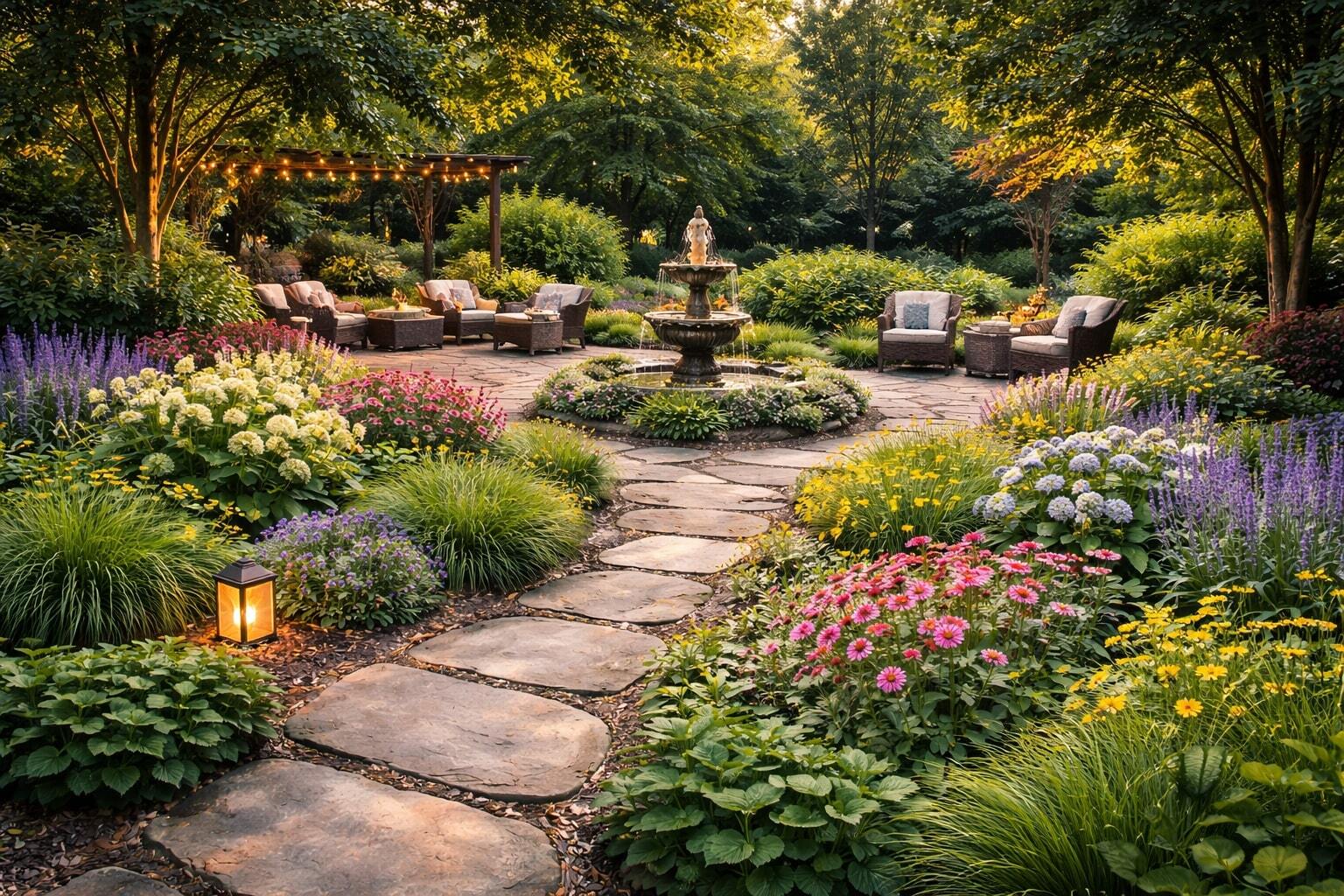
Before looking at specific garden design ideas, it’s good to understand what holds a good garden landscape design together. These basics guide your choices and help the space look planned instead of pieced together.
Design principles: how the garden works as a whole
Design principles explain how plants and features relate across the space. They help the garden feel comfortable to move through and easy to look at.
The main principles used in garden design include:
Proportion – Keeps plants and features sized correctly in relation to each other
Unity – Helps the garden look connected instead of scattered
Balance – Spreads visual weight evenly across the space
Rhythm – Uses repetition to guide the eye through the garden
Focal points – Gives the eye a clear place to land, such as a tree or seating area
Transition and flow – Allows one area to move naturally into the next
Once these principles are clear, planning the layout becomes much easier.
Design elements: what you use to shape the space
Design elements are the visible parts you work with when planning the garden. They affect how the space looks and feels day to day.
Every garden uses the same core elements, which include:
Color – Sets the tone, from calm greens to brighter flower colours
Form – The shape of plants and features, such as upright trees or rounded shrubs
Texture – Contrast from leaves, grasses, bark, and materials
Line – Paths, borders, and edges that guide movement and the eye
Scale – Making sure plants and features suit the size of the space
Hardscape and softscape: structure and planting
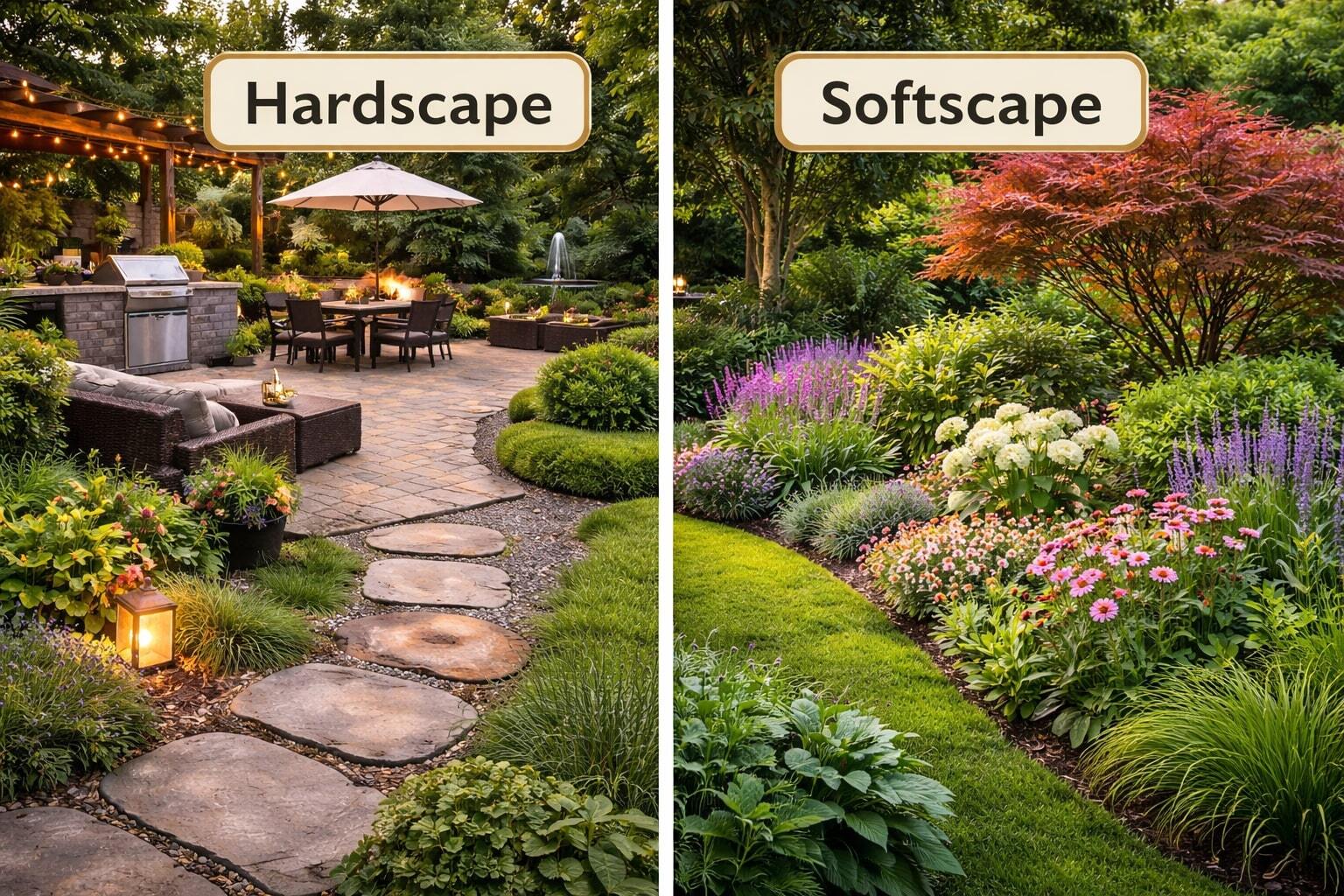
A well-planned garden balances built features with plants, and these are usually grouped into two main categories:
- Hardscape: This acts as the "bones" of the garden. It includes permanent features like patios, pathways, retaining walls, and fences. These provide the layout, defining where you walk and where you sit.
- Softscape: This is the "living layer" that covers those bones. It includes trees, lawns, flower beds, and soil. These elements soften the hard edges of stone or wood, adding color, texture, and movement.
When these are planned together, the garden becomes easier to use and simpler to maintain.
Layering and planting strategy: creating depth
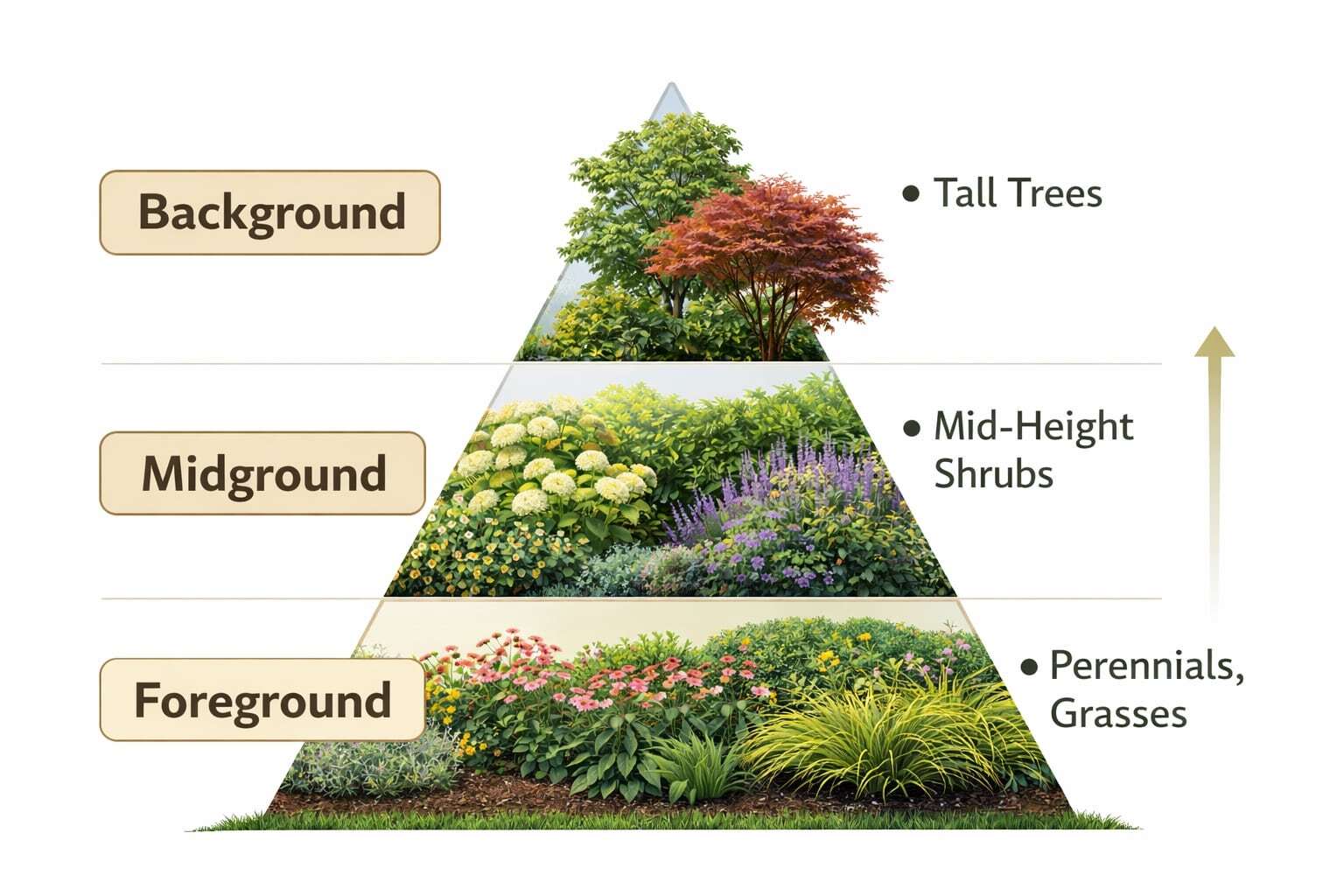
Planting works best when plants are arranged by height. This adds depth and keeps the garden from looking flat or crowded.
A simple layering approach includes:
Background – Trees or tall plants that define the space
Mid-ground – Shrubs and medium plants that add volume
Foreground – Perennials and groundcovers near paths and edges
Ground level – Grasses and low plants that soften the base
This layered approach creates a fuller, more organised garden and makes later design choices easier to apply.
Planning Your Garden Before You Plant Anything
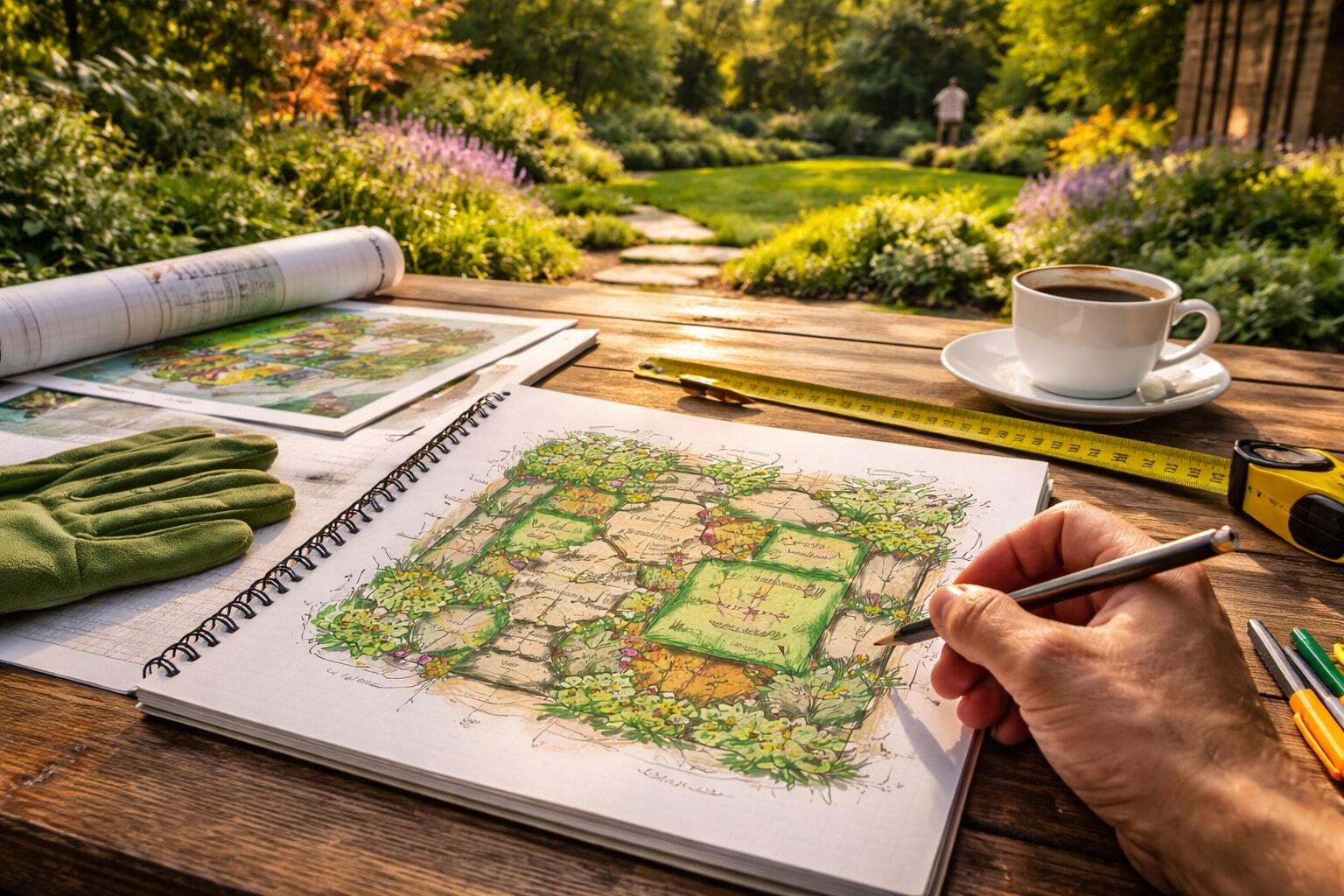
Before buying plants or choosing materials, it helps to plan the space first. Planning early makes it easier to decide where plants should go, how much space each area needs, and which parts of the garden should stay open. This helps you avoid overcrowding, awkward layouts, and changes you later wish you had planned for.
To begin with, take a close look at the space you already have. Measure the garden and note its shape. Pay attention to fixed features like trees, fences, walls, slopes, or existing patios.
Also watch how sunlight moves across the garden during the day, where shade lasts longest, and how water drains after rain. These details help you choose plants that will grow well and decide where seating areas, paths, and planting beds will work best.
Once you understand the space, shift your focus to how you want to use it. This is where the garden starts to match your daily life. Thinking about use early helps you avoid empty corners, blocked paths, or areas that never get used.
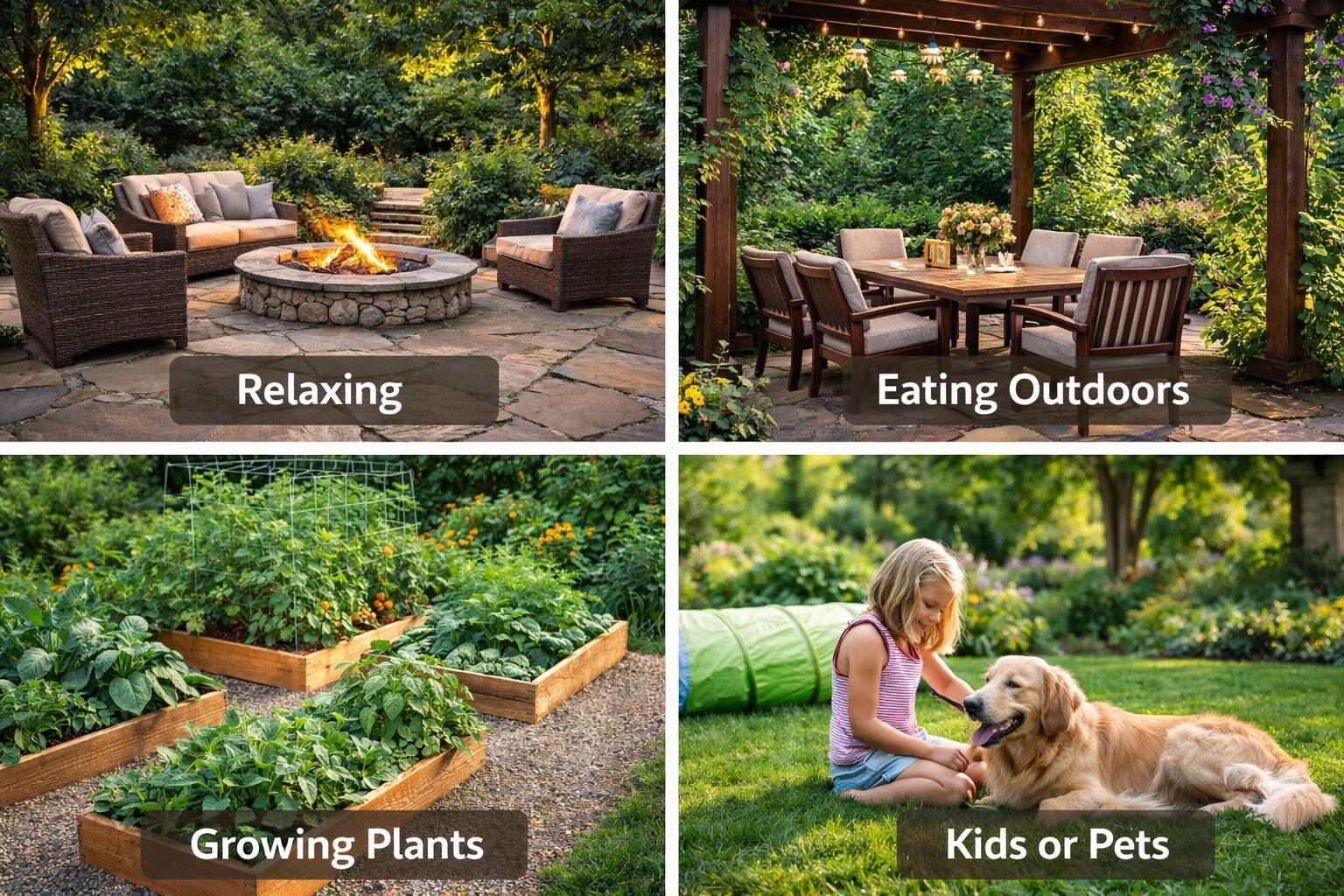
To plan the layout properly, it helps to be clear about how you want to use the space day to day. Think about which of these uses you want your garden to support:
Relaxing – seating areas, shade, and quiet corners
Eating outdoors – space for a table, chairs, or a grill
Kids or pets – open areas, safe surfaces, and clear movement
Growing plants – flowers, herbs, vegetables, or pollinator beds
Easy care – simple layouts that are quick to maintain
With those uses in mind, sketch a simple layout. This does not need to look neat or detailed. A rough drawing helps you see where different areas fit and how they connect. It also allows you to leave enough room for plants as they grow, so the garden stays organised over time.
Finally, think about time and cost over the long term. Some garden layouts need regular trimming and watering, while others stay tidy with less effort. Decide how much time you want to spend caring for the space and how much you want to invest over time. Planning with growth and seasonal change in mind helps the garden stay enjoyable year after year.
Garden and Landscape Design Ideas by Use and Purpose
Once you have a basic plan in place, choosing design ideas becomes much less stressful. You can focus on what actually fits your space and how you like to spend time outdoors, instead of adding things at random.
The ideas below can help you turn that plan into a garden that feels natural and easy to use.
Entertaining and Social Spaces
When a garden is used for entertaining, good planning keeps the space open, comfortable, and easy to move through. Thoughtful garden landscape design ideas allow people to gather, sit, and move around without the area feeling crowded. Planters add greenery around patios and decks while softening hard surfaces, all without getting in the way.
With that overall layout in mind, the ideas below show how social spaces can come together naturally while keeping the garden easy to enjoy.
Patios, decks, and outdoor dining areas
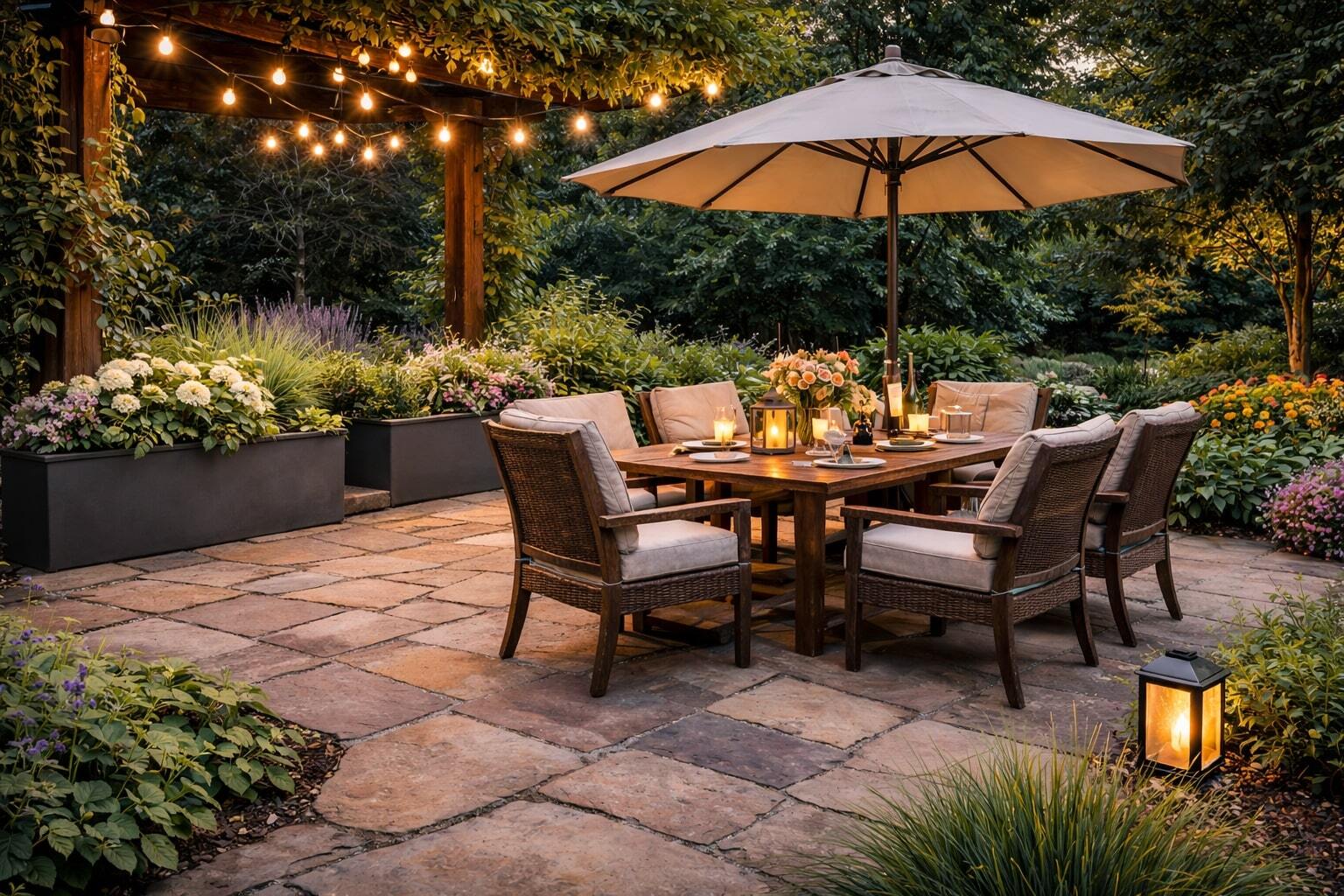
Patios and decks often become the home’s main gathering spots. In garden design, these areas feel most inviting when hardscaping and planting are planned together. While hard surfaces provide a base for tables and chairs, planting softens the edges and connects the space smoothly with the rest of the garden.
Wide rectangular patio planters are a great choice along walls or railings. They add greenery without sacrificing floor space, helping dining areas feel grounded rather than bare. Filled with shrubs, grasses, or seasonal plants, they fit naturally into both casual and formal landscapes.
Fire pits and fire features
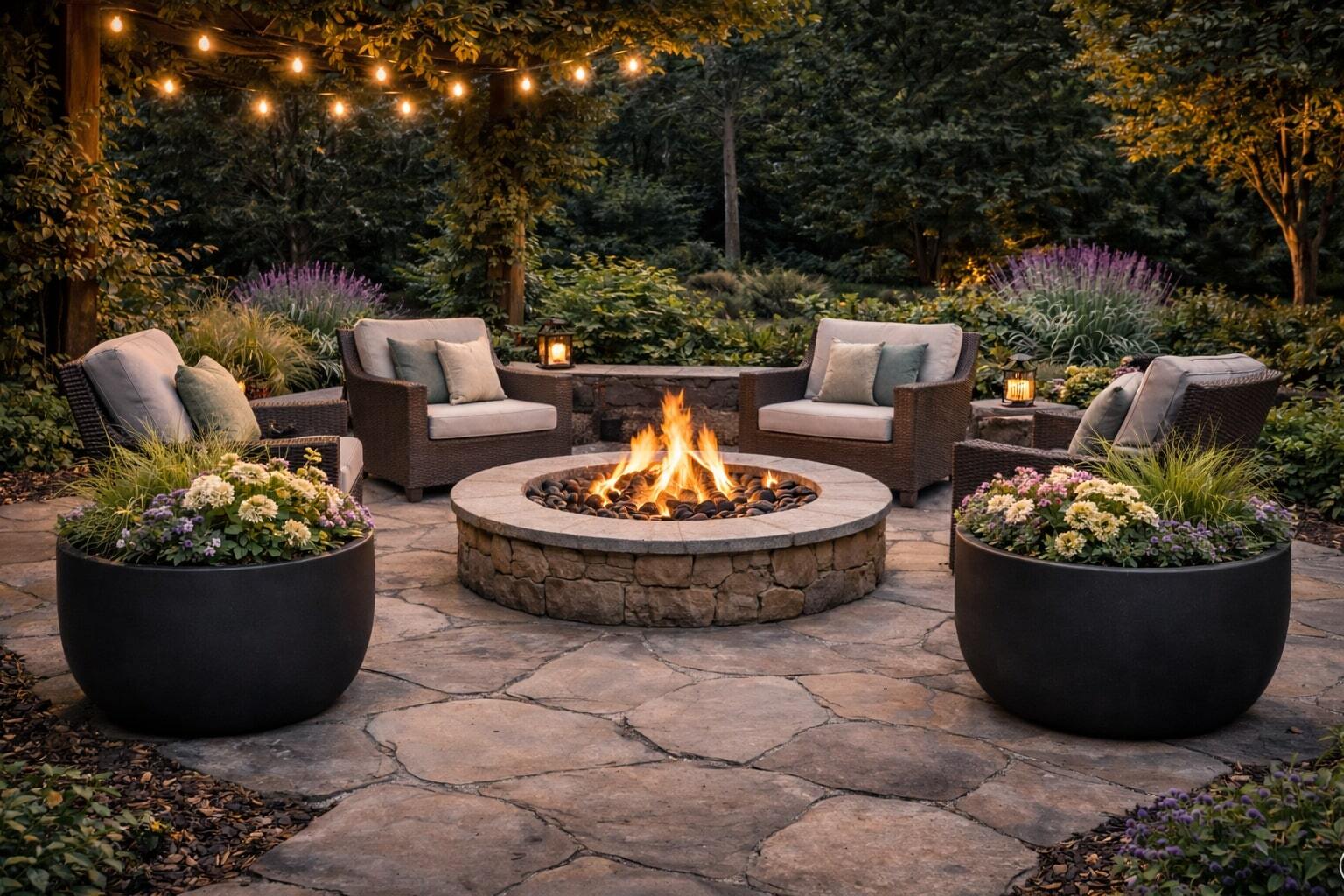
Fire features naturally draw people together and extend the use of the garden during cooler evenings. Many garden landscape design ideas place the fire pit at the centre, with seating arranged around it to keep conversation easy and relaxed.
Low round planters or short square planters work well in these settings. They soften hard edges, sit comfortably alongside seating, and add greenery without blocking views or disrupting movement through the space.
Pathways and garden rooms
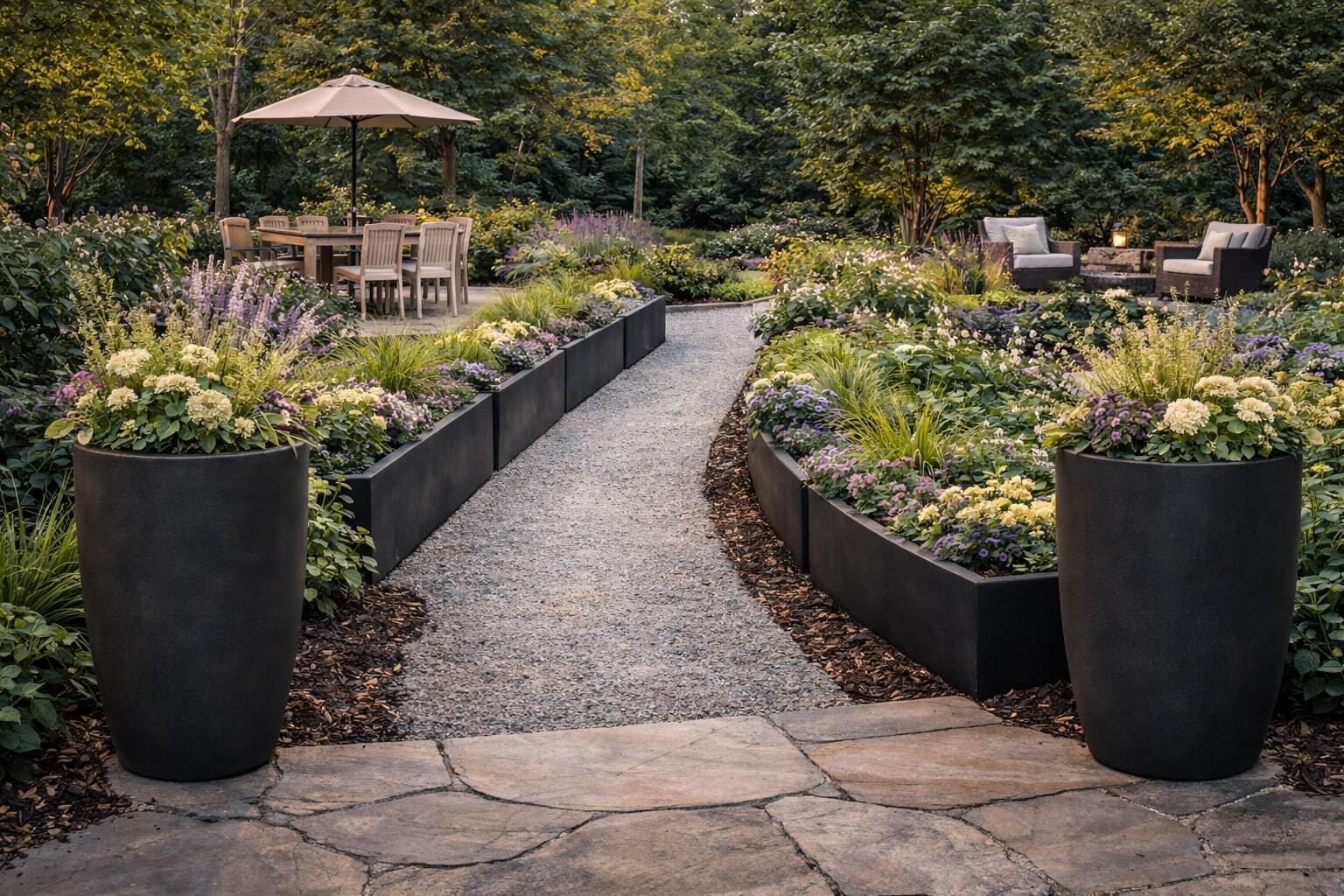
As gardens begin to support more than one activity, clear pathways help keep the layout organised. Paths guide movement, protect planting areas, and separate dining and seating zones without the need for fences or walls.
Long planters fit naturally along straight or gently curved paths because they follow the line of movement and keep the layout easy to read. At entry points or transitions between areas, tall planters add height and signal a shift in space while keeping sightlines open.
Green and Relaxation Retreats
Some garden landscaping ideas focus less on hosting and more on slowing down. These spaces use calm planting, privacy, and simple layouts to support quiet moments throughout the day. Planters help introduce greenery while keeping the space clear and uncluttered.
The ideas below show how planting and layout can support a more relaxed garden atmosphere.
Shaded and sheltered areas
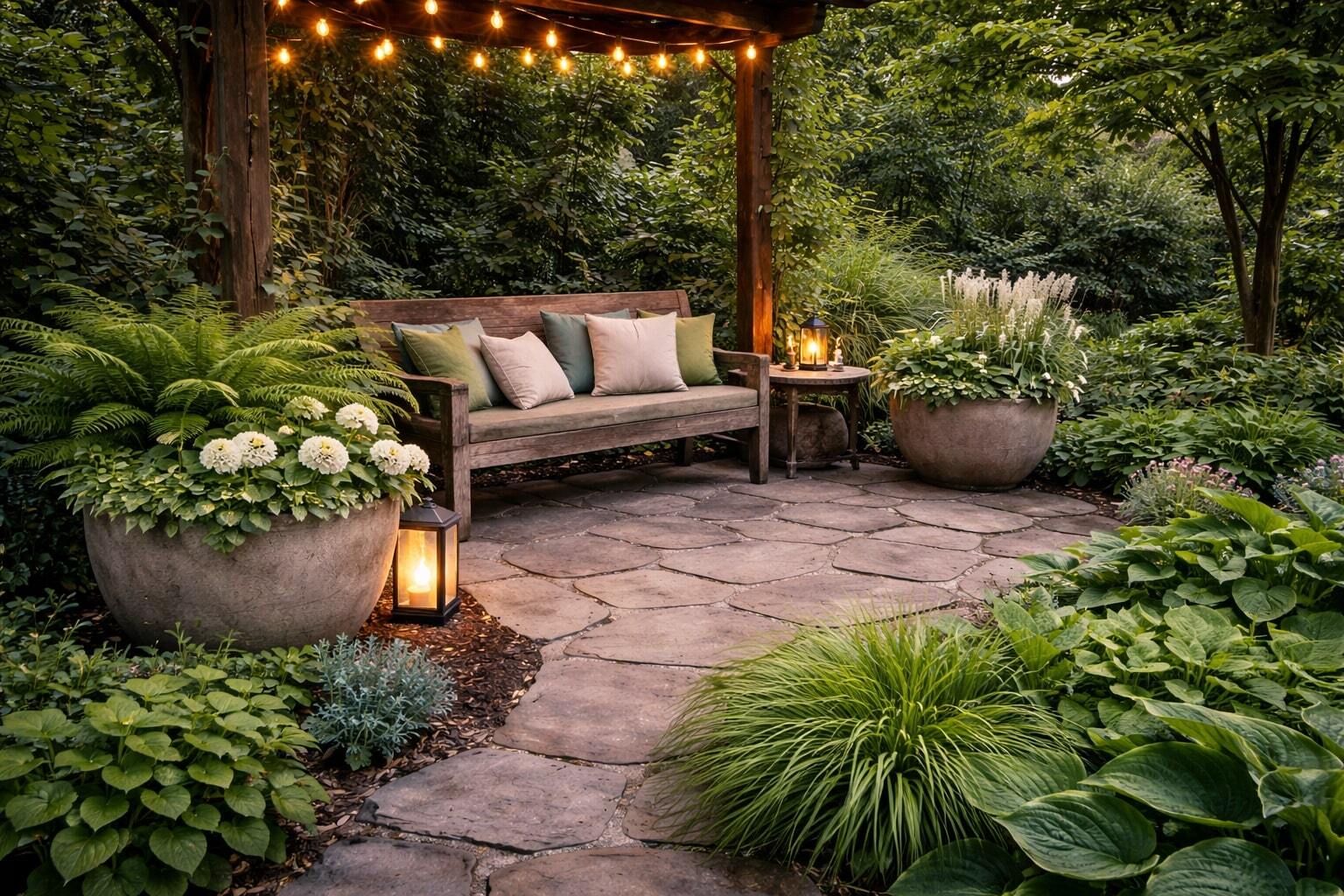
Shady corners often go unused, yet they can become some of the most inviting parts of a garden landscape. Shade-loving plants like ferns, hostas, and leafy shrubs suit these areas well and bring depth without visual noise.
Round planters fit naturally in these spaces, especially beside benches or tucked into corners. In slightly larger shaded areas, large planters also work well because they allow fuller planting and add a sense of privacy while keeping the layout open and comfortable.
Water features and quiet corners
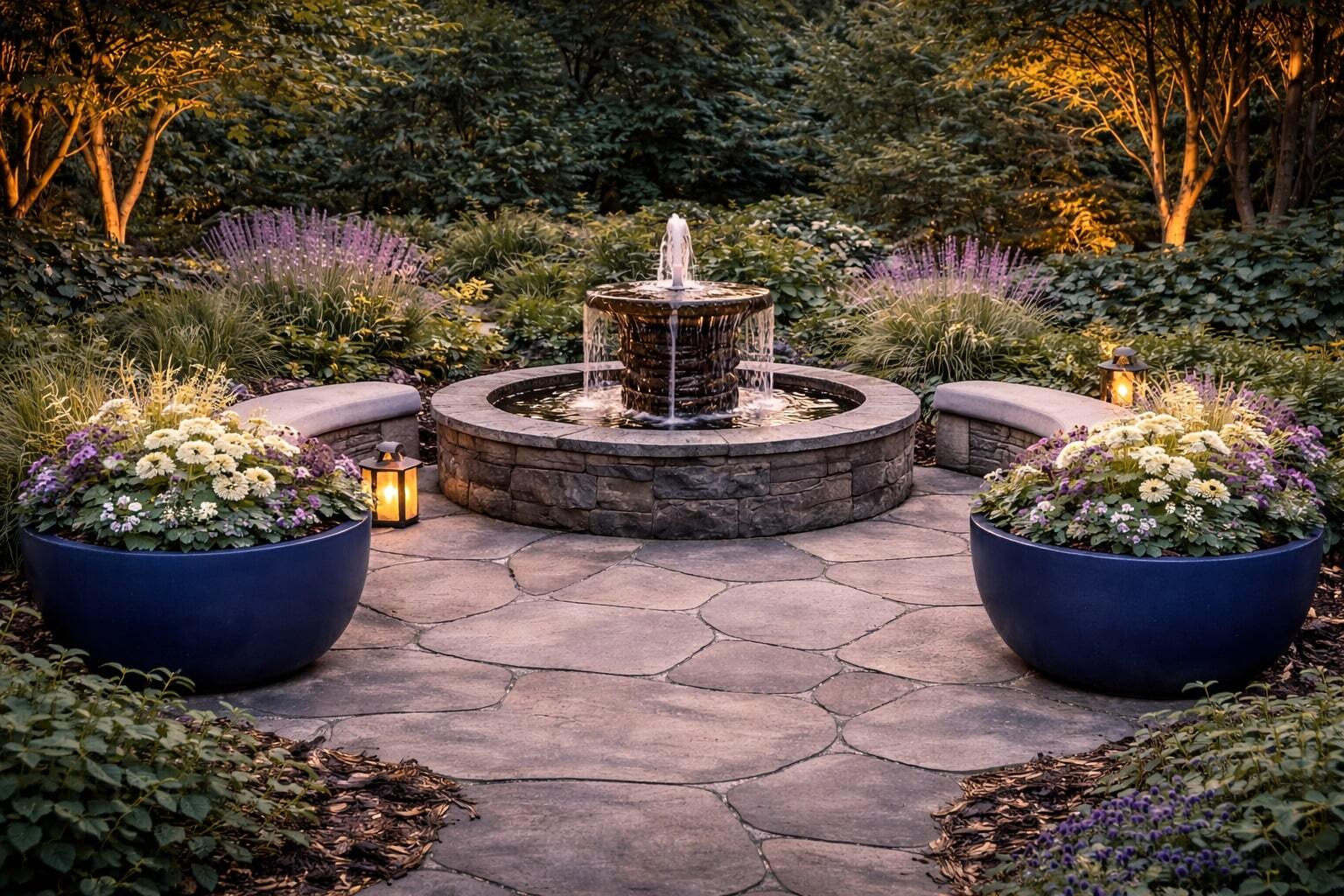
Water adds gentle movement and sound, which helps create a peaceful setting. Even a small fountain can bring calm to landscape garden designs that aim for rest rather than activity.
Round tapered planters are a great choice for these areas. Their curved shape matches the soft look of water and helps the space feel natural. Because they are narrower at the bottom, they fit easily next to a fountain or bench without taking up too much floor space.
Lush, Structured Planting and Visual Impact
Some of the best landscape designs stand out because they look full and organised rather than busy. This usually comes from thoughtful planting choices, not from adding more plants. Grouping, repetition, and height changes can help create visual strength without clutter.
Here are some landscape plant design ideas that focus on structure and consistency to keep the garden looking well put together.
Layered planting for depth
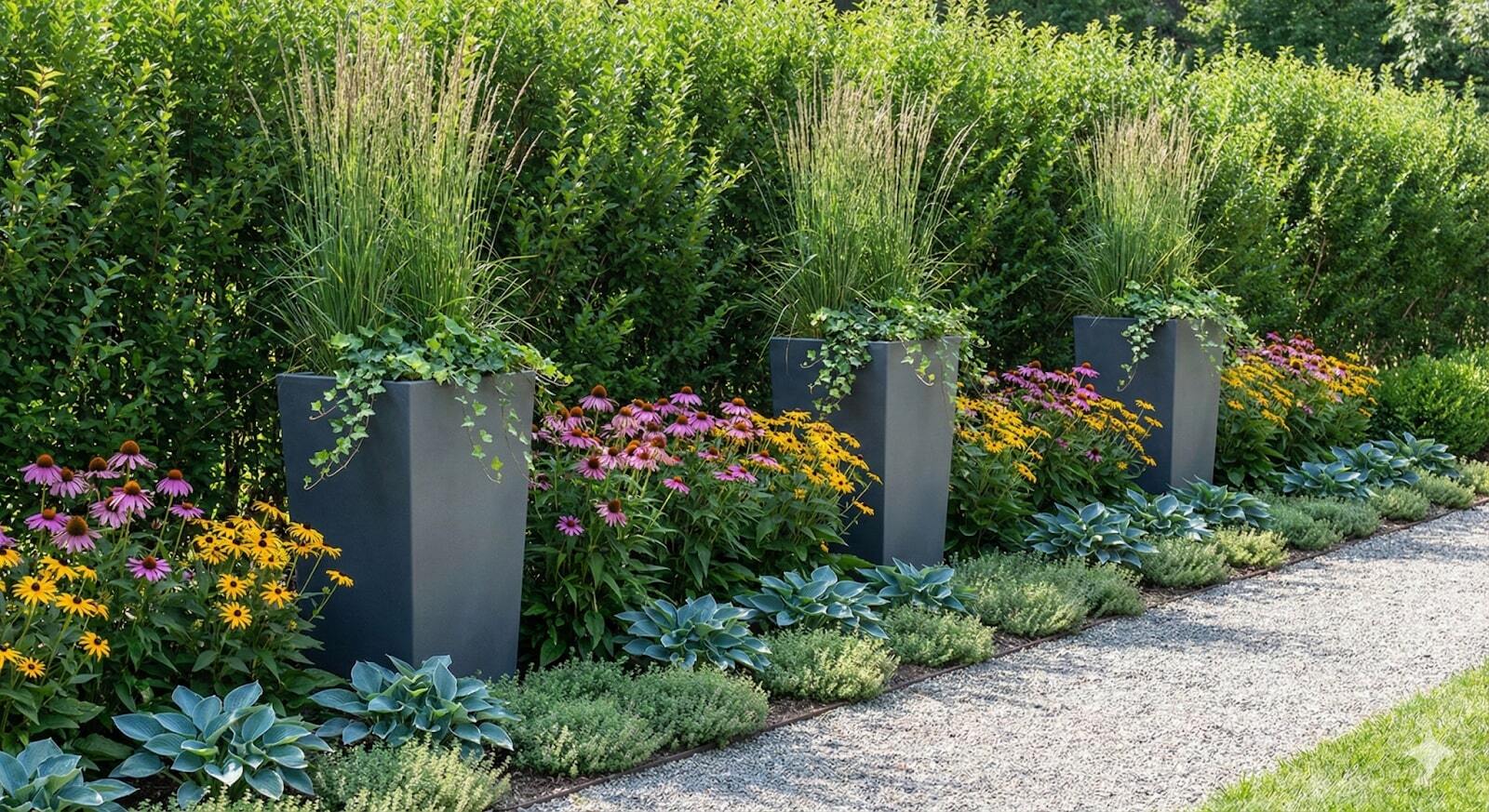
Planting by height helps gardens feel settled and balanced. Taller plants create a backdrop, while medium and lower plants fill areas closer to paths and seating.
Tall planters support this approach especially well. They add vertical interest without planting directly into the ground and help guide the eye through the space.
Grouped planting and repeated colours
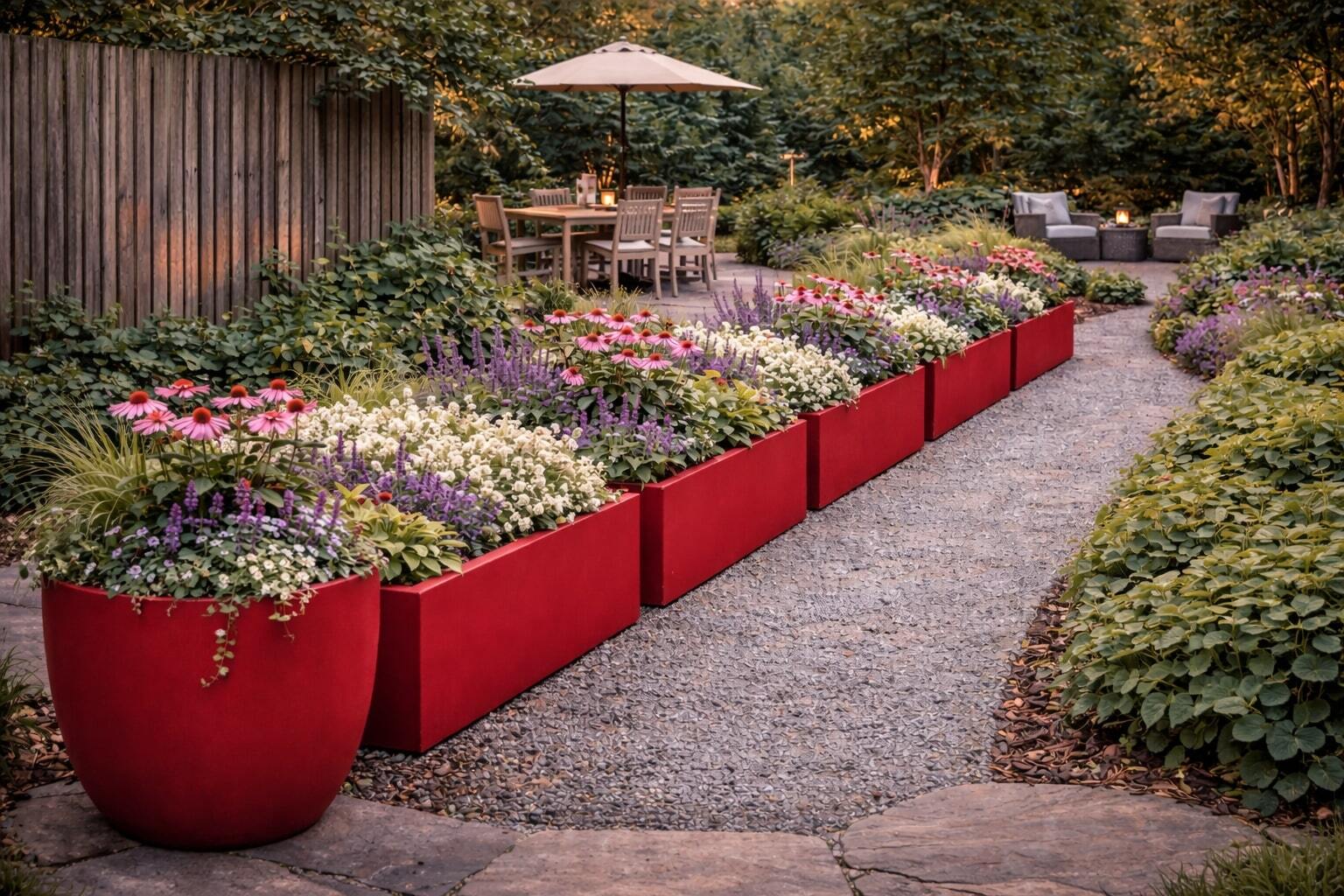
Repeating the same plants or colours helps gardens feel calm and connected. Instead of spreading plants everywhere, grouping them gives the eye a clear pattern to follow.
Rectangular planters fit naturally into this style. They allow plants to be grouped neatly along walls, fences, or walkways, reinforcing unity across the garden landscape design.
Grasses and loose planting styles
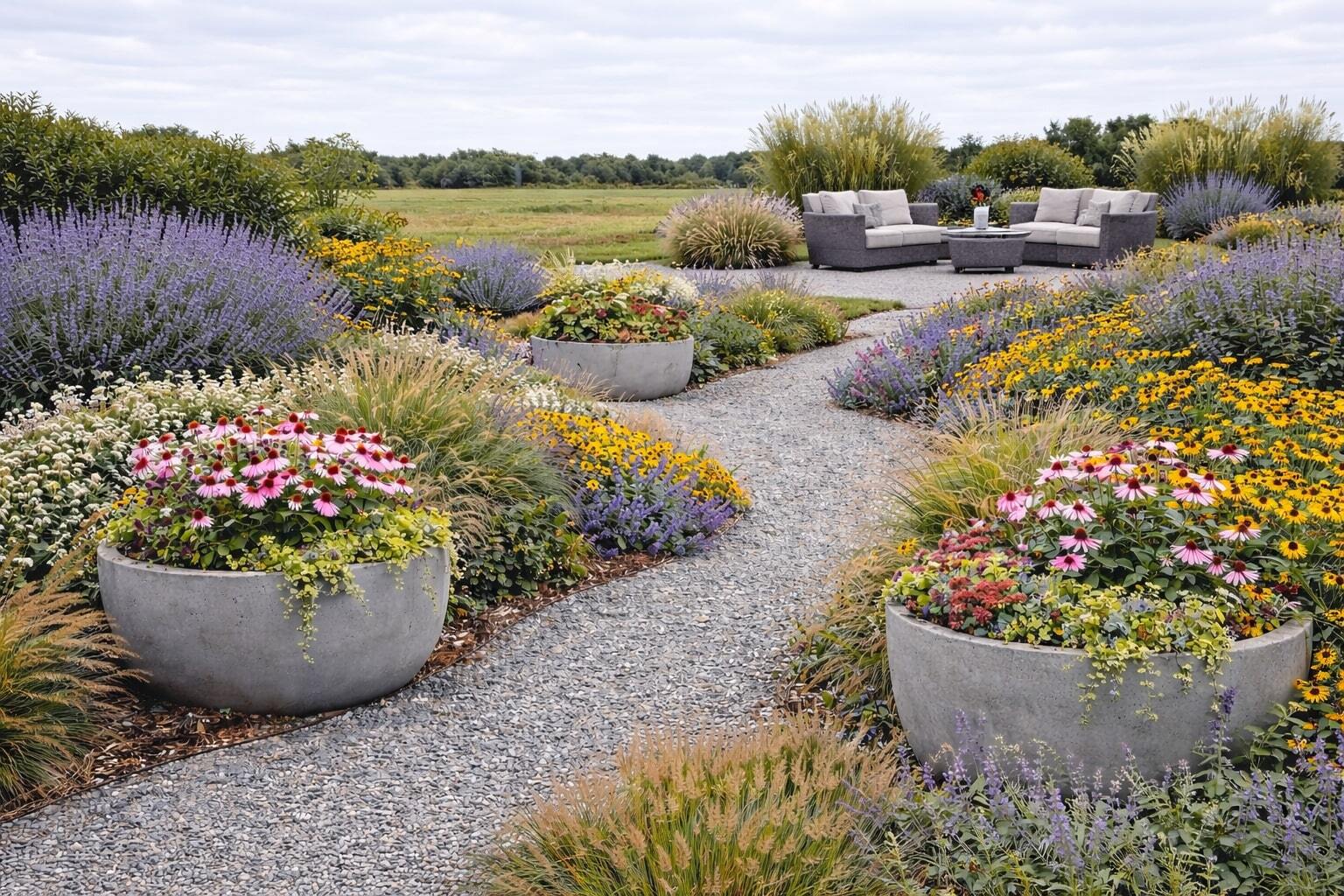
Ornamental grasses add movement and interest across the seasons. They soften hard edges and pair well with simple planting layouts.
Round planters filled with grasses or low perennials blend easily into this style and add texture without making the garden look busy.
Functional and Practical Garden-Use Spaces
Some parts of the garden need to support daily routines while still fitting into the overall design. With clear layouts and the right garden planters, practical spaces can sit comfortably alongside decorative ones without the garden feeling cluttered.
The ideas below show how garden landscape design can stay useful while remaining clean and well organised.
Vegetable, herb, and edible gardens
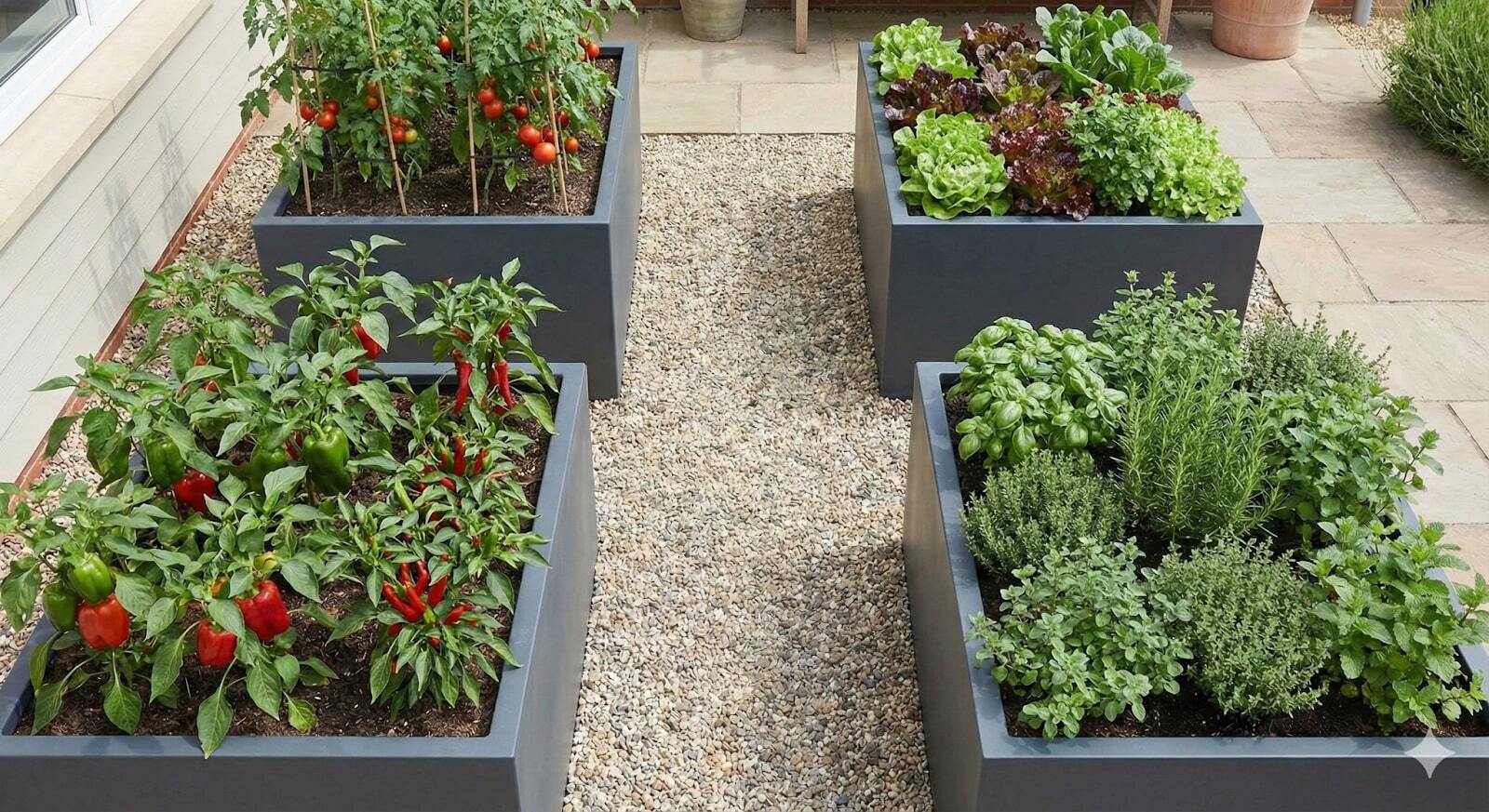
Edible gardens work best when they are easy to reach and simple to manage. Placing them close to the house or patio makes regular use more natural and less of a chore.
Rectangular planters are a strong option here because they keep planting organised and soil contained. Used consistently, they help edible areas blend into the broader garden landscape instead of looking like an afterthought.
Kid, pet, and multi-use areas
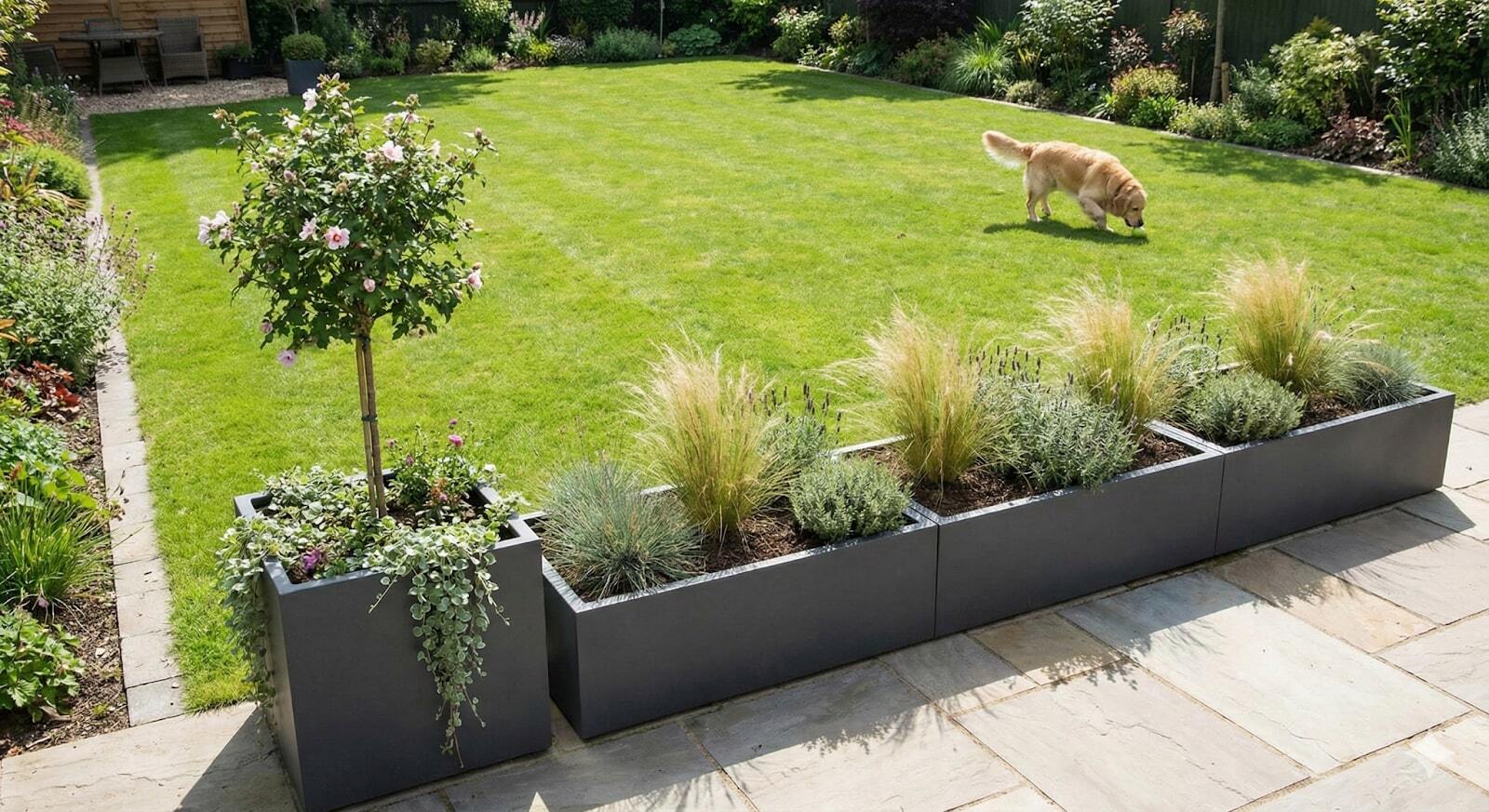
Gardens shared with kids or pets benefit from open space and clear edges. Lawn areas and play zones feel more usable when planting stays around the perimeter rather than in the middle.
Low planters help define these areas gently, while square planters add structure at corners or boundaries. They separate spaces without blocking views or interrupting movement through the garden.
Low-maintenance garden layouts
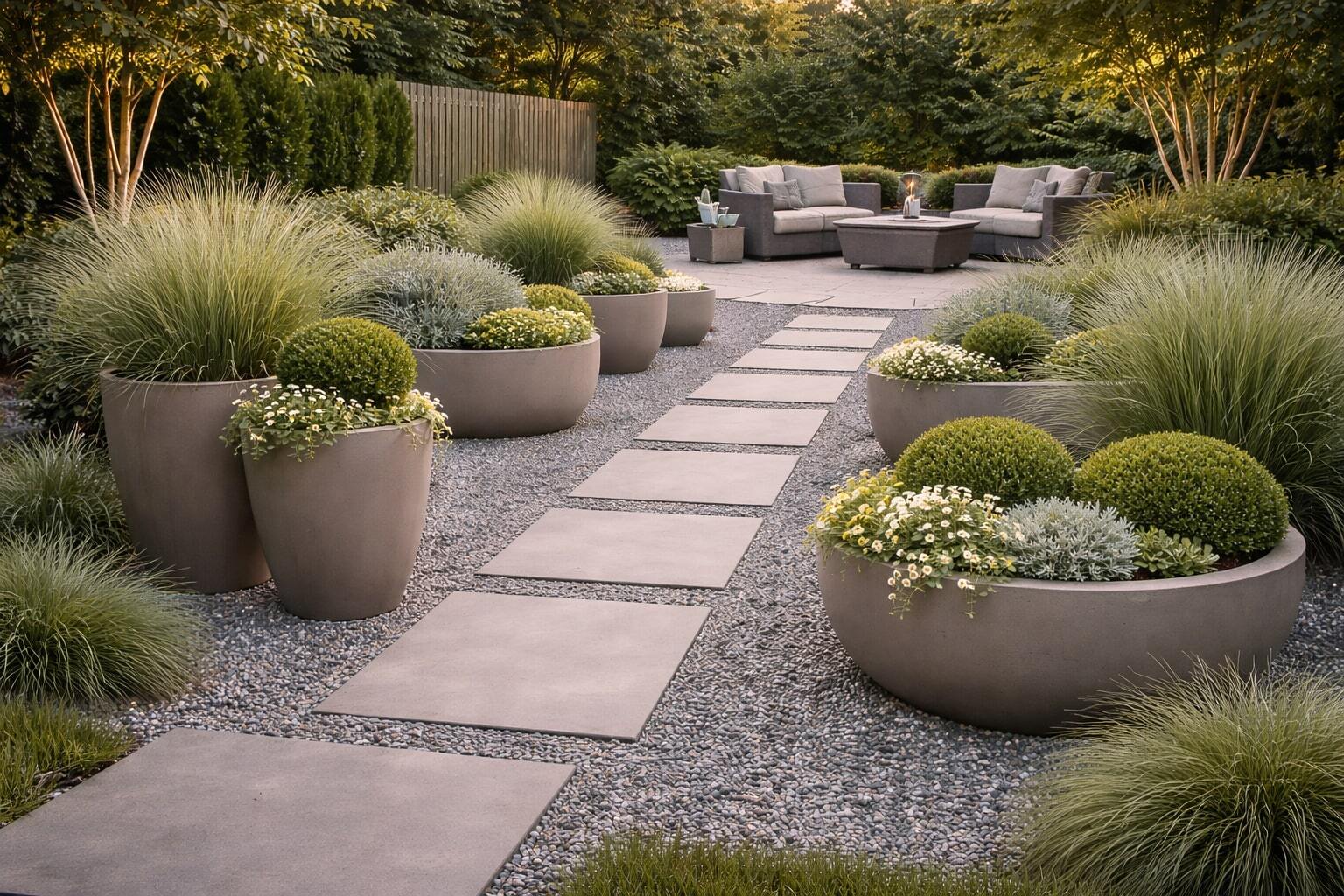
For those who want less upkeep, simple layouts and repeated planting help reduce long-term work. Using fewer plant types and repeating them across the space keeps care predictable and easier to manage.
Fiberglass planters are a great option in these layouts because they are lightweight, durable, and weather-resistant. Filled with hardy plants or grasses, they help control growth and watering while keeping the garden tidy and well organised.
Final Thoughts
A good garden landscape design brings everything together. It supports how you live, how you relax, and how you use your outdoor space day to day. With clear planning, thoughtful planting, and the right layout, even small changes can improve how a garden looks and works.
You do not need to redo everything at once. Starting with one area, adjusting planting, or adding a few well-placed planters can already make the space feel more organised and easier to enjoy. Over time, the garden can grow and change with you.
If you are refining your layout or updating a section of your garden, planters are a simple way to add structure, greenery, and flexibility. Used well, they help bring garden design ideas to life while keeping the space practical and inviting.
Take it one area at a time, keep the layout clear, and let your garden develop naturally as your needs change.