Loading cart...
Wildlife-Friendly Landscape Design From Scratch
Posted by Jason Wyrwicz on Nov 29th 2025
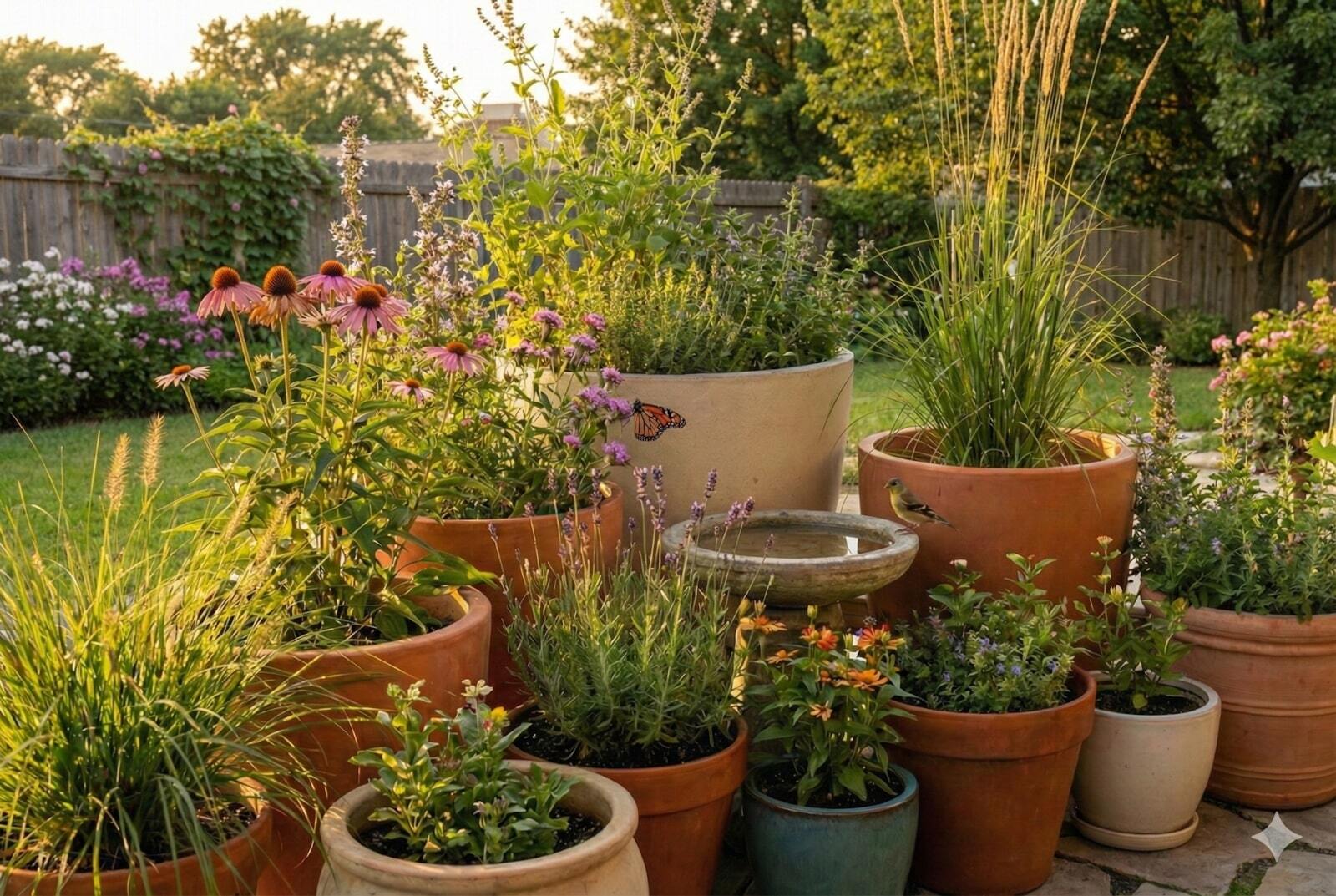
You might think that inviting nature into your life requires acres of land or a home deep in the forest. The truth is, even a small patio, a modest balcony, or a compact urban deck can become a thriving haven for birds, butterflies, and beneficial insects.
So you do not need a sprawling garden to sustain a vibrant ecosystem. With the right arrangement, a collection of planters and pots can create micro-habitats that support local wildlife.
This guide explores simple, sustainable ways to make your outdoor areas more friendly to nature. We will look at how using containers effectively can turn a sterile space into a lively natural space.
You will learn practical steps to support backyard wildlife, maintain your space through the seasons, and design an environment that looks beautiful while doing good.
Understanding What Wildlife Needs
To attract animals and insects, you just need to think about what they spend their days looking for. Every creature, from tiny beetles to colorful songbirds, is on the hunt for three essentials.
When you provide these basic elements, you transform your space into a welcoming destination for backyard animals:
- Food Sources: Native plants are the foundation of a healthy garden. Local birds and insects have evolved to eat these specific plants, whether it is nectar for pollinators or seeds for finches. While exotic flowers might look nice, native varieties offer the real nutrition that turns your patio into a prime dining spot.
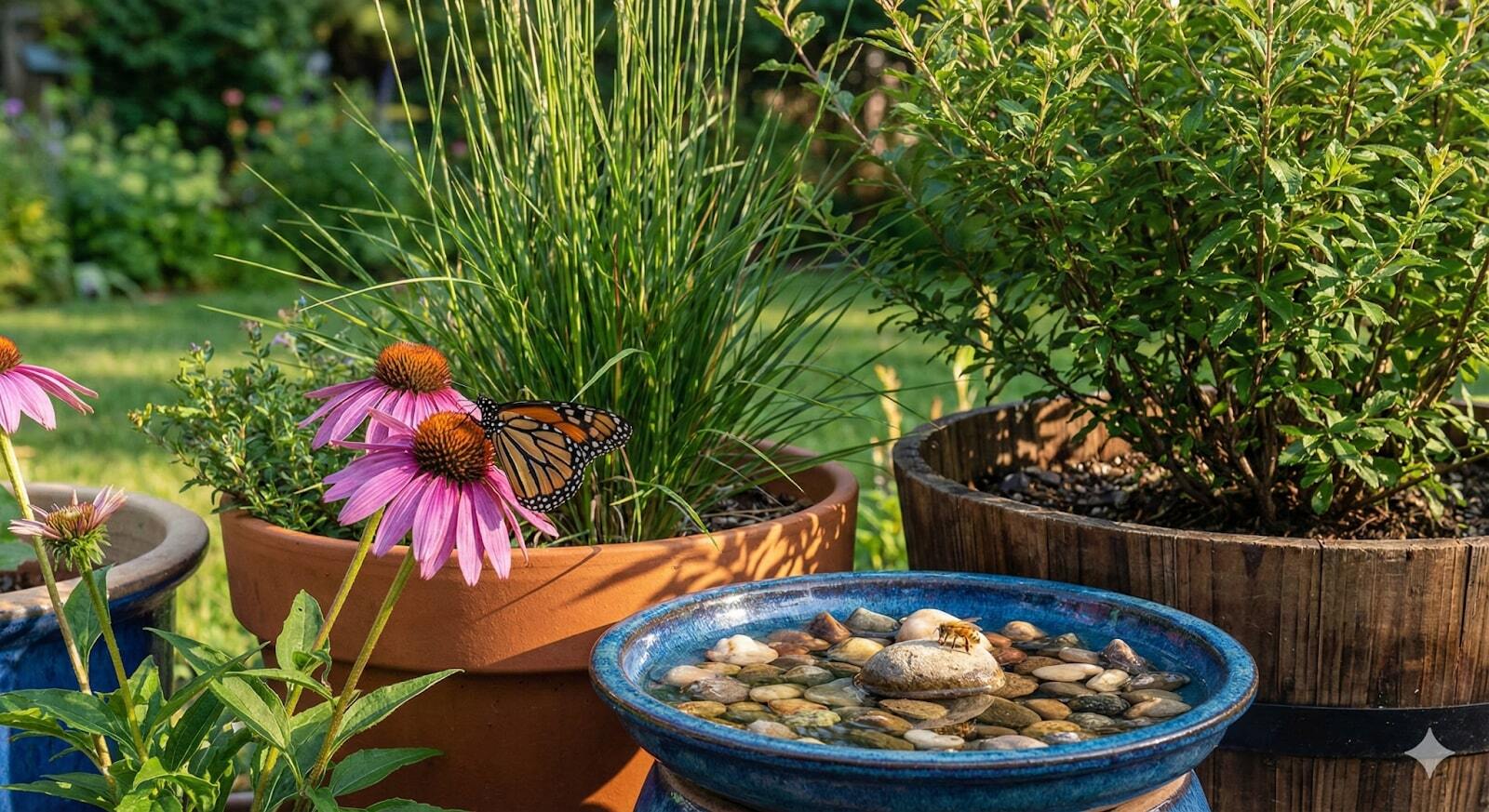
- Clean Water: Water is just as vital as food. Birds need it to drink and bathe, while bees require shallow spots to hydrate safely. A simple birdbath or a saucer with pebbles supports a wide range of backyard wild animals, especially during hot summers or freezing winters when natural water is hard to find.
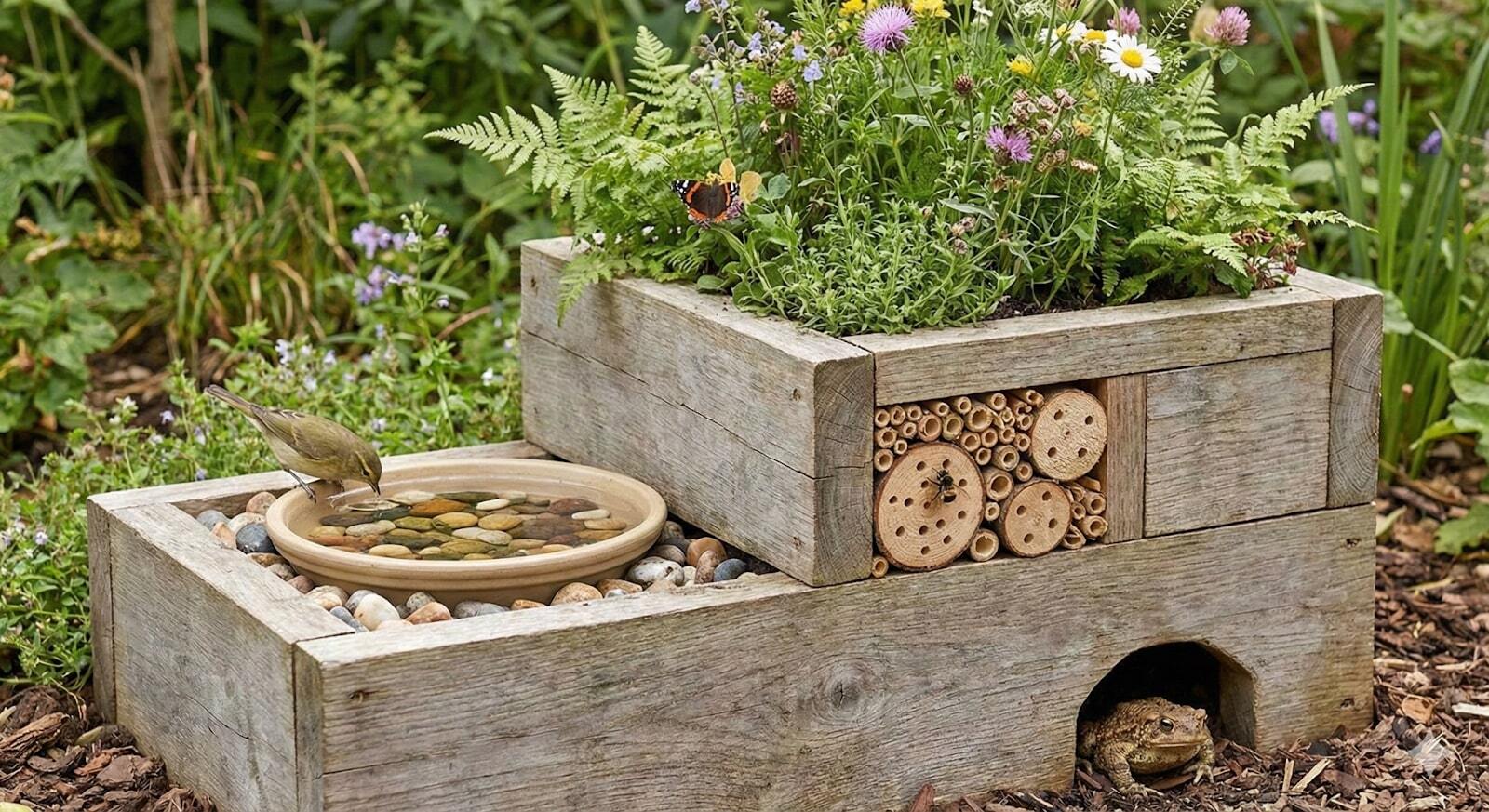
- Shelter and Safety: Animals need places to hide from predators and escape bad weather. In nature, natural shelters for animals might be dense thickets or hollow logs. You can recreate this protection in your planters by using dense shrubs or tall grasses where creatures can feel secure.
You can easily replicate these natural elements on a small scale. A few well-placed garden planters are all it takes to offer food, hold water, and provide the cover necessary for a thriving ecosystem.
Using Planters and Pots to Support Wildlife
Containers are often seen purely as decoration, but they are an essential part of ecological design. How to make a habitat out of a tiled patio or a concrete balcony comes down to picking the right home for your plants. Outdoor planters allow you to bring rich soil and greenery to spaces that are otherwise just hard pavement. Here’s how to use them:
Creating Volume and Cover
Large planters give you the capacity to support substantial growth. With that extra room, you can introduce native shrubs, tall grasses, or small trees that provide the height and dense cover birds need for nesting.
Because of this deep soil volume, the temperature remains much more stable. This acts as insulation, protecting roots from freezing so your perennials can survive the winter. As a result, you create a consistent, year-round habitat rather than just a temporary seasonal display.
Grouping for Mini-Ecosystems
A single pot is a good start, but there is real strength in numbers. When you bring several pots together at different heights, you begin to create a little "mini-ecosystem."
Try placing your tallest planters in the back and layering medium or small ones in front. This tiered look mimics the natural layers of a forest, from the ground cover all the way up to the canopy.
This approach does wonders for your backyard habitat. It offers different levels of cover, meaning you might see a lizard sunning itself on a low rim while a butterfly rests on a bloom high above. On top of that, clustering your plants traps humidity and creates cool, shady spots that many small creatures love.
Material Matters
The material of your planter affects how well it supports life. Ceramic, composite and fiberglass planters are excellent choices because they withstand outdoor conditions year-round. They do not rot like wood or crack easily like cheap plastic.
Durable pots allow you to leave the habitat in place through all four seasons. This is vital because backyard wildlife needs shelter during the winter just as much as in the spring. Choosing containers that blend aesthetics with functionality means you can enjoy a stylish space that doubles as a nature reserve.
Top Strategies to Attract Wildlife
Once you have your containers ready, the next step is choosing the right components to fill them. Here are the most effective strategies to transform your space into a backyard wildlife sanctuary.
1. Plant Native Species
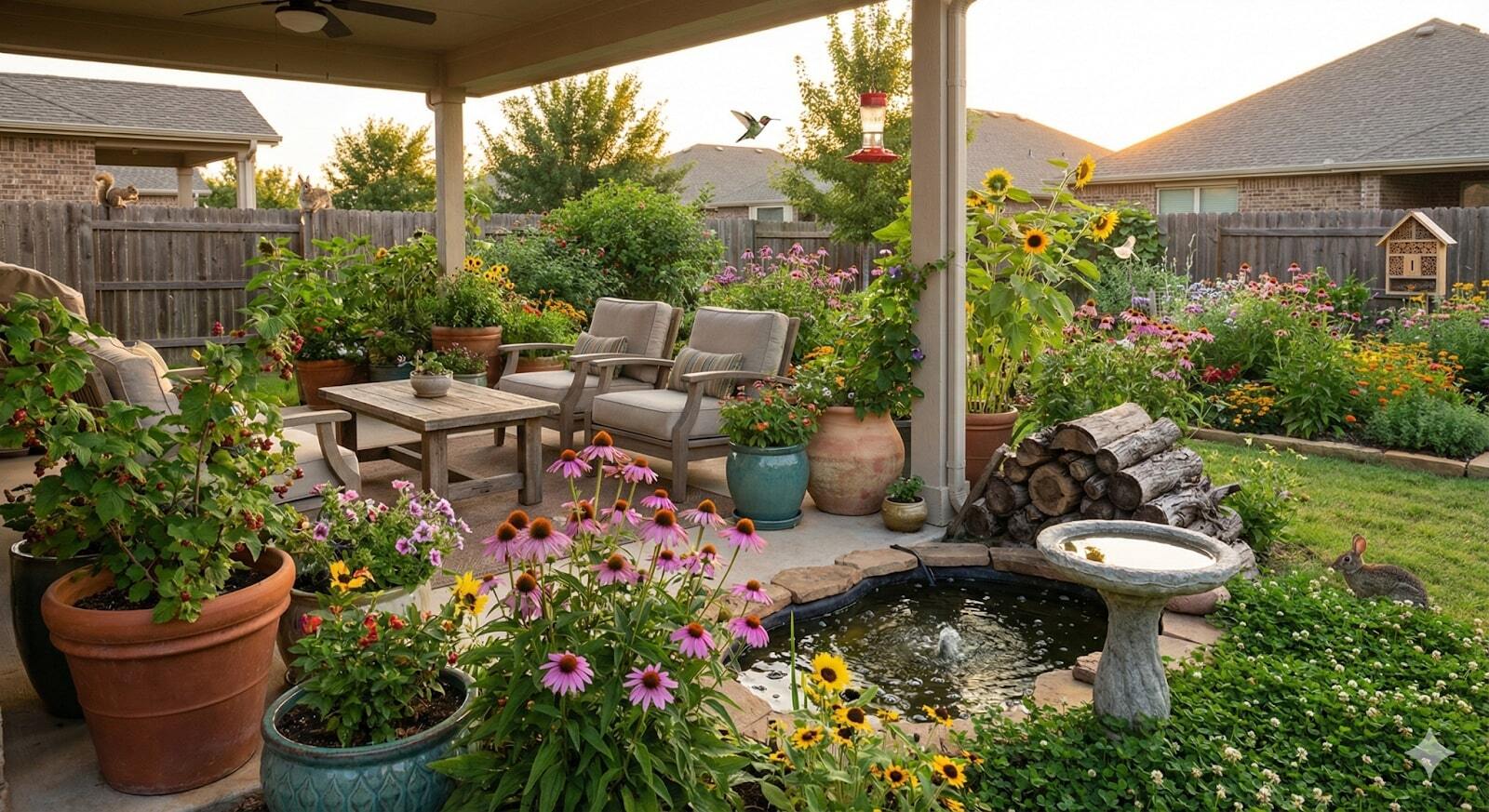
Native plants are the real heart of a wildlife-friendly garden. Since they have grown for thousands of years alongside local animals, they offer the best and most familiar food.
While exotic blooms might look colorful, they often get ignored by local insects. This matters because a lack of insects means fewer birds. Most nestlings rely on catching bugs to survive, so planting natives helps the whole food chain thrive.
So focus on options that grow well in containers, such as:
- Coneflowers (Echinacea): Great for pollinators in summer and seeds for birds in fall.
- Milkweed: Essential for Monarch butterfly caterpillars.
- Coral Bells (Heuchera): Provide ground cover in pots and attract hummingbirds.
- Asters: Offer late-season nectar when other flowers have faded.
By choosing these species, you invite a specific set of backyard animals that rely on them for survival.
2. Provide Reliable Water Sources
Water brings a special energy to the garden, and it is easy to include right alongside your plants. A simple glazed saucer resting on top of a soil-filled pot makes for an instant, elevated birdbath.
Smaller creatures like bees and butterflies need a different approach, since deep water can be a hazard. You can set up a "puddling station" for them by filling a shallow dish with pebbles and adding just enough water to wet the stones. This gives them a safe spot to land and sip without the risk of falling in.
Just make sure to keep the water fresh. While stagnant water attracts mosquitoes, clean water is a powerful magnet for wildlife in yard spaces.
3. Create Shelter and Safe Spaces
To make animals feel welcome, they need to feel safe. If your plants are too sparse, birds may avoid them for fear of hawks or cats. You can create natural shelters for animals by planting dense, bushy species like:
- Evergreens: Small boxwoods or dwarf pines in planters provide year-round cover.
- Vines: Let a native vine climb a trellis anchored in a pot. This creates a vertical "green wall" that offers excellent hiding spots.
- Birdhouses: You can tuck a small birdhouse on a post directly into a large planter.
Allow some of your plants to grow a little wild. Over-pruning removes the dense foliage that creatures need for cover.
4. Offer Food Year-Round
Many people focus on spring and summer flowers, but to attract wildlife to your yard involves thinking about the whole calendar. You want your planters to offer resources in every season. Here are some great seasonal ideas:
- Spring: Early bloomers provide nectar for waking bees.
- Summer: High-energy flowers support active butterflies and hummingbirds.
- Fall: Plants that go to seed (like sunflowers or black-eyed Susans) feed migrating birds.
- Winter: Berry-producing shrubs (like winterberry holly) are a critical survival food.
Natural feeding is often better than relying heavily on bird feeders. Feeders can attract pests or spread disease if not cleaned, whereas plants provide a clean, natural food source.
5. Avoid Chemicals and Over-Tidying
A sterile garden is a hungry garden. To support a backyard animal population, avoid using pesticides, herbicides, or synthetic fertilizers. These chemicals can harm the very insects and birds you are trying to attract. Even organic pesticides can be toxic to bees.
Also, embrace a slightly "messy" look. In the fall, leave the dried flower heads on the stems rather than deadheading them immediately. The seeds feed the birds, and the hollow stems can house hibernating insects. Leave some leaf litter on the soil surface of your large planters; this acts as mulch and provides hunting grounds for small birds like wrens.
6. Make the Most of Small or Urban Spaces
If you do not have a lawn, do not worry. How to make a habitat in an urban setting is all about vertical thinking. Try the following:
- Railing Planters: These maximize space and bring blooms up to eye level.
- Hanging Baskets: Fuchsias or petunias in hanging baskets are magnets for hummingbirds.
- Wall Gardens: Modular planters mounted on a wall can host ferns or succulents, creating a habitat where there was once just brick or concrete.
Maintenance and Seasonal Care
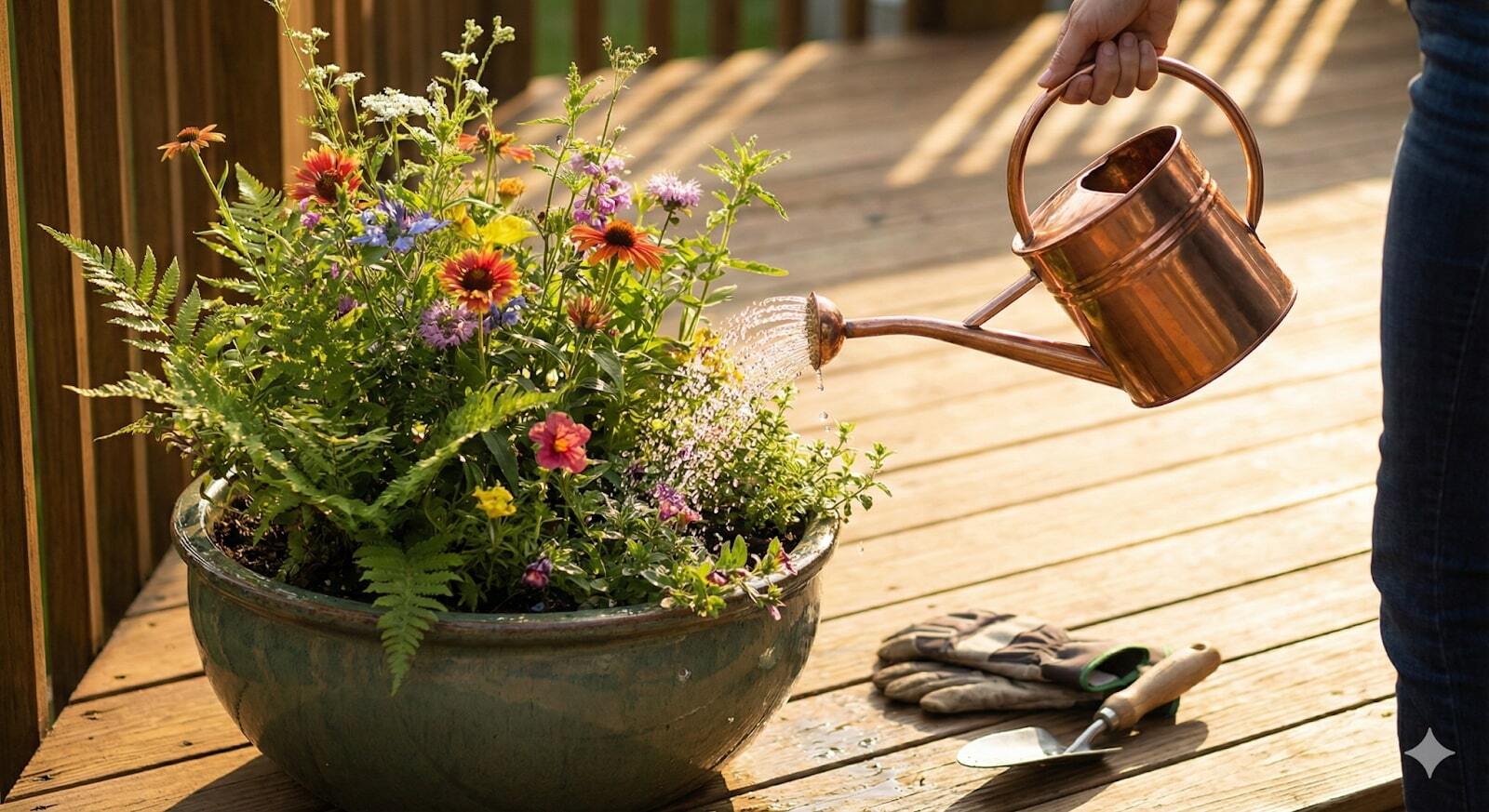
Caring for a backyard wildlife sanctuary is a little different than keeping a tidy, formal garden. You are looking after a living community rather than just a collection of plants. The secret here is consistency; when wild visitors know they can rely on your space, they will return season after season.
Here is a simple routine to help you stay on track throughout the year:
Spring
- Clean Up Gently: Wait until temperatures are consistently above 50°F before clearing away dead stems. This gives hibernating insects time to wake up and leave.
- Refresh Soil: Top off your planters with fresh compost to nourish plants for the growing season.
- Clean Water Sources: Scrub out birdbaths with a stiff brush and weak vinegar solution to remove algae.
- Plant New Natives: This is the best time to add new species to your pots.
Summer
- Water Management: Containers dry out faster than the ground. Check your pots daily. Keeping plants healthy means they continue producing nectar.
- Monitor Pests Naturally: If you see aphids, wait a few days before acting. Ladybugs or lacewings often arrive to eat them.
- Refresh Water: Heat evaporates water quickly. Refill birdbaths daily to keep them appealing.
Fall
- Leave the Seeds: Resist the urge to cut everything back. The dried seed heads are winter pantries for birds.
- Mulch: Add a layer of leaves or bark mulch to your planters. This insulates the roots against coming frost.
- Plant Bulbs: Tuck spring-blooming bulbs into your pots now for early nectar next year.
Winter
- Protect Containers: Move delicate pots to sheltered spots against the house wall.
- Water Availability: If you have a birdbath, use a heater or break the ice daily so backyard wild animals can still drink.
- Evergreen Care: Brush heavy snow off evergreen shrubs to prevent branches from breaking, preserving the shelter they offer.
Visual Inspiration and Décor Integration
A wildlife-friendly space does not have to look messy or wild. You can design an area that is both stylish and good for nature. It is all about blending the needs of backyard wildlife with the look you want for your home.

Here are a few ways to create a landscape that looks great and supports local life:
- Frame Your Entrance: Place a pair of tall, sleek planters on either side of your front door. Fill them with native serviceberry trees for white flowers in spring, berries in summer, and red leaves in fall. This creates a high-end architectural look that also feeds the birds.
- Create Living Privacy: Line your patio with rectangular planters to create a natural screen. Fill them with tall native grasses and purple coneflowers. The grasses block noise and move with the wind, while the flowers add color. This arrangement defines your seating area and invites butterflies to flutter right past your chair.
- Experiment with Texture and Color: Mix the smooth finish of a fiberglass planter with the rough, organic texture of ferns. Choose colors that sit well with nature, like slate greys, warm terracottas, or forest greens, to let the plants take center stage. This proves that a backyard habitat can be as beautiful as it is useful.
In Summary
Building a space that welcomes nature is one of the most rewarding things you can do. You do not need acres of land to learn how to attract wildlife to your yard. It starts by seeing your outdoor area as a living environment rather than just a backdrop.
By mixing native plants, water, and the right containers, you create a genuine refuge for biodiversity. Every pot you plant becomes a bridge connecting your home to the wider natural world.
We invite you to start small. Browse our collection of stylish and beautiful planters to find the perfect foundation for your garden. Then, pick a few native species, add a simple water bowl, and sit back. You will soon see your space come alive with movement, color, and song.