Loading cart...
Trusted by teams at:





Browse our fiberglass planters below, add likely sizes to your cart, then choose Checkout or ”confirm pricing and lead times” to request a quote for your project.
Where Fiberglass Planters Earn Their Keep
Concrete cracks. Metal bleeds. Plastic fades. Fiberglass handles the conditions that eliminate the alternatives: freeze-thaw climates, pool decks, rooftop load limits, coastal salt air, and high-traffic commercial exteriors.
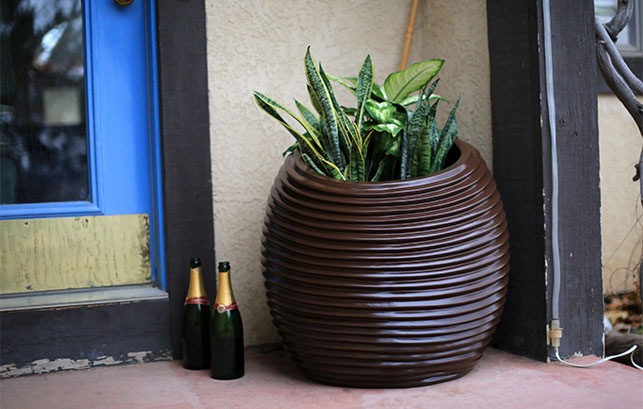
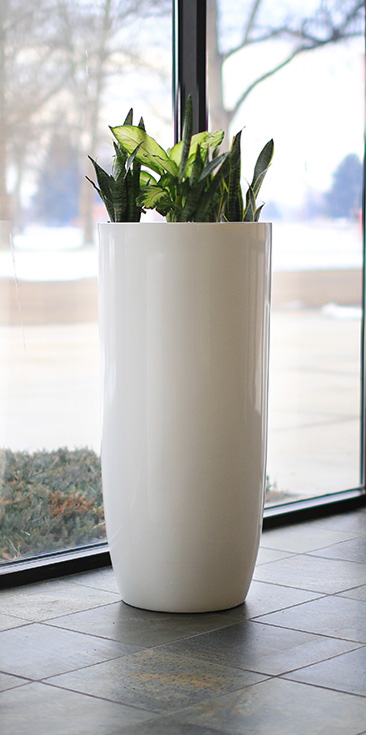
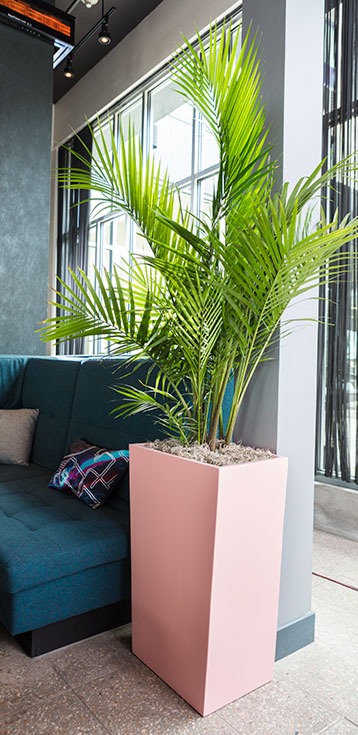
Smart Buying Guide for Fiberglass Planters
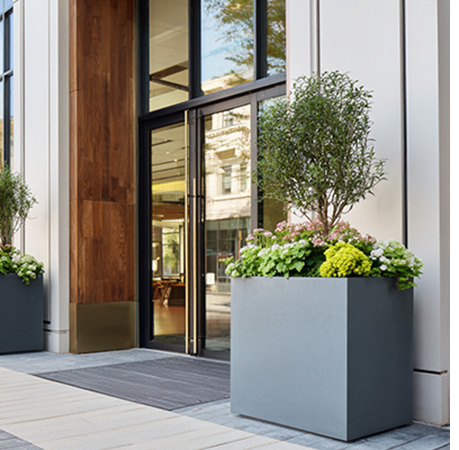
1. Fiberglass vs. Concrete: Same Look, 90% Less Weight
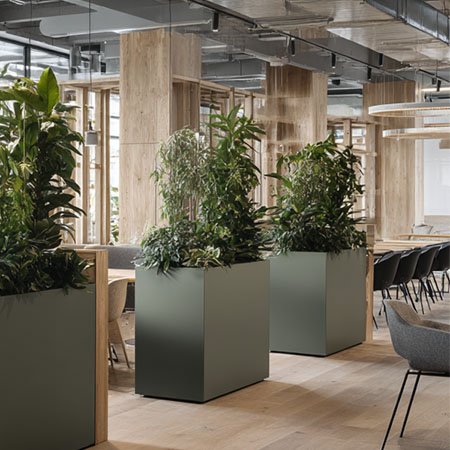
If the spec calls for the concrete aesthetic, fiberglass delivers it without the structural engineering problem. A large concrete planter can weigh 450 to 600 kilograms empty. The fiberglass equivalent runs 35 to 55 kilograms. That difference removes crane requirements, simplifies logistics on rooftops and upper-floor lobbies, and eliminates the freeze-thaw cracking risk that makes concrete a liability in cold climates. Concrete is also porous: water enters, freezes, expands, and cracks. Fiberglass is non-porous. It does not absorb water and does not crack in freeze-thaw conditions. Modern fiberglass finishes are manufactured to be visually indistinguishable from cast concrete, so the design intent stays intact.
2. Fiberglass vs. Metal: No Bleed, No Burn, No Maintenance
Corten steel and raw metal planters have a rust patina that bleeds orange onto surrounding pavers, decking, and stonework. That is a permanent stain on the hardscape and a problem that usually surfaces after installation, not before. Fiberglass does not bleed. It also does not transfer heat: metal planters in direct sun can heat soil to temperatures that damage roots. Fiberglass has UV-resistant, temperature-absorbent finishes that keep root zones stable. Fiberglass can be finished to look like brushed metal, powder-coated steel, or corten steel without the weight, the rust, or the staining risk. It requires no powder-coat reapplication or surface maintenance once installed.
3. Fiberglass vs. Plastic: Not the Same Category
Commercial fiberglass is not thin-wall consumer plastic. The comparison comes up because both are lightweight, but the construction is different. Consumer-grade plastic planters use injection-molded thin walls that bow under soil weight, crack under UV within one to three seasons, and lose color fast. Commercial fiberglass uses a reinforced hand-laid or vacuum-formed layup with UV-stable coatings and commercial-grade resin. It holds shape under filled weight and temperature cycling for years. If you are specifying planters for a project where replacements are not acceptable, the construction difference matters.
Need a fast gut‑check on sizes and lead times? Send us your plans and we’ll recommend outdoor planter options for your project.
Fiberglass Planters Built for Real-World Projects
When you choose fiberglass planters, you want them to be part of the architecture, not temporary decor. Our fiberglass planter boxes and tall forms stay rigid, resist bowing, and hold their finish when planted and exposed to sun, rain, and snow in busy commercial spaces.
Our commercial‑grade fiberglass planters are reinforced for long‑term outdoor use and heavy planting, including trees and tall shrubs. They handle extreme temperatures, rooftop limits, and heavy use, while keeping a clean, architectural finish for years.
Trusted Nationwide for Demanding Installations
Professionals specify our fiberglass planters for:
- → Hotels & hospitality
- → Office towers & corporate campuses
- → Retail & restaurant patios
- → Multifamily developments
- → Rooftop lounges & terraces
- → High-end residential projects
Non-Porous, All-Weather Construction
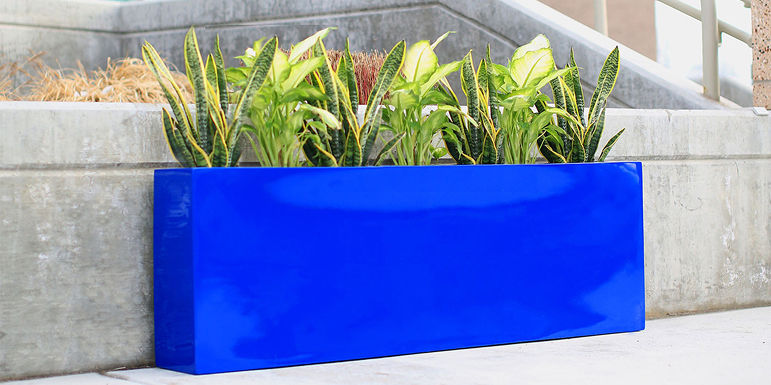
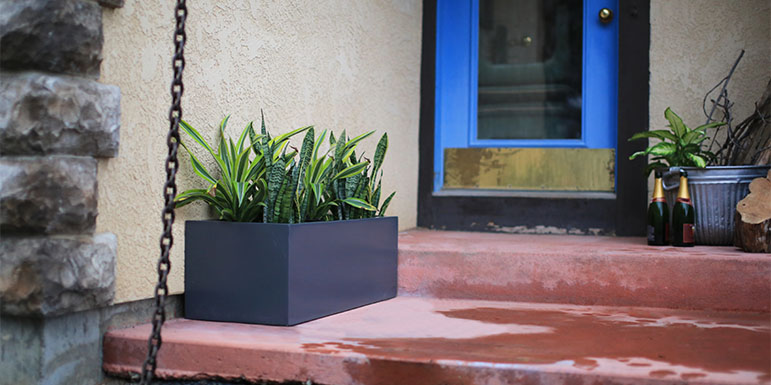
Fiberglass does not absorb water, which means it does not crack in freeze-thaw cycles the way concrete does. No sealing required. No surface treatment needed after installation. Suitable for pool decks where pool chemicals would corrode metal or etch concrete, coastal environments with salt air, and rooftop installations where maintenance access is difficult.
Looks Like Concrete or Metal, Ships in Weeks
Fiberglass takes smooth, textured, or textured finishes that are manufactured to read as cast concrete or powder-coated metal on a finished project. 20-plus standard colors plus custom RAL color matching. Core SKUs typically ship in 1 to 2 weeks from US finishing centers. No 12-16 week lead times for custom concrete or fabricated metal forms.
Commercial-Grade Resin Construction
Not thin-wall consumer plastic. Reinforced layup, UV-stable exterior coatings, and commercial-grade resin throughout. Backed by a 3-year commercial warranty. Built to hold shape when filled with the weight of potting soil, support trees and large specimens, handle rooftop load limits, and survive the high daily traffic in commercial spaces.
Frequently Asked Questions
Fiberglass planters are made from glass fiber reinforcement embedded in a resin matrix, then finished with UV-stable exterior coatings. Commercial-grade versions use a hand-laid or vacuum-formed construction process that creates a rigid, impact-resistant shell. The result is a planter that is substantially lighter than concrete, does not rust like metal, and holds shape under filled weight and temperature cycling for years.
The main differences are weight, freeze-thaw performance, and installation complexity. A large concrete planter can weigh 1000 to 1300 pounds empty. The equivalent fiberglass form runs 75 to 125 pounds, which eliminates crane requirements and allows 2-to-3-person installation. Concrete is porous and can crack in freeze-thaw climates where water enters the material and expands when frozen. Fiberglass is non-porous and does not crack. Both can be finished to look like cast concrete. Most designers choose fiberglass when weight, logistics, or cold-climate performance is a factor.
Fiberglass does not rust, does not bleed rust stains onto surrounding pavers and decking, and does not heat soil in direct sun the way metal planters do. Corten steel develops its patina protection over time but bleeds orange onto adjacent surfaces during that process. Fiberglass can be finished to look like brushed metal, powder-coated steel, or corten without any of those side effects. It also requires no surface maintenance after installation. On most commercial projects, fiberglass provides the metal aesthetic at lower cost, lower weight, and with no ongoing maintenance requirement.
Yes. Fiberglass is non-porous, stable across temperature ranges, and does not degrade in climate-controlled interior environments. The same planter can be used in a hotel lobby or on a rooftop terrace without any material change. For indoor use, the primary considerations shift to drainage setup and finish matching to interior materials rather than weather resistance.
High-quality commercial fiberglass planters do not crack in freeze-thaw conditions under normal commercial use. Fiberglass is non-porous, so water does not enter the material and there is nothing to expand when temperatures drop. This is one of the primary reasons designers and property teams choose fiberglass over concrete in cold climates. Concrete is porous and susceptible to freeze-thaw cracking; fiberglass is not.
Our fiberglass planters are available in 20-plus standard colors covering matte, smooth, and lightly textured finishes. Finishes are manufactured to closely match popular commercial material aesthetics including concrete gray, charcoal matte, warm white, black matte, and brushed metal tones. Custom RAL color matching is available for brand-specific finishes and multi-location projects where finish consistency across phases matters.
If You Need Fiberglass Planters, We Are the Team That Makes Your Life Easier
We help designers and contractors choose fiberglass planters that meet deadlines, handle real weather, and keep high‑visibility spaces looking finished.
When quality matters, our fiberglass planters deliver across front of house, patios, rooftops, and plazas, with trade pricing available for businesses and larger projects.