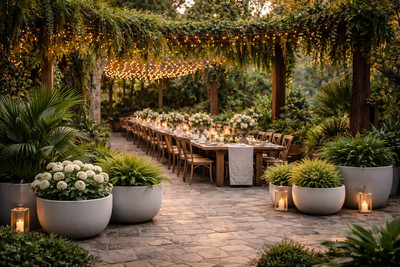
Container Garden Ideas
Posted by Jason Wyrwicz on Aug 8th 2024
Knowing how to plant a container garden is a practical way to add greenery where in-ground beds are not an option. Container plantings help businesses soften offices, restaurants, and hotels, and they give homeowners and renters a way to bring life into patios, rooftops, and small yards.
Whether you are a beginner gardener working with limited space or you are looking for a more flexible way to update established outdoor areas, container gardens are hard to beat. One of the most common questions we hear is “How do I start a container garden?” so this guide pulls together layout ideas, basic setup steps, and next resources to get you moving.
Stay Close
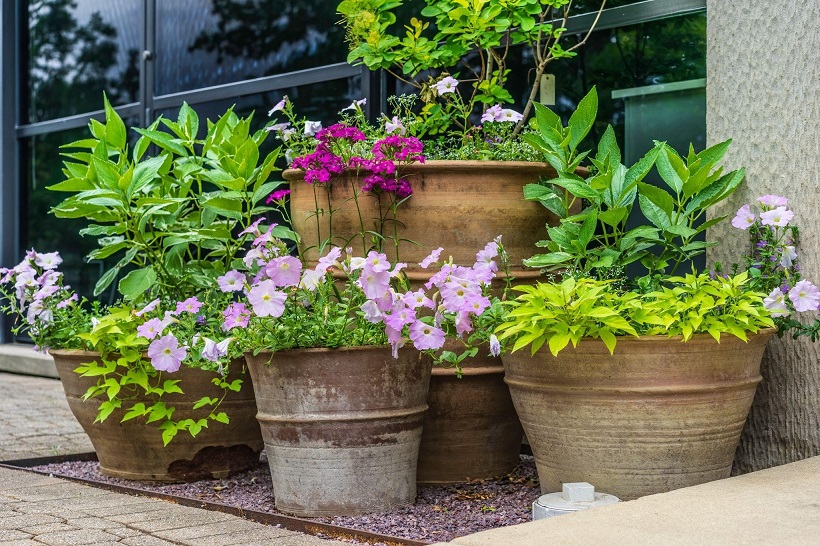
One of the most common mistakes with container gardens is scattering small pots too far apart. Isolated, undersized containers tend to look lost and are easy for guests or residents to overlook.
Instead, keep smaller planters close to where people actually spend time—near seating, entries, host stands, or elevator lobbies. For businesses, that means grouping compact containers where you want guests and customers to notice them, and reserving large planters for big, standalone moves.
Level Up
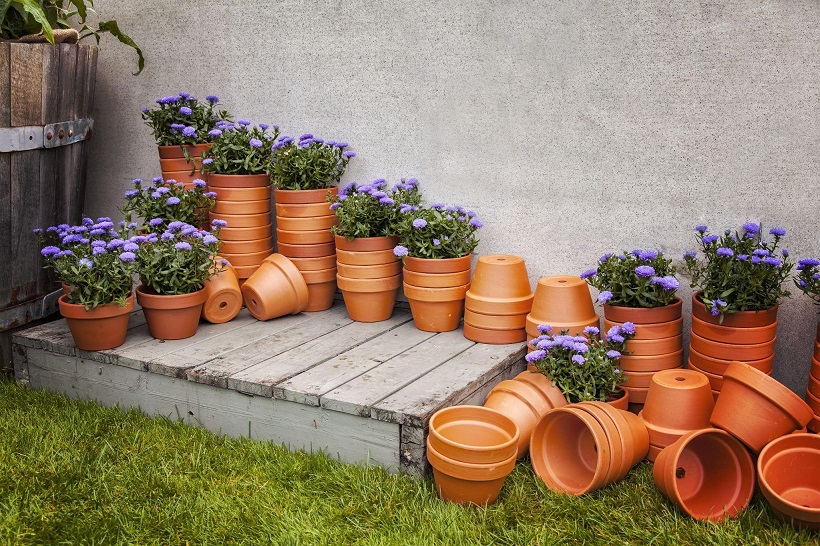
Varying height is one of the fastest ways to make container gardens feel intentional and three-dimensional. Start with a tight cluster of planters, then use different levels to move the eye through the composition.
You can borrow elevation from existing features—steps, low walls, ledges—or use stands and sturdy overturned pots to raise smaller containers up to eye level. The goal is to mix heights without creating trip hazards or blocking key sightlines.
Repeat Yourself
Repetition creates rhythm, which is why designers use it in both interiors and landscapes. When you are arranging a container garden, repeating the same container and plant combination along a path, edge, or facade can tie a space together.
Pick a simple pairing—one planter style and one plant mix—and deploy it in a series. Even spacing along a low wall, stair run, or balcony rail can highlight the architecture and make smaller spaces feel more deliberate.
Use Containers as a Guide
Large container plantings can act like wayfinding elements, helping people move through a property and notice key features. Use tall or oversized planters to frame entries, mark transitions, and gently steer guests toward seating, check-in, or retail zones.
They can also screen utilities, parking edges, or neighboring views you want to downplay. Once the big moves are in place, reinforce those cues by repeating similar plants or finishes along the path you want people to follow.
How Do I Start a Container Garden?
Most container gardens come down to the same four ingredients:
- Containers
- Plants
- Soil
- Water
The overall process is similar to planting in the ground, but containers concentrate everything in a smaller volume, so choices about soil, drainage, and plant selection matter more. Getting those basics right up front will make your displays easier to maintain.
- Soil: Skip native garden soil in containers. Use a high-quality potting mix formulated for containers so roots get air, moisture, and nutrients without compaction or contamination from pests and pathogens.
- Containers: Decide what you need the planter to do—anchor a corner, line a path, divide a space—and then size it for both the plant and the site. When you are selecting finishes and profiles, look for commercial-grade materials and proportion guides like our planter size tips so you are not under-sizing pots for larger plants or small trees.
- Drainage: Most outdoor containers need a way for excess water to escape so roots do not sit in saturated soil. That usually means drainage holes plus a suitable base or liner system for the surface below. If you are working indoors or over sensitive finishes, consider controlled-drainage setups or liners designed for that context.

How Do You Arrange a Container Garden?
Before you choose plants, map out where containers will go and what role they need to play—framing, screening, wayfinding, or softening hard edges. Planters are available in a wide range of sizes, shapes, and profiles, from low bowls to tall rectangles, so you can match the form to each job.
From there, decide whether you want the containers to blend in or stand out. A unified look—similar shapes and colors—can feel calm and architectural, while a mix of finishes and sizes reads more playful and eclectic. In tighter spaces, a pair of large containers often has more impact and is easier to maintain than a scatter of many small pots.
Think in three dimensions. Use height, depth, and overlap so groupings feel like composed “scenes” rather than single pots lined up in a row. Just be sure to protect clearances where people need to walk, dine, or work so containers enhance, rather than fight, daily use of the space.
When it is time to choose plants, match them to your light and climate first. Shade-heavy areas call for plants that thrive without strong, direct sun; hot, exposed locations do better with sun- and heat-tolerant palettes. For especially dry sites or water-conscious projects, build mixes around options from our 10 Best Drought Tolerant Plants guide.
Finally, think through irrigation. Make sure you can reach containers with a hose or install a simple drip system so watering does not become a chore. Consistency matters more than complexity—plants will perform better with a reliable schedule and appropriate drainage than occasional heavy soakings.
Putting Container Garden Ideas to Work
There is no single “right” way to design a container garden, but successful layouts tend to follow a few shared principles: the containers fit the space, plants are matched to light and climate, and maintenance is realistic for the people who will care for them. When those pieces are in place, containers can completely transform how a courtyard, lobby, terrace, or storefront feels.
If you want a deeper, step-by-step resource on preparing containers, selecting soil, and combining plants, explore our Ultimate Guide to Planting, Caring for, and Combining Plants in Containers. For broader layout thinking, Planter Design Ideas and Landscaping with Planters walk through patterns you can borrow for commercial and residential projects.
At Pots, Planters & More, we stock commercial-grade indoor and outdoor planters sized and finished for real-world projects, from hospitality and retail to office and multifamily. Browse our full planters collection for containers that fit your layout, or talk to our team for recommendations on sizes, materials, and configurations for your next installation.