Best Trees for Pots + How to Plant and Care for Them
Posted by Jason Wyrwicz on Jan 12th 2026
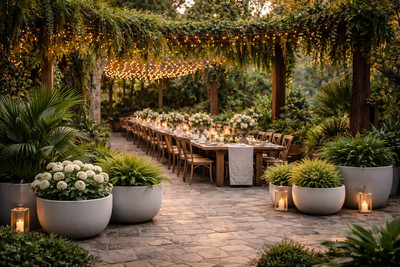
You don't need a sprawling estate or acres of land to enjoy the shade and structure of a beautiful tree. In fact, some of the most impressive garden designs happen entirely on concrete.
Growing the best trees for pots has gone from a niche gardening trend to a staple in modern design. If you are renting an urban apartment with a small balcony, styling a suburban patio, or managing a commercial landscape, placing trees in containers can transform the space. It gives you height, privacy, and visual interest in places where digging into the ground just isn't an option.
The benefits go beyond just looks. Potted trees are portable. You can move a Japanese Maple out of the harsh afternoon sun or shift a citrus tree indoors when the frost hits. Plus, they allow you to control the soil conditions perfectly, meaning you can grow species that might not survive in your native ground soil.
However, success isn't as simple as shoving a sapling into a bucket. Trees are long-term residents, and they need the right setup to thrive.
In this guide, we will cover:
- The Selection Process: Which species actually handle container life (and which ones you should avoid).
- The Setup: Choosing the right size and material for your planters to help roots establish.
- The Care Routine: Watering, pruning, and winterizing your potted forest.
- Troubleshooting: How to fix yellowing leaves and root-bound stress.
What Makes a Tree Suitable for Pots?
Before you head to the nursery, we need to clear up a common misconception: not every tree works in a container.
While you can physically plant almost anything in a pot for a season or two, many trees will struggle, stunt, or eventually die if they aren't suited for confinement. A massive Oak with a deep taproot is going to be miserable in a 24-inch box.
To find trees that grow in containers successfully for the long haul, you need to look for these specific traits:
1. Root Structure
This is the most critical factor. Trees with aggressive, deep taproots (like walnuts or hickories) hit the bottom of a pot quickly and start to circle, strangling the tree. You want trees that do well in pots, which typically have fibrous, shallow root systems that are happy to spread out sideways rather than digging straight down.
2. Growth Rate & Size
A tree that shoots up 4 feet a year will outgrow its container before you even get used to it. Look for "dwarf" or "semi-dwarf" varieties. These are often grafted onto special rootstocks that limit their size, keeping them manageable for years without constant repotting.
3. Hardiness (The "Two Zone" Rule)
Roots in a planter are more exposed to the cold than roots in the ground. The soil in a pot freezes faster and harder than the earth. A good rule of thumb is to pick a tree that is hardy to two zones colder than your actual location. If you live in Zone 6, look for a tree rated for Zone 4 to be safe.
Quick Check: Is It Container Friendly?
Best Trees for Container Growing
Choosing the right tree depends on what you want from your space. Are you looking for privacy, fruit, shade, or just something beautiful to look at?
Here are our top picks for the best trees for planters, broken down by category.
1. Dwarf Fruit Trees (Edible & Decorative)
If you have a sunny spot, fruit trees are fantastic small trees for pots. They give you beautiful blossoms in the spring and fresh produce later in the year. The trick is to stick to "dwarf" varieties, which are bred to stay compact.
Some of the most rewarding options for your patio include:
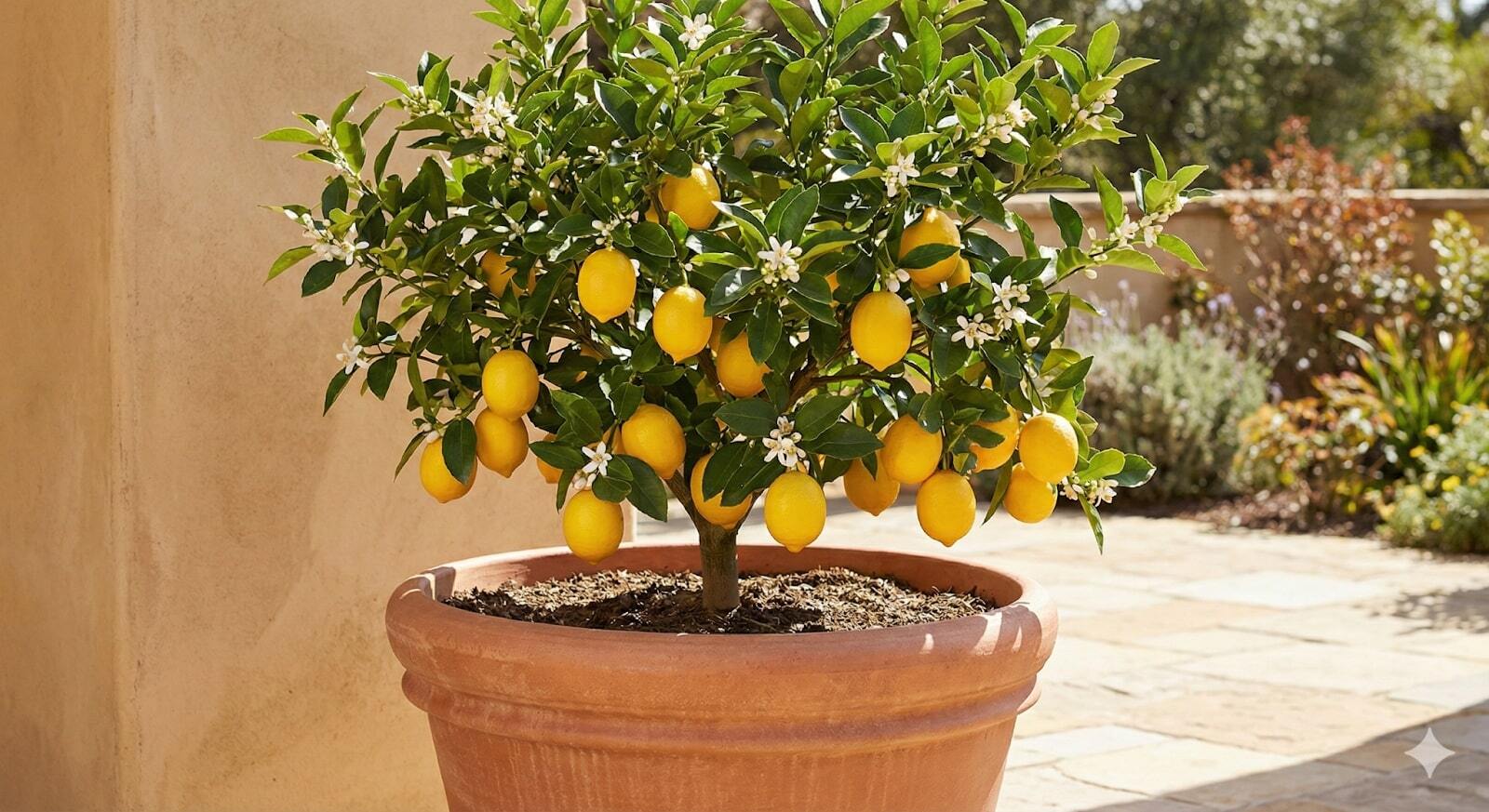
- Meyer Lemon: The absolute classic. It produces sweeter fruit than grocery store lemons and blooms with an incredible scent. These thrive in round planters that mimic the classic Mediterranean look.
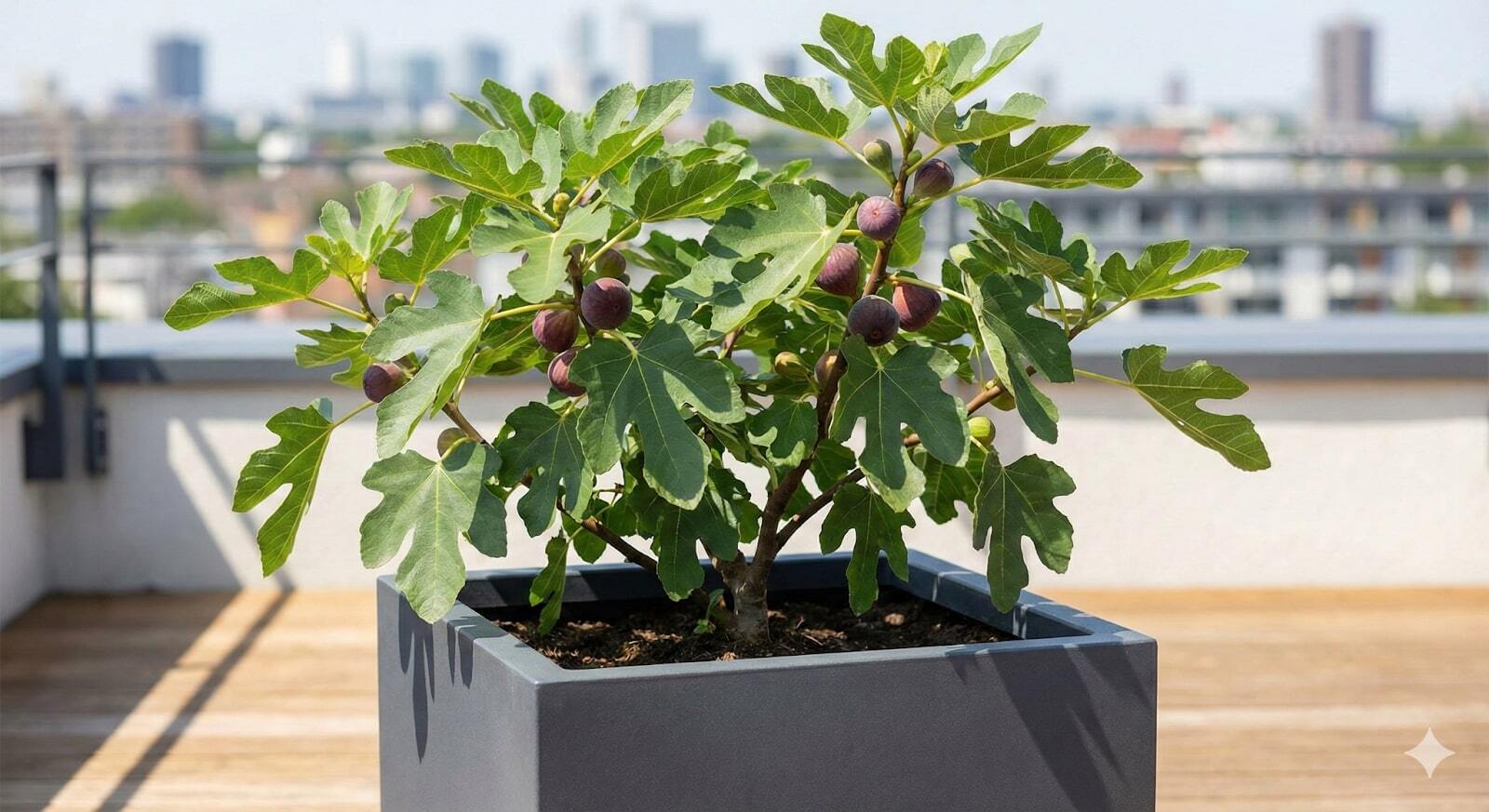
- Fig (Ficus carica): Figs actually enjoy having their roots restricted (it encourages fruit production), making them one of the trees that grow well in pots naturally. Look for ‘Brown Turkey’ or ‘Celeste’.
- Kumquat: These are tough, compact, and look stunning when loaded with bright orange fruit.
Best For: Sunny patios and kitchen gardens.
Climate: Needs protection if temperatures drop below freezing.
2. Ornamental Trees (For Color & Structure)
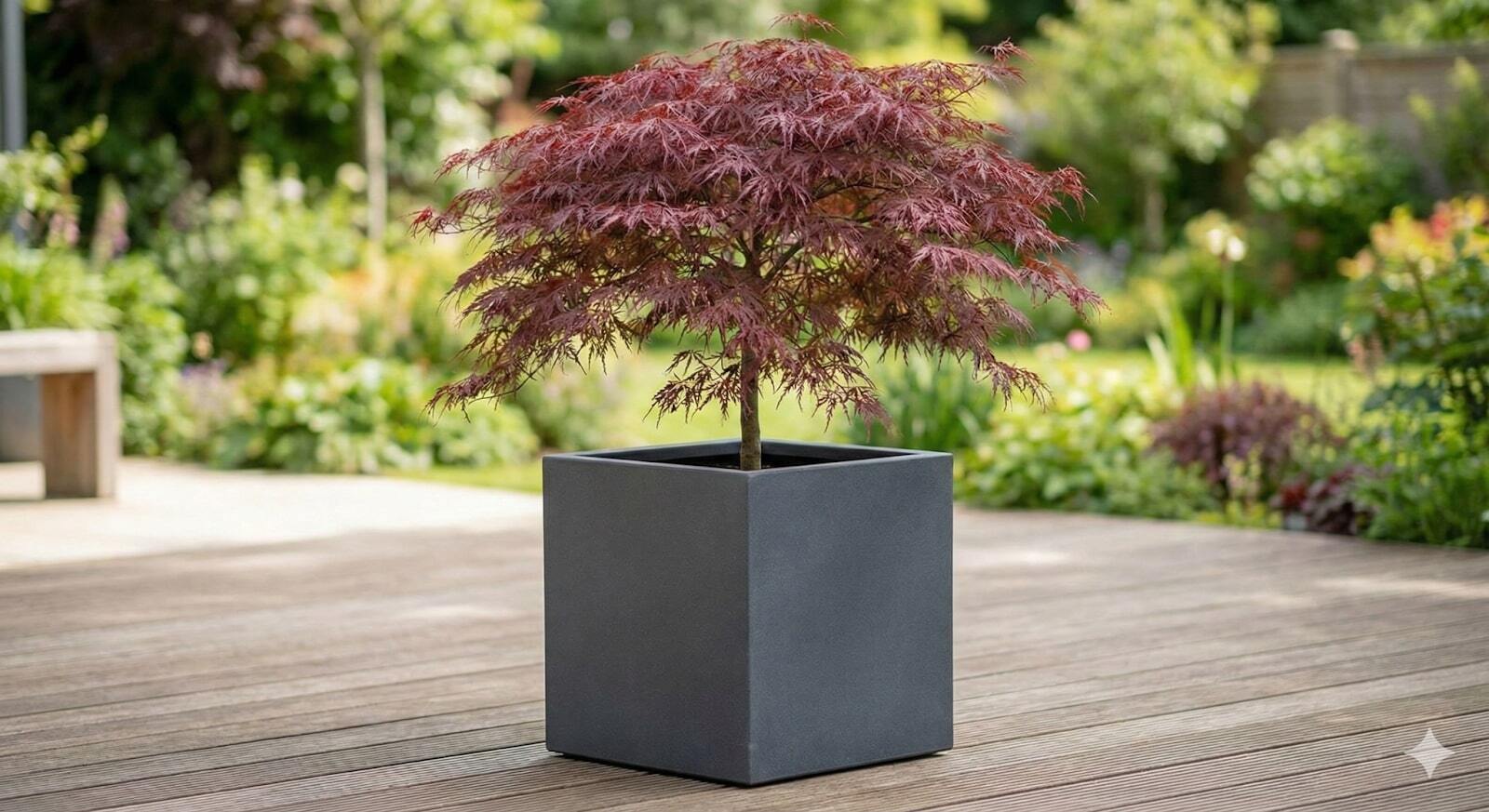
These are the best patio trees in pots if your main goal is aesthetics. They act as a focal point and add architectural shape to a terrace or balcony.
To make a bold visual statement, consider planting one of these:
- Japanese Maple (Acer palmatum): Famous for their delicate leaves and brilliant fall color, they grow slowly and have shallow roots, making them perfect for square planters that frame their elegance beautifully.
- Crape Myrtle: These offer showy summer flowers and interesting peeling bark. They love the heat, making them great outdoor potted trees for patio areas that get baked by the sun.
- Olive Trees: Even if they don't fruit, their silvery-green foliage looks sophisticated and modern. They are incredibly drought-tolerant once fully grown and look fantastic in tall planters.
Best For: Adding style and seasonal color.
Climate: Varies, but most prefer temperate to warm zones.
3. Evergreen Privacy Trees

Sometimes you need a tree to block a view or create a wall. Since evergreen trees for pots keep their leaves year-round, they are the perfect solution for giving you constant screening.
Excellent choices for creating a natural green wall include:
- Arborvitae (Thuja): 'Emerald Green' is a popular choice because it grows tall and narrow, fitting perfectly into rectangular planters to create a seamless privacy hedge along a railing.
- Dwarf Alberta Spruce: A classic cone-shaped Christmas tree look. It grows very slowly and is extremely cold-hardy.
- Bay Laurel: A culinary herb that grows into a dense, shapely tree. It works well as a formal topiary near entryways.
Best For: Privacy screens, windbreaks, and year-round greenery.
Climate: Conifers are generally cold-hardy; Bay Laurel prefers milder winters.
4. Shade & Fast-Growing Options

It is harder to grow a true "shade tree" in a pot, but some smaller species can still provide a nice canopy.
If you need quick coverage for a hot deck, try these contenders:
- River Birch (Dura Heat): This variety handles heat better than others and has beautiful peeling bark. It can be multi-stemmed for a fuller look, but ensure you use large planters to give its thirsty roots enough room.
- Creeping Fig (on a trellis): While technically a vine, when trained up a frame in a pot, it creates a fast, dense "tree" shape for shade.
Best For: Creating cool microclimates on hot decks.
Choosing the Right Pot Size & Material
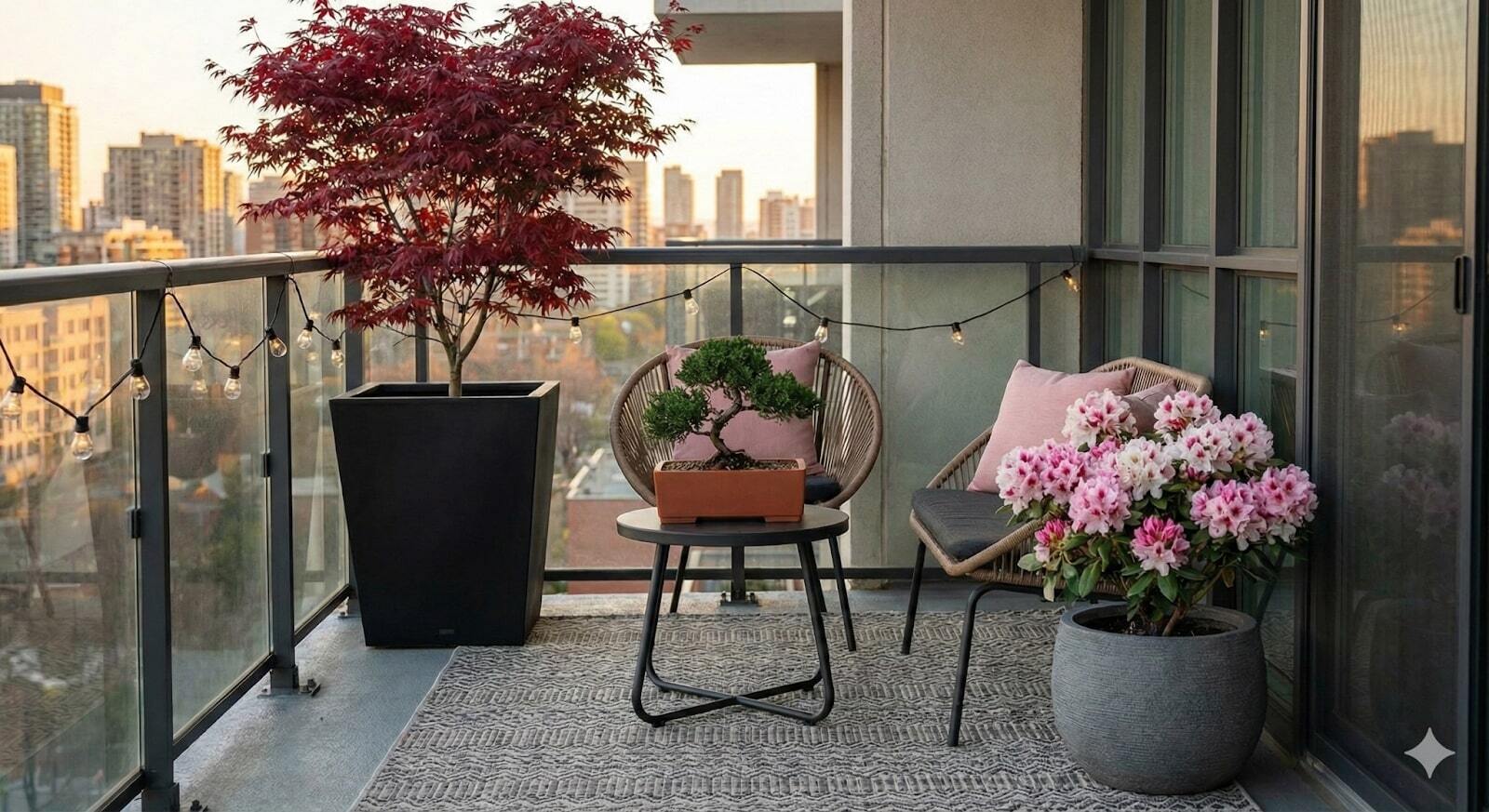
A tree is only as healthy as the home you give it. Since the pot replaces the entire earth for your tree, it needs to provide stability, insulation, and enough room for roots to breathe.
If you choose the wrong container, you might end up with a stunted tree or a cracked pot after the first winter. Here is how to pick the right one.
1. Sizing: Go Bigger Than You Think
When it comes to trees, size matters. A common mistake is buying a pot that looks "just right" for the current size of the tree. The problem is, trees grow.
- Rule of Thumb: Choose a pot that is at least twice the width of the tree’s current root ball.
- Depth is Key: Trees need vertical room for stability. For most small trees, look for a container that is at least 24 inches deep. Deeper pots also hold moisture longer, which keeps the roots cool during summer heatwaves.
If you restrict the roots too much, the tree will become "root-bound," where roots circle the pot endlessly, eventually strangling the plant. Starting with large planters saves you from having to repot a heavy tree just a year later.
2. Material: Why Fiberglass Wins
The material of your pot dictates how often you water, how heavy it is to move, and whether it survives the winter.
- Fiberglass Planters: These are widely considered the gold standard for trees. They are incredibly lightweight (making it easier to move large trees), but they are tough enough to handle freezing temperatures without cracking. Plus, they don't rust or rot.
- Terracotta & Ceramic: While beautiful, these are extremely heavy. Worse, they are porous, meaning they wick moisture away from the soil, drying your tree out faster. They are also prone to cracking in frost.
- Wood: Wood looks natural, but it requires maintenance. Wet soil constantly touching the wood leads to rot over time, meaning you might have to replace the planter long before the tree is done growing.
- Plastic: Standard plastic is cheap, but it often becomes brittle and cracks after a few seasons of UV exposure.
3. Drainage Is Non-Negotiable
Never plant a tree in a pot without holes - water needs to pass through freely. If water sits at the bottom, the roots will rot, and the tree will die. If you fall in love with a decorative pot that has no holes, you must drill them yourself before planting.
Soil Mix, Drainage & Planting Method (Step-by-Step)

Getting the soil right is just as important as picking the right pot. A common mistake beginners make is digging up dirt from the garden and throwing it in a container.
Garden soil is too heavy and dense for pots. It compacts quickly, suffocating the roots and preventing water from draining. For trees that grow in containers, you need a mix that stays fluffy and aerated for years.
The Perfect Soil Recipe
Instead of heavy dirt, use a high-quality, loam-based potting mix. If you want to mix your own for extra drainage, try this ratio:
- 60% Premium Potting Soil: Provides the base nutrients and structure.
- 20% Perlite or Pumice: These white rocks create air pockets, ensuring roots can breathe.
- 20% Compost or Pine Bark: Adds organic matter to hold moisture without becoming waterlogged.
- Slow-Release Fertilizer: Mix in a cup of granular fertilizer to feed the tree over the next six months.
How to Plant Your Tree: A Step-by-Step Guide
Once you have your large planters and soil ready, here is the best way to get your tree settled.
1. Prepare the Drainage: Check the holes at the bottom of your pot. To keep soil from washing out, place a piece of mesh screen or a coffee filter over the holes. Avoid adding a layer of rocks at the bottom because, contrary to popular belief, this actually traps water closer to the roots rather than helping it drain.
2. Create a Base Layer: Fill the bottom of the pot with your soil mix until the tree sits at the right height. You want the "root flare" (where the trunk widens into roots) to sit about 2 inches below the rim of the pot.
3. Prepare the Root Ball: Gently slide the tree out of its nursery pot. If the roots are circling tightly around the outside, gently tease them outward with your fingers or make vertical slices with a knife. This signals the roots to grow outward into the new soil.
4. Position and Fill: Place the tree in the center of the pot. Stand back and check that it is straight from all angles. Slowly fill in the sides with your soil mix, pressing down gently with your hands to remove big air pockets. Do not bury the trunk deeper than it was in the nursery pot, as this can cause the bark to rot.
5. Water and Mulch: Give the tree a deep watering immediately. Keep adding water until you see it trickling out the bottom. Finally, add a 2-inch layer of wood mulch or pine bark on top of the soil. This acts as insulation, keeping the roots cool and preventing the soil from drying out too fast.
Design & Aesthetic Inspiration: Styling Your Potted Trees
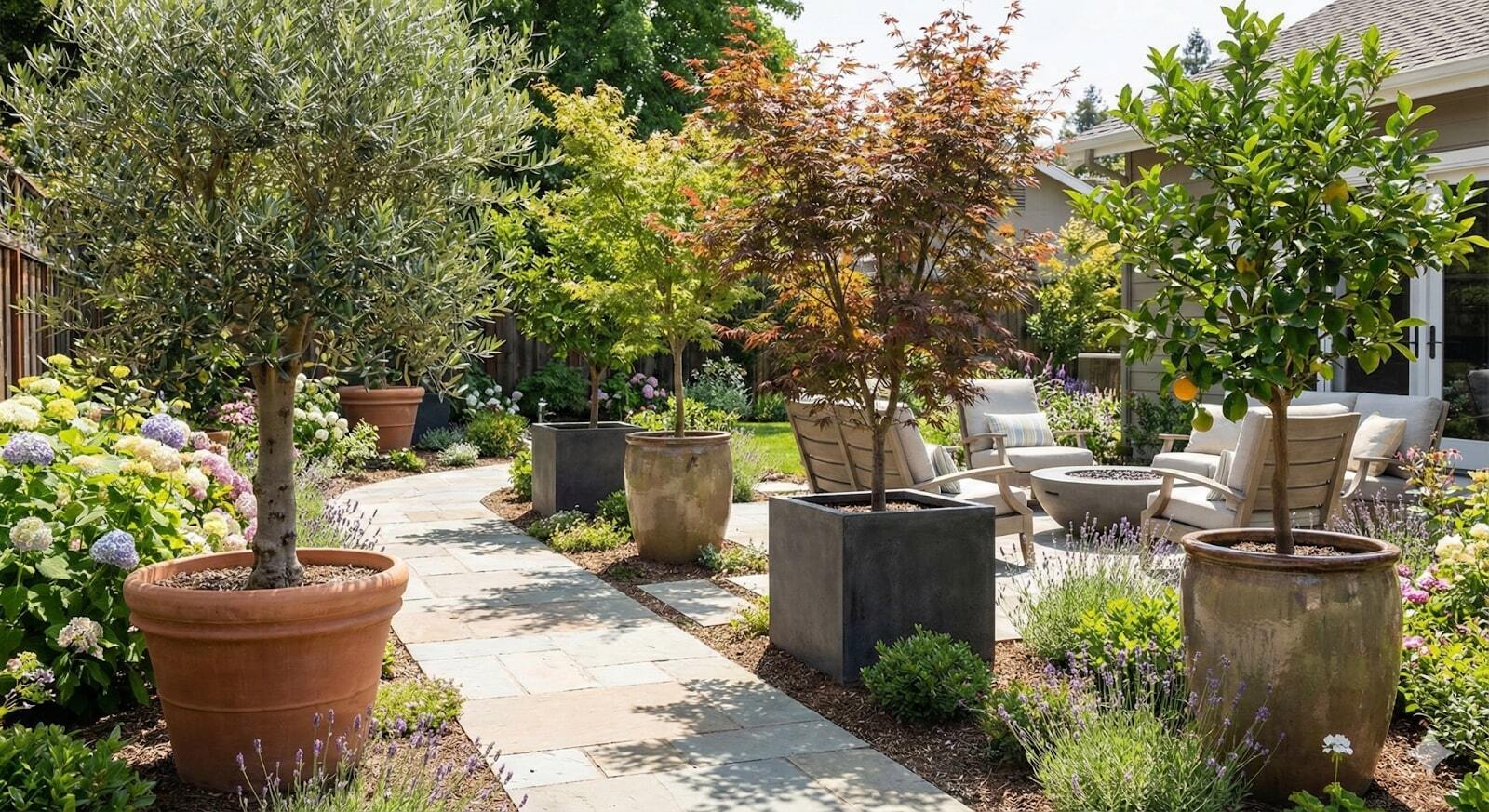
Keeping your tree alive is step one. Making it look incredible is step two.
Think of a potted tree as a piece of furniture that happens to be alive. It adds height, color, and texture to your space. If you want that professional "magazine look" without the hassle, here are a few simple tricks.
1. The Single Statement Piece
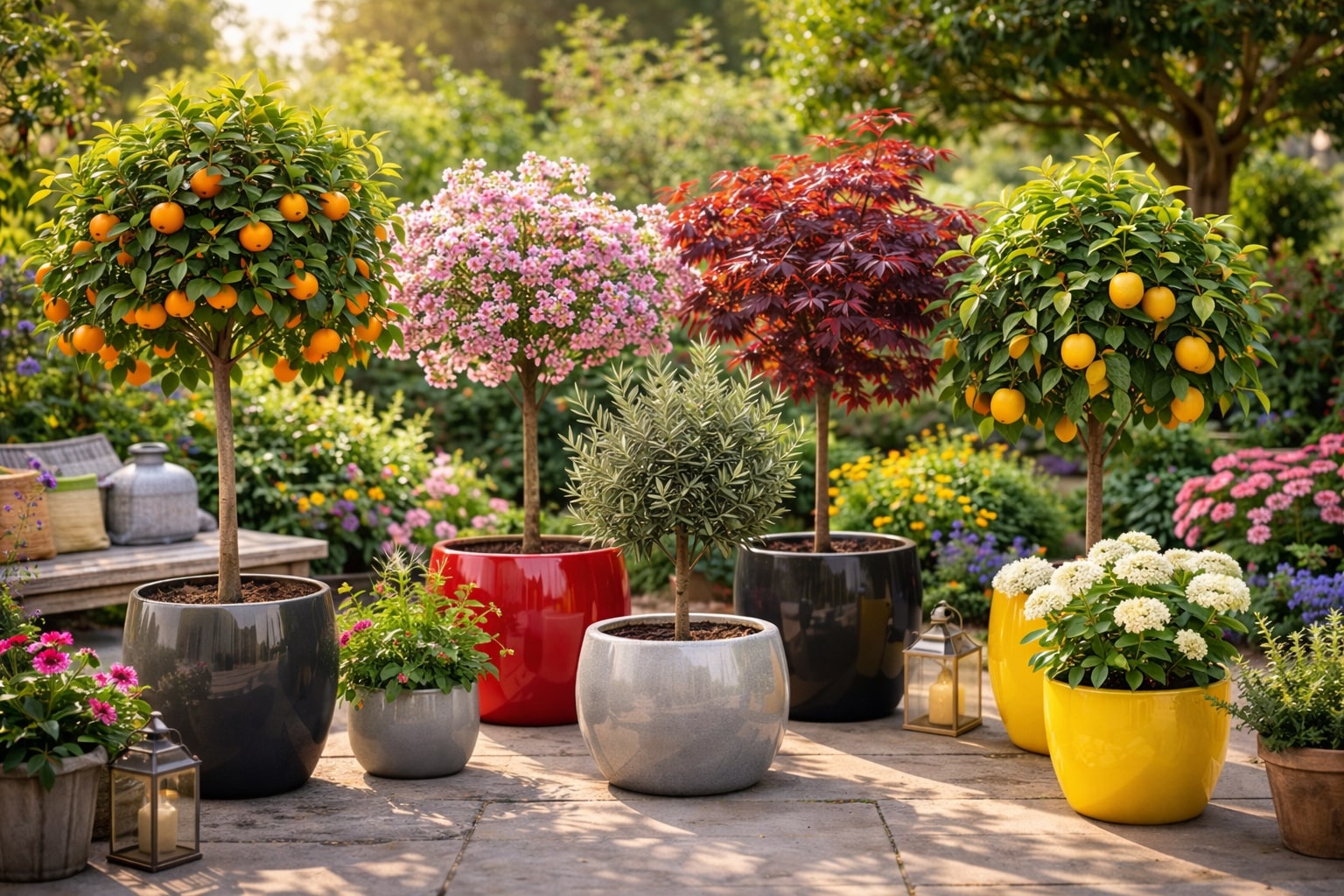
If you have a big open space or a wide entryway, one giant tree often looks better than five small ones. Imagine a tall Olive tree or a Japanese Maple in a large fiberglass planter. It grabs your attention right away.
Here is a quick tip to make it pop:
- Play with Contrast: If your tree has bright green leaves, put it in a dark "Black Matte" pot. If you have a darker evergreen, try a "Glossy White" container. It looks clean and modern.
2. Match the Tree to Your House
Your pot choice should match the style of your home. It connects your outdoor space to the indoors.
Try these combinations to get it right:
- Modern Styles: Does your home have clean, sharp lines? Stick to square planters or rectangles. They fit perfectly with modern architecture. Pair them with upright plants like Bamboo.
- Warm & Mediterranean: On the other hand, if you have a stucco house or a stone patio, go for curves. Round planters with lemon or fig trees look amazing here. The soft shapes help balance out the hard stone.
3. The "Rule of Three"
If one of your pots looks lonely in the corner, do what designers do: group pots in odd numbers, which is almost always three.
Here is the secret formula to making it look good:
- Mix the Sizes: Don't buy three pots of the same size. Pick one tall, one medium, and one low pot.
- Layer the Plants: Put your main tree in the biggest pot. Use a bushy shrub for the middle one. In the lowest pot, plant trailing vines that spill over the edge. This creates a lush, layered look that feels planned, not messy.
Troubleshooting Quick Guide
Even with the best intentions, trees can get stressed. Because they are in a contained environment, they react quickly to changes in water or weather.
Here is a quick cheat sheet to diagnose and fix the most common issues.
Conclusion
Growing trees in containers allows you to bring height, shade, and nature into spaces that otherwise would be bare concrete. It transforms a simple balcony or patio into a genuine garden sanctuary.
While it requires a bit more attention than planting in the ground, the results are worth it. By choosing the right dwarf variety, investing in high-quality fiberglass planters that protect the roots, and staying on top of your watering, you can enjoy a thriving tree for years to come.
You don't need a green thumb to make it work; just the right setup and a little patience. Explore our collection of durable outdoor planters to find one that suits your favorite tree.